
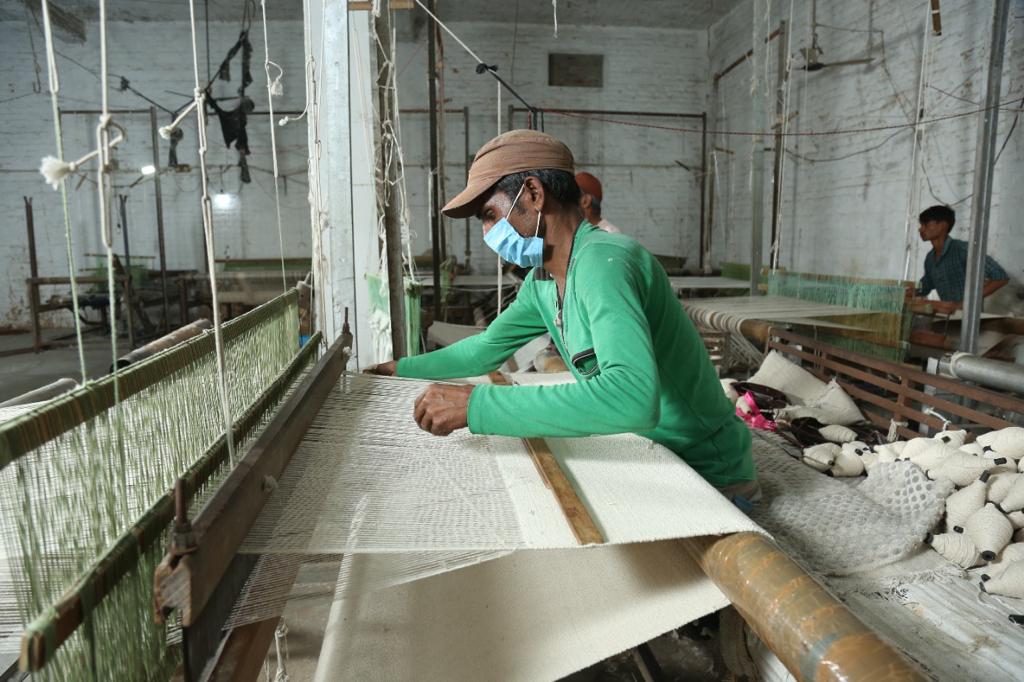
Panipat’s reputation as India’s textile capital rests on a hidden strength: thousands of skilled artisan workshops that have mastered home textile production across generations. For wholesalers, retailers, and interior designers planning their 2026 inventory, understanding how these artisan clusters operate reveals why they deliver more reliable, flexible, and traceable sourcing than traditional large-scale factories.
Key Takeaways
- Artisan networks distribute risk across multiple production units, eliminating single points of failure in your supply chain
- Customization happens faster with artisan workshops—expect samples in 5–7 days and small batch production in three weeks
- Quality control is embedded at every stage, resulting in defect rates of 2–3% compared to 5–7% in automated facilities
- Direct artisan partnerships eliminate 15–25% middleman margins while ensuring fair wages and full traceability
- Lower energy consumption and circular waste practices support your ESG reporting requirements
Why Panipat’s Artisanal Roots Matter for Your Supply Chain
Behind every bedspread, throw, or curtain shipped from Panipat lies a network of family-run weaving units that hold specialized knowledge passed down through generations. These workshops don’t simply manufacture products—they maintain quality through hands-on oversight and adapt quickly to custom orders that large factories often refuse.
For buyers sourcing home textiles in 2026, partnering with Panipat artisans through a trusted aggregator like Sheeltex delivers a dual advantage: authentic craftsmanship combined with supply-chain resilience against the bottlenecks that plague mass-production facilities. When global markets demand both flexibility and reliability, artisan networks provide both.
The Artisan Ecosystem: Structure and Scale
Panipat’s manufacturing landscape includes approximately 6,000 power-loom units, most employing 5 to 20 skilled weavers. These micro-units cluster in neighborhoods where entire streets hum with the rhythm of looms, each specializing in particular products—jacquard bed-covers, terry-towel rugs, or flame-resistant drapery.
Unlike mega-factories, this networked model distributes risk naturally. Each unit operates semi-independently but shares yarn suppliers, finishing houses, and logistics coordinators. When demand spikes or one factory faces maintenance downtime, neighboring units absorb overflow, keeping aggregate output steady without disrupting your delivery schedule.
Embedded Quality Control
Artisan-scale production builds quality checks into every stage of manufacturing. A master weaver inspects each warp beam setup, loaders monitor thread tension throughout the day, and finishers hand-examine selvages and stitching before products leave the workshop.
This “line-of-sight” quality system catches defects—uneven dyeing, snags, misalignment—before they accumulate into batch rejections. Industry observations show that artisan clusters record defect rates around 2–3%, compared to 5–7% in larger automated plants where quality checks occur only at the end of long production runs. For buyers, this means fewer returns and more consistent product quality across orders.
Customization Speed: From Brief to Bulk
Artisans work closely with design teams and maintain in-house sampling capabilities that accelerate custom orders. A typical request—such as a jacquard bedspread in your brand colors—moves from approved artwork to first loom sample in 5–7 days.
Small batch runs of 100–500 units can ship within three weeks, ideal for boutique hotel chains testing seasonal themes or retailers launching limited-edition collections. Mass factories, optimized for ten-thousand-piece orders, often quote 8–12 weeks and resist mid-run adjustments. Artisan units pivot within days, giving you the flexibility to respond to market feedback without costly delays. This is the same craftsmanship celebrated in Indian handwoven traditions.
Risk Diversification: No Single Point of Failure
Relying on one large mill creates a dangerous vulnerability: a strike, power outage, or machine breakdown halts your entire order. Sheeltex mitigates this by coordinating across 40+ artisan partners simultaneously.
If Unit A encounters a yarn-supply delay, Units B and C pick up slack immediately. This distributed model proved its value during the 2023 cotton-price surge, when some mills suspended orders entirely. Sheeltex maintained on-time delivery by reallocating work within its network, ensuring clients faced zero stock-outs. For buyers planning 2026 collections, this resilience isn’t optional—it’s essential.
Sustainability Through Scale: Energy and Waste
Artisan looms consume 30–40% less electricity per meter than industrial Rapier or air-jet machines because they run at moderate speeds without complex pneumatic systems. Smaller batch sizes also mean less overproduction and fabric waste that ends up in landfills.
Many Panipat units recycle selvage strips into braided rugs or sample books, and compact dyeing setups allow precise chemical dosing that reduces effluent volume. For buyers pursuing ESG goals, artisan sourcing offers measurable improvements: lower carbon per SKU and circular waste practices that fit directly into corporate sustainability reports.
Traceability and Ethical Auditing
Smaller workforces make ethical compliance easier to verify. Sheeltex conducts quarterly on-site audits checking worker contracts, safety equipment, ventilation, and child-labor absence across all partner units.
Transparency runs high: each unit maintains a digital log of employees, wages, and working hours, accessible for third-party audits. This traceability appeals to European and North American retailers subject to due-diligence regulations like Germany’s Supply Chain Act. Artisan clusters, operating visibly within communities, face reputational pressure that reinforces fair labor norms naturally. Learn more about supporting artisan communities through ethical sourcing.
Price Stability Through Direct Engagement
Middlemen and trading houses add 15–25% margin layers between artisans and buyers. By aggregating artisan output directly, Sheeltex eliminates intermediaries, passing cost savings to buyers while ensuring artisans receive fair piece-rates.
During raw-material volatility—like the 2022 polyester spike—direct relationships allowed real-time price negotiation and staggered purchasing. This approach smooths cost curves instead of forcing sudden price hikes. Long-term contracts with artisan clusters lock in predictable pricing, invaluable for retailers planning six-month merchandising calendars.
Heritage Meets Innovation: Blended Capabilities
Panipat artisans marry traditional shuttle-loom techniques with modern finishing technologies: digital printing, anti-microbial treatments, and soil-release finishes. A hand-woven cotton throw can receive a water-repellent coating in an adjacent finishing unit, meeting hospitality specifications without losing artisan character.
This blend lets buyers offer “artisan-crafted” narratives—popular in premium home-décor segments—while delivering performance attributes like colorfastness and shrink resistance that institutional buyers require. You get authentic storytelling with commercial durability.
Real-World Resilience: Case Snapshots
Hotel Chain Restock (2024)
A 150-room boutique chain needed 600 duvet covers in three custom colorways within four weeks to coincide with a rebrand launch. Sheeltex distributed the order across five artisan units; parallel production kept timelines tight, and minor color adjustments happened on Unit 3’s loom mid-run without delaying the other four. Delivery occurred two days early.
Retailer Seasonal Launch (2023)
A home-goods retailer planned a “Heritage Weaves” collection for autumn. Sheeltex coordinated sampling from eight artisan clusters, each showcasing regional weave patterns. The retailer selected four styles; staggered production let them test sell-through before committing to full reorders—a flexibility mega-mills don’t offer.
Supply Shock Mitigation (2023)
During a regional power crisis affecting northern India, two of Sheeltex’s partner units went offline for ten days. Orders were rerouted to units with backup generators and solar panels, maintaining aggregate output. Clients experienced no delays, demonstrating the anti-fragility of a networked artisan model.
How Sheeltex Orchestrates the Network
Sheeltex functions as the coordination center: consolidating demand forecasts, allocating orders by unit specialization, coordinating yarn procurement in bulk, scheduling shared finishing services, and managing export documentation.
This orchestration transforms independent artisans into a virtual vertically integrated supplier—offering the reliability of a large mill with the agility of small workshops. Digital dashboards give buyers real-time visibility into production stages, quality-check results, and shipment tracking. You maintain control without managing dozens of individual relationships.
2025–2026 Outlook: Why Artisan Sourcing Gains Ground
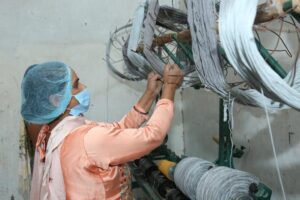
Three macro trends favor artisan networks for the coming years:
- De-risking: Geopolitical uncertainties and climate events make supply-chain diversification a boardroom priority; multi-unit sourcing inherently diversifies risk
- Premiumization: Consumers reward “handcrafted” and “small-batch” stories; artisan provenance commands 10–15% price premiums in Western markets
- Regulatory Pressure: Stricter due-diligence laws favor transparent, traceable supply chains—artisan clusters’ smaller scale simplifies compliance dramatically
Analysts project that artisan-aggregator models will capture 8–10% of India’s home-textile exports by 2026, up from approximately 5% in 2023. Buyers increasingly recognize that resilience and authenticity are no longer nice-to-haves but competitive necessities. For more insights on quality sourcing, explore our complete guide to Indian textile sourcing.
Partnering with Sheeltex: Practical Steps
- Discovery Call: Share your product categories, volume forecasts, and customization needs with our team
- Artisan Matching: Sheeltex identifies 3–5 specialized units within our network that align with your specifications
- Sampling: Receive loom samples within one week; iterate design details directly with master weavers
- Pilot Order: Place
