
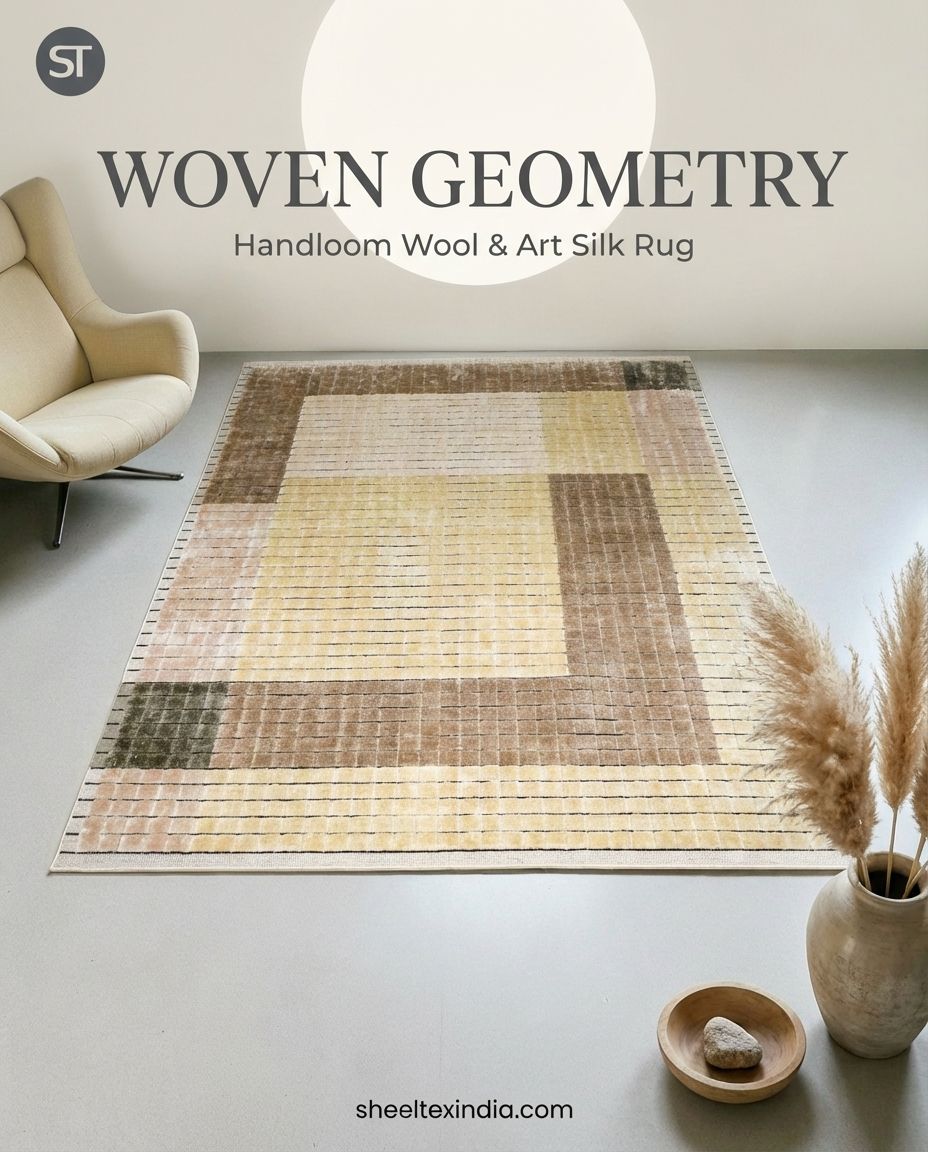
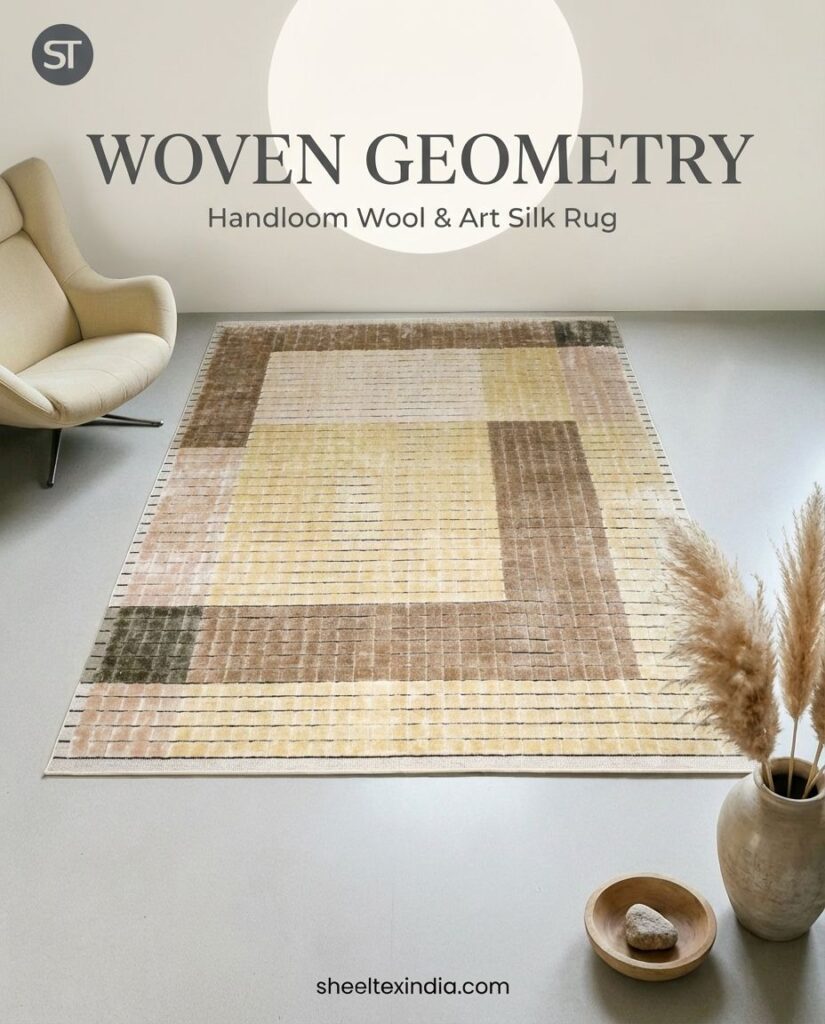
The global demand for handloom rugs from India continues to grow as buyers seek authentic, sustainable, and artisan-made floor coverings. For 2026, six key trends are shaping what wholesalers, retailers, interior designers, and hospitality buyers should source from Indian manufacturers.
This guide highlights the most important handloom rug trends emerging from India’s weaving regions, helping you plan your collections with confidence.
Key Takeaways
- Sustainable materials like jute, hemp, and organic cotton are becoming the standard, not the exception
- Maximalist designs with bold patterns and jewel tones are replacing years of neutral minimalism
- Performance handlooms now offer durability suitable for high-traffic commercial spaces
- Customization services are more accessible, with lower minimum order quantities than before
- Vintage aesthetics and biophilic shapes reflect growing interest in character-rich, nature-inspired designs
1. Sustainable and Eco-Conscious Materials
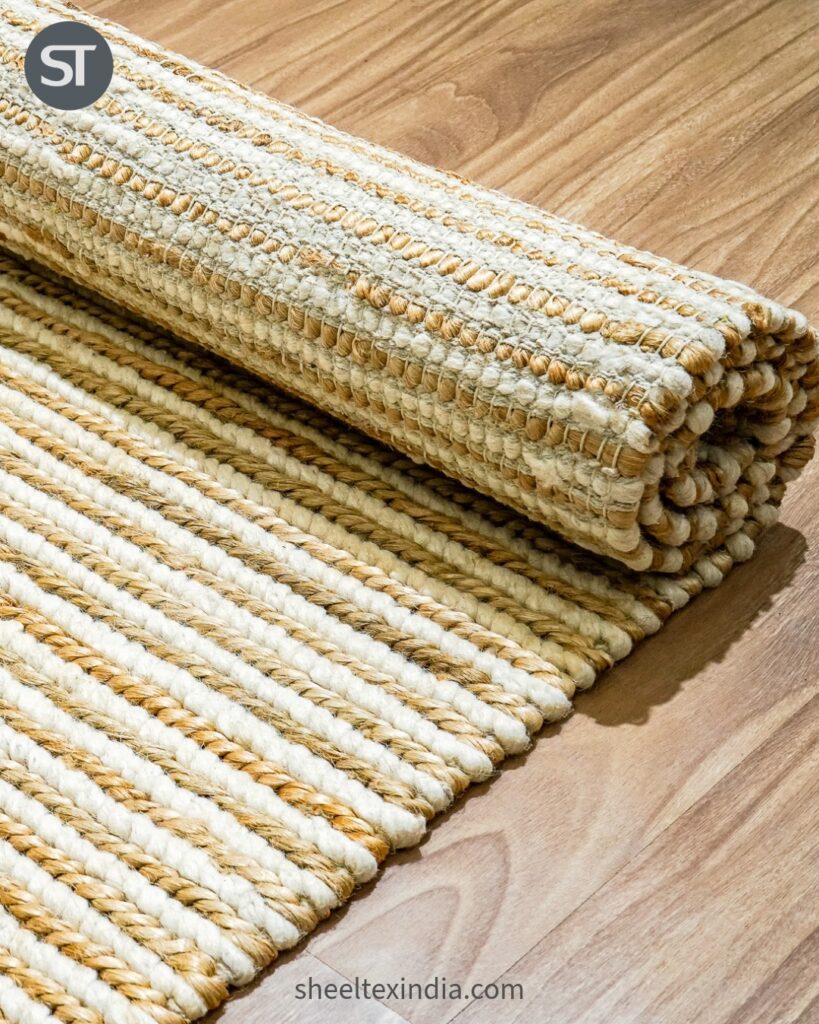
Environmental responsibility is no longer optional for handloom rugs of India. Buyers across Europe and North America specifically request natural fibers and low-impact production methods.
Natural fiber rugs made from jute, hemp, and organic cotton are leading this shift. These materials offer biodegradability and minimal environmental footprint compared to synthetic alternatives. Indian weavers, particularly in West Bengal and coastal regions, have centuries of expertise working with these fibers.
Plant-based dyes and AZO-free colorants address safety and environmental concerns. Many manufacturers now provide GOTS and OEKO-TEX certifications to verify their processes meet international standards.
For B2B buyers, sustainable rugs typically command 15-25% premium pricing, but the market demand justifies the investment. Always request lab reports confirming material composition and dye safety before placing bulk orders.
2. Maximalist Revival with Bold Patterns
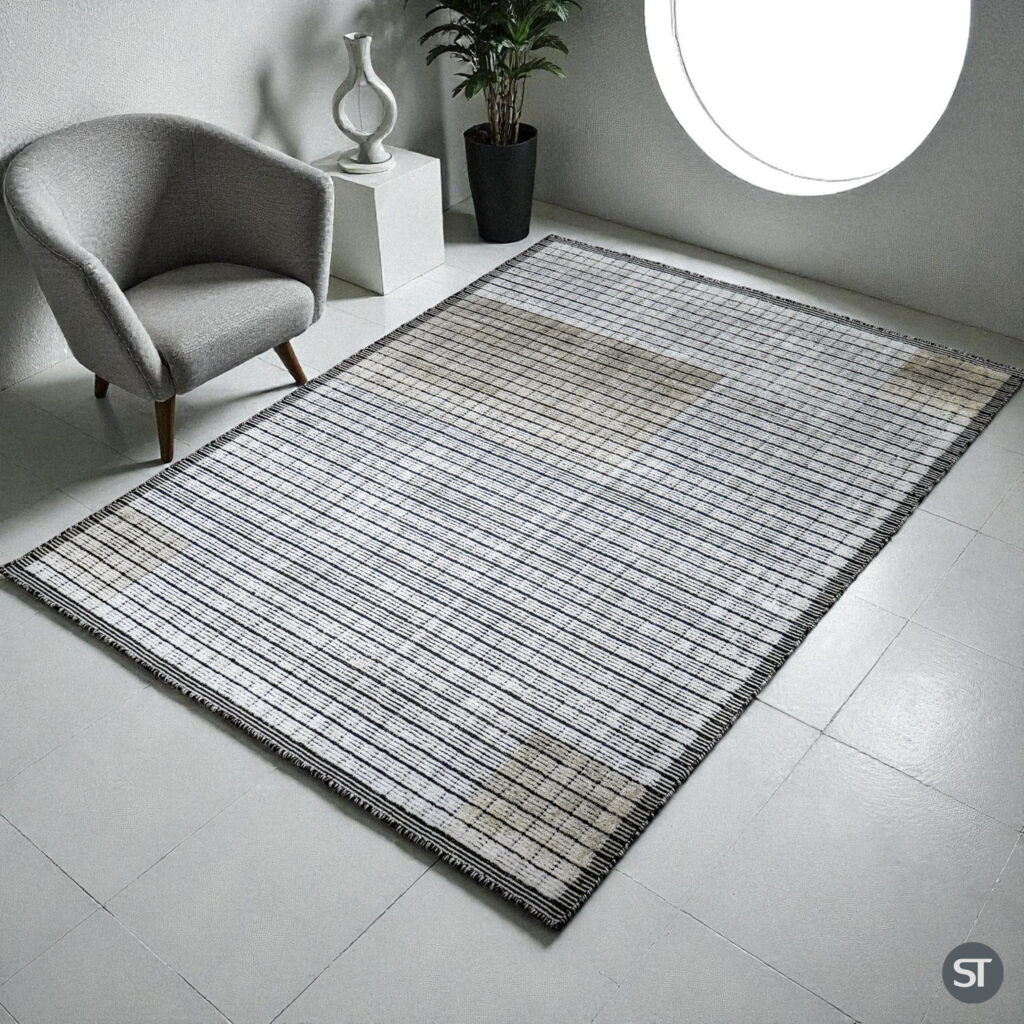
After years of beige and grey dominance, bold geometric patterns and rich colors are making a strong comeback in handloom collections.
Jewel tones like emerald, sapphire, and ruby now appear in traditional Indian patterns reimagined for contemporary spaces. Weavers are combining mixed weave techniques within single pieces, creating layered textures that add depth and visual interest.
Rajasthan’s dhurrie makers and Gujarat’s tribal pattern specialists excel at these vibrant designs. The trend connects with buyers seeking statement pieces that tell a story and showcase regional weaving heritage.
When sourcing maximalist rugs, pay attention to color consistency across production batches. Natural dye variations can occur, so sampling before bulk orders is essential.
3. Vintage and Overdyed Aesthetics
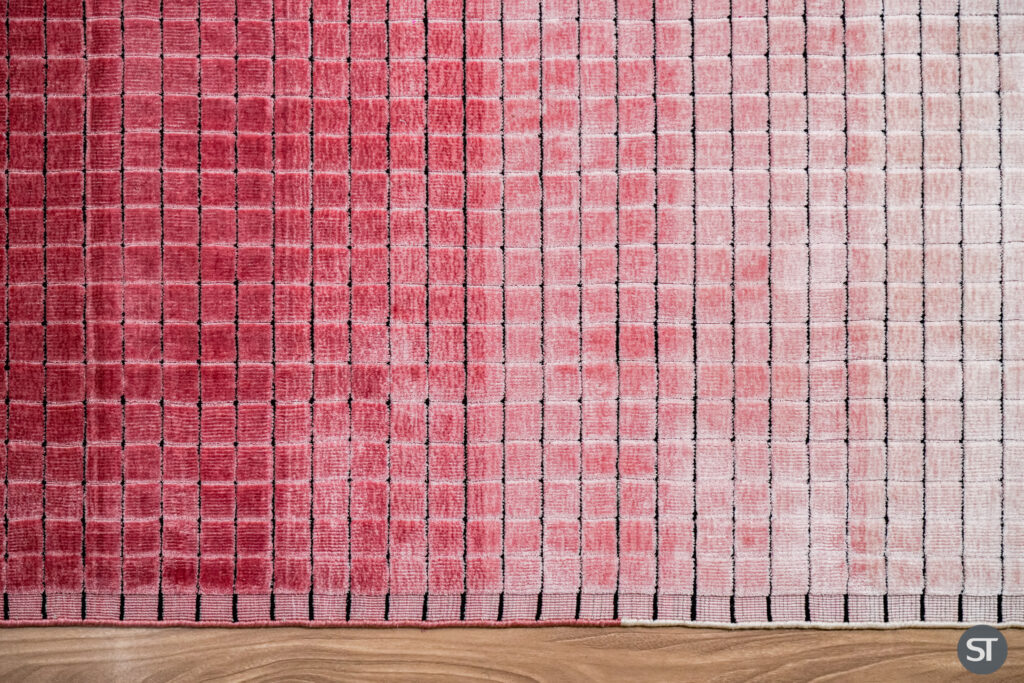
The deliberately aged look continues gaining popularity, with distressed finishes and color-washed effects creating instant vintage appeal.
Indian manufacturers have developed techniques to create sun-bleached appearances and faded color effects on new handloom pieces. Patchwork compositions take traditional motifs and arrange them in modern, unexpected ways.
This trend works particularly well for ethnic handwoven rugs where heritage designs receive contemporary treatment. The vintage aesthetic appeals to boutique hotels, restaurants, and residential buyers seeking character without the unpredictability of actual antique pieces.
Heritage reinterpretation allows traditional Indian patterns to fit modern interiors. Bhadohi and Mirzapur regions excel at adapting classic designs with overdyed techniques.
4. Performance Handlooms for Commercial Spaces
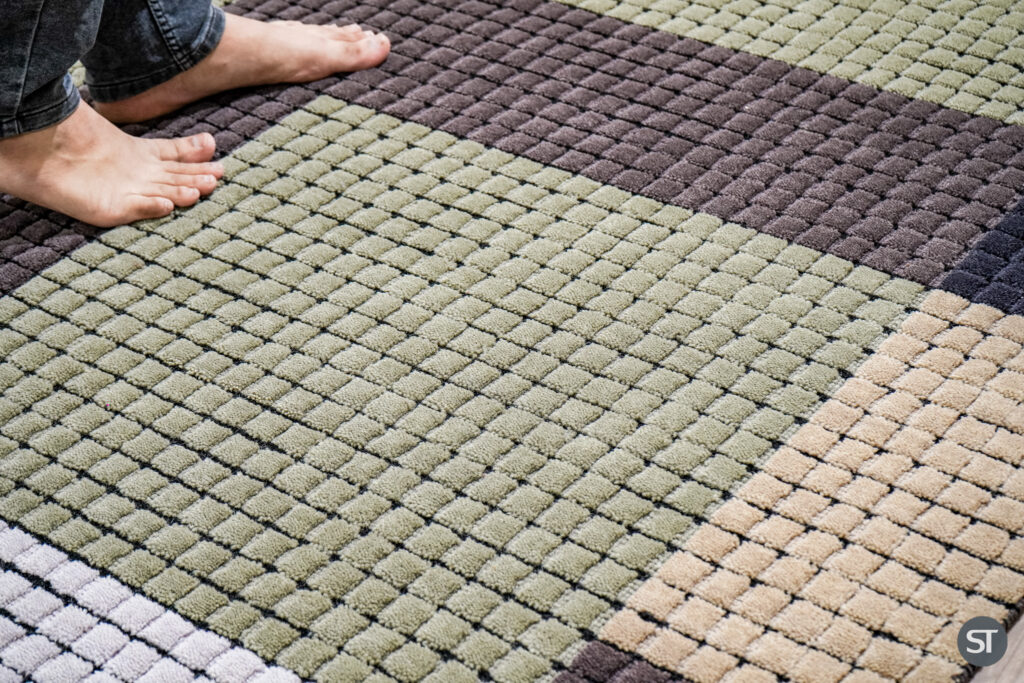
A significant development in Indian handmade rugs 2026 is the emergence of performance-grade handlooms suitable for hospitality and high-traffic environments.
Manufacturers now produce rugs with tighter weaves, reinforced edges, and natural protective finishes using wax and oils. These indoor-outdoor versatile rugs use weather-resistant natural fibers while maintaining handcrafted appeal.
Hotels, restaurants, and commercial designers can now specify handloom rugs that meet durability requirements without sacrificing authenticity. This opens significant opportunities for B2B buyers serving the hospitality sector.
When sourcing performance handlooms, verify construction details like knot density for pile rugs and edge finishing quality. Request samples exposed to your specific use conditions before committing to large orders.
5. Biophilic and Organic Shapes
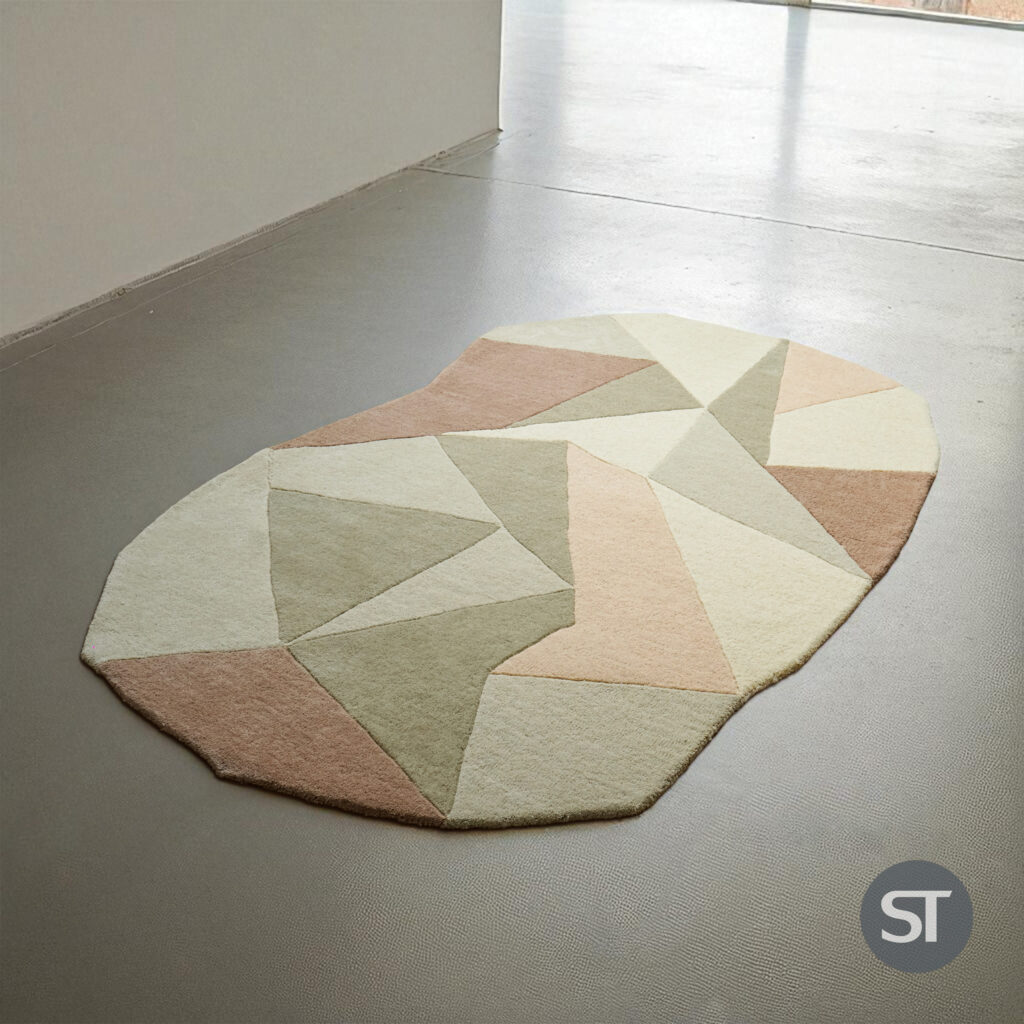
Moving away from perfect rectangles, irregular edges and nature-inspired forms represent a fresh direction in handloom design.
Weavers create rugs with shapes inspired by leaves, stones, and water patterns. Textural 3D elements using loop pile and raised patterns add tactile interest. This trend aligns with kilim rug design trends emphasizing organic aesthetics.
Earthy color palettes in terracotta, sand, moss, and clay tones complement the biophilic design movement popular in both residential and commercial interiors. These nature-connected designs appeal to buyers prioritizing wellness and natural elements in their spaces.
Indian artisans adapt traditional flat-weave techniques to create these contemporary shapes. Custom sizing becomes particularly important for irregular shapes, so clear technical specifications are essential when placing orders.
6. Customization and Made-to-Order Services
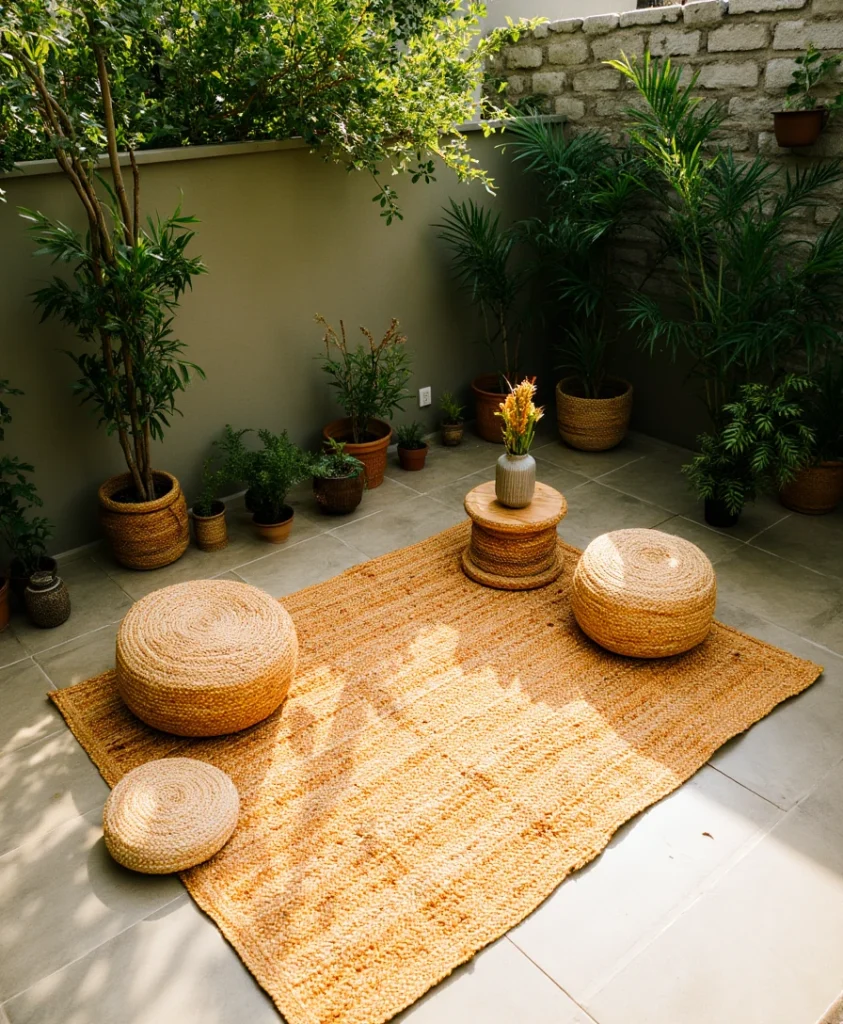
Perhaps the most practical trend for B2B buyers is the increasing accessibility of customization services from Indian handloom manufacturers.
Minimum order quantities have decreased significantly, with some producers now accepting 50-100 piece orders compared to previous requirements of 500 or more. This makes importing handloom rugs feasible for smaller retailers and boutique operations.
Available customization options include:
- Non-standard dimensions to fit specific project requirements
- Color matching services coordinating with existing décor palettes
- Pattern modifications adapting traditional designs to client preferences
- Sampling programs for small batch trials before bulk commitments
Custom orders typically add 20-30% to base pricing and require 90-120 day lead times. Standard collections ship in 45-60 days. Plan accordingly, especially considering India’s peak production season runs October through March.
Similar customization trends appear across wool handwoven rug collections, offering buyers flexibility across fiber types.
Regional Specializations to Know
Understanding which Indian regions excel at specific rug types helps you source more effectively:
- Rajasthan: Geometric dhurries and flat weaves with bold tribal patterns
- Uttar Pradesh (Bhadohi/Mirzapur): Hand-knotted pile rugs with fine detail work
- West Bengal: Jute and natural fiber specialists with sustainable practices
- Gujarat: Traditional tribal patterns in vibrant, authentic colorways
Each region brings distinct techniques, patterns, and material expertise. Matching your collection needs to the right regional suppliers improves quality outcomes and production efficiency.
Practical Considerations for B2B Buyers
When planning your 2026 handloom rug sourcing, keep these practical factors in mind:
Quality verification should include checking edge finishing, knot density for pile rugs, and color consistency across pieces. Natural material variations occur, making pre-production sampling essential.
Ethical sourcing verification matters increasingly to end consumers. Confirm fair labor practices and artisan wages with your manufacturer. Many Indian producers now provide transparency documentation.
Certification requests for GOTS, OEKO-TEX, or other relevant standards should happen early in the sourcing conversation. Not all manufacturers maintain these certifications, so clarify requirements upfront.
Payment and shipping terms vary by manufacturer and order size. Container minimums, partial shipment options, and payment schedules require clear agreement before production begins.
Conclusion
The 2026 landscape for handloom rugs from India offers exciting opportunities for B2B buyers. Sustainability, bold design, performance durability, and customization flexibility define the market’s direction.
Whether you serve residential retailers, hospitality projects, or interior design firms, these six trends provide a roadmap for collection planning. India’s weaving regions continue adapting traditional skills to meet contemporary market demands while maintaining the authentic, handcrafted quality that differentiates these products.
Ready to source handloom rugs for your 2026 collection? Sheeltex India offers sampling programs, customization services, and flexible MOQs for wholesalers, retailers, and designers. Contact us to discuss your specific requirements, timelines, and how our handloom collections can meet your business needs.
“`
