
Rectangular vs Round Jute Rugs: Assortment Planning
Last updated: August 2026
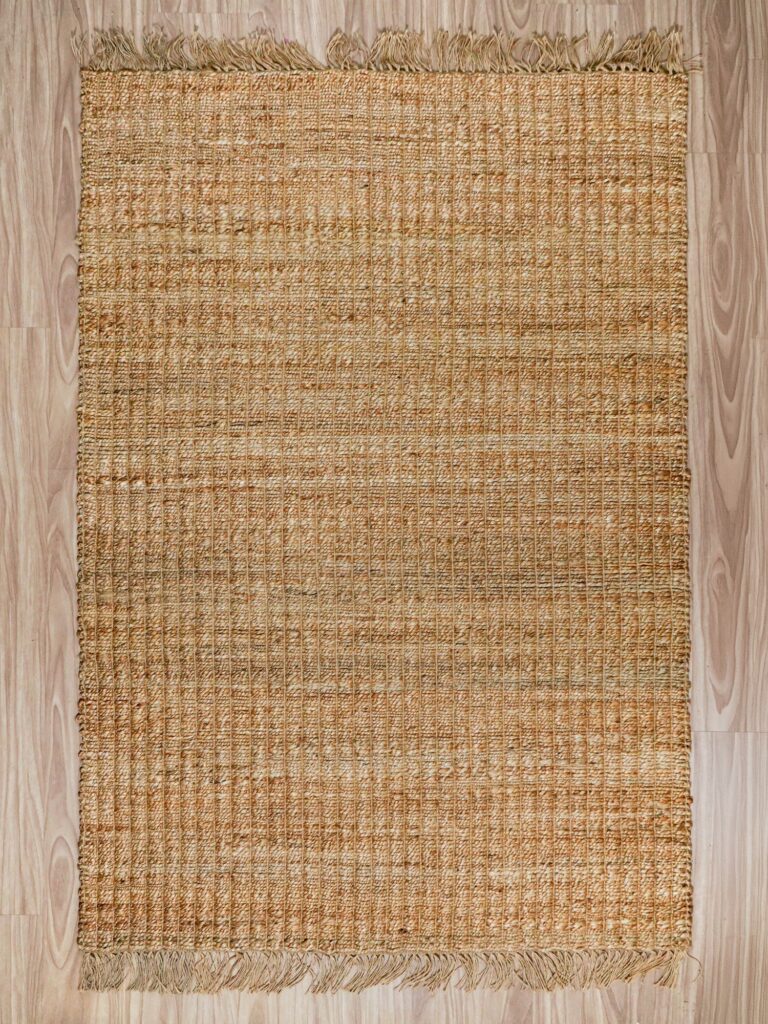
Rectangular jute rugs sell roughly three times faster than round ones in most retail programs, but round rugs often carry thinner markdowns and higher unit margin. The right wholesale assortment isn’t an even split — it’s weighted toward rectangles for volume, with round and oval formats stocked deep enough to catch accent-rug demand without tying up floor space in slow-turning inventory.
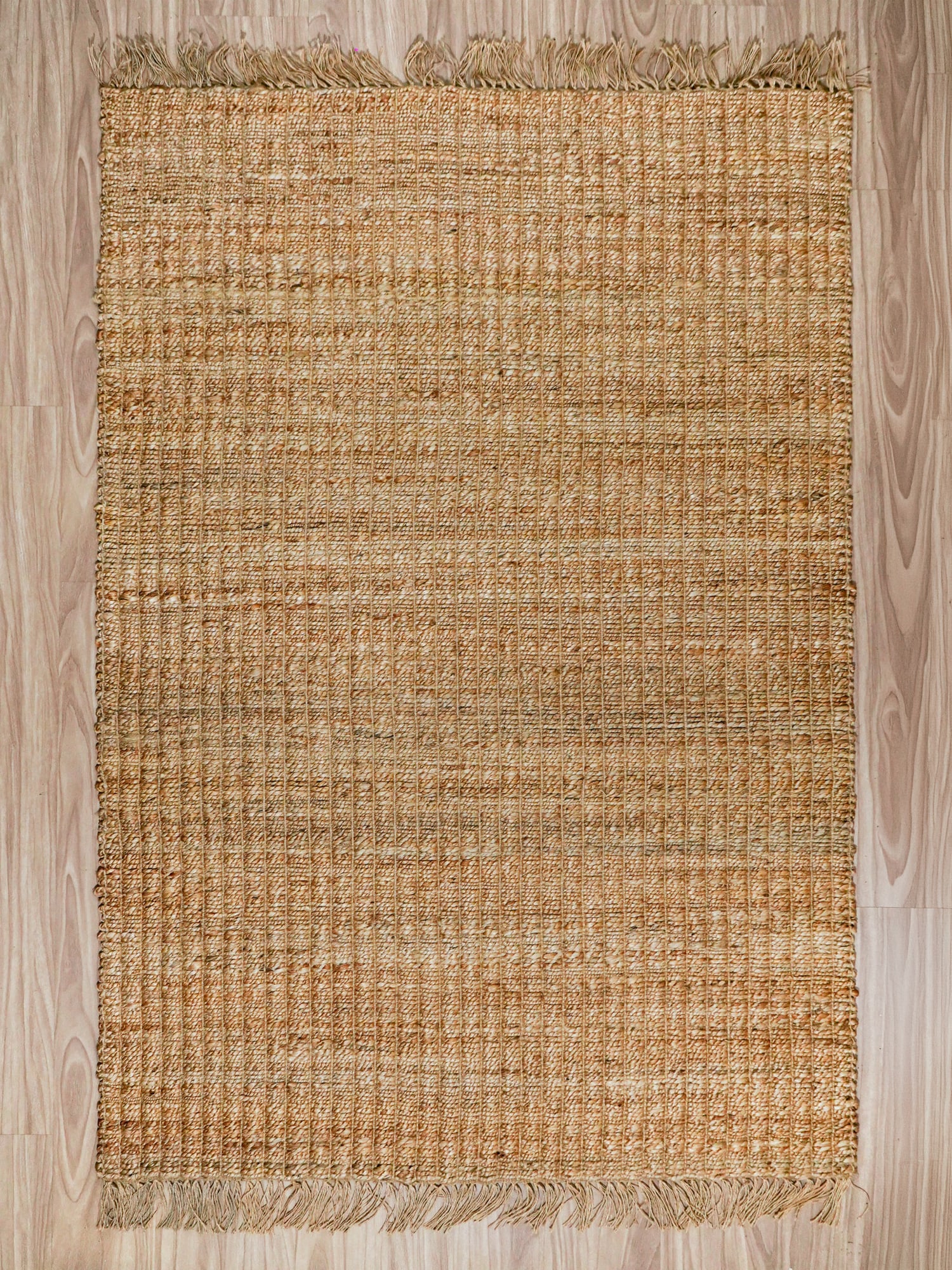
Sales velocity by shape: why rectangular formats outsell 3:1 but round rugs drive higher margin
Rectangular jute rugs outsell round formats because they map to more rooms — hallways, dining tables, living-room seating areas — while round rugs serve a narrower job: anchoring a single chair, a nightstand, or a small nook. In our 2026 production data, rectangular jute pieces accounted for close to 70% of repeat wholesale orders, while round pieces sat under 15% of unit volume.
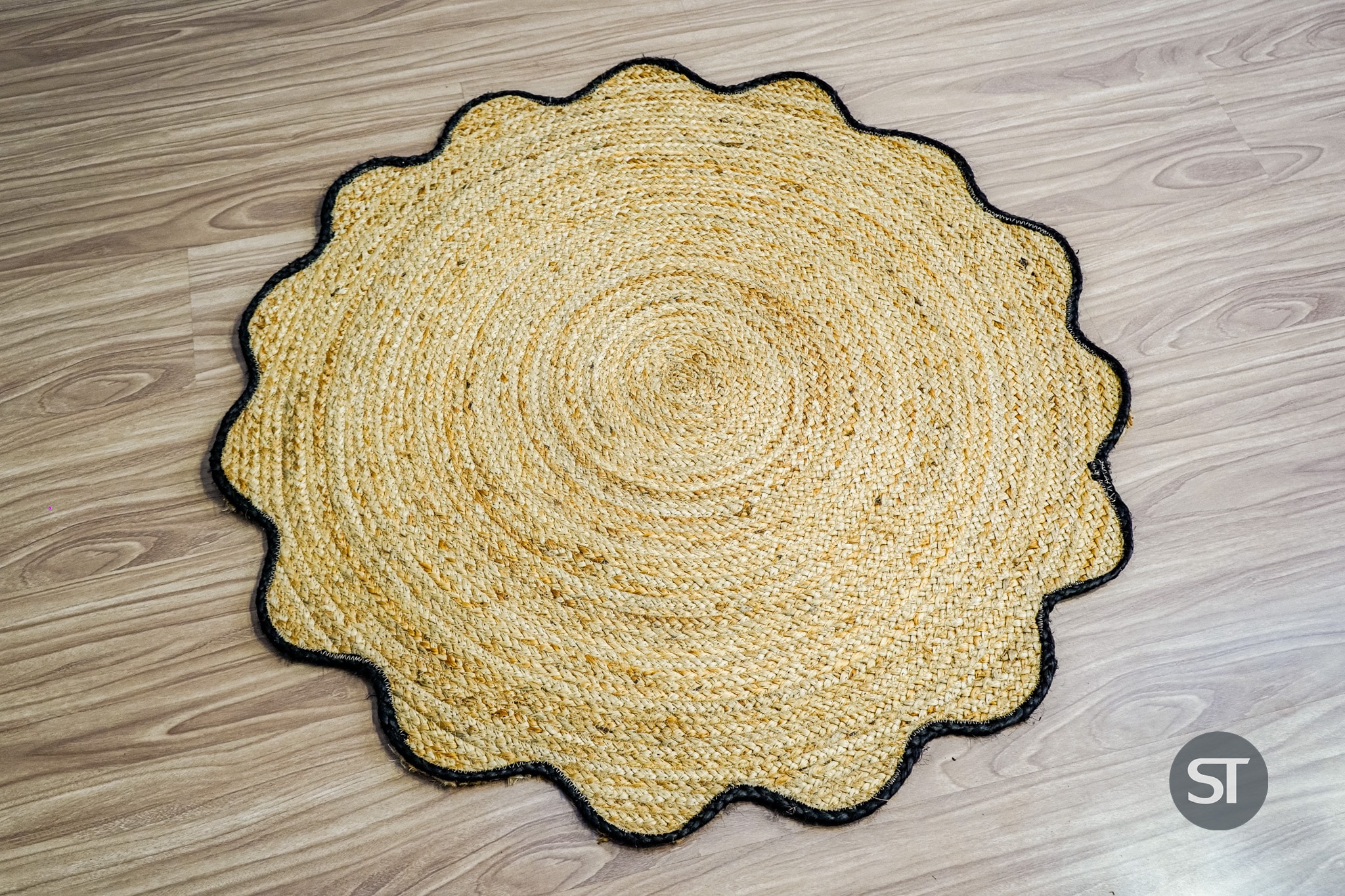
What round rugs give up in velocity, they often claw back in margin. Because round jute is cut and joined differently at the border — the weave has to turn a corner that doesn’t exist on a straight-edged piece — retail buyers tend to price it 10-20% above an equivalent-size rectangle, and it rarely gets marked down as aggressively at season-end. A category manager running four SKUs of each shape will typically see the round SKUs clear at closer to full price.
| Shape | Typical sell-through pace | Markdown pressure | Best floor role |
|---|---|---|---|
| Rectangular | Fast — 8-10 week sell-through in-season | High, moves with promotions | Runners, dining, living room anchor |
| Round | Slow — often full-season hold | Low, holds price | Accent chairs, entryway circles, nurseries |
| Oval | Moderate | Medium | Long narrow rooms, farmhouse dining |
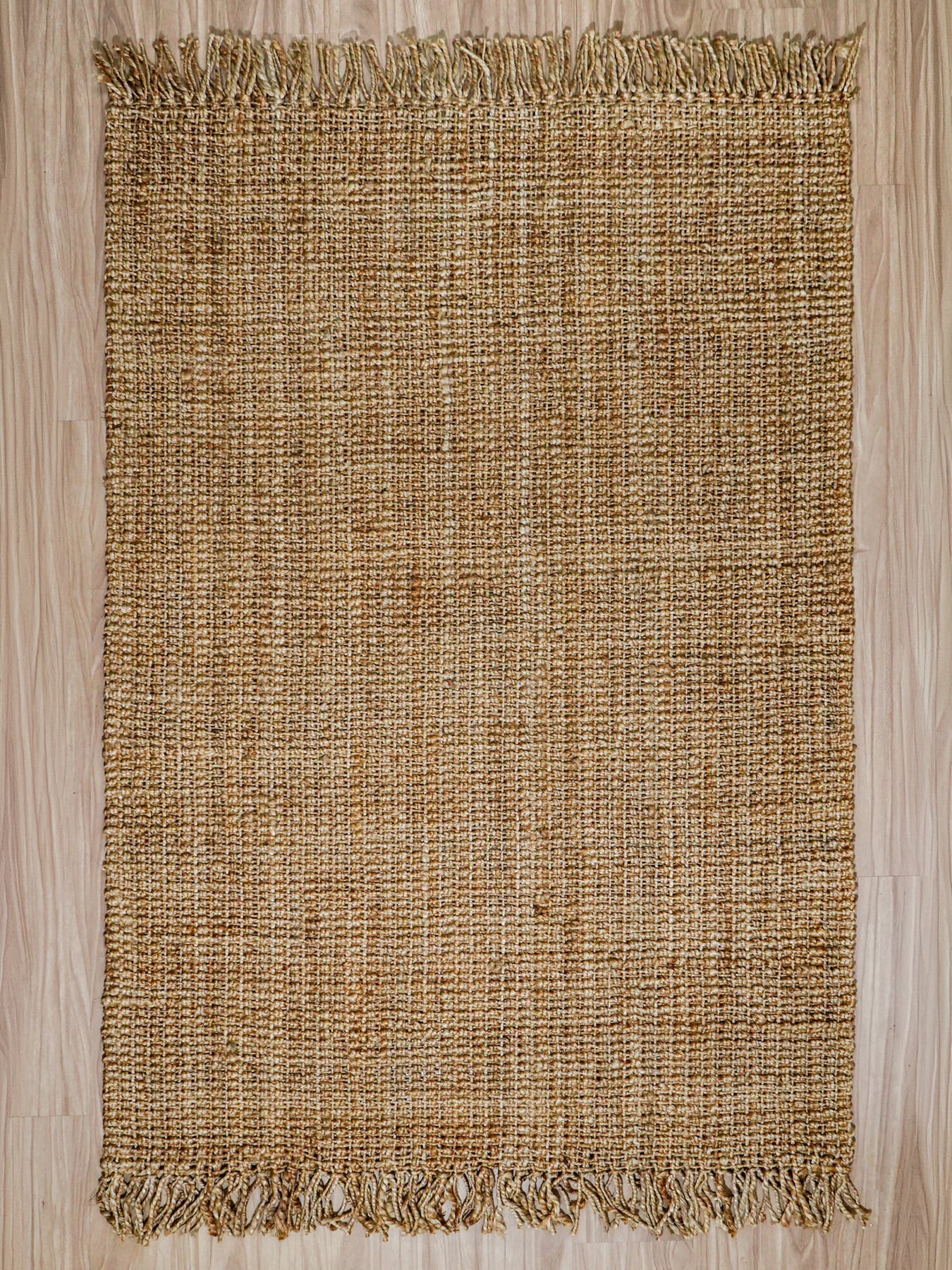
Space planning: how retail floor layouts influence optimal shape mix
The optimal shape mix follows the floor plan a rug is sold into, not an abstract ratio — narrow spaces sell runners, open living-room vignettes sell rectangles and rounds together, and small-format retail (boutiques, online-only lines) over-index on round accent pieces because they photograph better in a single square image.
A hallway or entry display converts almost entirely on rectangular runners under 90cm wide — round rugs simply don’t fit the geometry of the space, so stocking them there is a floor-space cost with no sales return. A living-room vignette, by contrast, often pairs a large rectangular area rug under the seating with a smaller round rug layered on top near a reading chair, which is why many retail buyers stock the two shapes as a set rather than as competing SKUs. For buyers building a size run around this, our sizing guide for rug placement breaks down the standard clearances retail floor sets use. It’s also worth reviewing how to style jute rugs across interior themes before finalising a shape ratio, since boho and minimalist floor sets pull round-rug demand higher than a standard transitional layout.
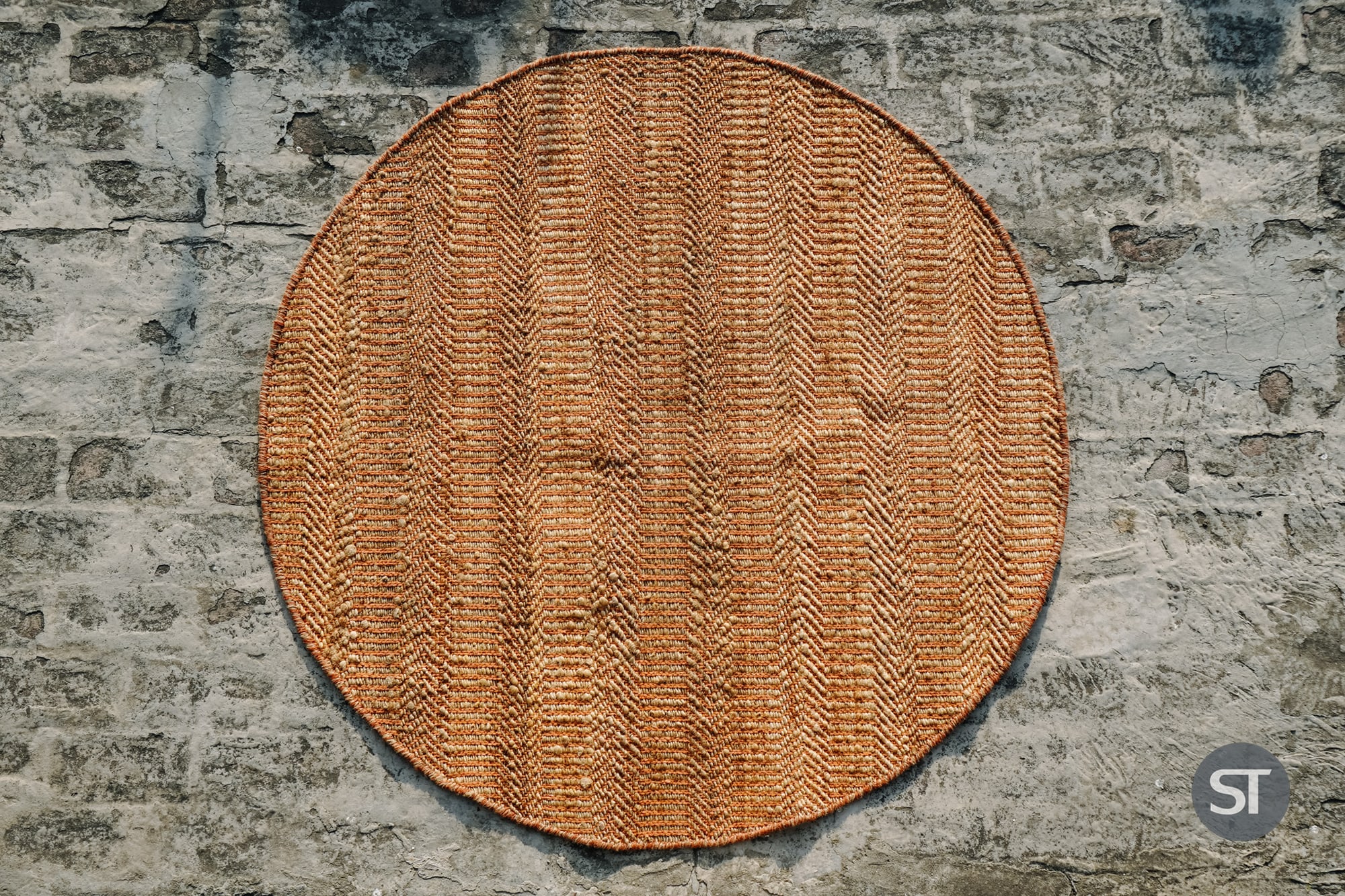
Our product range: rectangular STJR-298, RU24-34 vs round AJD2530 Emberleaf
The construction difference between our rectangular and round programs comes down to loom geometry, not material — all three are handwoven jute, built on stepped patterning rather than printed motifs, and none of them are rated for wet or outdoor use.
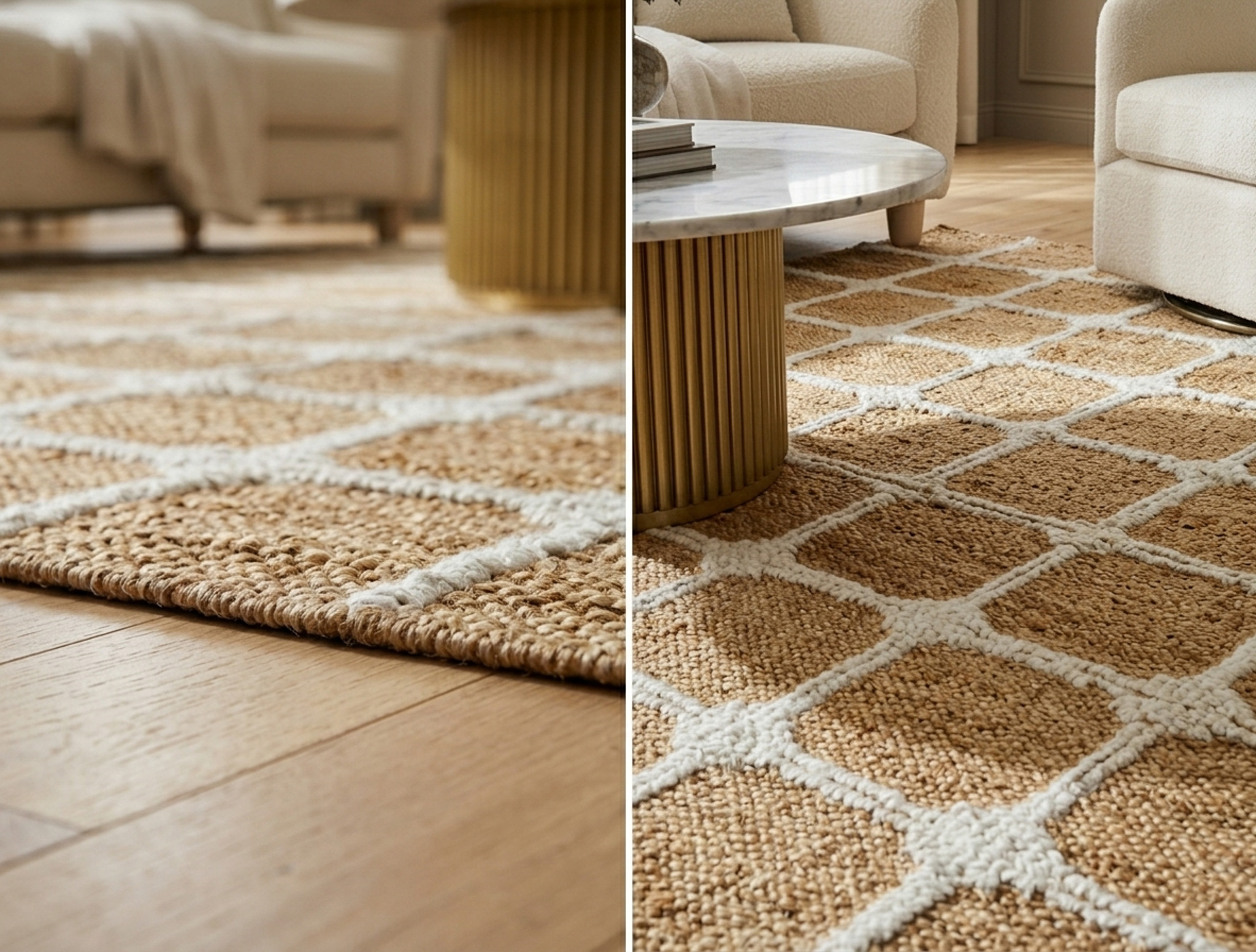
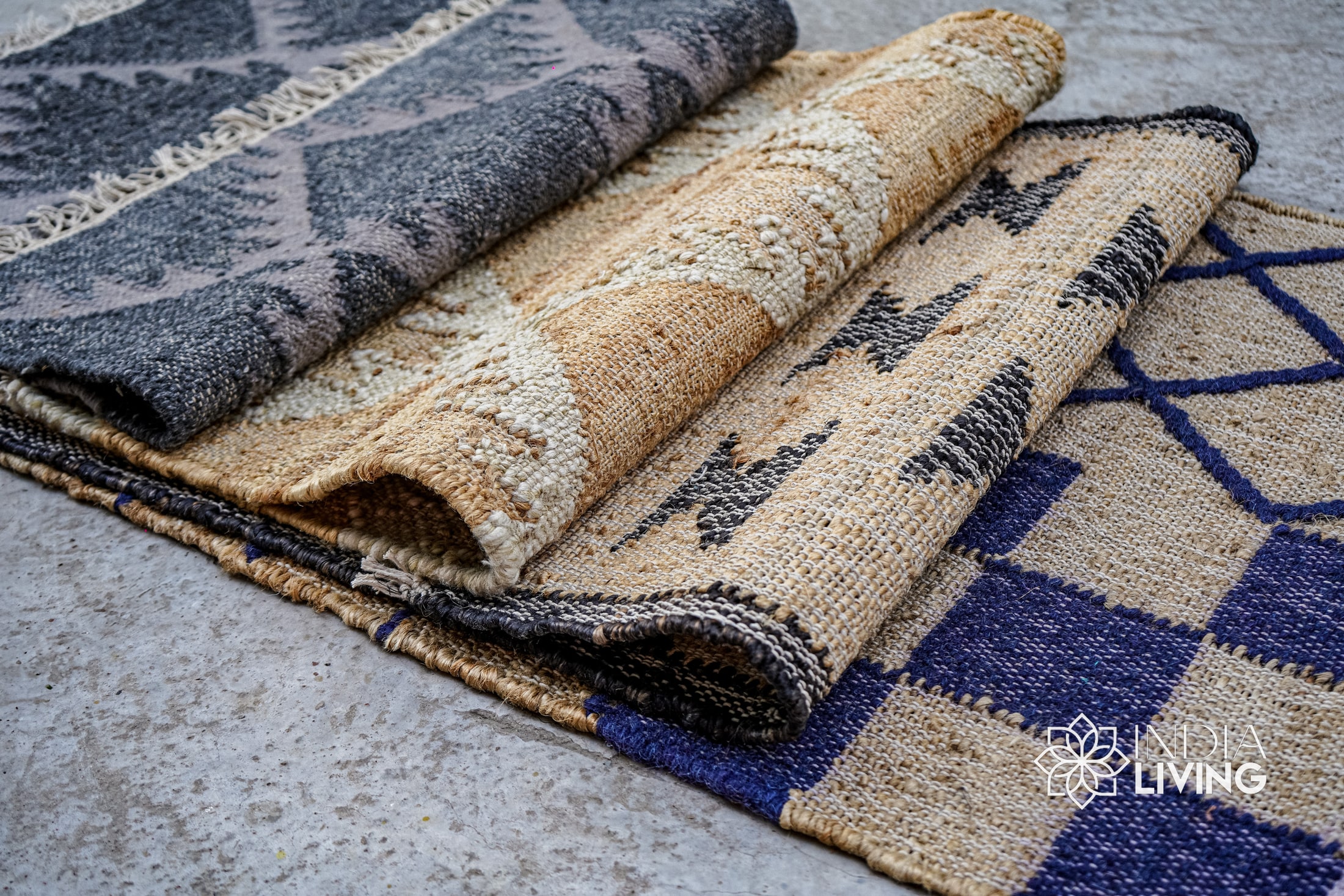
STJR-298 is a flatweave runner built on straight-line stripes, which is the fastest construction to weave consistently at width and the reason runner programs can carry deep colourway counts without stretching lead times. RU24-34 moves to a panja-woven stepped diamond, a slower, denser weave that holds pattern definition better on wider rectangular area-rug sizes. AJD2530 Emberleaf is our braided round construction — braiding is the only technique that turns a continuous circle cleanly, which is why round jute rugs almost always come braided rather than flatwoven. One thing worth flagging to buyers building colour plans: jute takes dye down a shade, so every colourway on a spec sheet lands slightly duskier and warmer once woven than it does on screen — factor that into private-label swatch approvals. Buyers scoping new colourways for either construction can also see recent releases in our modern jute rug design roundup.
Customer use cases: how shape determines purchase trigger (hallway vs dining vs bedroom)
Shoppers buy jute rugs by room-shaped problems, not by rug shape — a hallway shopper is solving for a narrow footprint (rectangular runner), a dining-room shopper is solving for chair clearance under a table (rectangular or oval, sized to the table plus 60-70cm on each side), and a bedroom or reading-nook shopper is solving for a single accent spot (round).
This is also where the material itself sets a hard boundary that shape can’t override. Jute is a dry indoor material — it belongs in living rooms, bedrooms, studies, and hallways, and it wears well underfoot in normal foot traffic. It is not a bathroom or outdoor product: jute holds moisture rather than shedding it, so a round jute mat in a bathroom or an oval one on a covered patio will mildew and flatten faster than the same piece indoors, regardless of how well it’s woven. PVC for the patio, jute for the bedroom, and never the other way round. For hospitality buyers building out lobby or guest-room programs around this constraint, our notes on retail and hospitality applications cover where jute performs in commercial foot traffic, and the durability breakdown for high-traffic areas is useful when a buyer asks how jute compares to wool underfoot.
MOQ and reorder strategy: balancing shape variety with stock depth for fast movers
The reorder mistake most new wholesale buyers make is spreading a fixed MOQ across too many shapes and colourways at launch, which leaves every SKU too shallow to reorder confidently once sell-through data comes in. Depth on fewer SKUs beats breadth across many, at least for the first two seasons.
Across export orders we shipped in 2025, buyers who committed their opening MOQ to three colourways of a single rectangular runner reordered within 90 days roughly twice as often as buyers who split the same total MOQ across five different shapes and sizes. The runner buyers had enough sell-through data per SKU to justify a reorder; the split-assortment buyers were still guessing. A workable starting ratio for a first jute program is close to 60% rectangular runners and area rugs, 25% round accent pieces, and 15% oval, then let 90-day sell-through data reweight the next purchase order rather than a house rule. If you’re weighing jute against a cotton or wool assortment for the same floor set, the jute vs cotton comparison is a useful reference before locking the ratio.
If you’re building a shape ratio for a 2027 opening order, send over your floor plan or tearsheet and we can come back with a sample plan and reorder cadence within 48 hours.
Frequently Asked Questions
What is a good starting ratio of rectangular to round jute rugs for a new wholesale order?
Most first-time jute programs do well starting near 60% rectangular runners and area rugs, 25% round accent pieces, and 15% oval, then adjusting the next order based on 90-day sell-through rather than fixing the ratio permanently.
Can jute rugs be used in bathrooms or outdoors?
No. Jute is a dry indoor material that holds moisture rather than shedding it, so it isn’t suited to bathrooms, poolside areas, or covered outdoor use. It belongs in living rooms, bedrooms, studies, and hallways where foot traffic is normal and the floor stays dry.
What’s the minimum order quantity for round jute rugs versus rectangular?
Round jute rugs are typically braided, which is slower to weave than a flatweave rectangle, so MOQs on round formats often run per colourway rather than per size range. Buyers usually get more size flexibility per unit ordered on rectangular runners and area rugs.
How long does sampling take for a custom jute rug colourway?
Sampling for a custom jute colourway typically runs 10-14 days from an approved reference, since jute takes dye a shade duskier than it appears on screen and usually needs one correction round before the swatch matches the target.
Why do jute rugs cost more in round shapes than rectangular?
Round jute rugs are almost always braided rather than flatwoven, because braiding is the technique that can turn a continuous circular edge cleanly. That construction is slower per unit than a straight-line flatweave, which is reflected in retail pricing and markdown behaviour.
Enquire about your collection or project
Tell us which products you need, your preferred sizes, quantities and destination. You can also share your collection or project requirements.
Make it part of your
next collection.
Share the designs you like, approximate quantities and destination. Let’s discuss samples, pricing and custom options.
