
Jute Rugs Manufacturer India: Handwoven vs Braided Quality
Last updated: August 2026
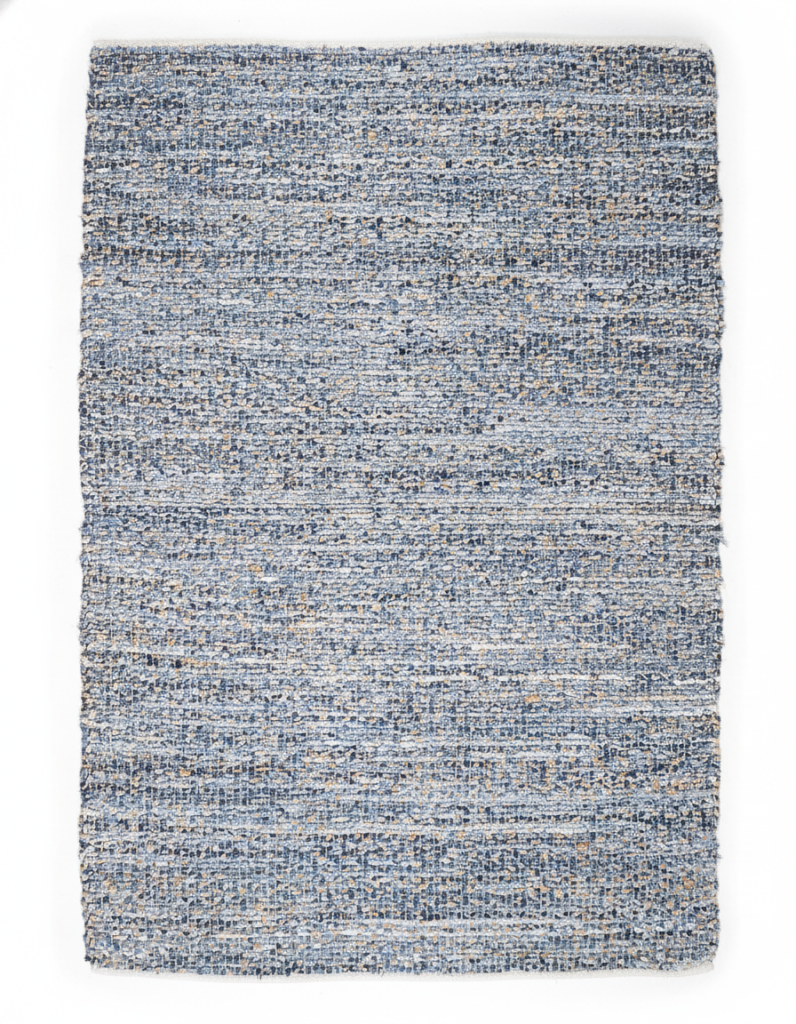
Not all jute rugs sold as “handwoven” meet the same bar. Density, colourfastness and backing vary widely between workshops, and a bulk order placed on visual samples alone often arrives with shedding, faded stripes or a floppy braid edge. Here’s what separates a well-built jute rug from one that won’t survive a season on a shop floor.
Handwoven Flatweave vs Hand-Braided Jute: What’s the Real Difference?
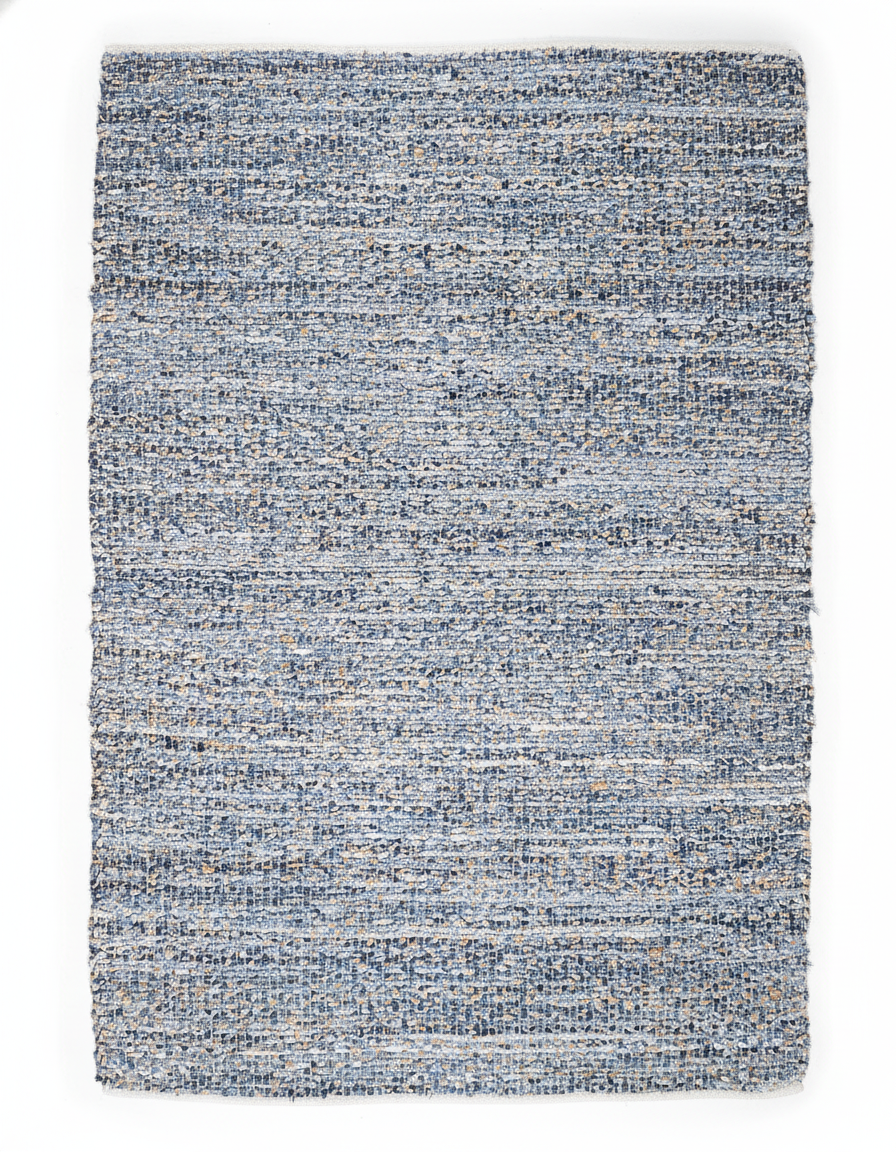
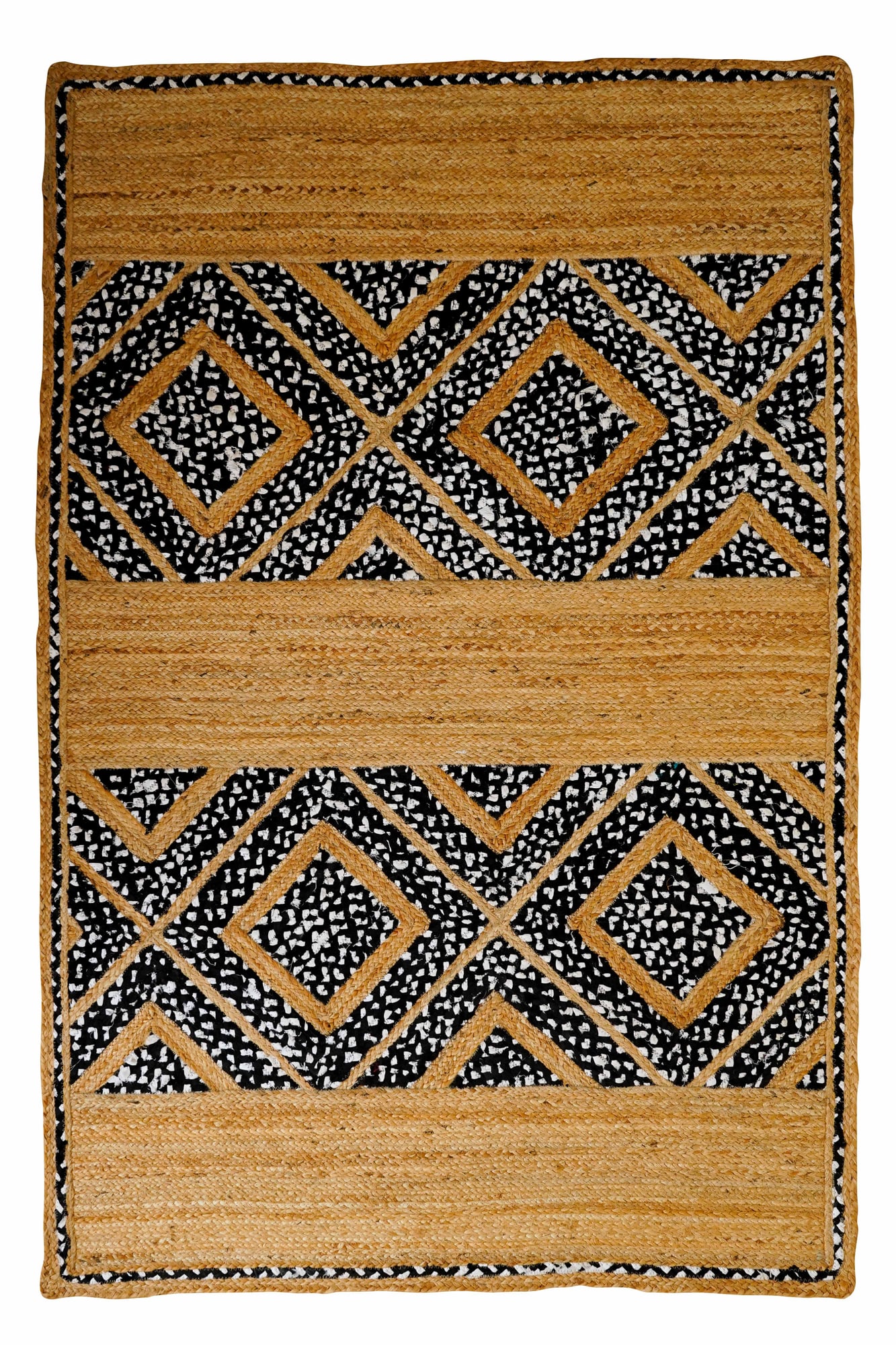
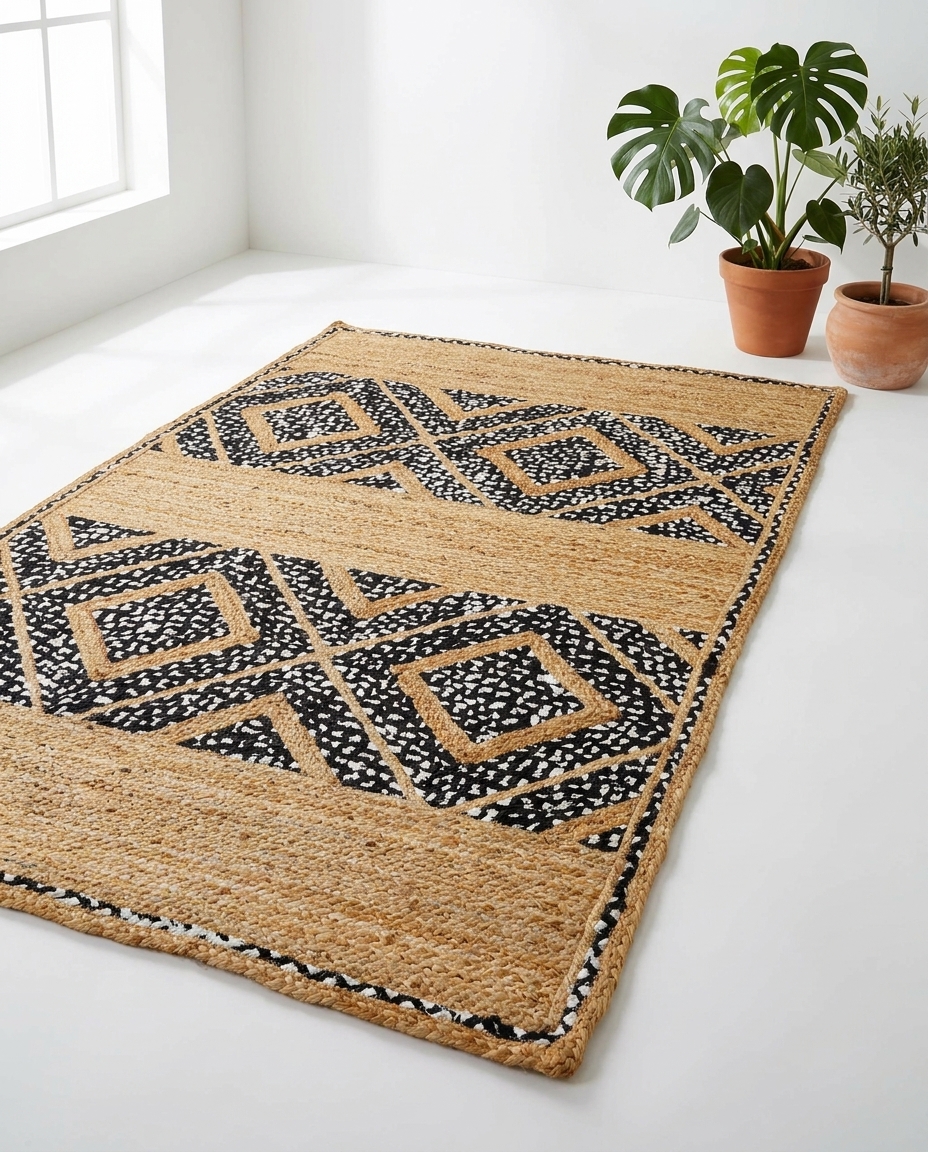
Flatweave jute is loom-built on a warp, giving a flat, dense surface that reads as stripes, blocks or stepped diamonds — a piece like our STJR-321, woven in jute with recycled cotton denim, falls in this camp. Hand-braided jute is coiled and stitched by hand into ropes, giving a raised, textural surface with more give underfoot, as on a piece like STJR-159.
The visual tell is simple: flatweave lies flush to the floor and takes geometric pattern well because the weave is stepped, never curved — jute cannot carry a printed motif or a curved line, only stripes, checks and stepped chevrons. Braided jute reads more organic, with visible coil lines running across the rug rather than a grid.
Performance differs too. Flatweave resists crushing better in a straight traffic path — an entryway or aisle — because the weft is locked tight across the full width. Braided constructions flex more at the coil joins, which is exactly why the stitching quality at those joins matters more for braids than for flatweaves.
| Construction | Surface feel | Best traffic pattern | Pattern vocabulary |
|---|---|---|---|
| Handwoven flatweave (e.g. STJR-321) | Flat, dense | Straight-line, high-frequency | Stripes, blocks, stepped diamonds/chevrons |
| Hand-braided | Raised, coiled | Softer, lower-frequency | Solid tonal, coil-line texture |
Quality Markers: Knots Per Inch, Weave Tightness and Fibre Grading
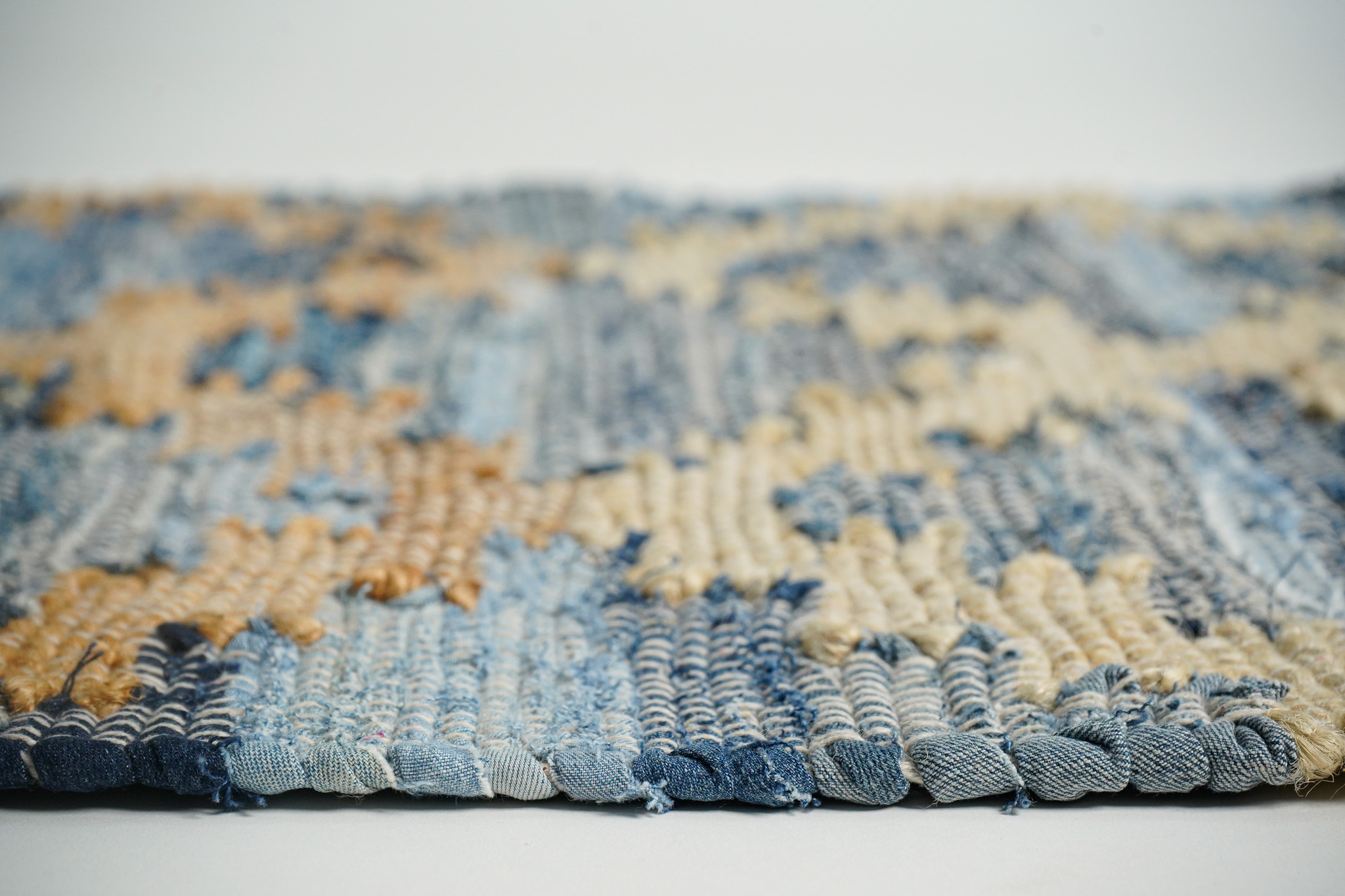
On a braided jute rug, count the coil rows per inch across the width — fewer than 8 per inch usually means loose stitching that will loosen further after handling. On a flatweave, tightness shows in picks per inch on the weft; a loose weave lets you see daylight through the base when held up to light.
In our 2026 production data, flatweave panja constructions on the 120 x 180 cm format run 22-26 picks per inch, while hand-braided coils average 8-10 rows per inch across the same width. Anything noticeably below that range on a sample should prompt a question about the loom tension or the braid grip used.
Fibre grading matters as much as construction. Top-grade jute (often called TD or grade-A fibre in export documentation) has a longer staple length and takes dye more evenly. Lower grades shed more loose fibre in the first month of use and dye unevenly, leaving visible streaking within a single colourway — worth asking any wholesale jute rug supplier to confirm in writing, not just describe verbally.
Common Failure Points: Shedding, Fading and Edge Fraying
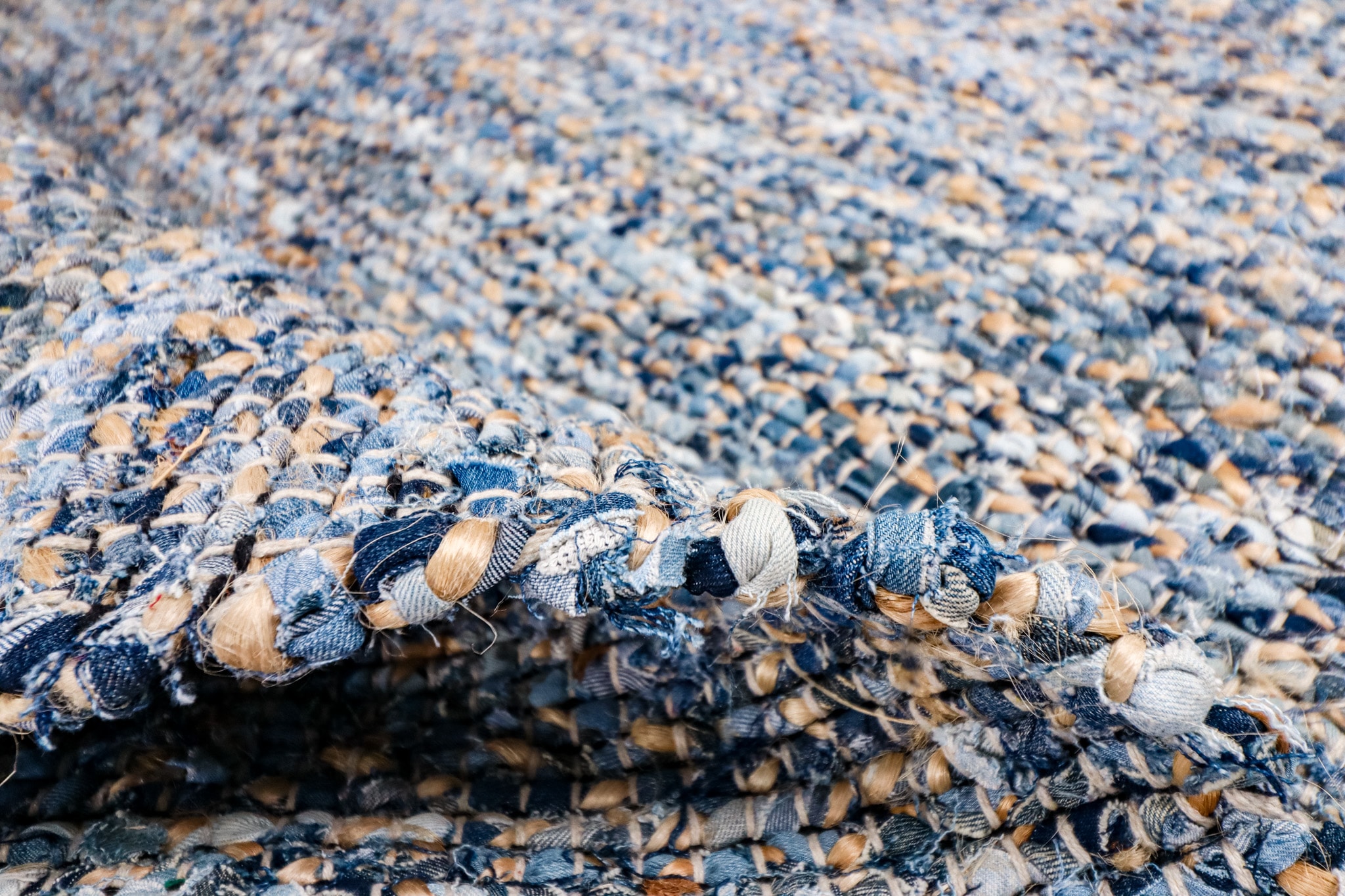
Shedding, fading and edge fraying account for most jute rug complaints after the first three months of retail floor time — and all three trace back to finishing steps that happen after weaving, not the weave itself. Ask suppliers specifically how each is controlled before you commit to a container quantity.
Shedding drops off sharply after a proper singeing and brushing pass on the finished cloth; skip that step and a rug keeps releasing loose fibre for months. Fading is a dye-fastness issue — jute takes dye down a shade duskier than it looks on a swatch card, and a poor mordant process means that duskier tone keeps shifting under UV exposure in a shop window. Ask for a rub-fastness and light-fastness rating, not just a colour match.
Edge fraying is almost always a backing and binding problem. A cotton or jute overlock along the selvedge, stitched rather than glued, holds up to repeated vacuuming; a glued edge lifts within a season of commercial cleaning. Across export orders shipped in 2025, roughly one in six jute rug complaints we reviewed traced back to glued rather than stitched edge binding — a detail buyers rarely think to ask about until it’s already a problem. This is one reason durability on high-traffic jute rugs comes down to finishing choices as much as the fibre grade.
Jute vs Recycled Cotton Blends: Which Fits a High-Traffic Retail Zone?
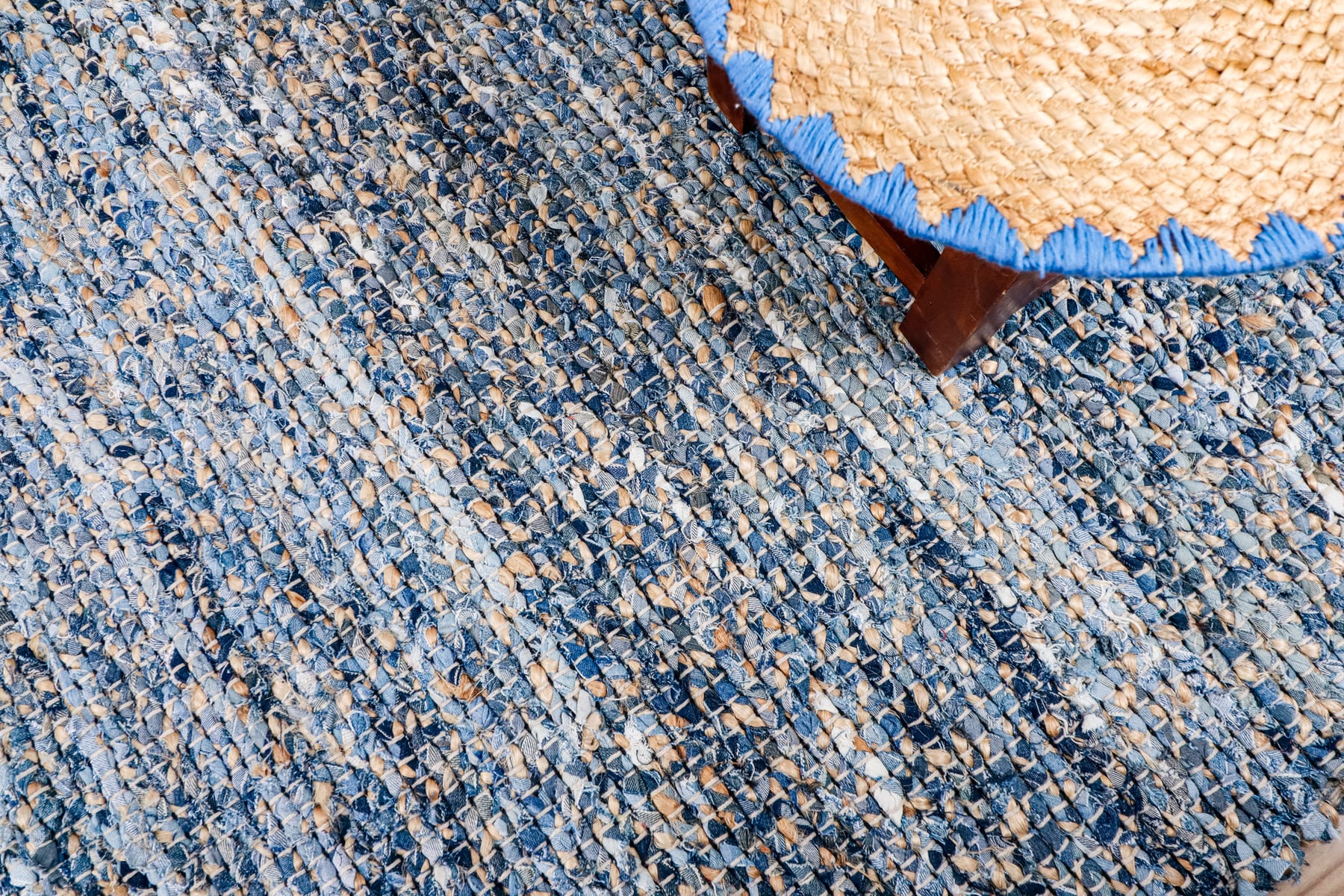
Jute is a dry indoor material — living rooms, bedrooms, studies, boutique floor displays — valued for its warm texture and hard-wearing weave, but it holds moisture and should never be positioned for bathrooms, outdoor use or poolside display. Recycled cotton blends, like the denim-jute combination in STJR-321 or the fully cotton construction of RU24-288, wash and handle better and carry a genuine sustainability story for a swing tag.
For a retail zone that gets mopped, spot-cleaned or handled by customers directly — think a homewares aisle where shoppers touch and unroll samples — a cotton-forward blend tolerates that handling better than pure jute. For a styled vignette or a living-room display where the rug is seen more than touched, jute’s texture and pattern depth do more visual work per square metre.
| Factor | Jute (e.g. STJR-321) | Recycled cotton blend (e.g. RU24-288) |
|---|---|---|
| Moisture tolerance | Low — dry indoor use only | Higher — washable |
| Feel underfoot | Firm, textured | Softer, more flexible |
| Sustainability story | Natural fibre | Post-consumer recycled content |
| Retail use case | Living room, bedroom, boutique display | High-touch aisles, kids’ and everyday zones |
A useful comparison for buyers weighing both is laid out in jute vs cotton rugs for the home, which walks through the same trade-off from a residential angle.
The Supplier Checklist: What to Send Before You Place a Bulk Order
A one-page spec sheet sent before sampling catches most quality problems before they reach a container. Ask any supplier — including our own team — to confirm each line in writing, not verbally over a call.
- Fibre grade and staple length for the jute used
- Picks per inch (flatweave) or coil rows per inch (braided), matched against a physical sample
- Edge finishing method — stitched overlock vs glued — and warranty against fraying
- Rub-fastness and light-fastness ratings for the dye lot
- Backing type and whether it’s suited to indoor-only placement
- Tolerance on finished size (ours runs ±2% on the 120 x 180 cm format)
- MOQ and whether it’s per colourway or per style — ours sits at 10 pieces per style
A buyer ordering across four colourways in one style will hit MOQ math fast if the supplier counts MOQ per colourway rather than per SKU — worth confirming before quoting a retail plan. For a broader read on what separates a reliable workshop from one cutting corners, how to identify high-quality rugs in the wholesale market is a useful companion read, as is this rundown of why buyers are stocking jute and recycled cotton rugs in 2026.
If you’re scoping a jute or cotton-blend program for next season, send over your spec sheet and we’ll come back with sample lead times and a quote within a few working days.
Frequently Asked Questions
What is the MOQ for handmade jute rugs from an Indian manufacturer?
MOQ typically runs per style rather than per colourway. At Sheeltex, the MOQ on jute and jute-cotton blend rugs like the STJR-321 is 10 pieces per style, which lets a buyer order a small colourway spread within a single production run rather than committing to one colour at volume.
How long does sampling take for custom jute rugs?
Sampling for handwoven jute rugs generally takes 10-14 days from approved artwork, and slightly longer for hand-braided constructions since coil samples need a drying and tension-check stage. Anything quoted much faster likely skips a colour-correction pass.
How do I check colourfastness on a jute rug sample before ordering in bulk?
Ask the supplier for a rub-fastness and light-fastness rating on the specific dye lot, not just a colour-matched swatch. Jute takes dye a shade duskier than it looks on screen, so confirm the fastness numbers in writing rather than relying on a visual check alone.
Are jute rugs suitable for bathrooms or outdoor use?
No. Jute is a dry indoor material suited to living rooms, bedrooms and studies. It holds moisture and should never be specified for bathrooms, outdoor spaces or poolside display — recycled cotton or treated outdoor-rated materials are the better fit for wet zones.
What’s the difference between handwoven and hand-braided jute rugs?
Handwoven flatweave is loom-built and lies flat, carrying stepped patterns like stripes and chevrons — the construction used in styles like STJR-321. Hand-braided jute is coiled and hand-stitched into ropes, giving a raised, textural surface, as seen in styles like STJR-159.
Enquire about your collection or project
Tell us which products you need, your preferred sizes, quantities and destination. You can also share your collection or project requirements.
Make it part of your
next collection.
Share the designs you like, approximate quantities and destination. Let’s discuss samples, pricing and custom options.
