
Hand-Knotted vs Hand-Tufted vs Handwoven Rugs: What to Know
Last updated: August 2026
Hand-knotted, hand-tufted, and handwoven (flatwoven) rugs differ in how the pile is built, how long each piece takes to make, and how it wears over years of foot traffic. Knotting ties yarn by hand around warp threads; tufting punches yarn through a stretched canvas backing with a hand-held gun; weaving interlaces yarn on a loom with no separate pile layer at all.
How each construction is made
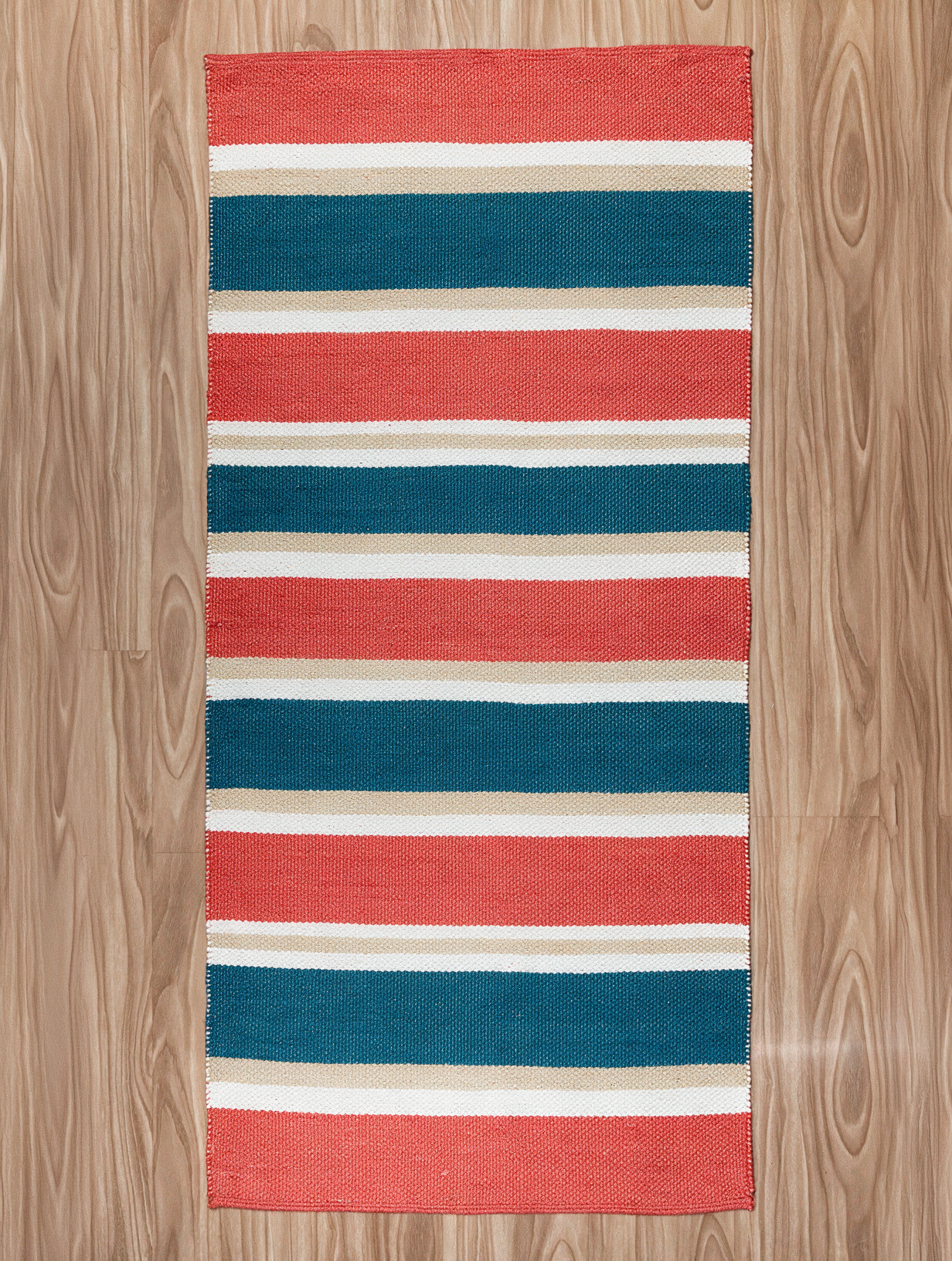
Each method starts on a loom but ends in a completely different structure. Hand-knotted rugs are built knot by knot around vertical warp threads, so the back shows a mirror image of the front pattern with no fabric backing at all. Hand-tufted rugs are made by punching yarn through a stretched cotton canvas with a tufting gun, then coating the back with a latex adhesive layer and gluing on a secondary backing to lock the tufts in place. Handwoven flatweaves — kilim and dhurrie-style construction — interlace warp and weft with no pile, so the rug is reversible and lies flatter than either of the other two.
Across export orders we shipped in 2025, hand-knotted pieces averaged 8-12 weeks in the loom room against 10-14 days for tufted goods of comparable size in wool — a gap that shows up directly in reorder lead times, not just unit cost.
| Construction | Backing | Typical production time | Reversible? |
|---|---|---|---|
| Hand-knotted | None — knots visible on reverse | 8-12 weeks | Pattern visible, mirrored |
| Hand-tufted | Latex + secondary scrim | 10-14 days | No |
| Handwoven flatweave | None — interlaced structure | 2-4 weeks | Yes, fully reversible |
Durability and price-per-sqft bands
Durability tracks how the pile is anchored, not how the rug looks on the floor. Knotted rugs have no adhesive layer to fail, so a well-made piece can be re-fringed or re-piled decades later. Tufted rugs depend on the latex bond, which typically holds 8-12 years before edges start releasing. Flatwoven rugs have nothing to shed but wear thin fastest at high-friction pivot points like doorways and stair landings.
On price banding: hand-knotted work sits in the upper tier because of labor hours per square metre, hand-tufted sits mid-tier, and handwoven flatweave is usually the entry tier — though yarn choice (wool versus jute versus cotton) can flip that order inside any single collection. In our 2026 production data, tufted-rug returns for backing separation ran under 1% within the first 12 months when the latex cure was held to a 48-hour standard before packing; suppliers who ship before that window sees higher field failures at the retail end. It’s worth reading how material choices affect durability and cost before locking a price ladder, and cross-checking against current wholesale wool rug programs if wool is your base fiber.
Which retail segment each serves
Each construction has a natural customer, and mismatching them shows up in your reorder data within two seasons. Hand-knotted rugs suit design-led retail, heritage collections, and hospitality lobbies where the story and 15-20 year lifespan justify a slower buying cycle. Hand-tufted rugs suit mid-market home stores and hotel guestrooms that need consistent patterns at volume and a faster restock. Handwoven flatweaves suit boutique, coastal, and casual-lifestyle retail, plus transitional indoor-outdoor spaces.
A category manager stocking 40 SKUs across three price points typically anchors the top shelf with a handful of knotted pieces, fills the core range with tufted rugs across 6-8 colourways, and uses flatweave for accent and seasonal sets that turn over twice a year. If volume tufted programs are the priority, our guide to sourcing hand-tufted rugs in bulk walks through MOQ structures buyers ask for most.
| Segment | Best-fit construction | Why |
|---|---|---|
| Luxury / hospitality lobby | Hand-knotted | Longevity, design credibility |
| Mid-market home / hotel guestrooms | Hand-tufted | Volume consistency, faster restock |
| Boutique / coastal / casual | Handwoven flatweave | Lower cost, reversible, lightweight |
Where each rug type belongs (and where it doesn’t)
Room conditions decide the right construction — moisture exposure matters more than pattern. Hand-knotted and hand-tufted rugs both rely on wool or cotton pile and, in the tufted case, a fiber-based backing, so both belong in dry, climate-controlled interiors: living rooms, bedrooms, formal dining spaces. Neither belongs in an entryway that sees standing water, a bathroom, or a covered but unsealed patio, where moisture breaks down the latex bond or rots natural fiber from underneath.
Handwoven flatweaves tolerate more foot traffic and dry faster since there’s no pile to trap moisture, which is why they work well in sunrooms, hallways, and casual dining areas. But they still are not built for direct water contact. Tufted for the living room, flatweave for the well-ventilated sunroom, and neither in a mudroom that sees puddled rain — that job belongs to a washable synthetic or PVC-backed mat, not a handmade wool or cotton construction. Browse the full range across constructions on our rugs and carpets page if you’re mapping a collection against these use cases.
How to tell them apart on inspection
Flip the rug over — the back tells you more than the front ever will. A hand-knotted rug shows the same pattern in reverse with no fabric backing, just knotted warp ends. A hand-tufted rug shows a solid cotton or synthetic scrim glued to the back, hiding all the yarn ends completely. A handwoven flatweave shows an identical pattern on both sides with visible weft floats and no glue layer anywhere.
Three quick field checks for a container inspection: pull gently on the fringe — a knotted rug’s fringe is the extension of the warp and won’t detach, while a tufted rug’s fringe is sewn on separately and can pull free. Bend a corner 180 degrees — latex past its cure window cracks visibly along the fold within seconds. And check the edge binding stitch density; loose or skipped stitches on a tufted edge are usually the first place a rug fails in the field. Buyers new to import logistics can find the broader checklist in our import guide for sourcing rugs from India.
If you’re building out a collection across two or three of these constructions and want a second opinion on the spec sheet before you commit to a container, our merchandiser team reads them all — send over your tearsheet and we’ll flag anything that’s likely to cause a field issue down the line.
Frequently Asked Questions
What is the difference between hand-knotted and hand-tufted rugs?
Hand-knotted rugs are built by tying individual knots around a loom’s warp threads, with no backing material, so the pattern is visible on both sides. Hand-tufted rugs are made by punching yarn through a canvas backing with a tufting gun, then gluing a secondary backing over the yarn ends to hold them in place.
Which rug construction lasts longest for hotel guestrooms?
Hand-tufted rugs are the standard for hotel guestrooms because they balance a 8-12 year backing lifespan with faster, consistent production across large colourway runs. Hand-knotted rugs last longer but cost more per unit and take 8-12 weeks to produce, which slows large-format reorders.
Can handwoven flatweave rugs be used in high-traffic areas?
Yes — flatweave rugs have no pile to shed and dry faster than knotted or tufted rugs, which makes them suitable for hallways and casual dining areas. They do wear thin faster at doorways and pivot points under sustained heavy footfall, so rotate them seasonally in commercial settings.
What is the MOQ for custom hand-tufted or hand-knotted rugs?
MOQs vary by construction and colourway count, but tufted programs typically start smaller than knotted ones because production turnaround is 10-14 days versus 8-12 weeks. Ask your supplier for their MOQ broken out by size and colourway rather than a single blanket number.
How can I tell if a rug is hand-tufted just by looking at the back?
Flip it over. A hand-tufted rug shows a solid glued-on cotton or synthetic backing that hides all the yarn ends. A hand-knotted rug shows the knots and pattern directly, with no backing layer at all, and a flatweave shows the identical pattern on both sides.
