
Chindi Rag Rugs: How Recycled Cotton Becomes a Bestseller
Last updated: August 2026
Chindi is the Indian term for cotton fabric strips — offcuts from garment units and mill selvedge — torn or cut into ribbons and rewoven into rugs. Export catalogues call the same product a rag rug: a flatweave or braided cotton floor covering built entirely from repurposed cloth, not spun yarn, which is exactly why it carries a genuine recycled-content story.
What Chindi Is (and Why It’s Not Scrap)
Chindi is sorted, torn cotton cloth — not fibre waste swept off a mill floor. It comes from garment-cutting rooms and weaving units as usable fabric offcuts, which get graded by weight and colour before anyone touches a loom. That grading step is what separates a sellable rag rug from a genuinely scrappy one.
Most buyers confuse chindi with recycled cotton yarn (fibre that’s been shredded, respun, and woven like any other cotton yarn). They’re different supply chains with different stories. Chindi keeps the original cloth’s weave and colour intact inside the strip, so the finished rug shows visible fabric texture rather than a uniform spun-yarn surface — a detail retail buyers use in point-of-sale copy because it’s verifiably true, not marketing gloss. In our 2025 export shipments, chindi and rag SKUs made up roughly one in five cotton rug cartons packed for EU accent-rug reorders, almost entirely on the strength of that swing-tag story.
Because the construction is always handwoven flatweave or hand-braided, buyers researching recycled cotton rugs to import should rule out anything described as tufted or printed chindi — that’s not what the term covers, and a supplier claiming otherwise is likely relabeling a different product.
Hand-Braiding Process: From Rag Strip to Finished Rug
Braiding turns sorted rag strips into three-strand plaits that are coiled and hand-stitched flat, or fed as weft into a floor loom for a flatweave version — the strip width and tension, not a printed design, are what create the pattern. Both methods start with the same sorting and tearing step.
A typical line: rags are graded by base colour and cloth weight, torn into strips roughly 2-3 cm wide, then either hand-braided into coils (for round and oval rugs) or woven as weft across a warp of plain cotton yarn (for rectangular flatweave runners and mats). A two-person braiding team turns out roughly 3-4 square metres of finished coiled rug in a working day; the loom-woven version moves faster per metre but needs a wider spread of rag colours on hand to avoid running out of a shade mid-piece.
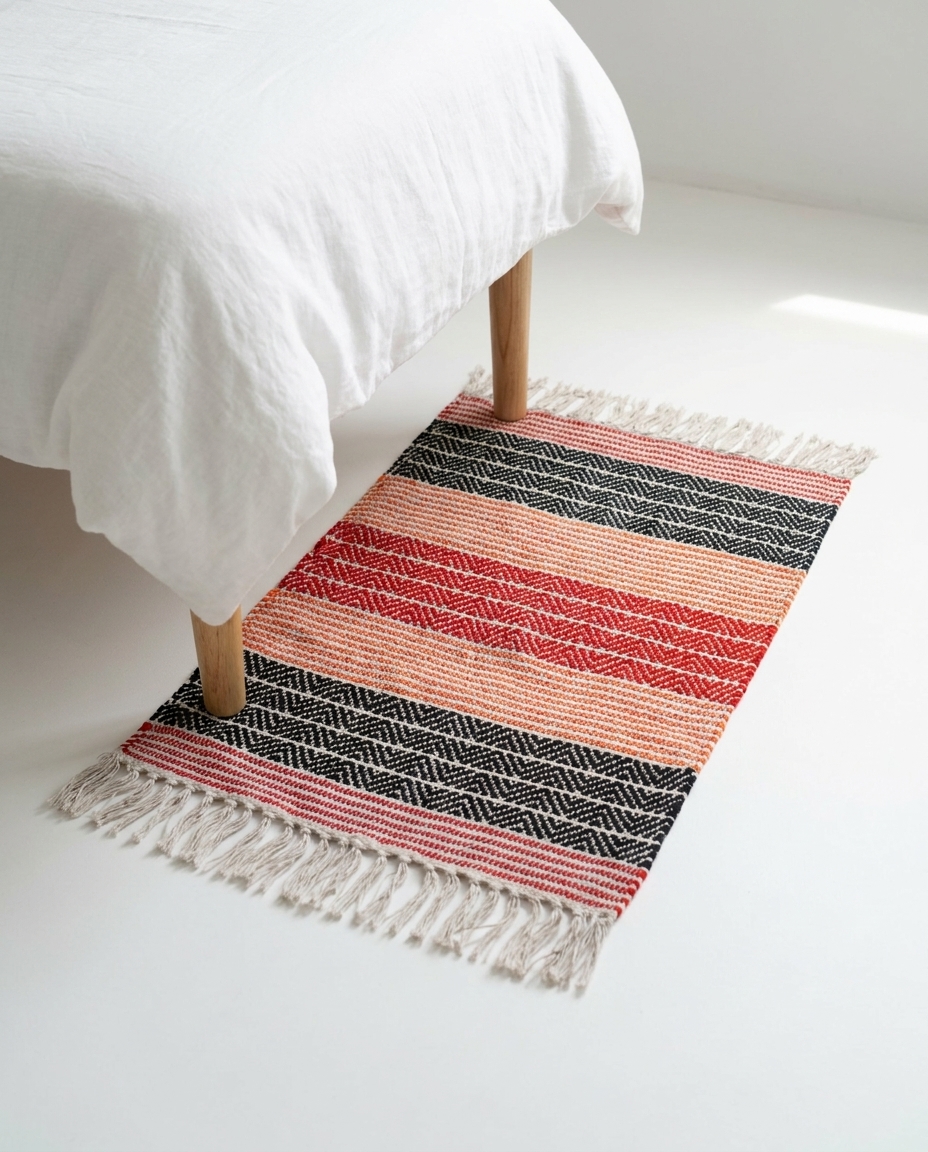
The irregularity is the point, not a flaw. Two rugs cut from the same rag lot will never repeat exactly — buyers who need repeatable colour lot after lot should be looking at printed cotton constructions instead, since a printed ground gives design consistency that a genuine rag lot can’t promise.
Where Chindi Rugs Belong (and Where They Don’t)
Chindi and rag rugs belong on dry indoor floors with light-to-moderate traffic: entryways, bedrooms, kids’ rooms, kitchens away from the sink, and layered accents over larger rugs. They do not belong outdoors, in bathrooms with standing water, or anywhere they’ll face repeated wet-mopping, because the construction has no weatherproof finish or backing.
This is worth stating plainly because it’s the mistake we see most often on incoming spec sheets. A hospitality buyer who specs a rag runner for a covered outdoor cabana walk will get colour bleed and mildew inside one wet season — that job belongs to a treated recycled PET outdoor rug, not cotton chindi. Untreated cotton and outdoor exposure simply don’t mix, no matter how tightly the rag strips are woven.
Inside the home or store, chindi earns its keep on the softness-and-story angle: buyers comparing jute against cotton for a bedroom or nursery SKU will find cotton rag rugs win on hand-feel and washability, while jute wins on high-traffic hallway durability. Stock both, and sell them for the room they’re actually suited to.
Colourway Logic for Retail Shelves
Because a chindi rug’s colour comes from a sorted rag lot rather than a print repeat, each colourway is a genuinely distinct batch inside a controlled palette — not a printed pattern run — which is the detail that makes the sustainability claim on a swing tag stand up to a buyer’s follow-up question.
This changes how a category manager should plan an assortment. A single-tone sorted lot (all reds, all indigos) gives predictable shelf colour but limits how many pieces you can cut before the lot runs out. A multi-tone flecked lot gives more yardage per sorting run but less colour consistency store to store.
| Lot type | Colour consistency | Typical yardage per sort | Best retail use |
|---|---|---|---|
| Single-tone sorted | High | Lower | Matching accent pairs, hotel corridors |
| Multi-tone flecked | Medium | Higher | Everyday floor stock, kids’ rugs |
| Ombre/gradient rag | Medium-high | Lower | Feature SKUs, window displays |
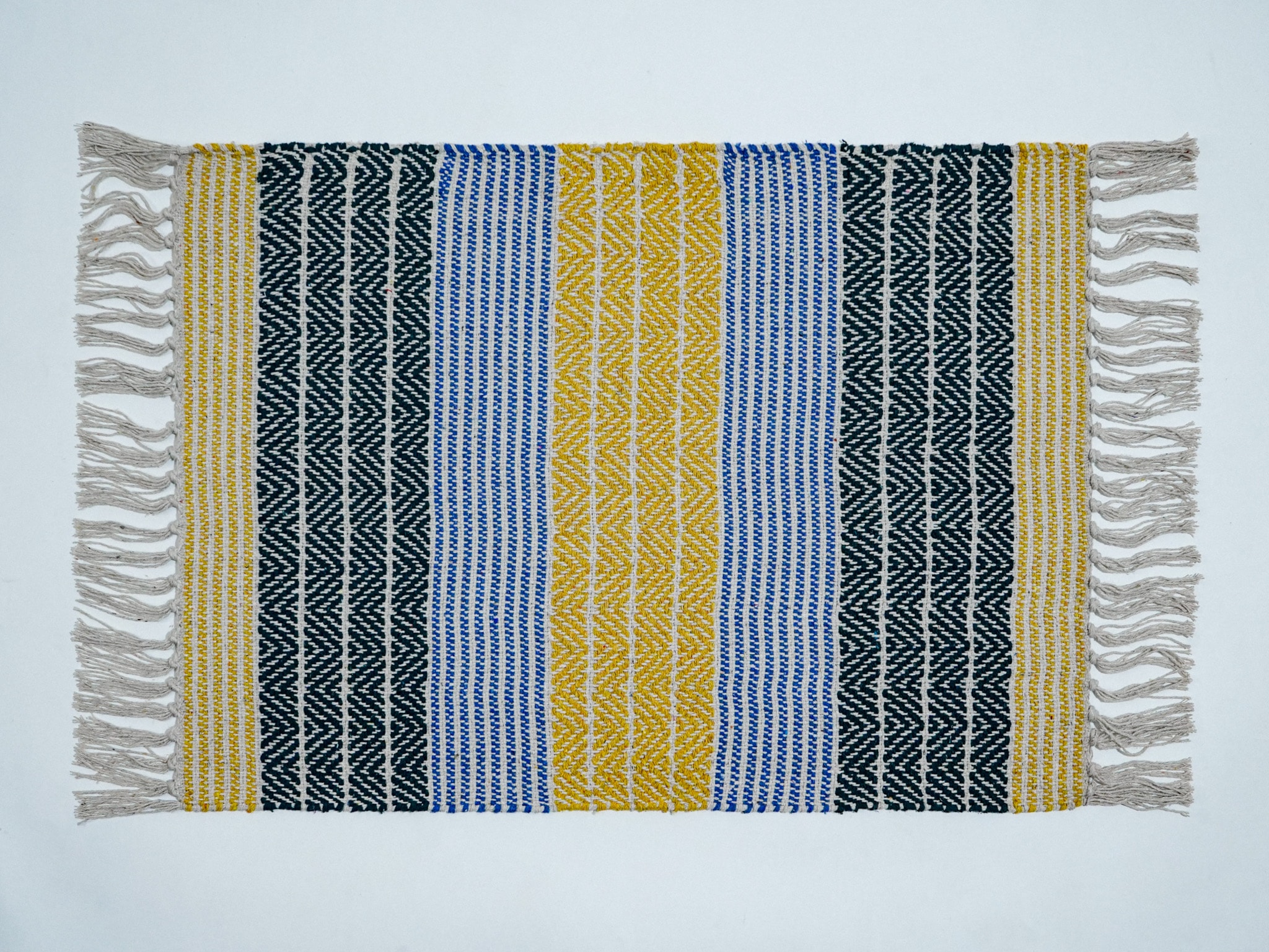
Across 2026 production runs, red and mustard-yellow rag lots outsold indigo and grey roughly two-to-one on European accent-rug reorders — worth knowing before you lock a colourway plan around what looks good in a lookbook rather than what a rag supply chain can actually keep delivering. If you’re building out a broader assortment, the reasoning behind stocking jute and recycled cotton together applies here too: pair a predictable natural-fibre base with a rotating rag colourway for seasonal refreshes.
Care and Durability Facts Buyers Should Know
Cotton rag rugs in bath-mat and small-runner sizes are machine washable on a cold, gentle cycle and should air dry rather than tumble, since heat stresses the stitched braid joints faster than it stresses a solid weave. Larger area rugs are better spot-cleaned or professionally wet-cleaned, since most home machines can’t handle the size or weight.
Before a rag lot goes into production, we run a one-wash shrinkage check on the sorted cloth — because it’s pre-washed garment offcuts rather than raw greige yarn, shrinkage typically comes in under 3%, well inside what a wholesale buyer would specify for a cotton flatweave program. That’s a smaller number than most raw-yarn cotton weaves post, and it’s worth asking any rag-rug supplier to confirm before you commit to a size run.
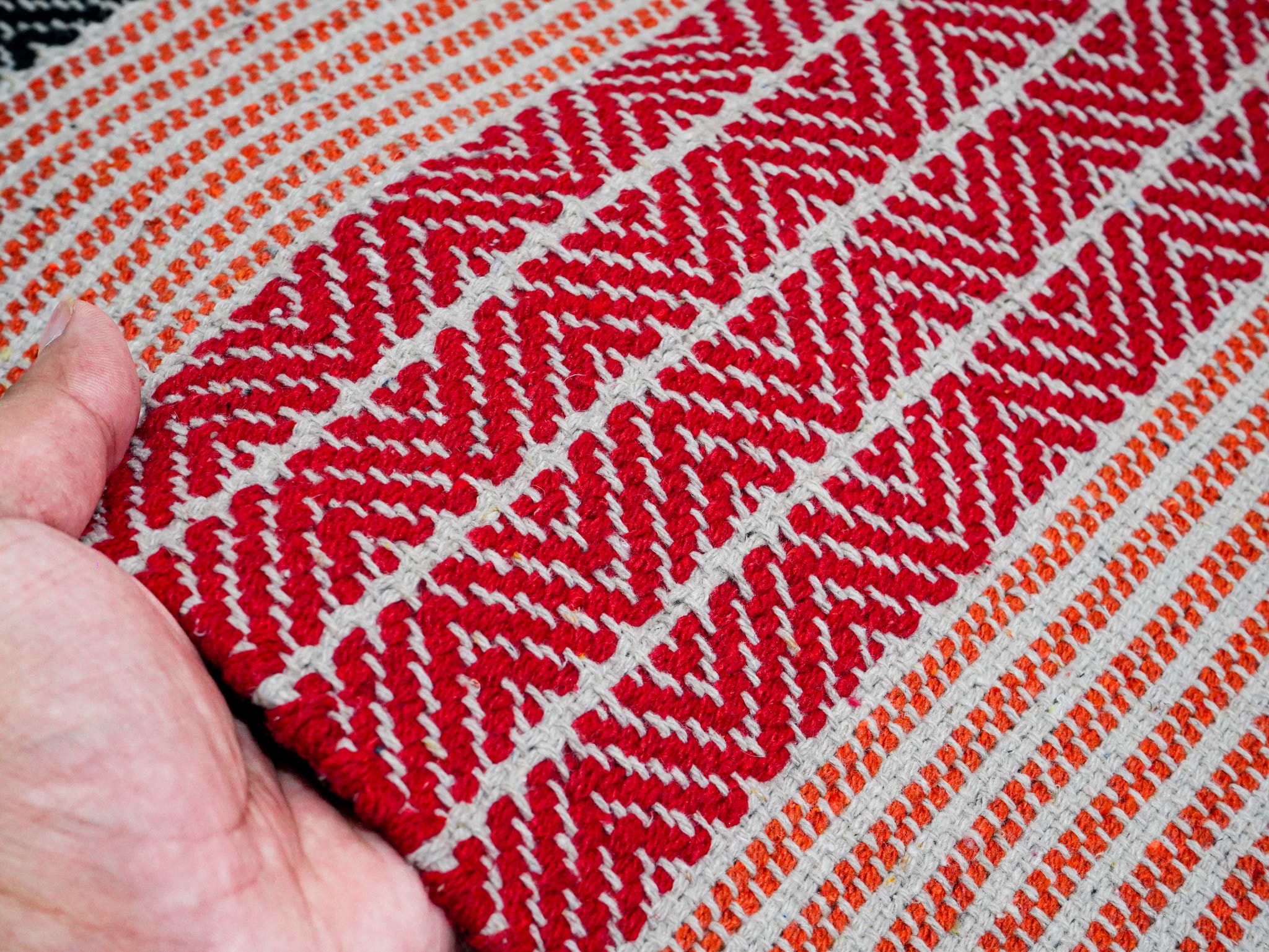
The irregular colour pattern also does double duty on durability perception: because there’s no solid field of colour to show a worn traffic lane, a rag rug can look fresh through more foot traffic cycles than a solid-dyed flatweave of the same construction. That’s a genuine selling point for entryway and kids’-room placement — just don’t oversell it into hallway or commercial-traffic claims the construction can’t back up.
FAQs
What is a chindi rug made of? A chindi rug is made from torn or cut cotton fabric strips — offcuts from garment cutting rooms and mill selvedge — that are hand-braided or woven into a flatweave rug. It’s built from repurposed cloth, not spun recycled-cotton yarn, which is what gives the visible strip texture.
Are rag rugs machine washable? Smaller rag rugs and bath-mat sizes are machine washable on a cold, gentle cycle with air drying. Larger area rugs are usually too heavy for a home machine and should be spot-cleaned or sent for professional wet cleaning to protect the braid stitching.
Can chindi rugs be used outdoors? No. Cotton chindi and rag rugs have no weatherproof finish or backing, so outdoor or wet-splash use causes colour bleed and mildew. Outdoor placements should use a treated recycled PET or similar weather-resistant flatweave instead.
What’s the MOQ for a custom chindi colourway? MOQ depends on how tightly you want the rag lot sorted — a single-tone colourway needs a larger rag volume upfront than a multi-tone flecked lot. Most wholesale programs start sampling at a few pieces per colourway before committing to a production run; ask your supplier for their sorted-lot minimum specifically, not their general rug MOQ.
How long does sampling take for a rag rug program? Sampling for a new chindi or rag colourway typically runs 2-3 weeks from confirmed rag-lot sourcing to approved sample, longer than a standard printed cotton rug because the rag sorting itself takes time. Build that into your production calendar if you’re launching a new colourway for a seasonal set.
If you’re scoping a rag-rug colourway range for Q4, we can turn around a sample plan within 48 hours of an approved lookbook — send over your target sizes and colour direction and we’ll come back with what’s realistic against current rag-lot supply.
Frequently Asked Questions
What is a chindi rug made of?
A chindi rug is made from torn or cut cotton fabric strips — offcuts from garment cutting rooms and mill selvedge — that are hand-braided or woven into a flatweave rug. It’s built from repurposed cloth, not spun recycled-cotton yarn, which is what gives the visible strip texture.
Are rag rugs machine washable?
Smaller rag rugs and bath-mat sizes are machine washable on a cold, gentle cycle with air drying. Larger area rugs are usually too heavy for a home machine and should be spot-cleaned or sent for professional wet cleaning to protect the braid stitching.
Can chindi rugs be used outdoors?
No. Cotton chindi and rag rugs have no weatherproof finish or backing, so outdoor or wet-splash use causes colour bleed and mildew. Outdoor placements should use a treated recycled PET or similar weather-resistant flatweave instead.
What’s the MOQ for a custom chindi colourway?
MOQ depends on how tightly you want the rag lot sorted — a single-tone colourway needs a larger rag volume upfront than a multi-tone flecked lot. Most wholesale programs start sampling at a few pieces per colourway before committing to a production run; ask your supplier for their sorted-lot minimum specifically, not their general rug MOQ.
How long does sampling take for a rag rug program?
Sampling for a new chindi or rag colourway typically runs 2-3 weeks from confirmed rag-lot sourcing to approved sample, longer than a standard printed cotton rug because the rag sorting itself takes time. Build that into your production calendar if you’re launching a new colourway for a seasonal set.
