
Hand-Tufted Cushion Covers: Texture Trends Buyers Order
Last updated: September 2026
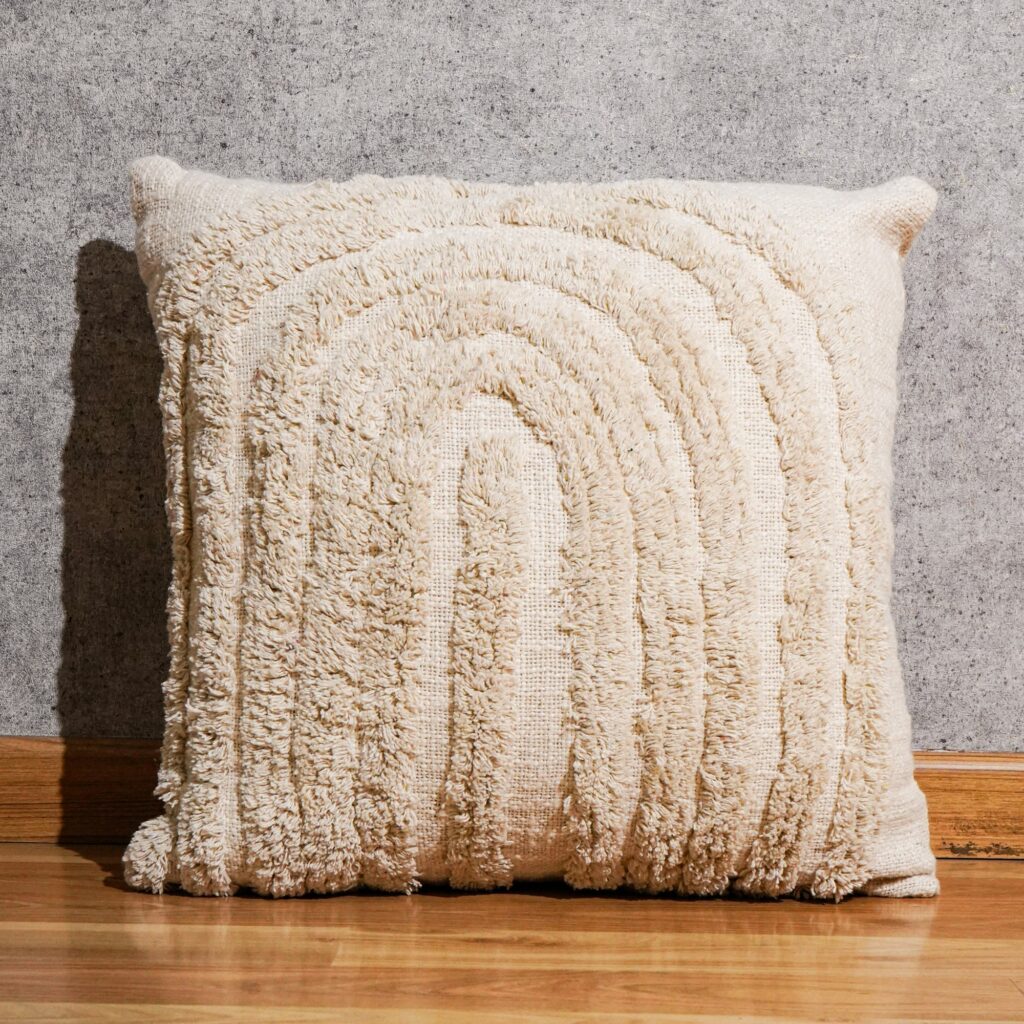
Cushion cover RFQs used to open with a print reference. In 2026, they open with a texture reference — a tufted loop, a chunky knit, a fringed edge — because retail buyers have learned that texture reads as quality on a shelf photo in a way flat print no longer does. This shift changes how covers get specified, packed and paired with rugs.
Five texture directions
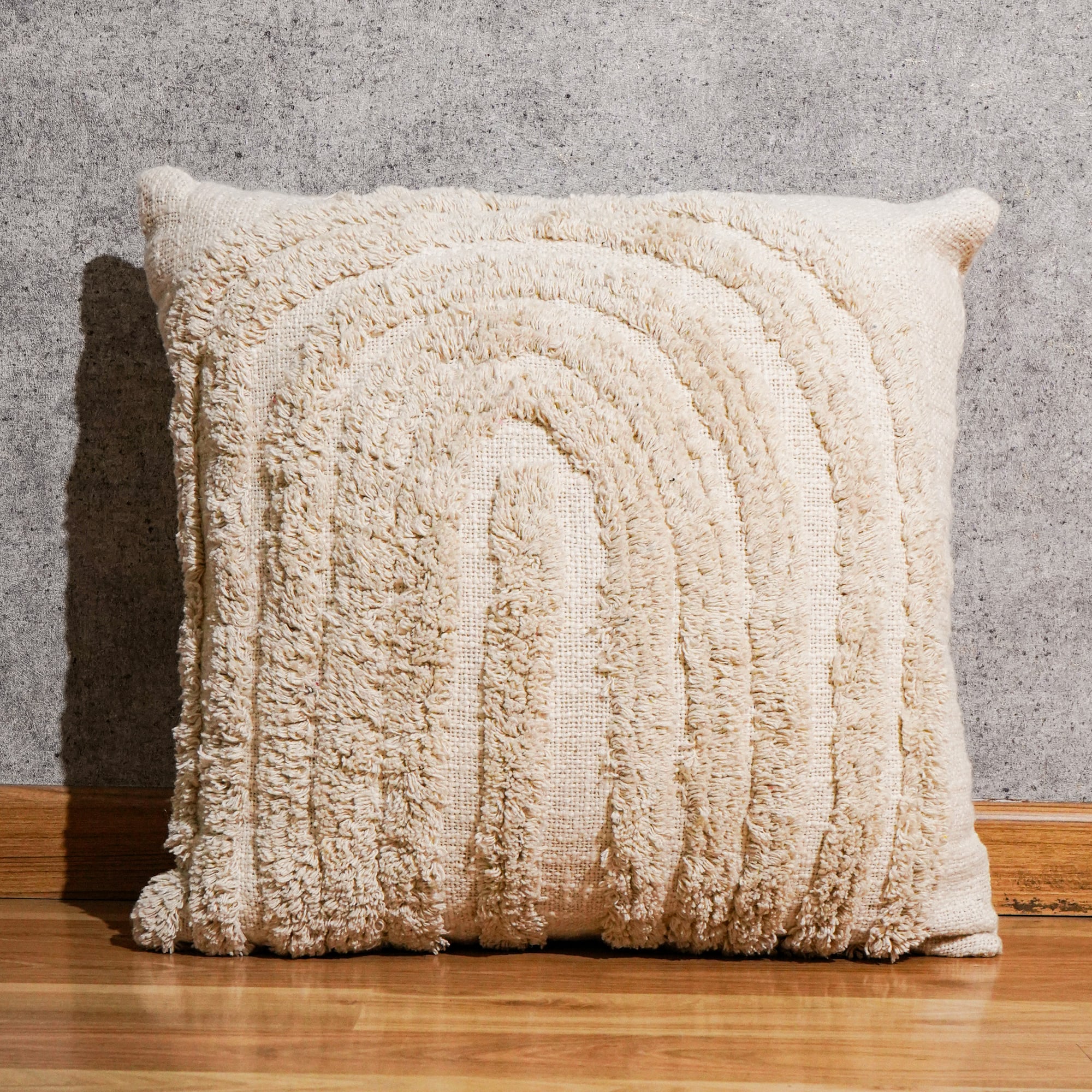
The texture directions moving through sampling rooms right now are hand-tufted loop pile, hand-tufted cut pile, chunky hand-knit, boucle weave and fringed-edge flatweave — each reads differently under retail lighting and each carries a different production timeline. A buyer choosing between them should ask which one their photography and their fulfilment schedule can actually support.
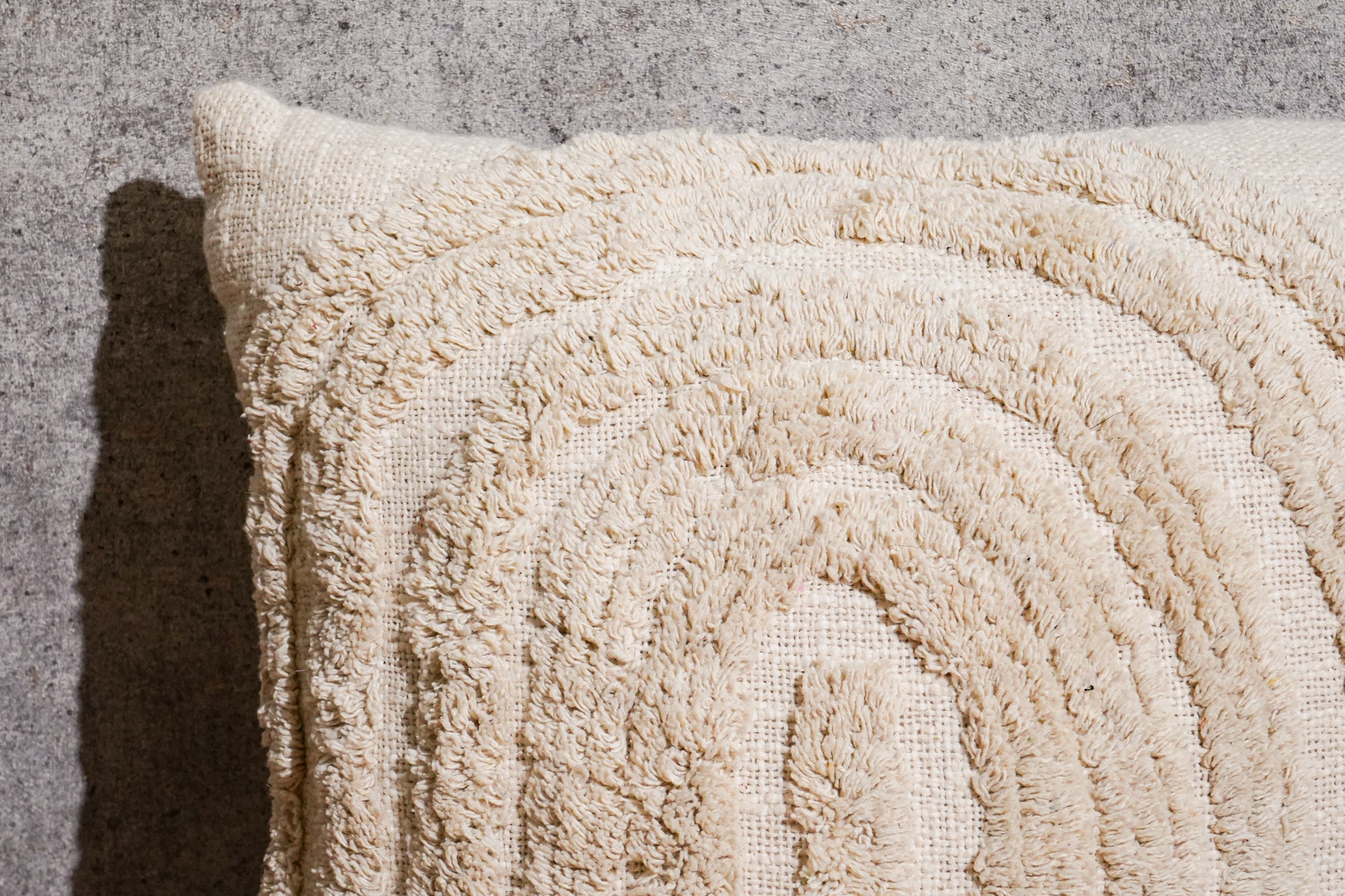
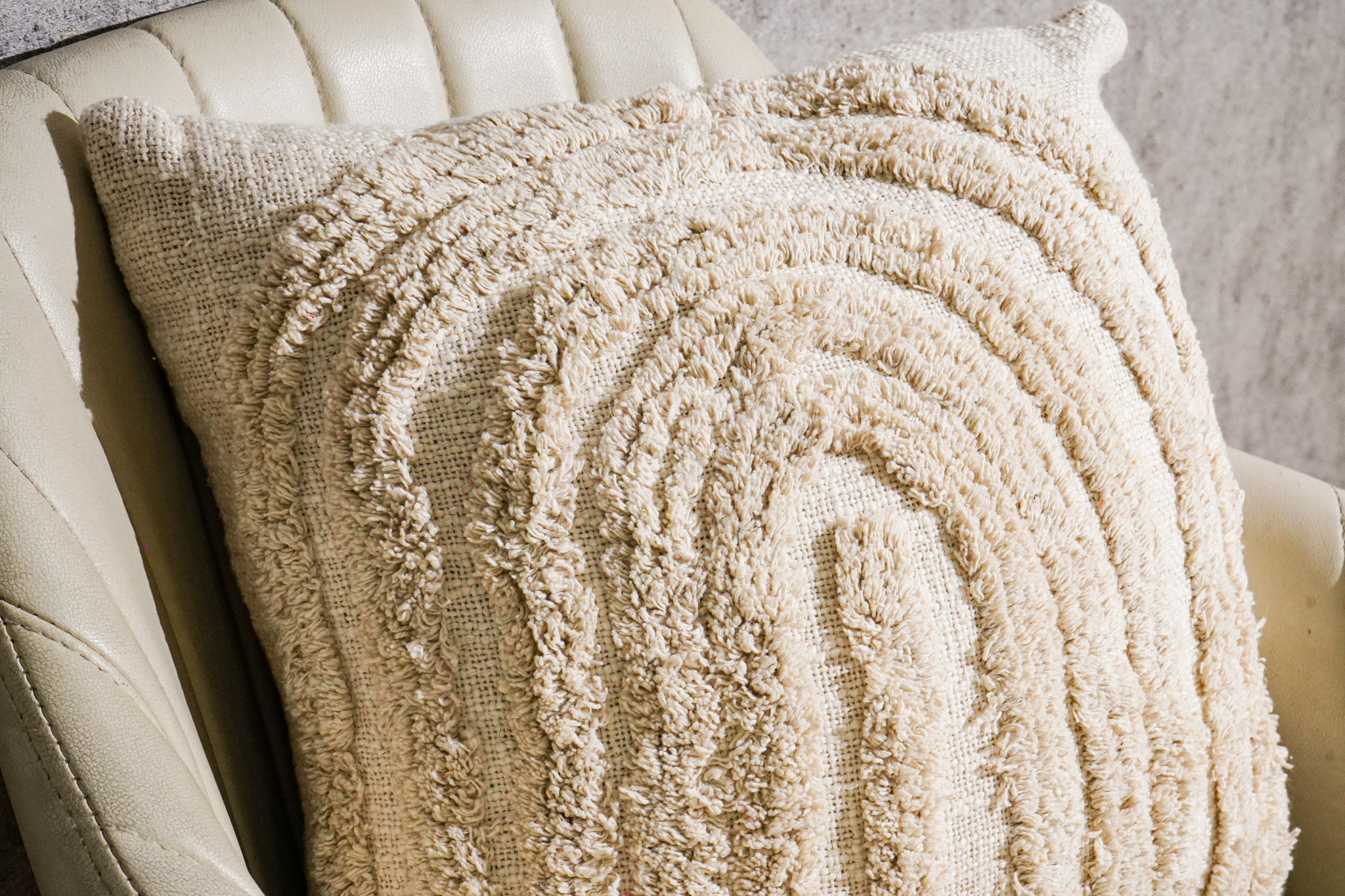
Hand-tufting builds the pile by punching yarn through a stretched cotton canvas with a tufting gun, then locking it with a latex or glue coat and a secondary backing cloth — that’s what gives a tufted cushion its raised, sculpted surface and its structure. Loop pile keeps the yarn uncut for a tighter, more durable face; cut pile is trimmed for a softer, plusher hand that shows shading and light more dramatically in product photography.
| Texture direction | Construction | Typical use case | Sampling window |
|---|---|---|---|
| Tufted loop pile | Yarn looped, latex-backed | High-traffic sofa/hospitality | 10-12 days |
| Tufted cut pile | Yarn cut, latex-backed | Decorative accent, bedding | 10-12 days |
| Chunky hand-knit | Hand-knitted face, lined | Statement/seasonal SKUs | 12-15 days |
| Boucle weave | Looped boucle yarn, woven | Neutral/Scandi-style ranges | 8-10 days |
| Fringed flatweave | Flat weave with cut fringe edge | Bohemian/kilim-coordinated lines | 10-12 days |
Across the sampling calendar we ran in the first half of 2026, tufted requests outnumbered printed cushion requests for the first time in this workshop’s history — a swing worth noting if your buying calendar still defaults to print as the safe choice. The importance of texture in home furnishings isn’t a passing aesthetic; it’s now a line item buyers write into spec sheets before colour.
Insert and sizing standards
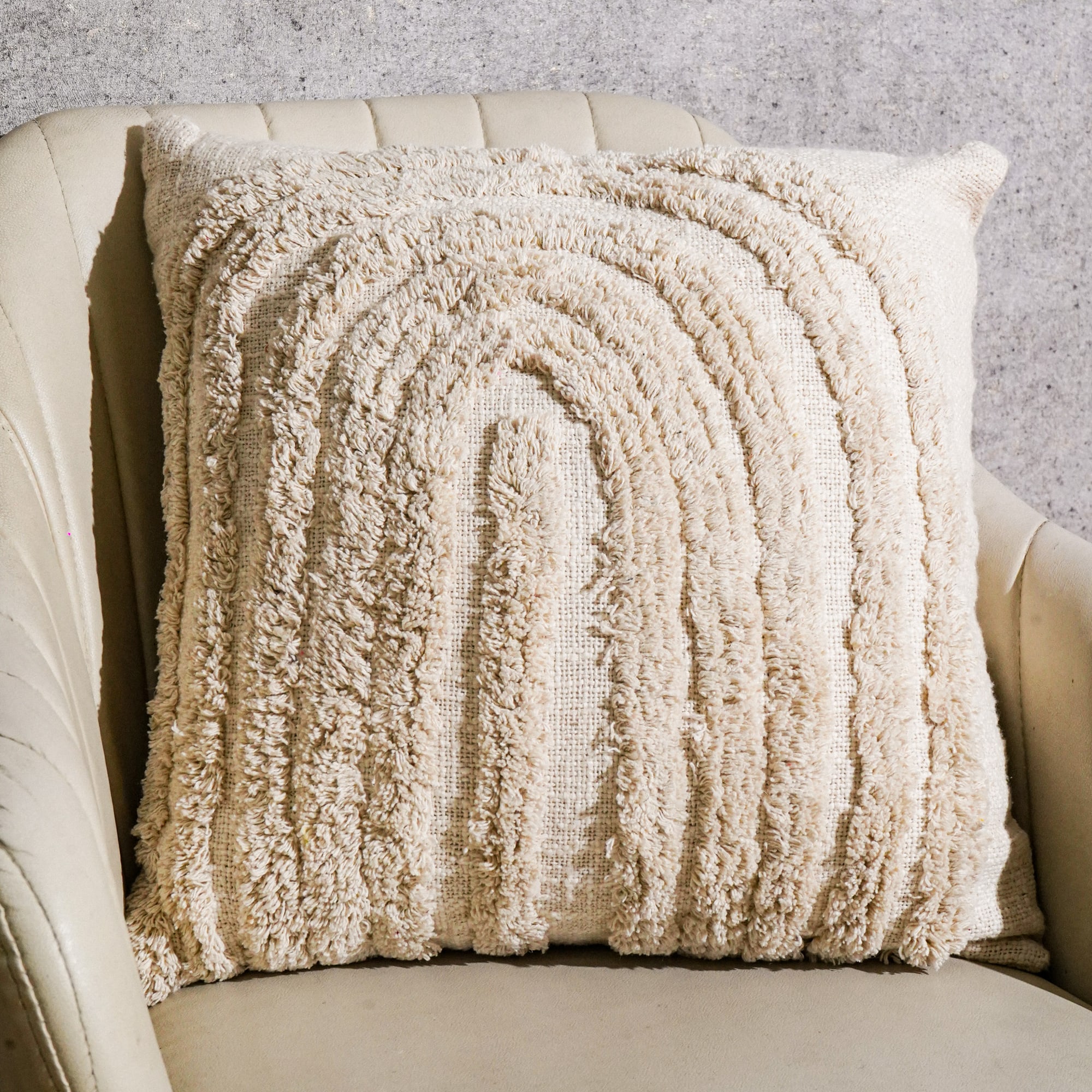
Cover-to-insert sizing is where most reorders go wrong: a cover cut to exact insert dimensions looks flat and under-filled once it’s on a shelf or a hotel bed. The standard fix is to spec the insert 1-2 inches larger than the cover on each side, so the fill pushes into the corners and the texture — especially tufted loop — actually shows dimension.
Retail buyers working across multiple markets tend to standardize on a small set of sizes rather than customizing per SKU, because mixed sizing complicates both packing density and retail bay planning:
| Cover size (declared) | Recommended insert | Common market |
|---|---|---|
| 16 x 16 in (40 x 40 cm) | 18 x 18 in | US, Australia |
| 18 x 18 in (45 x 45 cm) | 20 x 20 in | Europe, UK |
| 20 x 20 in (50 x 50 cm) | 22 x 22 in | Middle East, hospitality |
| 12 x 20 in lumbar (30 x 50 cm) | 14 x 22 in | US accent programs |
Insert fill also affects how the texture behaves over time: a firmer polyfill core holds a tufted cushion’s shape through repeat hotel laundering better than a loose fibre fill, which flattens under the pile’s own weight after a season of use. If your program includes hospitality volumes, ask your supplier to confirm insert density alongside cover GSM — cover specs without an insert spec are only half the answer buyers need before a container ships. Anyone comparing this construction against other cushion techniques should also read how hand-tufted rugs stack up against machine-made construction, since the same tufting logic governs pile behaviour on both products.
Mixing covers into rug orders
Mixing tufted cushion covers into an existing rug container is a straightforward way to hit consolidated MOQs, provided both product lines share a colour palette and a shared shipping timeline — otherwise one line holds the other hostage in production. Buyers running a retail-floor program increasingly ask suppliers to develop cushions as a matched accessory to a rug collection rather than as a separate SKU family.
The practical constraint is sampling sequencing: a rug collection typically needs 3-4 weeks from concept to approved strike-off, while a tufted cushion sample can turn in 10-12 days. Sequencing cushion development to start after rug colours are locked, rather than in parallel, avoids a second round of dye-matching once the rug palette shifts mid-development. This is also where customization options in bulk rug orders become relevant to cushion buyers too — the same colour-matching and MOQ logic that governs a rug program applies almost unchanged to its cushion companion line.
On container planning: cushion covers pack far denser than rugs per cubic metre, so a mixed container often has room for 2-3 additional cushion colourways without adding a line item to freight cost. Buyers who plan this in from the RFQ stage, rather than adding cushions as an afterthought, get better per-unit costing on both product lines. Worth reviewing the broader case for partnering on bulk rug orders if cushion consolidation is new to your sourcing plan.
Colour stories per market
Colour direction on textured cushions splits fairly cleanly by market, and getting this wrong on a first order is the single most common reason a reorder shrinks rather than grows. A buyer sourcing one universal colourway for five regions usually finds three of them underperform.
| Market | Colour story 2026 | Texture pairing that performs |
|---|---|---|
| Europe | Warm neutrals, clay, sage | Tufted loop, boucle |
| UK | Heritage tones, deep teal, mustard | Chunky knit, fringed |
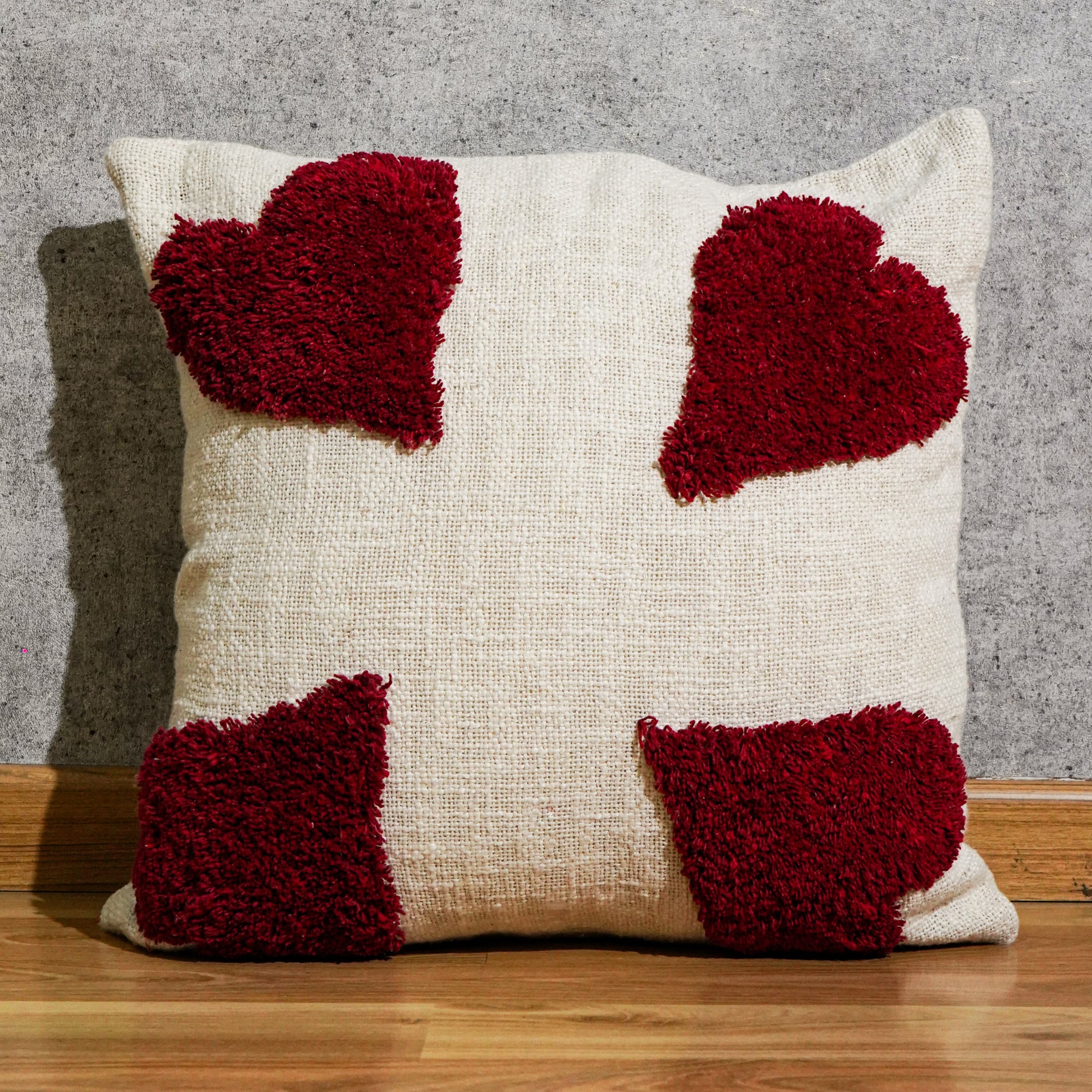
| US | Bold jewel tones, terracotta | Tufted cut pile |
| Middle East | Metallics, deep burgundy, gold-thread | Tufted cut pile, dense fringe |
| Japan | Muted greys, undyed natural | Boucle, tufted loop, low-contrast |
| Australia | Coastal neutrals, chalk, ochre | Boucle, fringed flatweave |
In export shipments we processed across 2025, orders that matched cushion colourways to the destination market’s dominant rug palette — rather than shipping one global colour range — carried a measurably higher reorder rate into the second season. That pattern lines up with what’s covered in our review of rug trends interior designers are tracking for 2026: colour direction on soft furnishings is now being planned as a set, not as separate product categories.
Frequently asked questions
What is the MOQ for hand-tufted cushion covers wholesale?
MOQs typically run 100-300 pieces per colourway when cushions ship inside a mixed rug-and-cushion container, and closer to 500 pieces per colourway for a standalone cushion order, though this varies by construction and finishing complexity.
How long does sampling take for a custom tufted cushion design?
A hand-tufted cushion sample usually takes 10-12 days from an approved artwork and colour standard. Knitted and boucle constructions run slightly longer, 12-15 days, because yarn sourcing and hand-finishing add steps before the strike-off is ready.
Can cushion covers be customized to match an existing rug collection?
Yes — matching a cushion colourway to a rug program works best when cushion development starts after the rug’s dye lot is locked, not in parallel, since matching to a moving colour target usually needs a second correction round.
What insert size should I order with a tufted cushion cover?
Spec the insert 1-2 inches larger than the declared cover size on each side. This overfill pushes fill into the corners and lets a tufted or knitted texture hold its dimension, rather than looking flat once it’s on a shelf or bed.
Do fringed and knitted cushion covers wash the same as tufted ones?
No. Tufted covers with a latex-backed base tolerate regular laundering well; fringed and hand-knit constructions are generally better suited to spot cleaning or gentle cycles, since repeated machine washing can loosen fringe edges and distort hand-knit tension over time.
If you’re building a Q4 cushion range around one of these texture directions, send a tearsheet with your target market and colour direction — our merchandiser team can turn a sample plan around within 48 hours.
