
Recycled PET Yarn Rugs Wholesale: 5 Durable Options
Last updated: September 2026
Recycled PET yarn rugs give wholesale buyers a durability story and a sustainability story in one SKU: yarn spun from post-consumer bottles that takes dye brighter than natural fibre, resists moisture, and holds colour under repeated cleaning. For 2026 retail programs, five construction and design variants cover most indoor-outdoor and high-traffic briefs.
!Tumbling Blocks geometric recycled PET yarn rug studio shot
Why recycled PET is a winning material for indoor-outdoor and high-traffic areas
Recycled PET yarn holds up in high-traffic and indoor-outdoor settings because the fibre is inherently colorfast, sheds dirt rather than absorbing it, and resists the moisture damage that shortens the life of natural-fibre rugs. Retailers stock it for entryways, hospitality corridors and covered outdoor areas — not for spaces where a soft, natural hand-feel is the priority.
That second half matters as much as the first. PET is not the fibre to reach for when a customer wants the fibre-soft, barefoot-friendly texture of wool or the warm, matte finish of jute — for a bedroom or a formal lounge, those constructions still win the brief. PET earns its keep at the door: mudrooms, poolside cabanas, hotel corridors, outdoor dining areas, anywhere foot traffic and moisture meet on the same square metre. It should never be positioned as a jute or wool substitute on a spec sheet; it’s a different job entirely.
Across export orders we shipped in 2025, PET-yarn rugs accounted for close to a third of indoor-outdoor rug volume moving to European and Middle East hospitality buyers, a share that grew noticeably from the year before as procurement teams standardised on recycled-content flooring for lobby-adjacent zones. If a project brief calls for fully weatherproof flooring rather than an indoor-outdoor transition zone, outdoor PVC rugs handle standing water better than any yarn construction, PET included. The broader durability trade-offs of PET specifically are covered in more depth in our piece on recycled PET outdoor rug benefits.
Feature APD2622 and APD2619 D — handwoven and paddle weave constructions that maximize durability
APD2622 and APD2619 D show the two constructions PET yarn takes best. APD2622 is handwoven for a flatter, tighter face that resists crushing under repeated foot traffic, while APD2619 D (‘Herring Rug D’) uses a paddle weave that builds a raised herringbone texture suited to heavier-traffic zones like lobbies and reception areas.
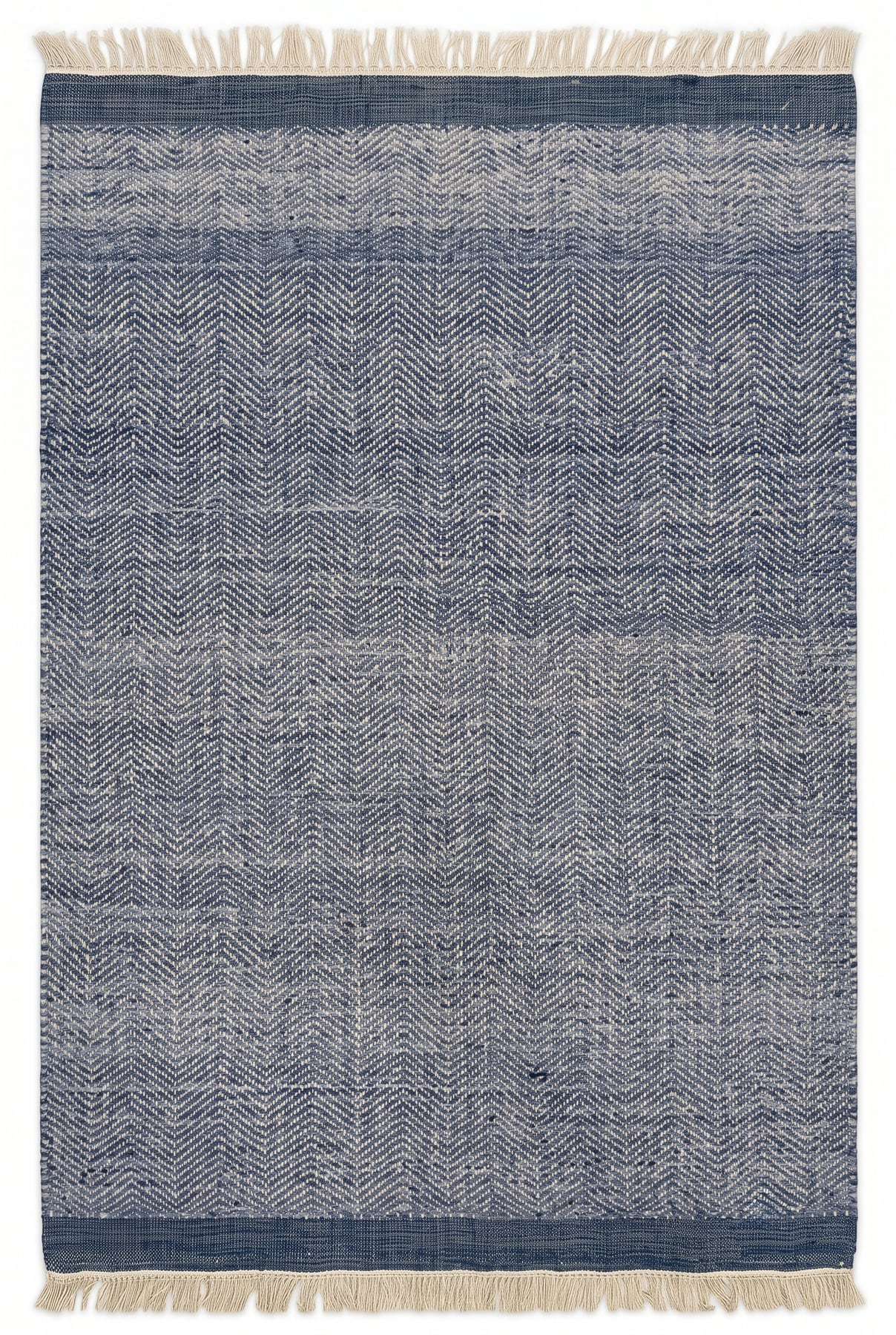
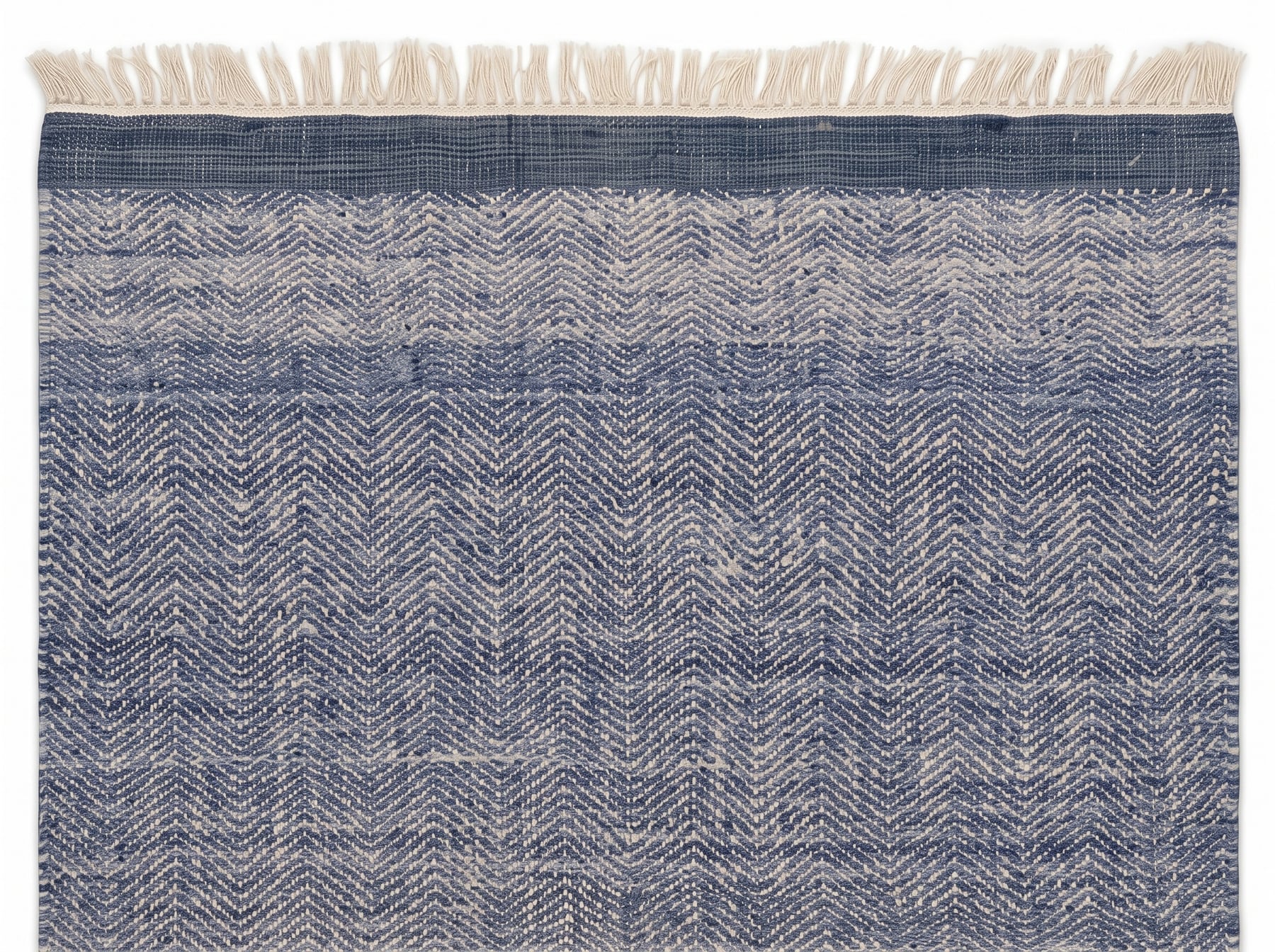
Both ship at a 100-piece MOQ per colourway, which lets a category manager test two constructions side by side in one buy without opening two separate sourcing relationships. Because PET absorbs dye more intensely than jute or cotton, the same named colourway will read a full shade deeper on either rug than it would on a natural-fibre sample card — worth flagging early to a design team working from a jute or wool swatch book, so the in-store colour doesn’t surprise anyone at delivery.
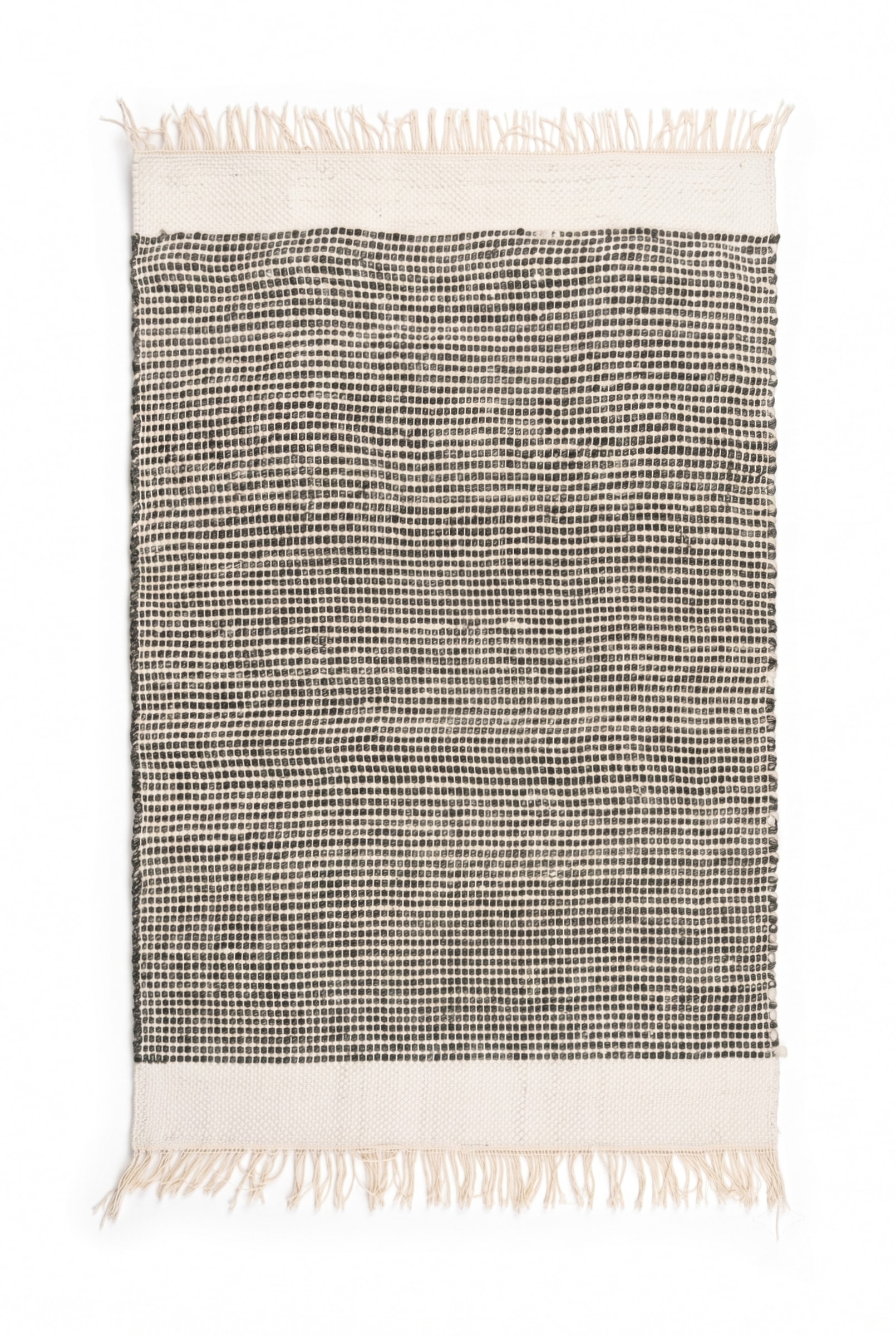
The construction difference matters more than the surface pattern when it comes to lifespan under a lease term. Our breakdown of hand-knotted, hand-tufted and handwoven builds walks through how each holds up, and the same logic applies when comparing a handwoven PET rug against a paddle weave one.
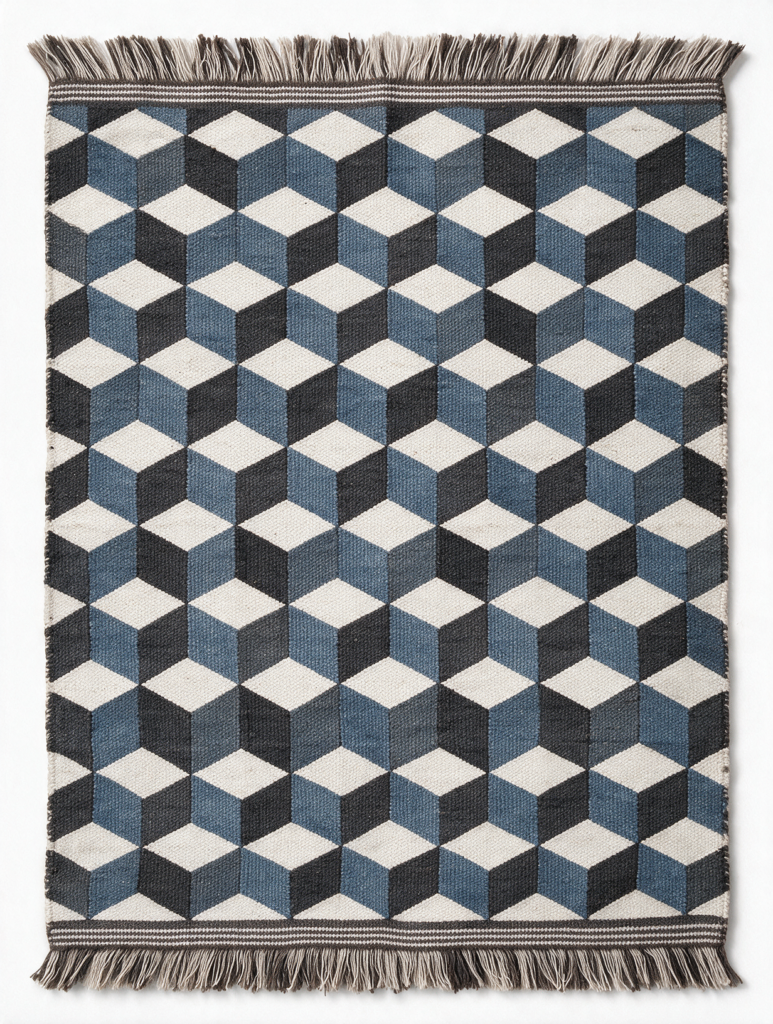
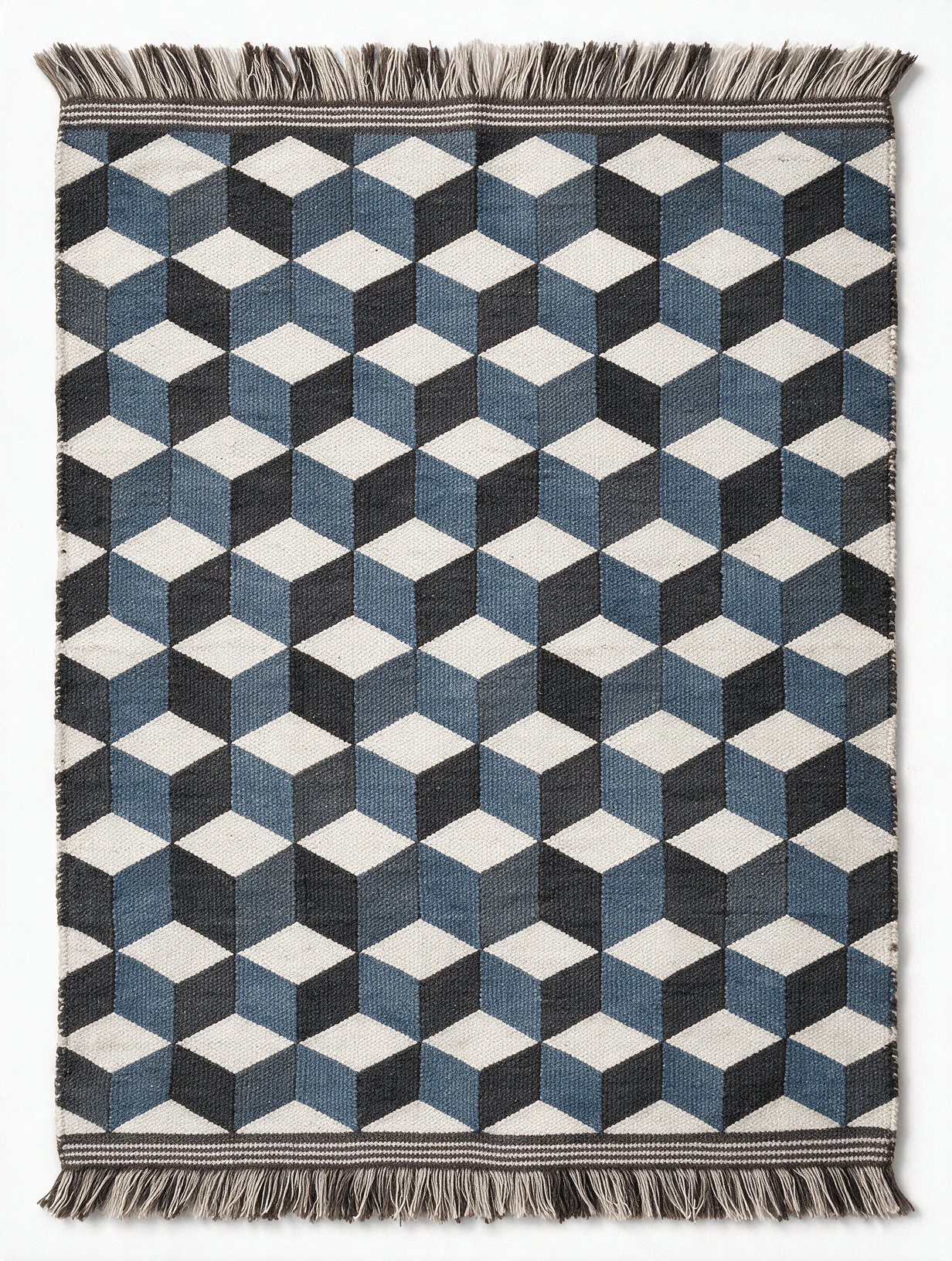
Highlight APD-26012 ‘Tumbling Blocks’ — a geometric statement piece for modern retail
APD-26012 ‘Tumbling Blocks’ puts a repeat geometric pattern on a recycled-PET base, and the fibre’s higher dye uptake makes the contrast between blocks read sharper than the same layout would on jute or wool. That’s the reason retail buyers tend to pull it for accent placements — a feature display, a boutique entry, a hotel lobby anchor — rather than for wall-to-wall runs where a quieter neutral usually wins.
Because the pattern reads bold, it works best as the one strong visual statement in a floor set rather than one of several patterned pieces competing for attention. Buyers building a broader colour story around it often pair it with the calmer palette covered in our piece on sustainable, eco-friendly rug decor, using Tumbling Blocks as the anchor and softer tones around it.
Compare flatweave vs jacquard PET rugs — which suits your customer base?
Flatweave PET rugs suit buyers who need a thinner, easy-to-ship profile and simple two-to-three colour geometrics at volume; jacquard PET rugs suit buyers whose customers pay for multi-colour, higher-detail patterns and can absorb a longer production lead time. The real decision is a trade-off between piece cost, carton volume and pattern complexity.
| Flatweave PET | Jacquard PET | |
|---|---|---|
| Pattern complexity | 2-3 colours, geometric repeats | 4-8 colours, fine detail |
| Typical lead time | 4-6 weeks | 6-9 weeks |
| Pile profile | Low, thin, stacks tightly for freight | Textured face, slightly higher loft |
| Best customer fit | Value/mid-market retail, high-volume reorders | Boutique, design-led, hospitality feature pieces |
In our 2026 production data, jacquard PET orders ran roughly 30% smaller in unit count per PO than flatweave orders, but carried longer repeat-order cycles — buyers reorder jacquard less often but at a higher average order value each time. Buyers who need a custom colourway on either construction should check what’s realistic to change within a single bulk rug order before quoting a client a colour they can’t actually deliver at MOQ.
Sourcing tips: verifying recycled content and colorfastness for wholesale orders
Verify recycled PET content through a GRS (Global Recycled Standard) transaction certificate tied to the specific purchase order, not a general company-level certificate, and test colorfastness with a grey-scale rub rating of 4 or higher before signing off a bulk order. Anything below that fades visibly within a single retail season under fluorescent lighting.
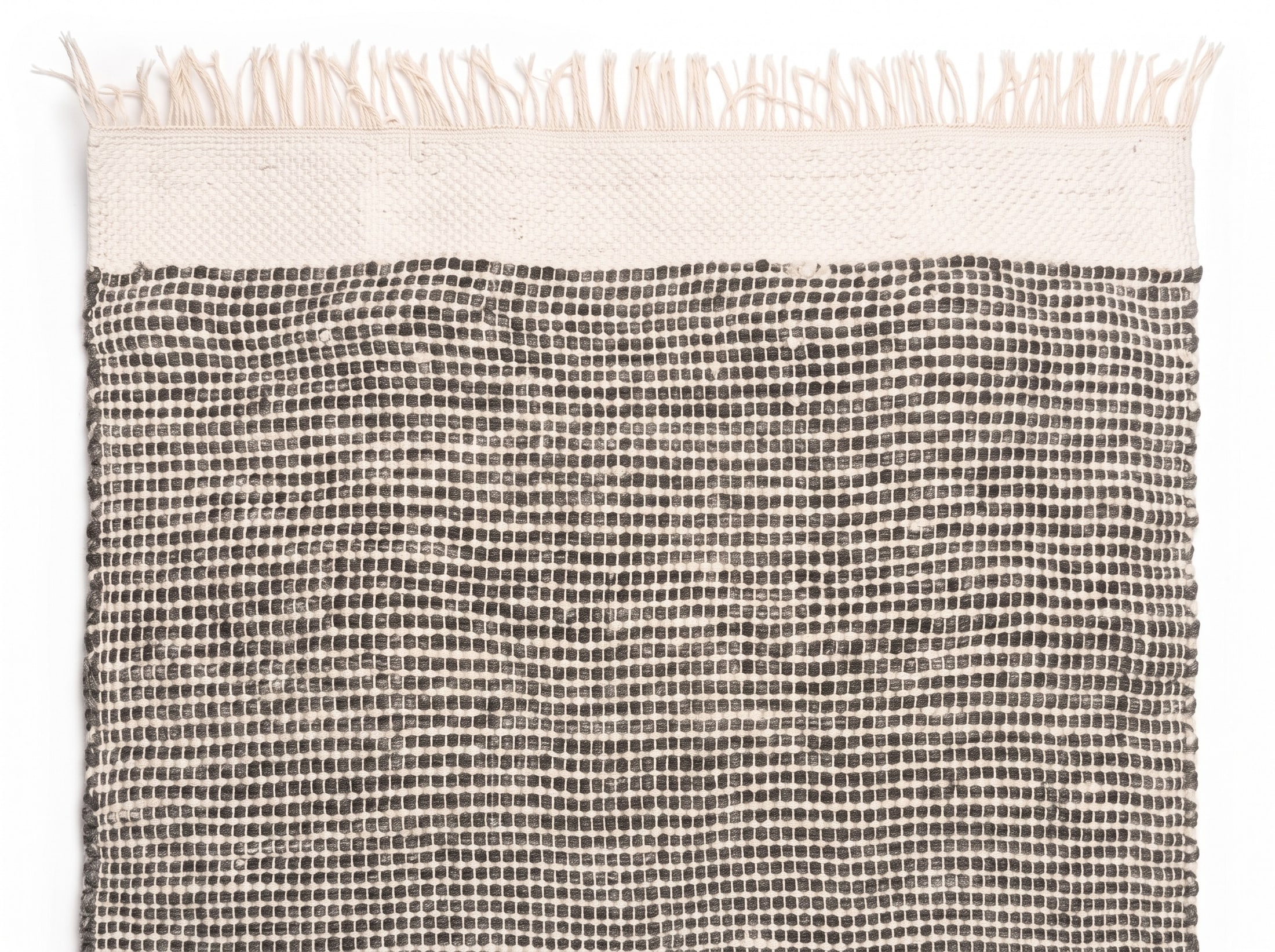
Buyers who accept a general recycled-content claim without a batch-level certificate risk a chargeback if a retail auditor later asks for traceability on a specific container — ask for the transaction certificate number to appear on the commercial invoice, not just on the swing tag. On outdoor-facing SKUs specifically, we run a 20-hour xenon-arc light exposure check alongside the standard rub test, because rub testing alone misses UV-driven colour shift that only shows up after weeks of direct sun.
The cost implications of skipping this step are laid out in more detail in how rug material choices affect durability and cost — worth a read before a spec sheet goes out to more than one supplier.
If you’re building a 2026 indoor-outdoor rug program and want to see how APD2622, APD2619 D and Tumbling Blocks sit next to each other in person, email a tearsheet and we can put together a sample plan within 10-14 days.
Frequently Asked Questions
What is the MOQ for recycled PET yarn rugs wholesale?
Most recycled PET yarn rug ranges, including APD2622, ship at a 100-piece minimum per colourway. Buyers testing two constructions, such as a handwoven and a paddle weave style, can typically split that minimum across both without opening separate sourcing relationships.
Are recycled PET rugs durable enough for high-traffic retail floors?
Yes. Recycled PET yarn is colorfast and resists moisture damage better than jute or cotton, which is why it’s specified for entryways, hotel corridors and covered outdoor areas. It’s not, however, a substitute for wool where a softer barefoot texture is the priority.
How do I verify recycled content claims from a rug supplier?
Ask for a GRS (Global Recycled Standard) transaction certificate tied to the specific purchase order and container, not a general company certificate. The certificate number should appear on the commercial invoice, which gives you traceability if a retail auditor questions the claim later.
Can PET yarn rugs be used outdoors?
PET yarn rugs handle covered outdoor spaces like patios and cabanas well, given their moisture and UV resistance. For fully exposed, standing-water conditions, a PVC construction is a better fit than any yarn-based rug, PET included.
How long does sampling take for custom recycled PET rug orders?
Sampling for a custom colourway or pattern change on a recycled PET rug typically runs 10-14 days from approved artwork, covering yarn dyeing, weaving and colour-correction checks before the sample ships for sign-off.
