
How to coordinate rugs and cushion covers for a retail range
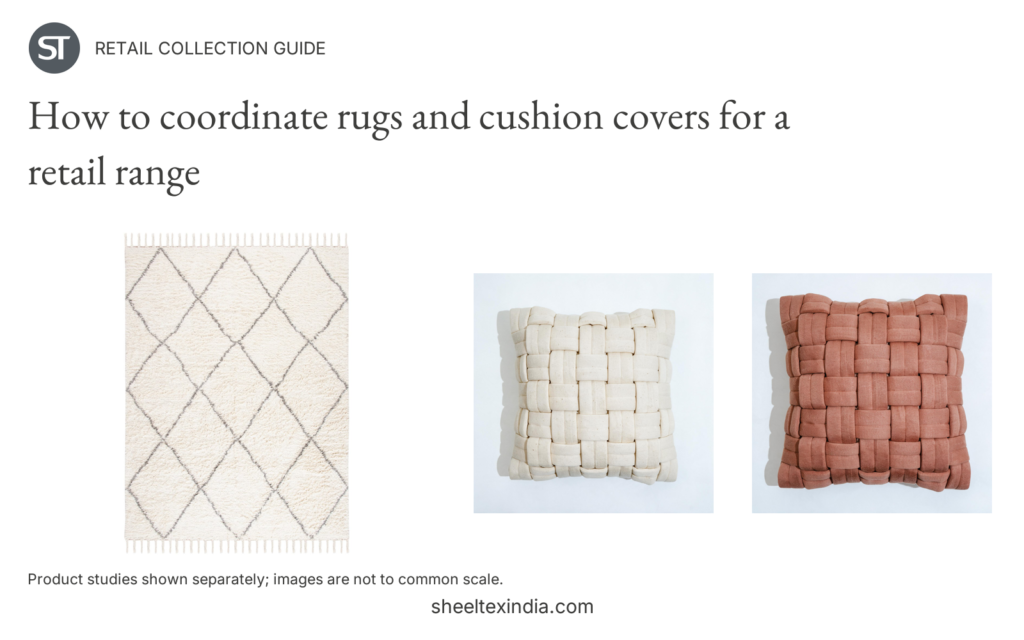
To coordinate rugs and cushion covers for a retail range, choose a colour reference, decide which product carries the strongest pattern, and compare textures in physical samples. Then give every combination a reason to remain in the collection. Matching every detail can produce repeated looks; adding unrelated accents can make the range difficult to present as a collection.
For a retail buyer or wholesale importer, the useful outcome is a shortlist that can be sampled, quoted and photographed consistently. The Sheeltex photographs below show one cream rug with a broad diamond pattern and two cotton cushion covers with an interlaced surface. They provide a practical starting point for comparing a pale combination with a warmer accent. The proposed pairings are selection examples, not approved colour matches.
Choose a colour reference before expanding the range
Write down what the collection should connect to: an existing upholstery fabric, a retained rug, a packaging palette or a physical colour swatch. “Neutral” is too broad to act as an approval instruction. A cream rug and an ivory cover may both look pale while differing enough in tone to change the combination.
There are two useful directions. Repeat a colour family when the range should feel closely related. Introduce a deliberate contrast when the buyer wants a distinct alternative without developing another rug. Record which direction you intend, so a sample reviewer does not try to correct an accent colour into a match.
For example, start with the pale ground of the photographed rug. Test the ivory cover as the quieter colour relationship, then test terracotta as a separate, warmer direction. Retaining the rug makes the comparison specific: the decision is whether the change of cover adds a useful choice for your customer.
A shared palette can connect different patterns, as shown in IKEA’s cushion styling guidance. For procurement, carry that idea into a named physical reference and a written sample decision. Photograph the reference beside the selected pieces for your record, while retaining the samples for colour approval.
Compare pattern scale and direction at the intended size
The rug below has broad diamonds across a pale field. That large repeat gives you a clear feature to compare with the covers. Examine the entire rug as well as its surface; a close crop can hide how often a motif repeats.
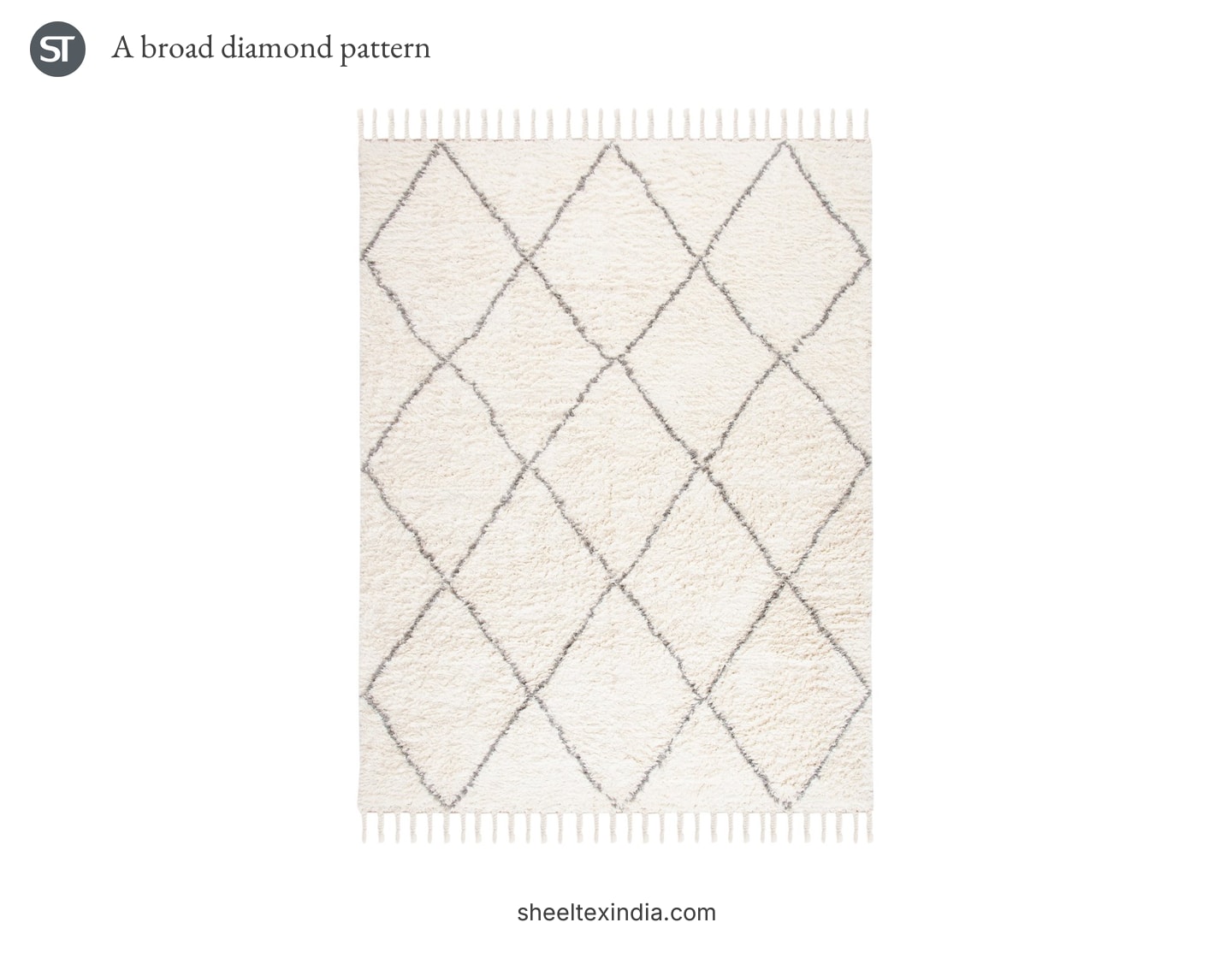
The broad diamond lines and the visible fringe belong to the actual photographed rug. This full view helps judge repeat and direction; it is not a dimensional drawing.
When mixing patterned rugs and cushion covers, distinguish the size of a repeat from how strongly it stands out. A large pale motif may read more quietly than a small dark motif. The interlaced cover shown next has its own repeated grid, even though it has no contrasting printed design. Treat that surface as part of the pattern comparison.
If two repeats appear equally strong, decide whether your customer is looking for that deliberately busy combination. For a quieter direction, keep the rug’s large pattern and test a cover whose colour contrast is lower. If the cover should lead instead, compare it with a less pronounced rug pattern. These are choices to test, not a rule that every patterned rug needs a plain cushion.
Ask for a full view at the proposed finished dimensions when changing sizes. More or fewer repeats, and the point where the design meets an edge, can change the appearance. A thumbnail enlarged on a buying board does not show how a pattern will be arranged in the finished product.
Use texture to create a difference that buyers can see
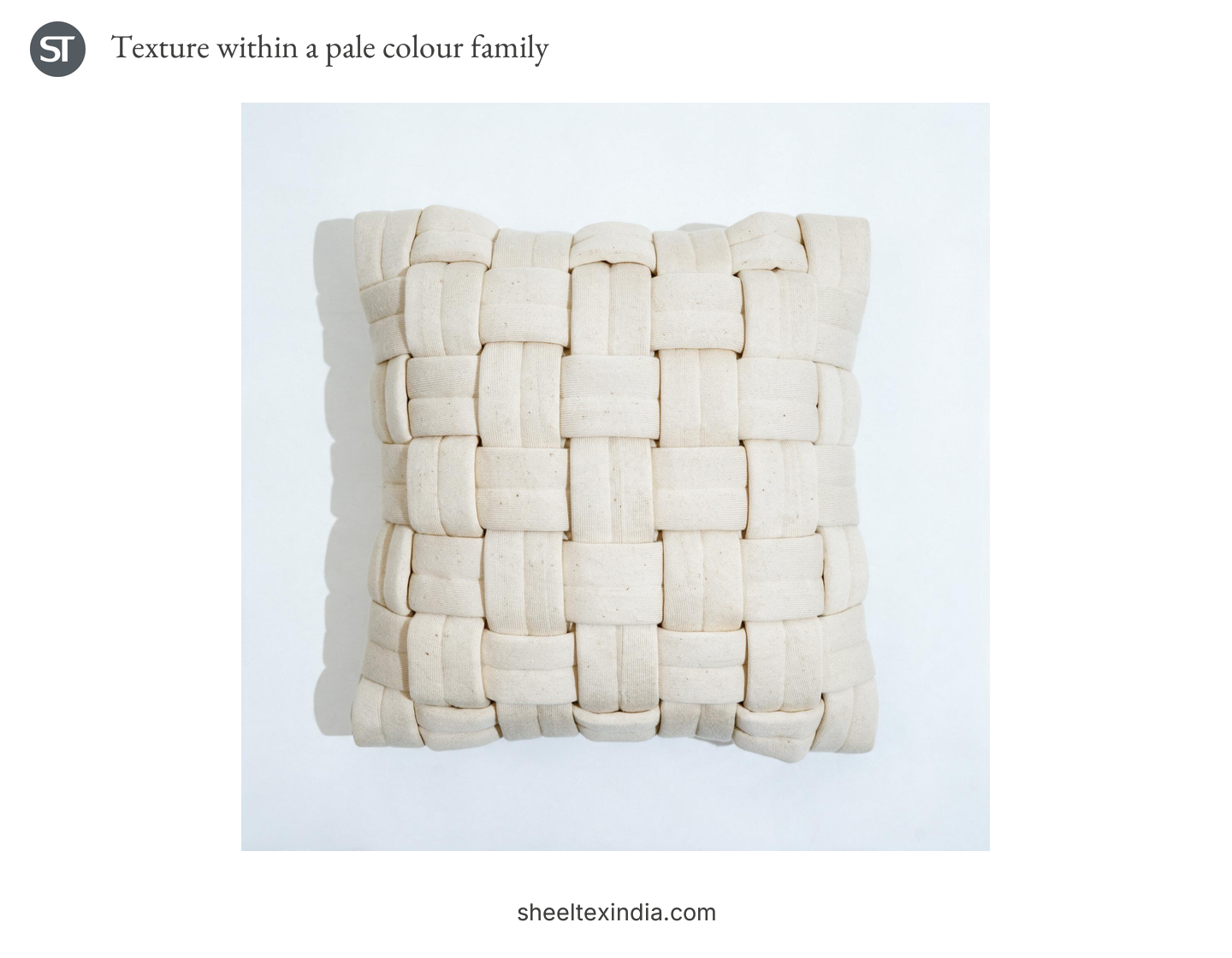
The ivory cotton cover has broad strips passing over and under one another. The visible relief gives a pale combination another point of interest.
The rug and cover share a light colour direction, but their surfaces differ visibly. That is a useful reason to sample them together: can the cover add detail while the rug retains the larger pattern? Feel both samples, view them from the distance at which a customer would see them, and decide whether the difference remains clear in your intended display.
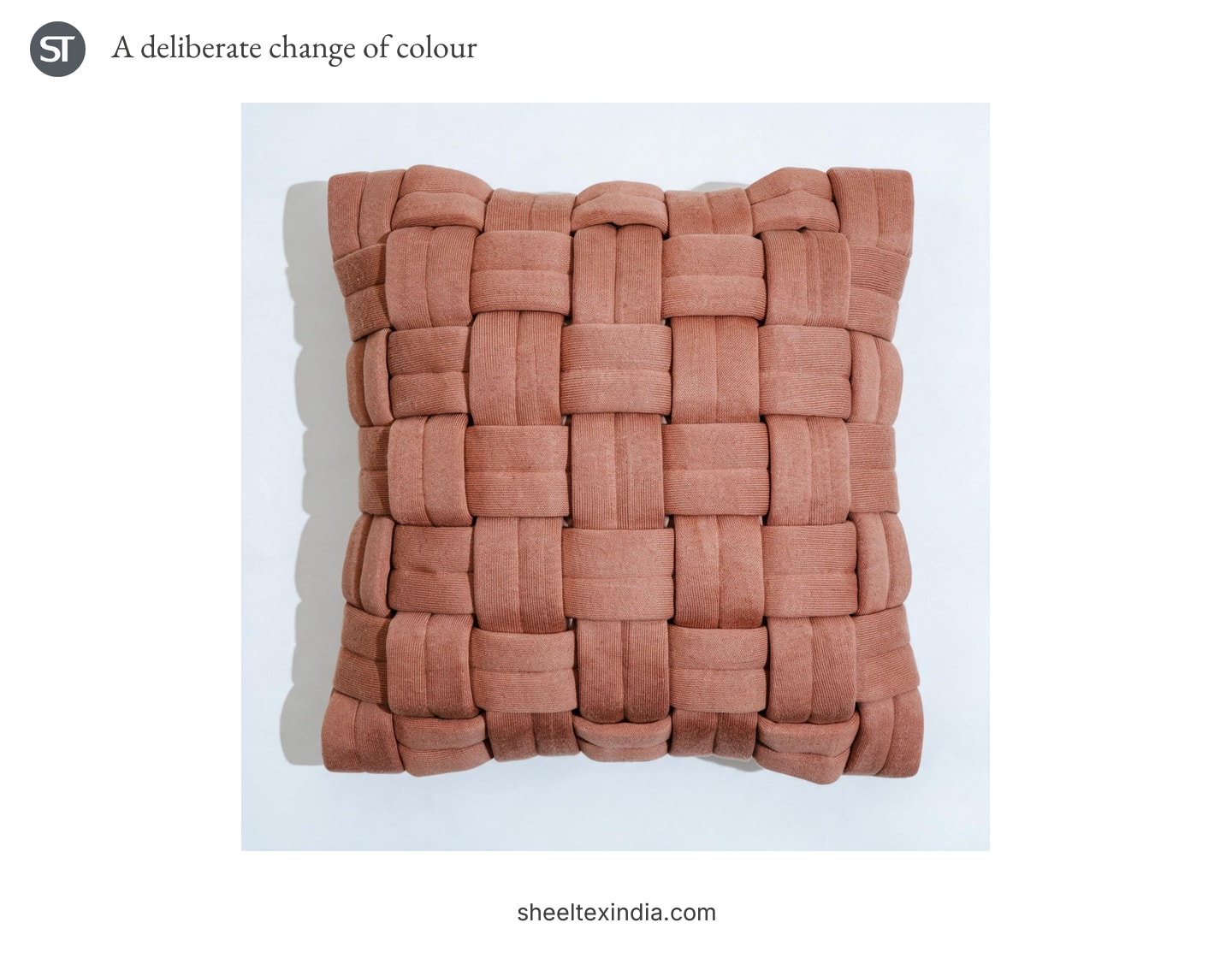
The terracotta cotton cover shows a similar interlaced arrangement in a warmer colour. Here the comparison changes colour while retaining a related surface treatment.
This second cover helps isolate the colour decision. It does not introduce an entirely new pattern at the same time. If you later add another texture, state what that addition contributes. A different surface with almost the same overall appearance may need a strong customer reason to occupy another place in the range.
The photographs show appearance. Use the sample review below to confirm touch, finish and written care requirements for the selected pieces. Start a wider shortlist from the rug collection and cushion collection when these examples do not suit your customer.
Give each combination a role before requesting quantities
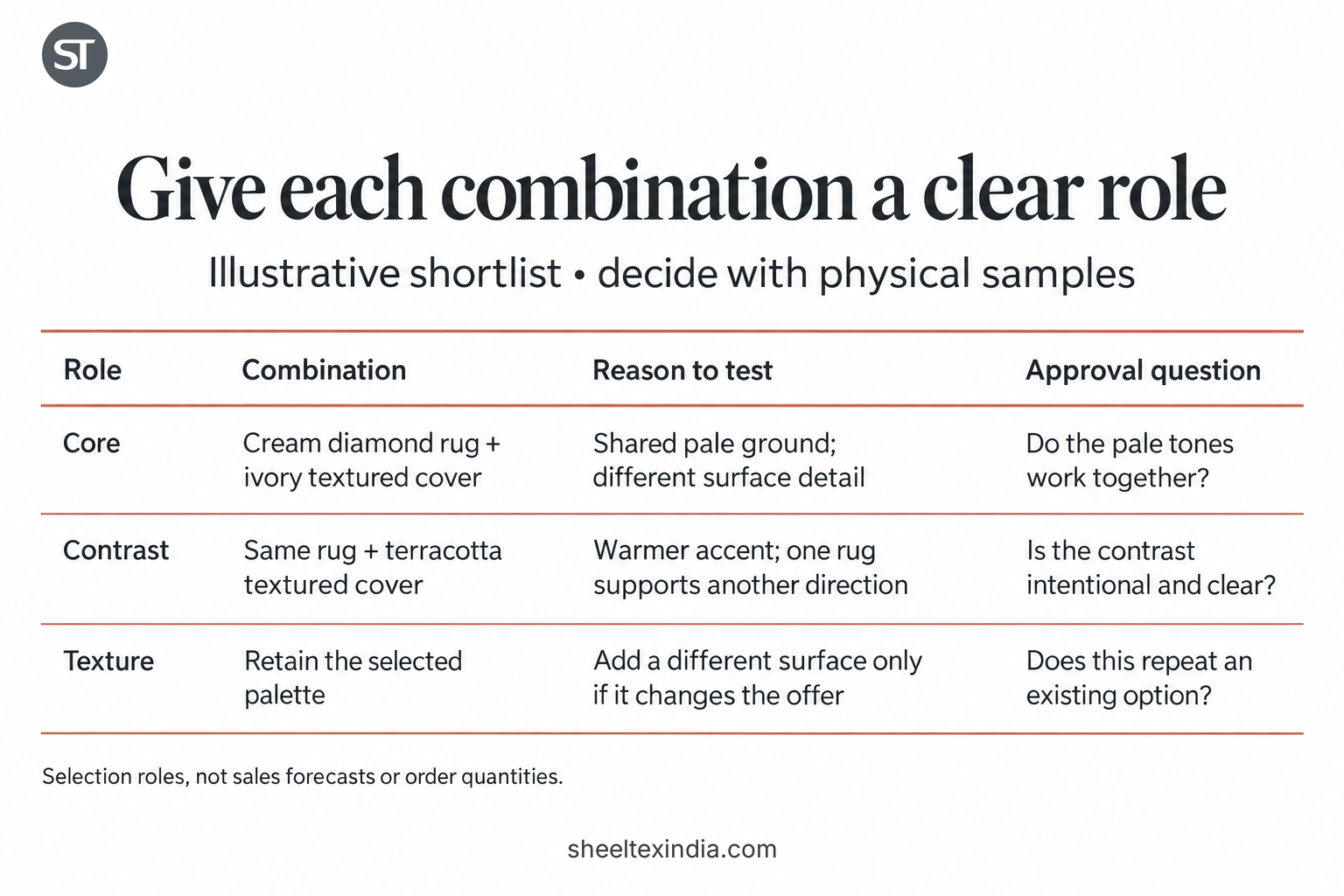
The comparison record above is an illustrative starting point. Use “core” for the combination that expresses your main collection direction; it does not mean a proven bestseller. Use “contrast” for a clearly different colour choice. A “texture” addition earns its place only when its surface changes the offer enough to justify another option.
For the core example, the approval question is whether the rug’s cream ground and the ivory cover work together in person. For the contrast example, it is whether terracotta creates the intended warmer alternative. Neither decision requires an arbitrary rule about how many cushions to order with each rug.
Keep buying quantities separate from display combinations. One rug shown with two covers does not establish a retail bundle, a fixed buying ratio or demand for either cover. Request quantities by design, colour and size, using your own range budget and selling plan. Ask for minimum order requirements and prices on that same basis. A proposed combination can remain a styling recommendation while its products are sold separately.
Before retaining a line, complete this sentence: “We need this option because ___.” If the reason also describes an existing option, compare the two directly and keep the one that better answers your brief.
Review the physical samples as one combination
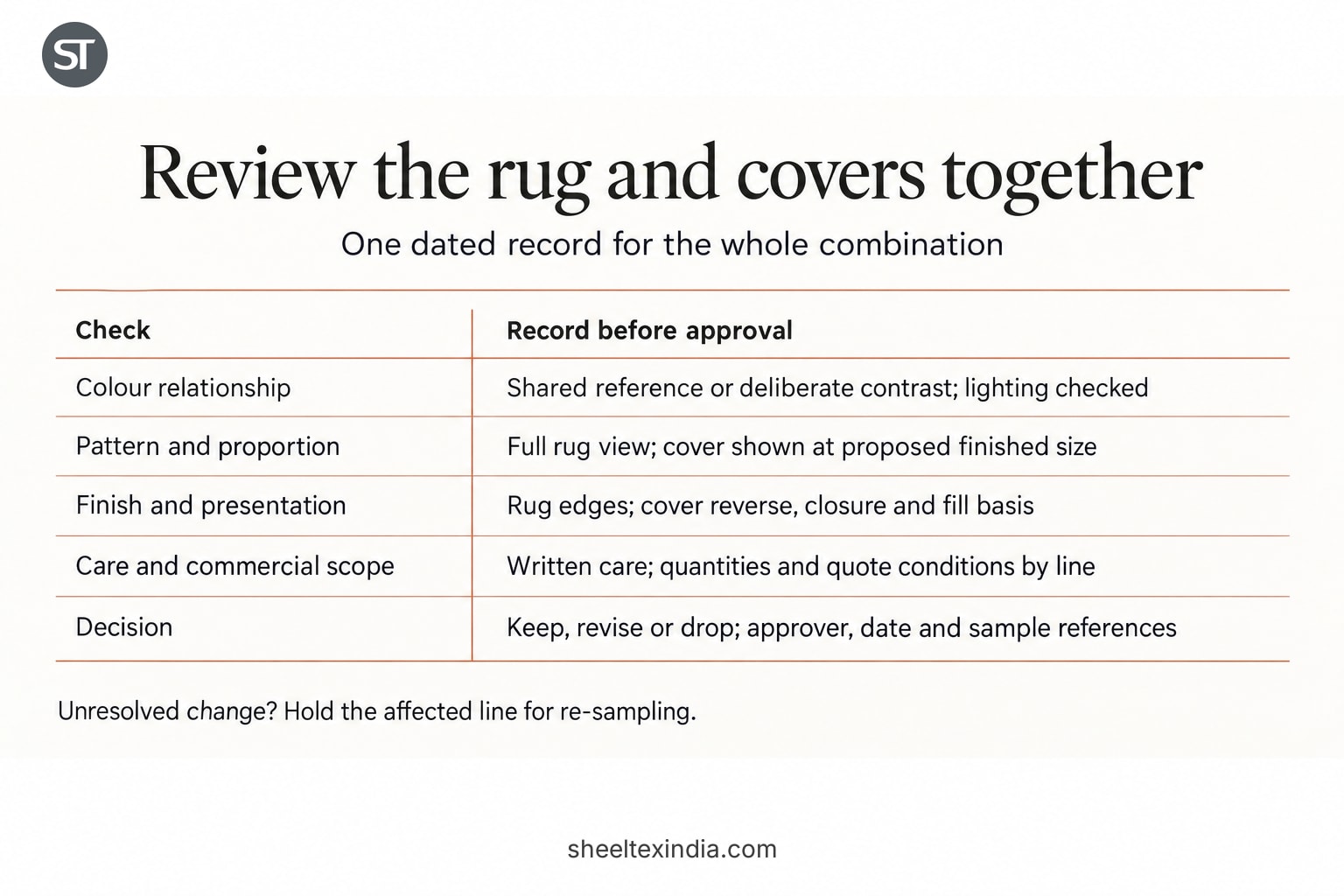
Use one dated approval record for the rug and the covers together. Check the colour relationship under the lighting used for your buying review and intended display. Dulux Heritage explains how daylight and artificial light change colour appearance; applying that general principle here means checking the textile samples in the relevant lighting before signing off the combination.
Record the physical colour reference, full pattern view and proposed finished dimensions. Inspect rug edges and the cover’s reverse and closure. Clarify whether the quote is for covers only or includes filling, then review the sample in that agreed presentation. Get written care instructions for each selected construction and decide whether those requirements suit your customer’s intended use.
Finish the record with sample references, the approver, date and a decision for each line: keep, revise or drop. Describe a change precisely, such as “retain this cover colour; review the rug ground against the enclosed fabric reference.” Hold the affected line for a revised sample rather than leaving a vague note such as “make the set more coordinated.”
Send a collection brief that can be quoted line by line
Copy the following structure into your enquiry. Attach the comparison board and mark which photographs are references, which samples you want first, and which details still need agreement.
- Customer and use: retail channel, intended room or display, and the customer’s reason for choosing this collection.
- Colour direction: main physical reference; shared colour family or deliberate contrast; details to retain.
- Selection by line: reference photograph or product link, rug or cover, proposed finished dimensions with units, colour and quantity for that line.
- Presentation: covers only or filled cushions; whether products will be offered individually or as a proposed bundle; required product photographs.
- Sampling priority: combinations to compare first, approval contact and changes to review before a production decision.
- Commercial requirements: destination, target delivery date, packaging or labelling needs, and the information you need in the quotation.
Give each proposed combination a reference on your buying board and repeat that reference in the sample record. This makes it easier to connect a colour decision to the right rug, cover and quotation when alternatives arrive.
Send your coordinated collection brief to Sheeltex India. Include your shortlist and the decisions you want to resolve in sampling, so the reply can address the range you actually plan to buy.
Frequently Asked Questions
Do rugs and cushion covers need to match exactly?
No. A shared colour family can connect them, while a deliberate contrasting cover can create another direction using the same rug. State which relationship you intend and approve the physical samples together.
How do I mix patterned rugs and cushion covers without repeating the same look?
Compare both the size of the repeat and its contrast. Decide which piece should carry the stronger pattern, then check the complete combination at the proposed finished sizes. A textured single-colour cover can still have a visible repeated surface.
Should a coordinated range be sold as a bundle?
That is a separate commercial decision. A styling combination can show customers how individually sold products relate. Specify whether you want individual lines or a proposed bundle, and request quantities and pricing accordingly.
What should a retailer record when approving a rug and cushion combination?
Record sample references, the physical colour reference, proposed sizes, pattern and finish decisions, cover-only or filled presentation, written care requirements, and a keep, revise or drop decision with an approver and date.
Enquire about your collection or project
Tell us which products you need, your preferred sizes, quantities and destination. You can also share your collection or project requirements.
Make it part of your
next collection.
Share the designs you like, approximate quantities and destination. Let’s discuss samples, pricing and custom options.
