
Cushion cover sample approval: fit, closure and finish
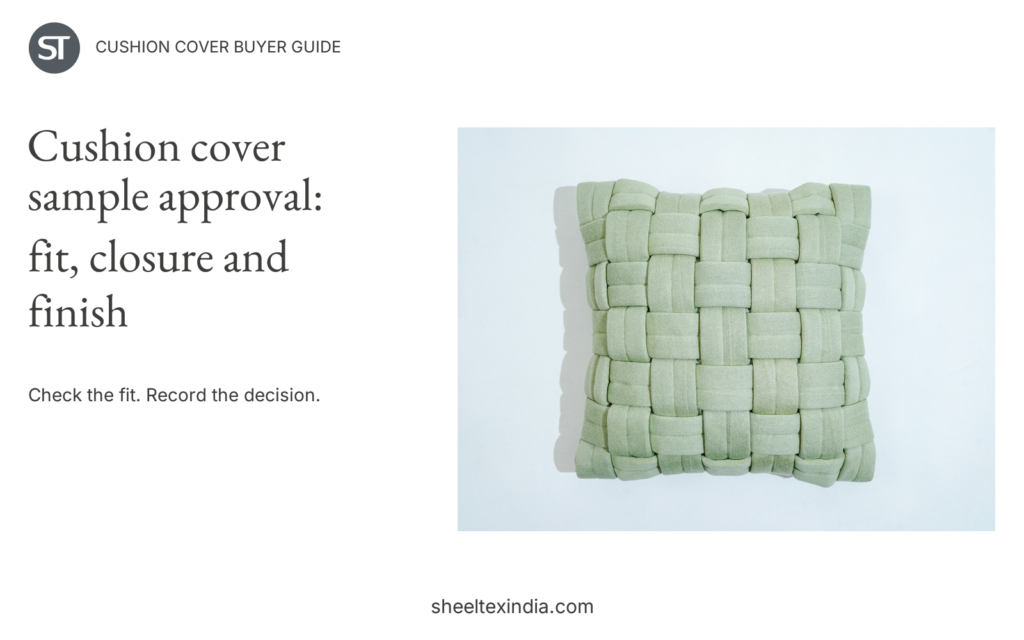
Approve a cushion-cover sample by measuring the empty cover, fitting the intended insert, checking the closure and finish, and recording the result against a named physical reference. Resolve changes in a revised sample before releasing the affected design. A front photograph or an attractive colour match cannot establish the fit of the finished cushion.
For a private-label home-furnishing buyer, the practical outcome is a sample record that another reviewer can repeat. Keep the cover, insert reference, photographs, care instructions and decision together. That connects the appearance you selected to the version you actually checked.
Identify the sample before checking it
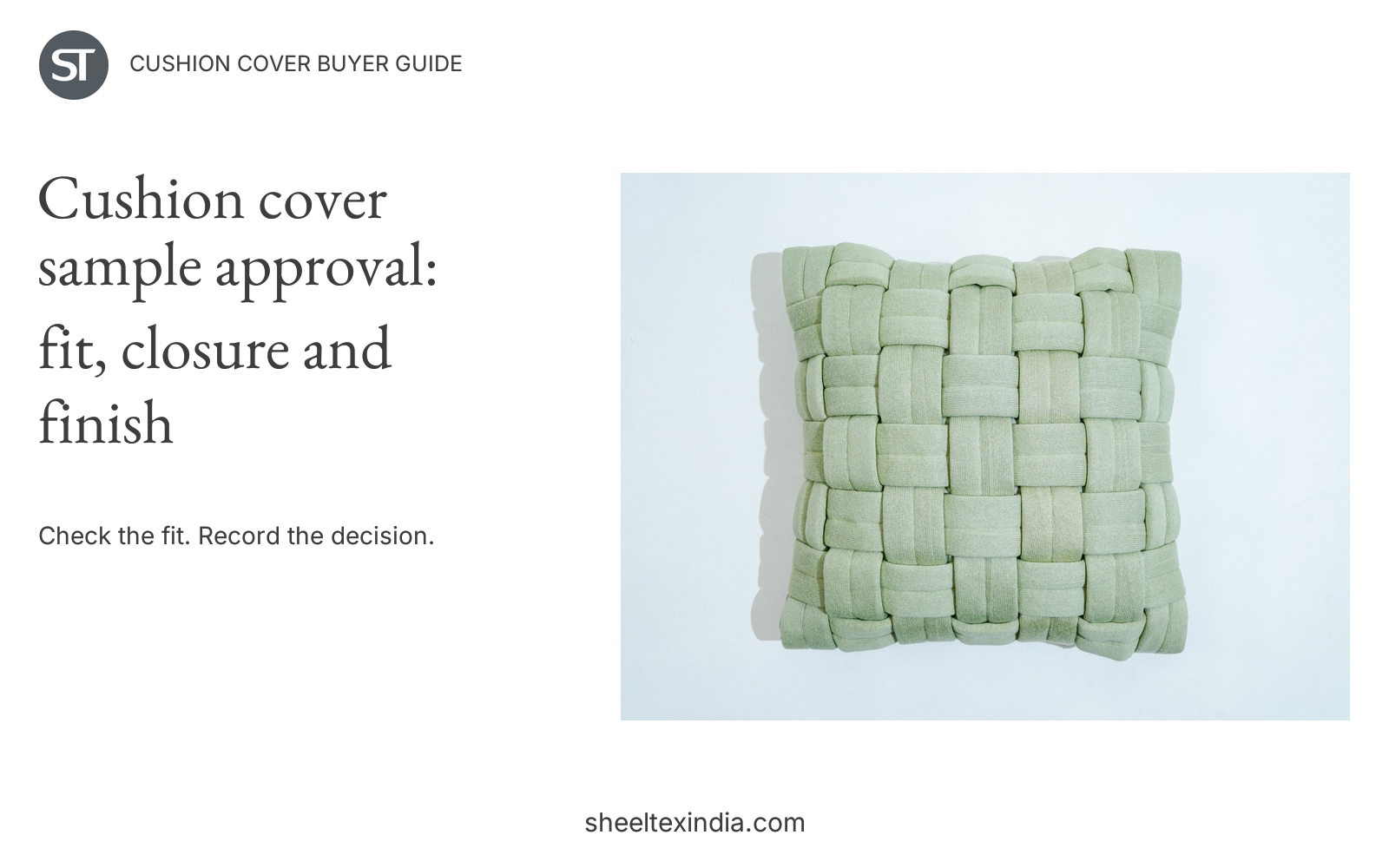
Match the received cover to your enquiry: design reference, colour, requested finished size and sample version. Note the date received and photograph the front, reverse and closure before changing its presentation. Mark which sample replaces an earlier version so the two cannot be mistaken for each other.
Separate the supply scope from the display. A photograph of a plump cushion does not mean the quotation includes an insert. State whether you are buying covers only or assembled cushions, who supplies the insert, and which insert will be used for the fit review. If your customer buys an insert separately, identify the pairing you intend to recommend rather than approving whichever filling happens to be in the office.
Keep a physical colour or fabric reference with the sample. An email containing several similar pale shades is a poor substitute for one agreed reference. If the first sample is itself the proposed reference, record that decision explicitly and retain it for the next comparison.
Measure the empty cover and trial the intended insert
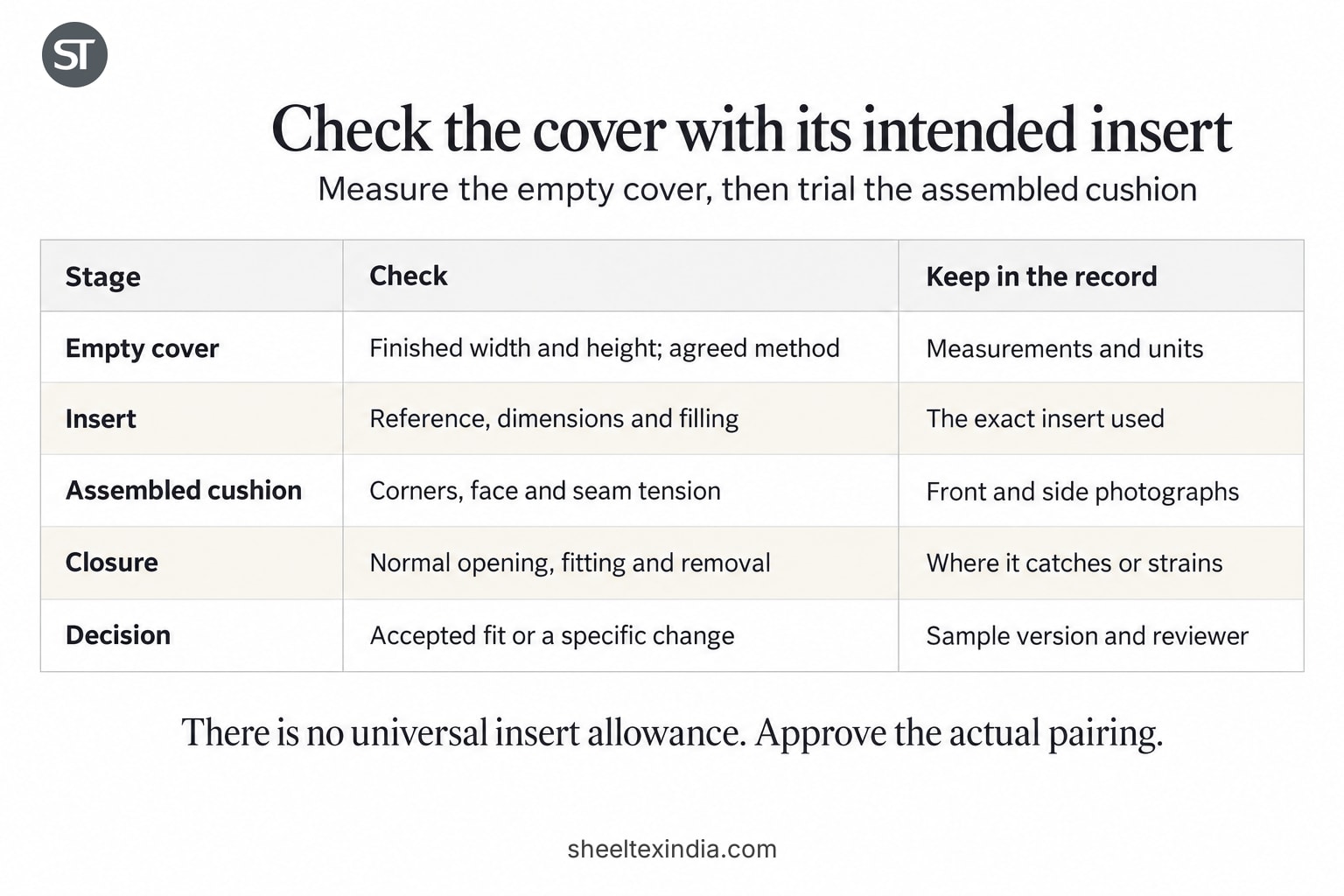
Remove the insert and lay the cover flat without pulling it into a larger shape. Agree the measuring points with the supplier, then record the finished width and height with units. For a simple square or rectangular cover, that may be the seam-to-seam body measurement. If there is piping, a flange or another projecting finish, distinguish the body measurement from the overall outline. Attach a photograph showing where the measurement starts and ends.
A filled cushion’s curved front is a different measurement from an empty cover laid flat. Record which condition you measured. Do not compare a tape drawn over the filled face with a flat finished-size specification and treat the difference as a sewing error.
Fit the intended insert and look at the assembled cushion from the front and side. Does it fill the corners as expected? Does the face sit as intended, or do the seams pull and the surface distort? Can the insert be fitted and removed through the opening without forcing it? Record the insert’s reference, dimensions and filling, together with the fit photographs.
An insert that suits one cover may not give the same result in another construction. Avoid approving a fixed extra allowance for every cover. The useful decision is whether this cover and this insert produce the agreed appearance and can be handled normally. If the pairing fails, identify whether the cover dimensions, opening or insert needs another trial before requesting a change.
Ask for the finished-size acceptance range to be agreed in the specification. A nominal size alone does not say how much variation you and the supplier intend to accept. Keep that dimensional decision separate from the visual fit review: a cover can meet a measurement and still need a different insert pairing.
Check the closure through normal use
Open and close the sample empty, then repeat the fitting and removal process with the intended insert. For a zipper, watch where the surrounding fabric approaches the moving slider and whether the opening gives enough access. For an envelope closure, check that the overlap stays in the intended position with the insert fitted. Review the closure type actually proposed for your design.
If a zipper catches, stop and photograph the point rather than forcing it past the obstruction. YKK’s zipper-use guidance warns that forcing a slider when thread or fabric is trapped can worsen the snag. That general handling advice does not identify the hardware used in the photographed Sheeltex covers.
Give the supplier an observable issue: “fabric catches at this point when the insert is removed”, with a marked photograph and sample version. A request to “improve the zipper” leaves several possible changes open. Ask what will change and which revised sample you should check before accepting the closure.
Normal handling of one sample is not a durability test. If repeated-use performance is part of your buying requirement, agree the separate evidence and acceptance criteria you need rather than converting a few opening movements into a lifespan claim.
Review the whole face, the texture and the edge
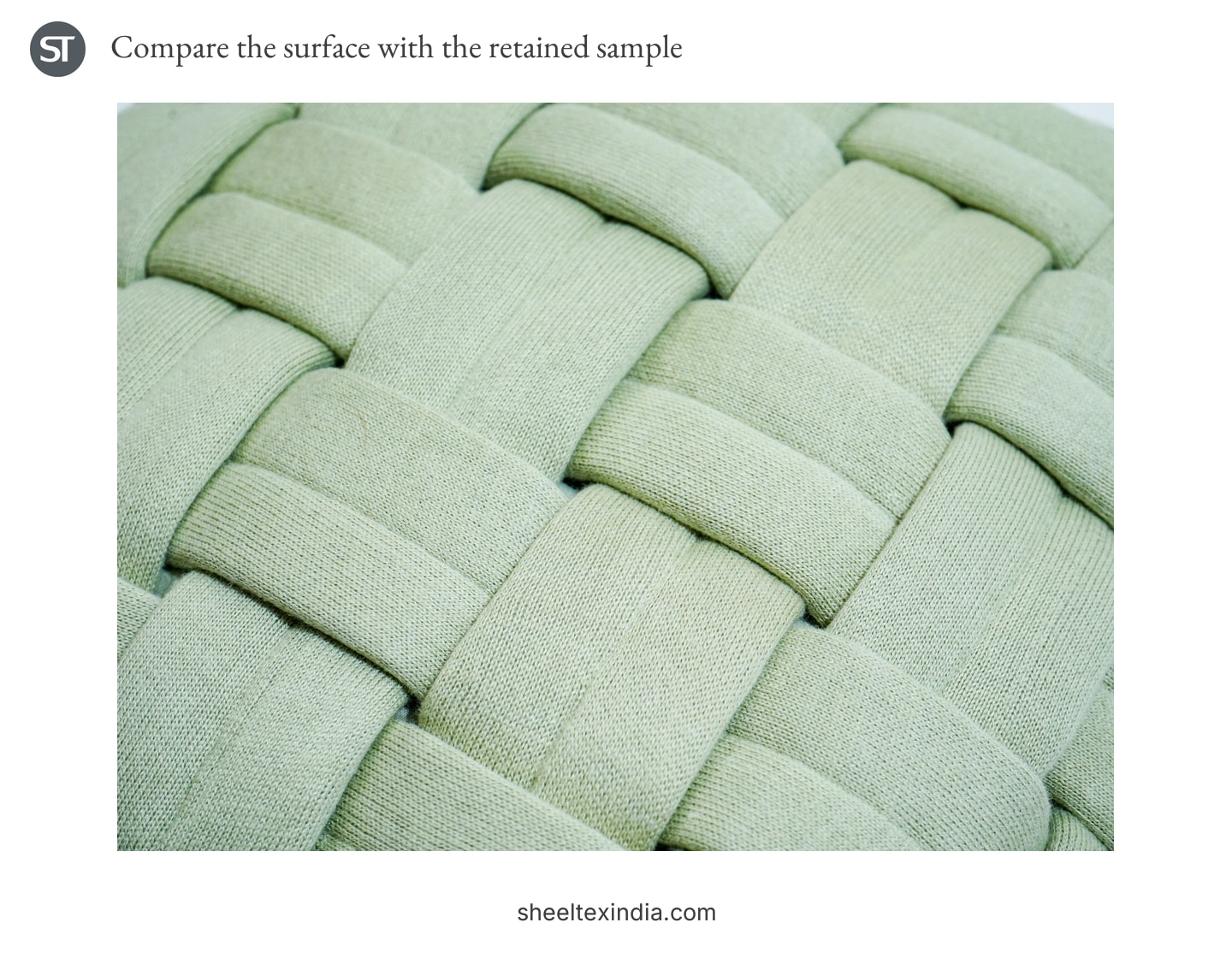
This original Sheeltex photograph shows pale green fabric bands passing over and under one another. It is an appearance reference, not the result of a sample inspection.
Inspect the full face as well as close details. A surface can look attractive in a tight crop while a misplaced repeat or uneven edge is visible across the complete cover. Check the front in the intended orientation and compare it with the retained reference. Note the direction of the design if it matters when the cushion is displayed.
Feel the surface and inspect the reverse, corners and inside seams where accessible. Look for the specific finish you agreed: edge shape, seam appearance, lining or reverse fabric, and any labels. Describe an observed difference with its location. Do not flatten, trim or otherwise alter the sample to make it match the reference before recording the issue.
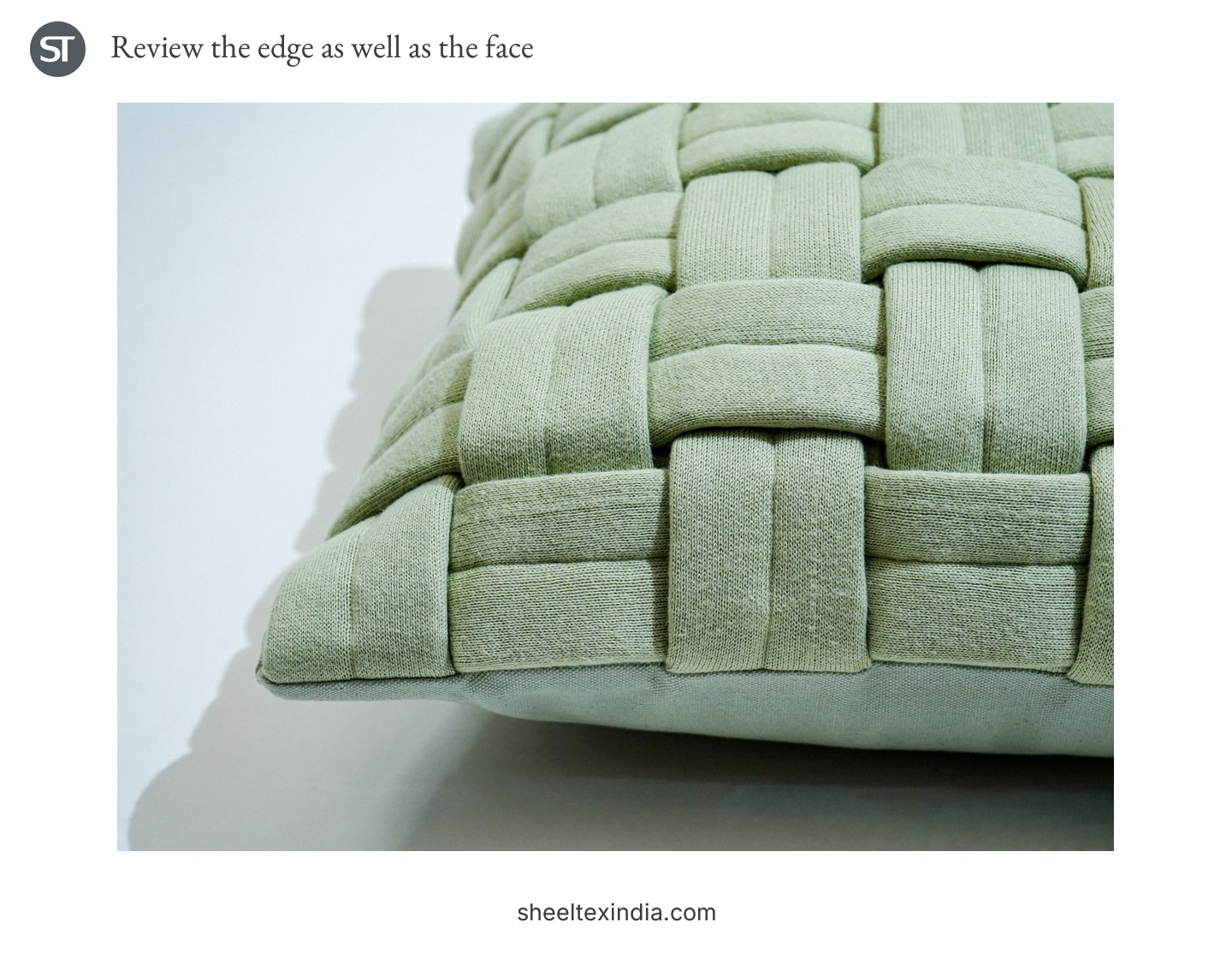
The closer edge view shows the raised fabric bands meeting the lower outline. The photograph illustrates where an edge review can focus; it does not establish seam strength or closure construction.
Agree which variations in the handmade appearance are acceptable and which require a correction. A marked reference photograph can help communicate that discussion, while the retained physical sample gives the next reviewer something to compare. Avoid writing “all handmade variation accepted” when you intend only a particular surface effect to remain.
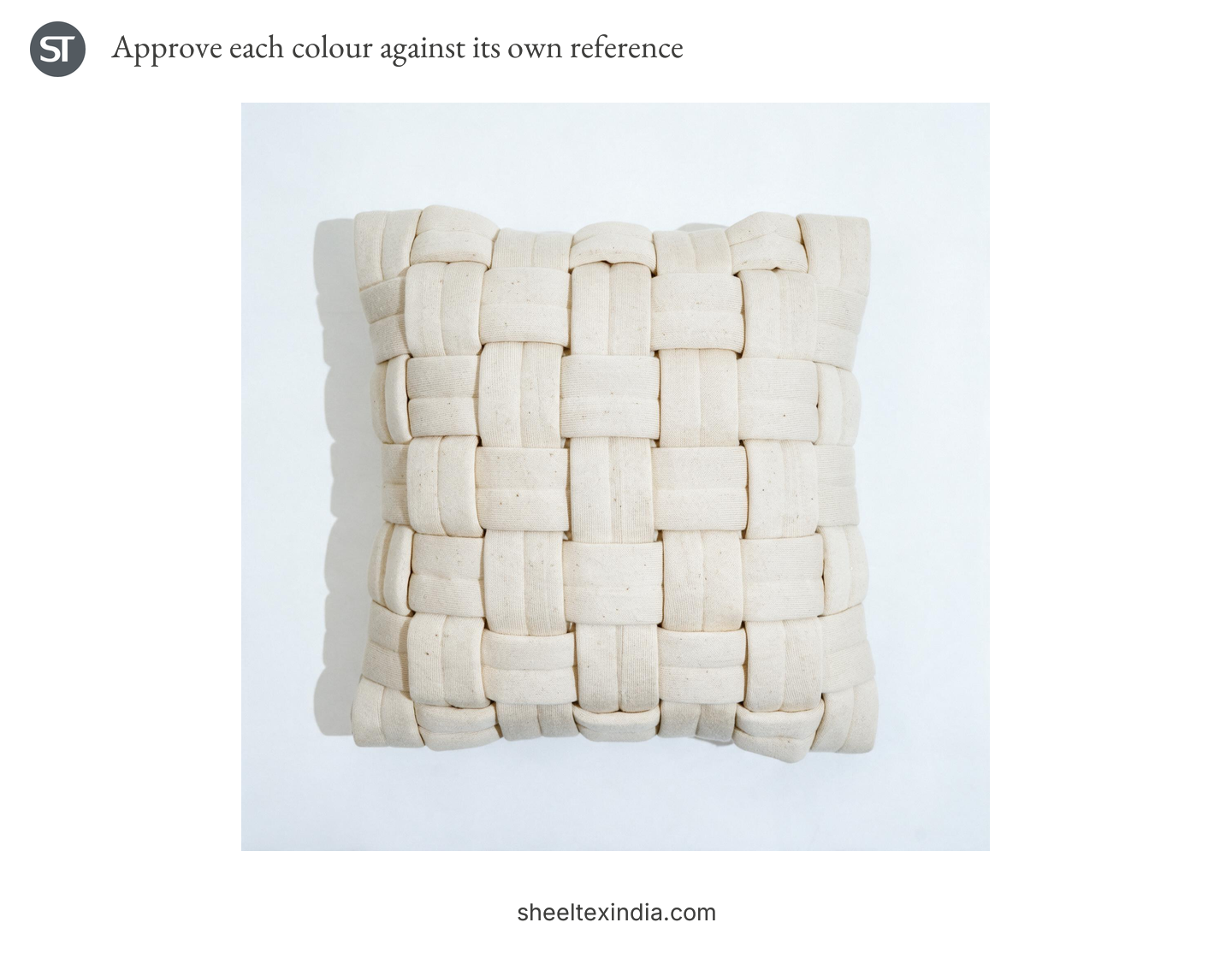
The ivory cover is a separate Sheeltex colour reference with a related interlaced surface. It has its own sample decision; acceptance of the green example would not automatically approve this colour.
Review each colour you intend to buy against its agreed physical reference. Use the lighting relevant to your buying review and intended presentation, and note those conditions. When the cushion is part of a wider range, the guide to coordinating rugs and cushion covers helps decide the colour relationship before this individual-cover approval.
Review care instructions before a care trial
Get the proposed care instructions for the complete selected cover, including its reverse, finish and closure. Read them before washing or arranging professional cleaning. Cotton composition or a pale appearance does not establish the permitted treatment for the whole cover.
GINETEX’s care-labelling explanation states that a wash-tub number gives the maximum temperature, bars modify the process, and a crossed-out symbol prohibits the indicated treatment. Read the instructions together, including drying. A washing temperature by itself is not a complete care method.
If a care trial is part of your approval, agree the treatment and assessment with the supplier first. Keep an untreated reference when needed for comparison. Record the initial measurements and appearance, the method used and the condition in which you measure afterwards. Once the sample is ready for comparison under the agreed method, check the outline, surface, colour, seams, closure and fit with the same insert.
Record the result of that trial and any unresolved point. A change seen after one trial needs a decision against the agreed requirement; it is not evidence of every future care outcome. Keep any laboratory or repeated-care requirements separate from this buying review, and request the appropriate evidence where your product brief requires it.
Write a decision that separates acceptance from open changes
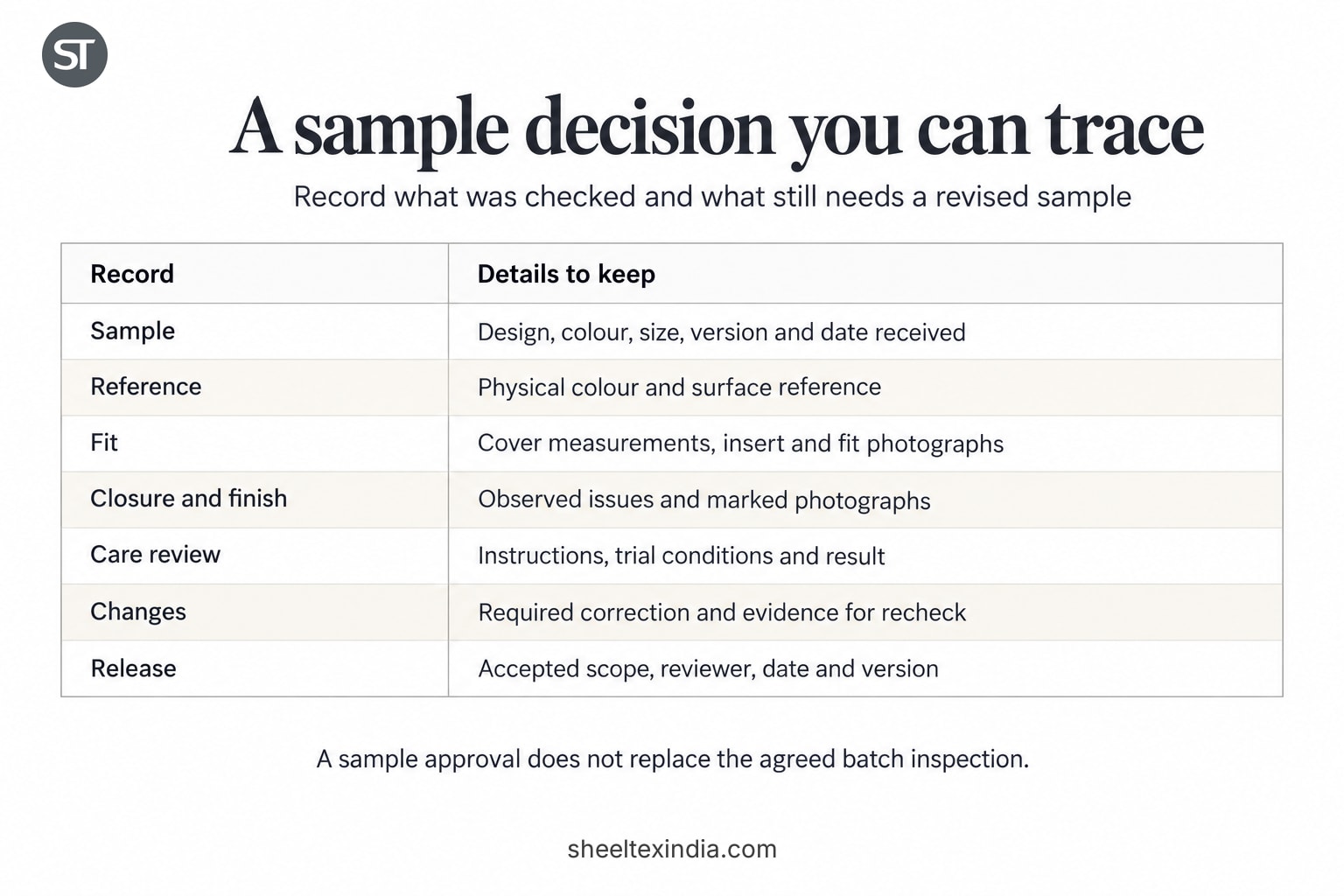
Use the following fields as a reusable cushion-cover sample approval checklist. Attach the marked photographs and keep the actual reference sample identifiable.
| Record | Details to keep |
|---|---|
| Sample | Design, colour, size, version and date received |
| Reference | Physical colour and surface reference used for comparison |
| Fit | Empty-cover measurements and method; insert reference; assembled-fit photographs |
| Closure and finish | What was checked, observed differences and their locations |
| Care review | Instructions received; agreed trial conditions and result, or a pending action |
| Changes | Required correction, revised sample requested and evidence needed for recheck |
| Release | Accepted scope, open items, reviewer, date and version |
Here is a hypothetical review, not a report on the photographed products:
| Review item | Illustrative recorded outcome | Next action |
|---|---|---|
| Colour and surface | Accepted against the retained physical reference | Keep that reference for the revised sample |
| Fit | Accepted with the named insert used in the trial | Recheck if the cover or insert changes |
| Closure | Fabric catches at the marked point during removal | Request a revised sample and repeat the handling check |
| Care review | Instructions requested; trial not completed | Agree the instructions and review required by the brief |
| Overall sample | Held; the design is not released | Close the listed actions and issue a dated decision |
This record lets a buyer retain the accepted colour direction while holding the sample for specific corrections. It avoids an ambiguous “approved, but please fix the closure” message that could be read as permission to proceed with the affected design.
On the revised sample, confirm the requested correction and recheck anything it could affect. A changed opening may alter fitting and removal; a changed cover dimension requires another fit review. Record the new version and decision rather than overwriting the first sample’s result. A sample approval does not replace the agreed inspection of the production batch.
Send a sampling brief that the supplier can answer
Start with the Sheeltex cushion collection and identify the design photographs you want to discuss. Send one line per proposed design, colour and finished size, with units, quantity, destination and required date. State covers-only or assembled supply, the intended insert reference, physical colour reference and closure or edge requirements.
Attach your completed sample record when discussing a revision. Name the accepted details, the change requested and the check needed before release. Ask how the proposed sample, quotation and eventual order will reference the same agreed version, including packaging or label details relevant to your range.
Send your cushion-cover sampling brief to Sheeltex India with the reference photographs and the decisions you need to resolve. A clear record gives the next sample a defined purpose and makes the final buying decision easier to trace.
Frequently Asked Questions
Should a cushion insert be larger than its cover?
Approve the intended cover and insert together rather than applying one extra allowance to every construction. Record the insert reference, dimensions and filling, then check the assembled shape, seam tension and normal fitting and removal.
How should I measure a cushion cover sample?
Measure the empty cover laid flat without stretching it, using measuring points agreed with the supplier. Record finished width and height with units, and distinguish the body from projecting finishes. Keep a photograph of the method; a tape over the filled face measures a different condition.
Can I approve the colour while requesting a closure change?
Record colour acceptance separately against the retained reference, but hold the overall sample if the closure change remains unresolved. Name the required correction, revised sample and recheck before issuing a dated release decision.
What should a cushion cover care trial record include?
Include the selected cover version, complete care instructions, agreed treatment and assessment, initial measurements and appearance, trial conditions and the result. Recheck the shape, finish, closure and fit with the same insert. This buying review does not replace any separately required testing.
Enquire about your collection or project
Tell us which products you need, your preferred sizes, quantities and destination. You can also share your collection or project requirements.
Make it part of your
next collection.
Share the designs you like, approximate quantities and destination. Let’s discuss samples, pricing and custom options.
