
Braided Rugs Wholesale: Jute & Cotton, High-Traffic Ready
Last updated: August 2026
Hand-braiding twists yarn into rope-like bundles, then coils and lock-stitches them flat — the opposite construction to a woven or tufted rug. The result is a reversible, dense floor covering built for entryways, kitchens and other spots that take repeated foot traffic and grit.
What Makes Hand-Braided Construction Different From Woven Rugs?
A braided rug is built from thick yarn ropes coiled into spirals and stitched edge-to-edge, rather than interlaced on a loom. That rope profile sits slightly proud of the floor, hides soil between coils, and shows no right or wrong side — flip it when one half wears down.
That construction is why braided pieces get specified for thresholds, boot rooms, galley kitchens and hallway runs rather than formal living-room centerpieces. The rope surface reads casual and textured rather than flat and graphic, which matters when a buyer is choosing between a braided SKU and a panja or kilim flatweave for the same floor plan.
One caveat that gets missed at the RFP stage: jute braid belongs in dry indoor rooms — living rooms, bedrooms, studies, entry halls. Jute fiber holds moisture, so a braided jute runner has no business in a bathroom, mudroom with wet boots daily, or anywhere near a pool deck. Cotton braid is the washable answer for those damp-adjacent spots; jute is not, no matter how the rope construction is marketed.
Which Braided SKUs Are Currently Moving Through Export Orders?
Three constructions cover most of what wholesale buyers ask for in a braided line: a jute-cotton facet braid, a pure jute rope braid, and a recycled cotton colour-block braid. Each targets a different placement and a different care conversation with the end retailer.
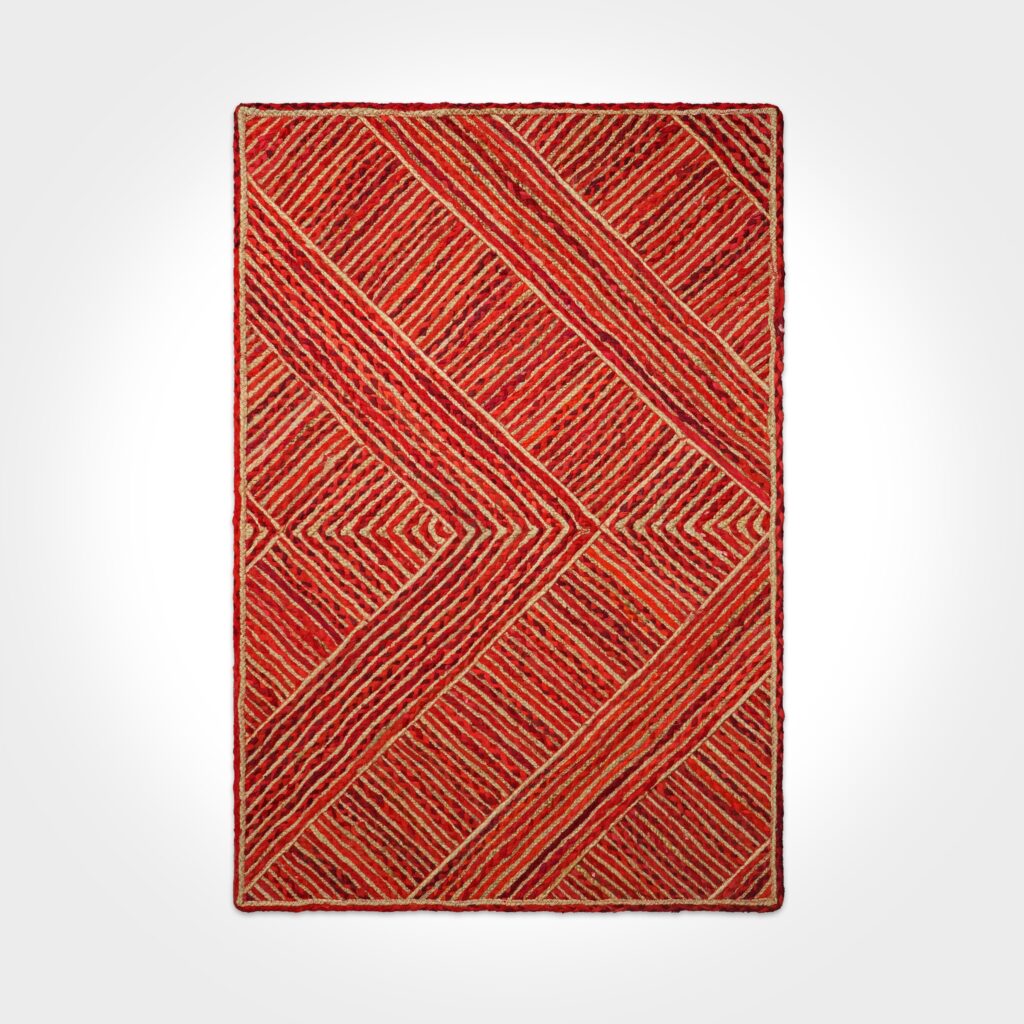
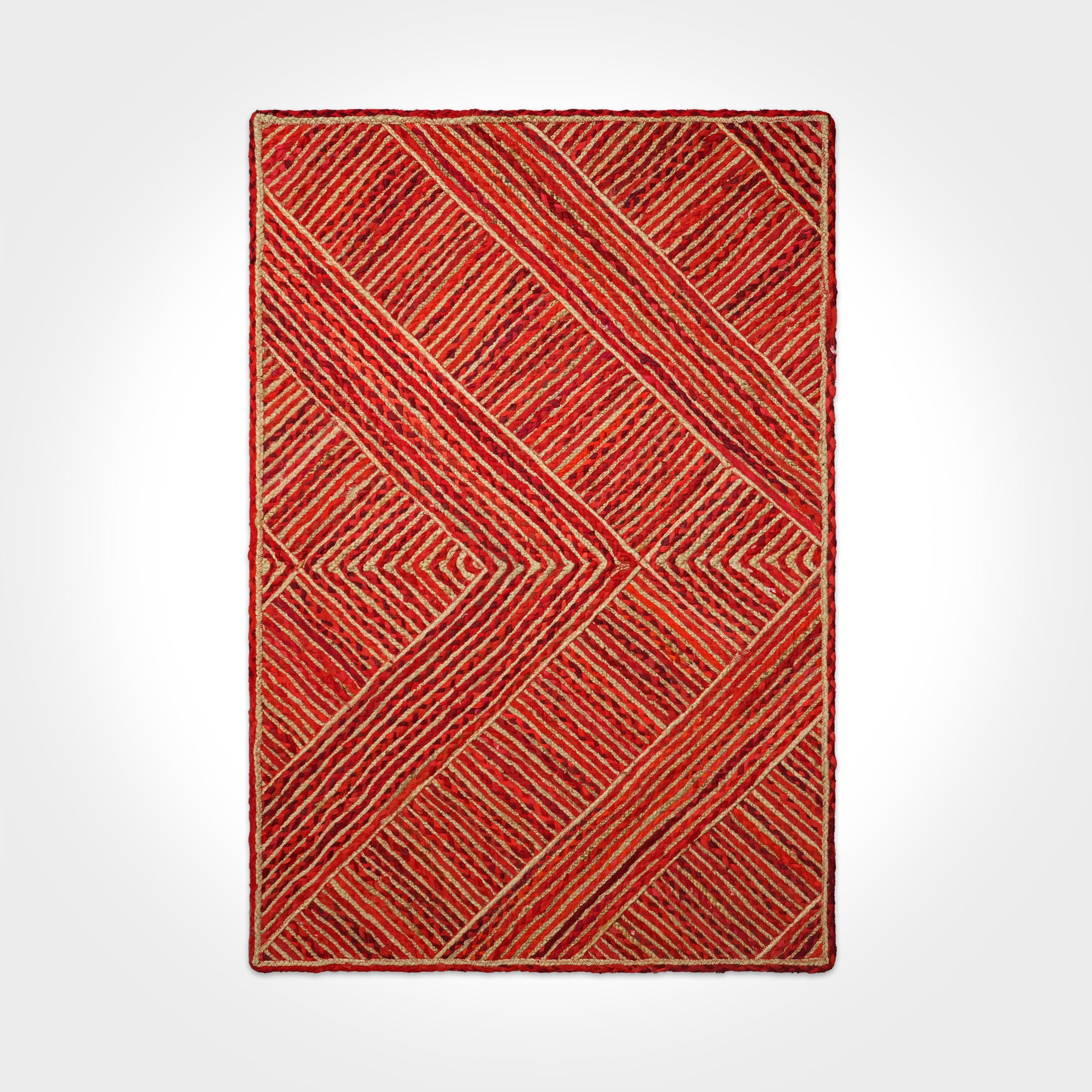
The Facet Rug (STJR-159) is a jute-cotton hand-braid sampled at 120 x 180 cm with a 10-piece MOQ — the cotton content softens the handle slightly versus a straight jute rope while keeping the same stepped, geometric colour logic jute takes on naturally.
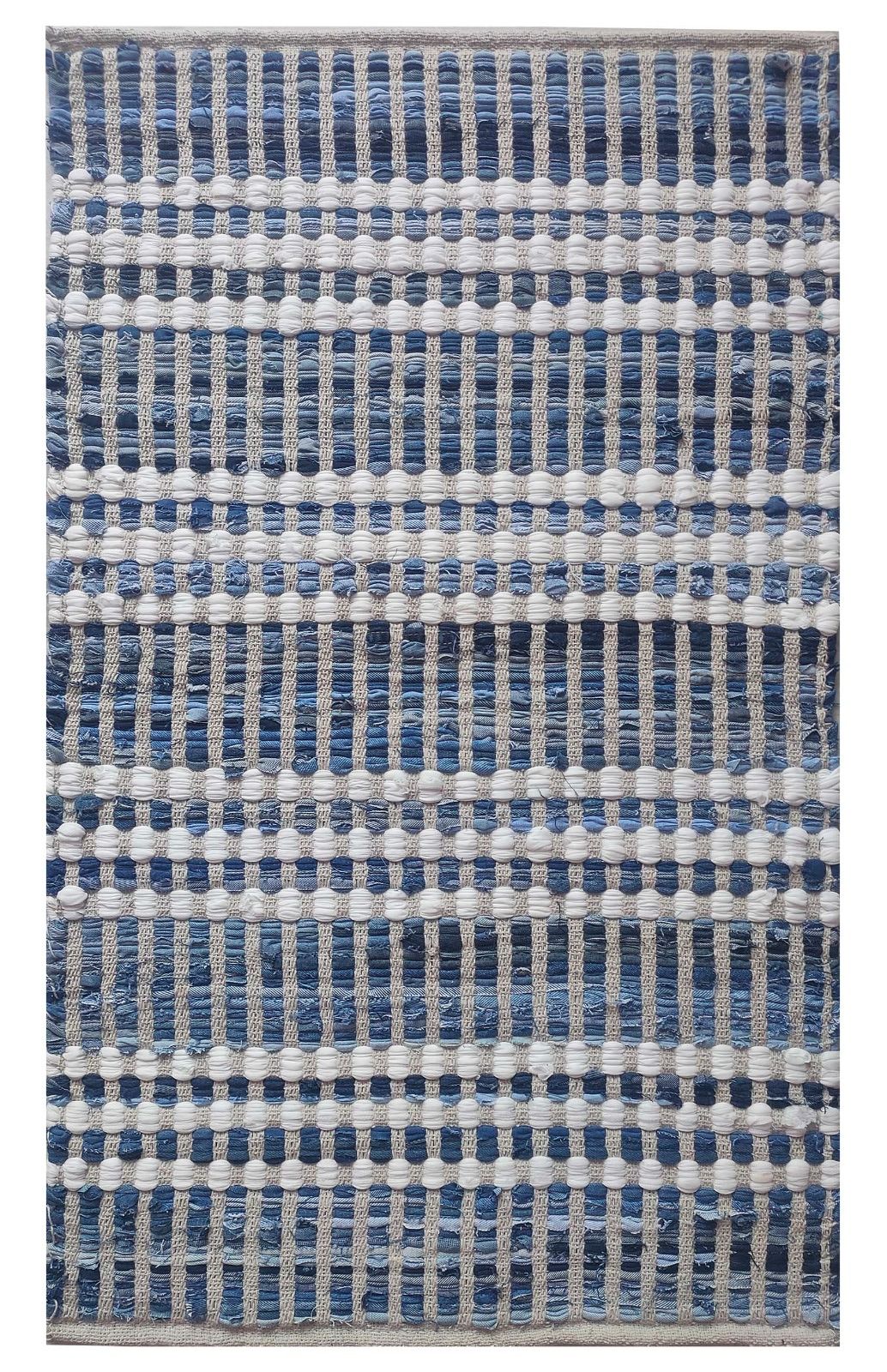
The Indigo Rug (STCR-2) runs in recycled cotton, which is where the sustainability line item on a swing tag actually holds up — cotton braid is washable and suits a kids’ room, a reading nook, or anywhere a spill needs blotting rather than a dry-clean callout.
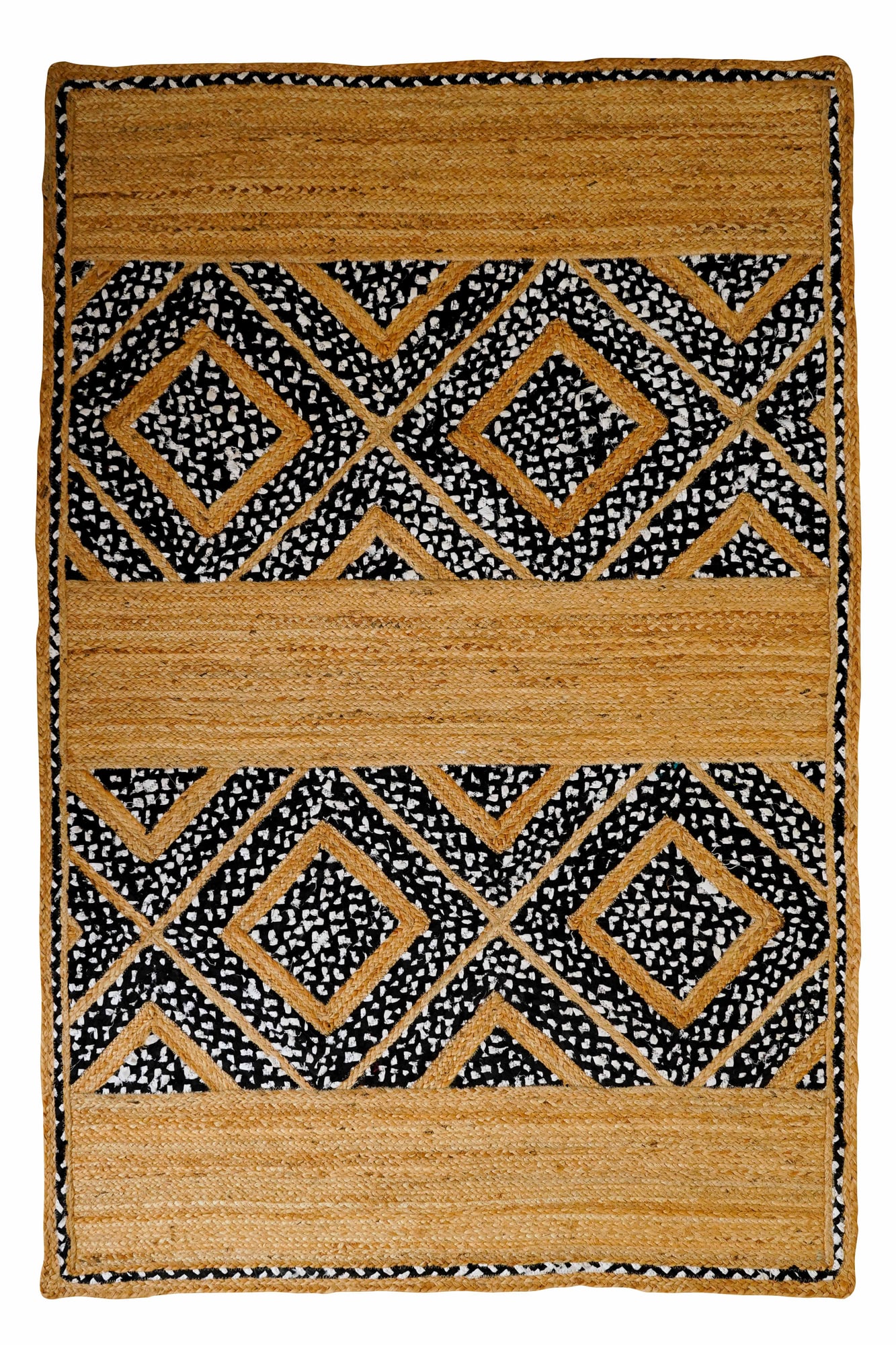
The RU24-17 RD jute braid is the plainer rope construction — no cotton blend, just jute coiled and stitched, which is the SKU to spec when a retail buyer wants the heirloom braided look at the lowest fiber cost per square metre. Styled correctly, it reads as a hallway or entry piece rather than a living-room anchor.
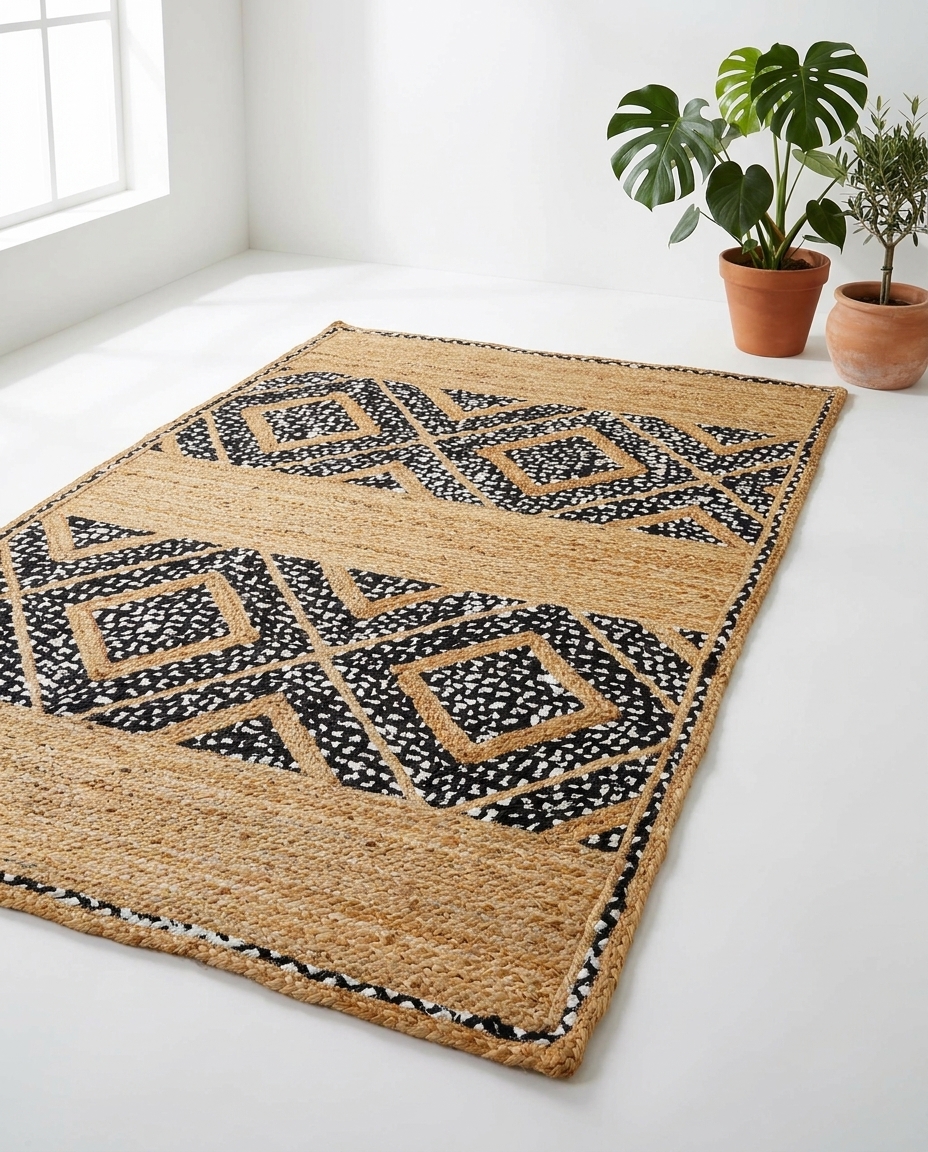
How Is a Braided Rug Actually Built, Step by Step?
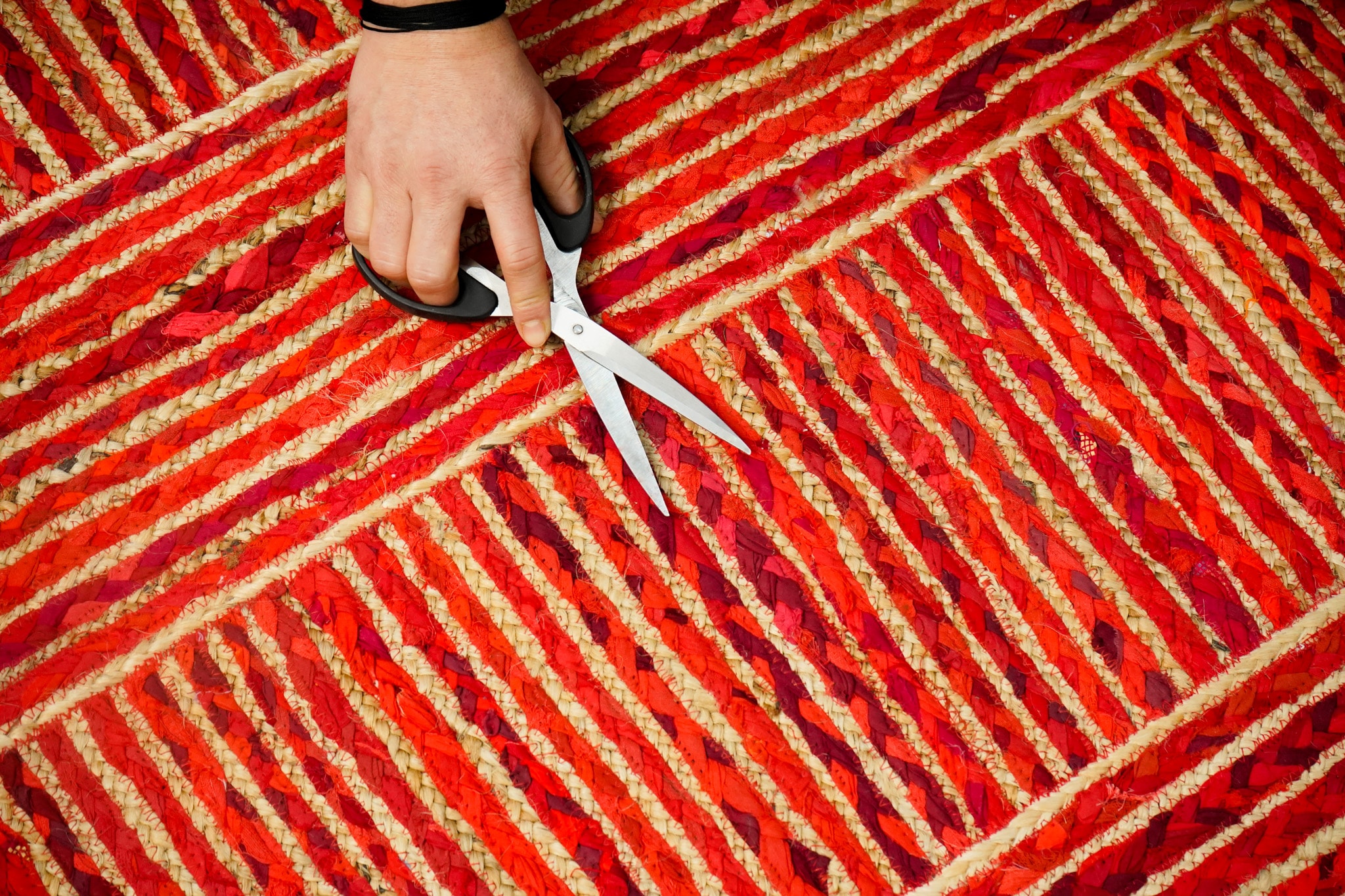
Braiding starts with three or more yarn bundles twisted into a continuous rope, which is then coiled into a spiral or oval base and lock-stitched row to row so the coils lie flat under weight instead of unraveling at the edge.
In our production runs, rope bundle diameter is held within about 1-2mm across a single rug so the spiral doesn’t drift off-round by the time it reaches the size we’re braiding to. The lock-stitch pass — usually a heavier cotton or jute twine run every 6-8mm along the seam — is what keeps a braided rug flat rather than domed, and it’s the first thing that fails on a poorly made piece: loose lock-stitching shows as rippling at the edges within a few months of foot traffic.
Oval and rectangular shapes are built by braiding straight runs and turning tight corners at each end, which takes longer per piece than a round spiral and is usually reflected in longer lead times rather than a different construction method.
Braided vs Flatweave: Which Holds Up Better Underfoot, and How Do You Care for a Jute Braid?
Braided rugs sit higher off the floor and resist crushing better in entry zones; flatweave jute and panja pieces lie flatter and suit rooms where a low profile matters, like under furniture or in a formal living space. Neither should go near standing water.
| Hand-Braided | Flatweave (Panja/Kilim) | |
|---|---|---|
| Profile height | Raised, rope-textured | Flat, low profile |
| Best placement | Entryways, kitchens, hallways | Living rooms, bedrooms |
| Reversibility | Fully reversible | Not reversible |
| Underfoot feel | Firmer, more cushioned | Thinner, harder |
| Wet-area use | No — jute holds moisture | No — jute holds moisture |
| Repair method | Re-stitch the seam | Re-weave the section |
Across export orders shipped in 2025, braided constructions in entry and hallway placements were coming back for reorder within roughly 14-18 months, against 22-24 months for the same fiber in a flatweave living-room placement — the raised rope profile simply takes more direct wear before it flattens.
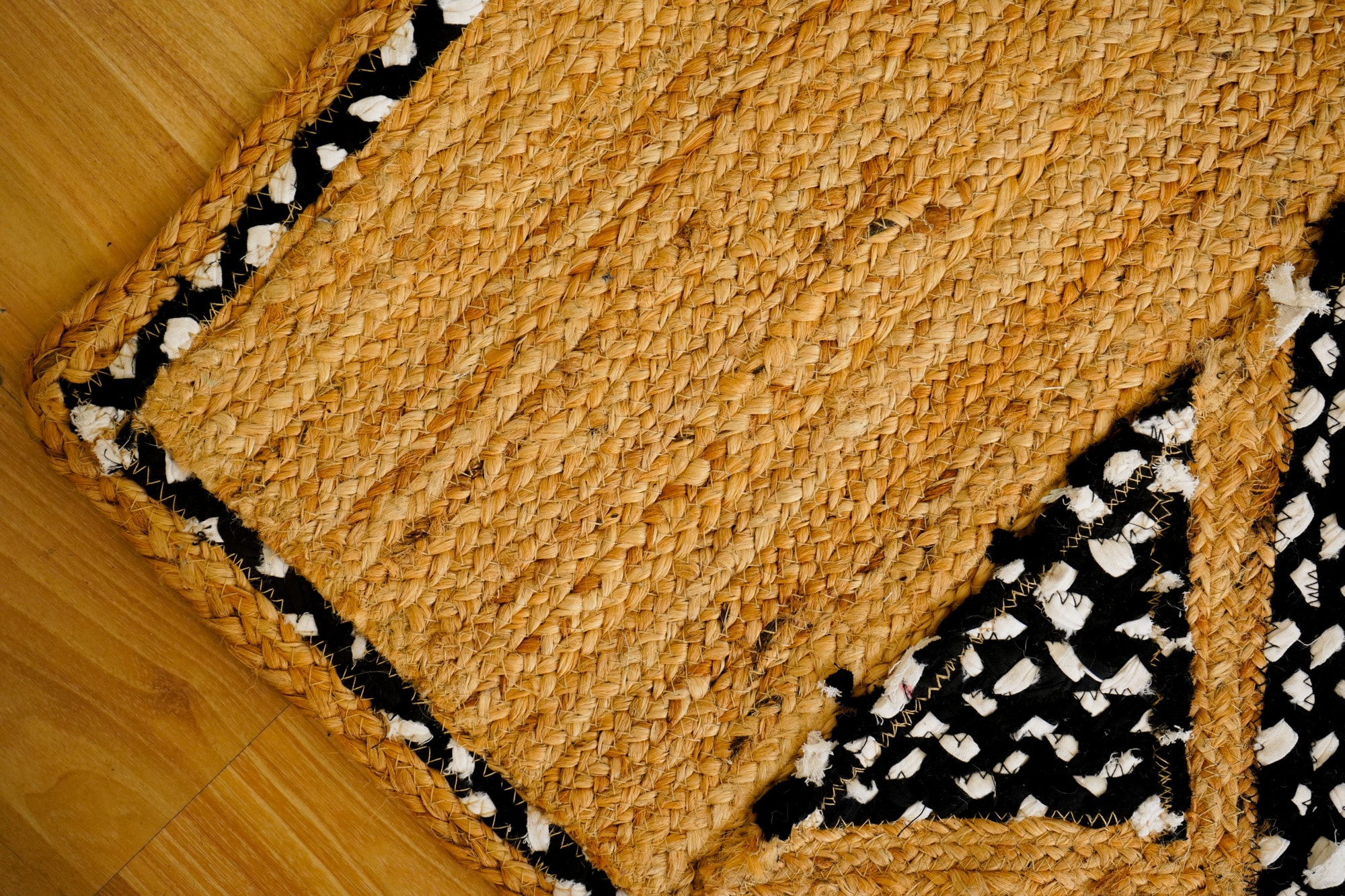
Care for a jute braid stays dry throughout: vacuum on a low-suction setting or use a stiff brush against the coil direction, blot spills immediately with a dry cloth rather than wet-wiping, and rotate the rug every few months so wear doesn’t concentrate on one arc of the spiral. Never wet-mop under it or steam-clean it — jute that stays damp for more than a day or two will mildew from the inside of the rope where air can’t reach. That single rule is worth putting in the care-label copy rather than leaving it to the retailer to guess. For a longer maintenance rundown, our guide to caring for jute rugs covers the wash-adjacent mistakes that shorten a rug’s life fastest, and the traffic-specific case for the fiber is laid out in why jute holds up in high-traffic areas.
What OEM Options Exist for a Custom Braided Program?
Braid width, colourway and shape are the three levers a private-label buyer can move without changing the underlying construction. A thinner lace braid reads more refined; a thick rope braid reads more rustic and wears longer per square metre.
Shape is the constraint that catches first-time buyers off guard: round and oval bases are the native geometry of a coiled braid and ship faster, while rectangular braided rugs require straight runs turned at hard corners, which adds bench time and usually pushes lead times out by a week or two over the same order in round.
On colour, remember jute takes dye down a step — a swatch that looks bright indigo or rust on screen lands warmer and duskier once it’s spun into rope and coiled, so approve against a physical lab dip rather than a screen proof before committing to a production run. In our 2026 sampling data, roughly one in five colour-only reorders needed a second dip because the first approval was done off a monitor rather than a physical swatch. Cotton braids like the Indigo Rug take dye closer to true, which is one reason cotton stays the easier fiber for exact Pantone matching on a retail program. Buyers building out a wider natural-fiber range alongside a braided SKU often pair it with the reasoning laid out in why buyers are stocking jute and recycled cotton rugs in 2026, or compare current braided styles against this year’s braided rug picks before finalizing a colour and shape matrix.
Before issuing a PO, it’s worth checking a supplier’s construction consistency the way you’d check any other handmade good — the checklist in how to identify high-quality rugs in the wholesale market applies just as directly to a braided coil as it does to a knotted pile.
If you’re scoping a braided line for Q4 and need to see how a rope construction handles against your own traffic data, we can put together a sample plan across round, oval and rectangular bases — send over your spec sheet and we’ll come back with lead times.
Frequently Asked Questions
What is the MOQ for wholesale braided rugs from India?
Most hand-braided SKUs, including the Facet Rug (STJR-159), run a 10-piece minimum order across a single design and colourway. Mixed-colourway orders under that count are usually handled as a paid sampling run rather than a production MOQ.
How long does sampling take for a custom braided rug?
Expect 10-14 days from an approved colour dip to a finished sample, longer if the shape is rectangular rather than round or oval since corner turns need extra bench time. Add a few days if the first swatch approval was done off-screen and needs a physical re-dip.
Can jute braided rugs be used in bathrooms or outdoor spaces?
No. Jute holds moisture and will mildew if it stays damp, so braided jute belongs in dry indoor rooms only — entryways, hallways, bedrooms and living spaces. For bathrooms or covered outdoor areas, a recycled cotton braid is the washable option instead.
What’s the difference between braided and flatweave jute rugs?
Braided rugs coil rope-like yarn bundles into a raised, reversible surface suited to entryways and high-traffic zones. Flatweave jute (panja or kilim) lies flat and low, better suited to living rooms and under-furniture placements, but it isn’t reversible and shows wear faster in heavy-traffic spots.
Do braided rugs come in custom shapes and colours?
Yes. Round and oval are the native shapes for a coiled braid and ship fastest; rectangular versions need straight runs turned at hard corners and typically add a week or two to lead time. Colour is customizable too, though jute always dyes a step duskier than the screen proof shows.
Enquire about your collection or project
Tell us which products you need, your preferred sizes, quantities and destination. You can also share your collection or project requirements.
Make it part of your
next collection.
Share the designs you like, approximate quantities and destination. Let’s discuss samples, pricing and custom options.
