

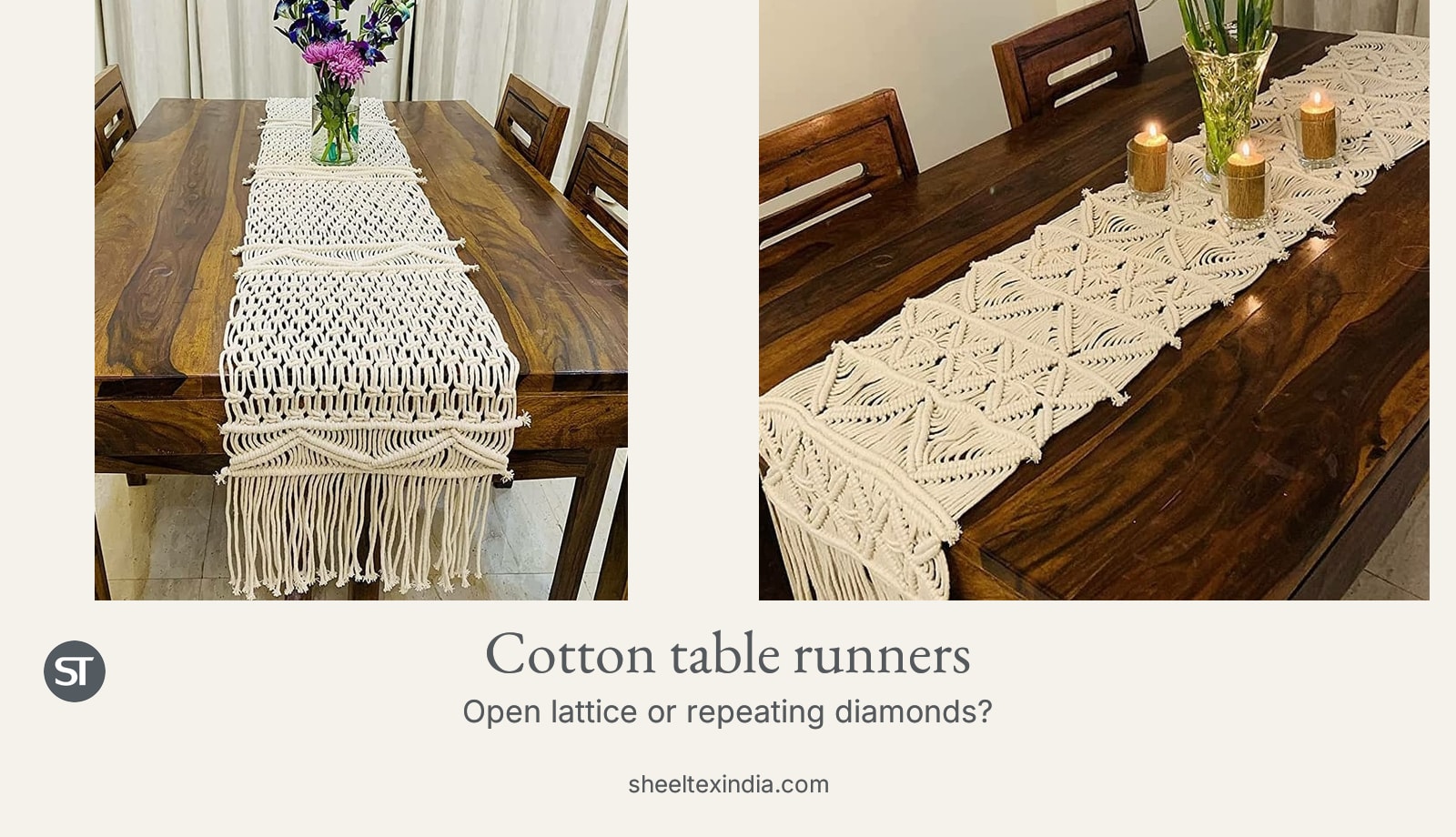
Against a dark wooden table, ivory cord makes the pattern easy to see. Two cotton table runners in Sheeltex’s current tableware range take different approaches: one breaks open lattice into bands, while the other carries a chain of diamonds along the length. For a retailer, that means choosing a more varied texture or a continuous geometric repeat.
Open loops let the table show through
The first runner changes as the eye travels along it. Long ladder-like loops sit beside smaller mesh, while thick knotted bands cross the width. Near the end, curved cords form a shallow pointed shape before opening into long fringe. The gaps are part of the design: the wood underneath remains visible between the ivory cords.
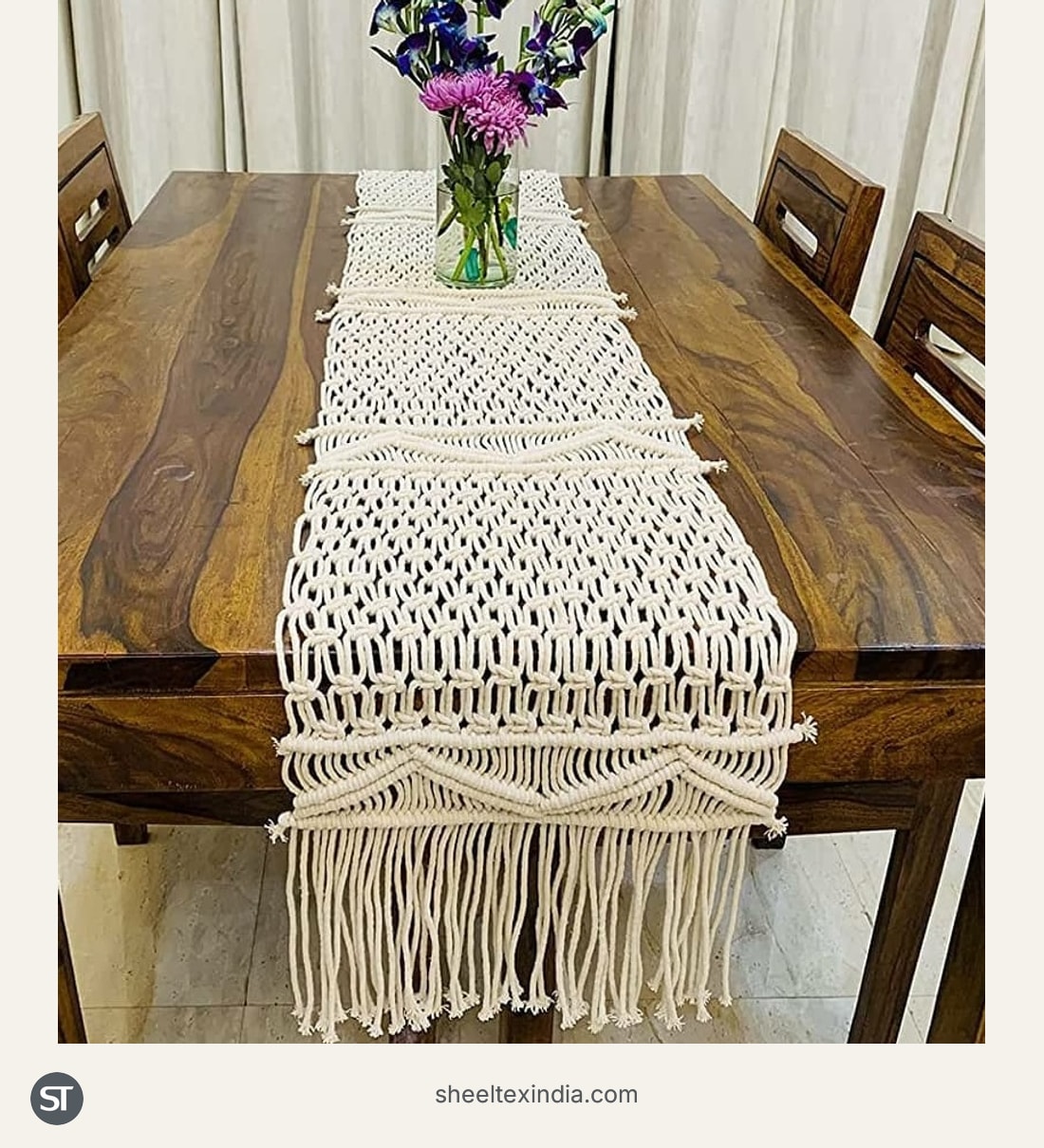
This is worth shortlisting for a display in which the table itself has a strong grain. Keep part of the runner uncovered so customers can see the change from loose loops to tighter knots. A large tray spread across the centre would conceal much of that variation; a narrower vase leaves more of it in view.
The end treatment deserves its own photograph in a product listing. Here, the fringe hangs beyond the table edge, making a different impression from the open pattern lying flat on top.
Diamonds give the length a steadier repeat
The second runner has prominent diagonal lines that meet in a chain of diamonds. Inside them, finer cords curve into fan-like sections. Small knotted points mark the sides. The pale pattern reads clearly against the dark tabletop, with a more regular sequence than the open-loop runner.
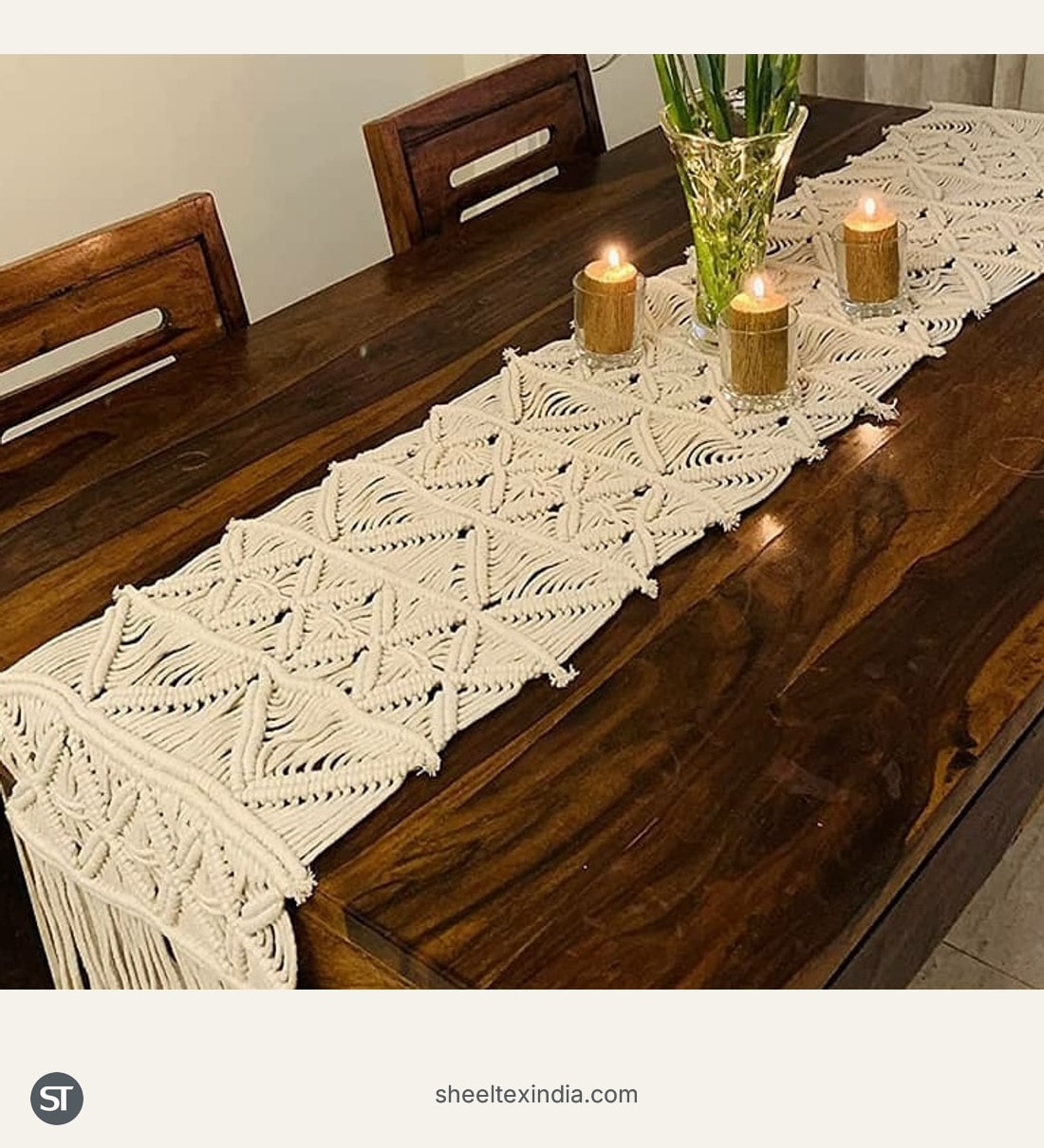
For a retailer already showing plain plates and simple glassware, this gives the centre of the table a defined pattern without adding another colour. Leave several complete diamonds visible between the objects in the display. If the centrepiece covers every junction, customers mostly see ivory cord rather than the reason to choose this design.
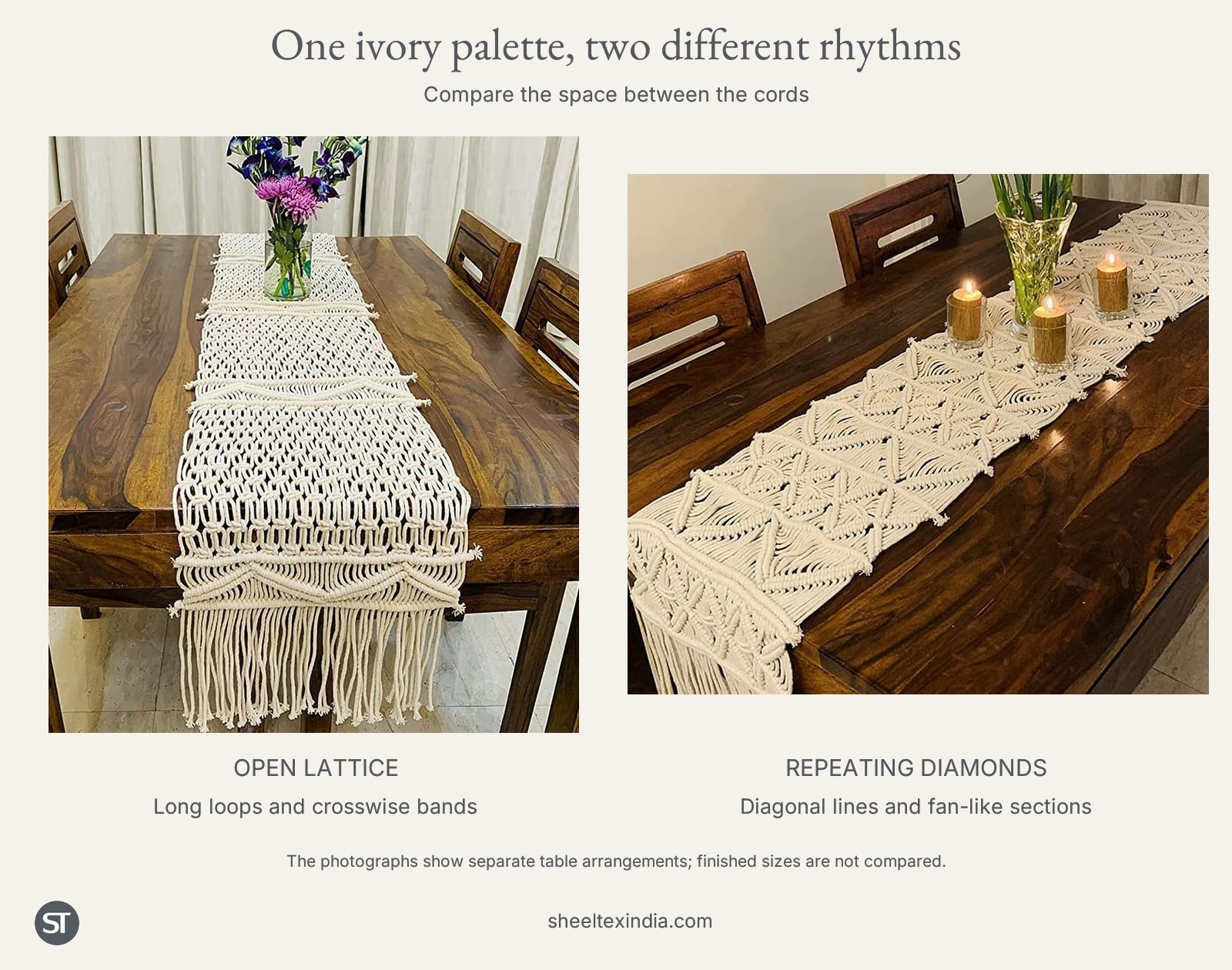
The comparison below uses the actual photographs to show those differences. It compares the pattern, rather than the finished dimensions of the two runners.
Two display ideas for the same ivory colour
For the open lattice, try a warm wood table, plain chalk-coloured crockery and deep olive napkins. The napkins add one deliberate colour while the gaps keep the grain visible. Use an arrangement with space around it; a row of small ornaments would compete with the changing knot pattern.
For the diamond runner, a darker table with plain white plates and charcoal napkins would make the diagonal cord lines easier to notice. Keep printed placemats out of this first display so a buyer can judge the runner’s repeat on its own.
Showing both designs on similar tabletop colours would also help an online comparison. Keep the photo angle and lighting consistent, and include one clear view of the full length alongside the end detail.
Choose the length with the fringe in view
Both current designs are cotton, and both allow requested sizes. When discussing a size, distinguish the patterned section from the fringe: the same overall length can leave a different amount of pattern on the tabletop. Give the table dimensions and say whether the runner should sit entirely on top or hang over the ends.
Explore Sheeltex’s current home-furnishing collection for the wider tableware range. To discuss either runner, send a trade enquiry with the design photograph, required dimensions, quantity and destination.
Frequently Asked Questions
How can I compare the size of these cotton table runners?
Compare confirmed finished measurements, including whether the quoted length includes fringe. The two photographs show different table arrangements and do not establish relative product size.
Which runner suits a display with strongly grained wood?
The open lattice lets the timber show between long loops and knotted bands. Keep enough of the runner uncovered to see both the wood and the changing cord pattern.
Can I enquire about a different runner length?
Yes. Both selected cotton runners allow requested sizes. Send the intended table dimensions, preferred overhang and quantity so the team can confirm a suitable size and quotation.
Enquire about your collection or project
Tell us which products you need, your preferred sizes, quantities and destination. You can also share your collection or project requirements.