
Hand-Braided Rugs: Manufacturing for Wholesale Buyers
Last updated: August 2026
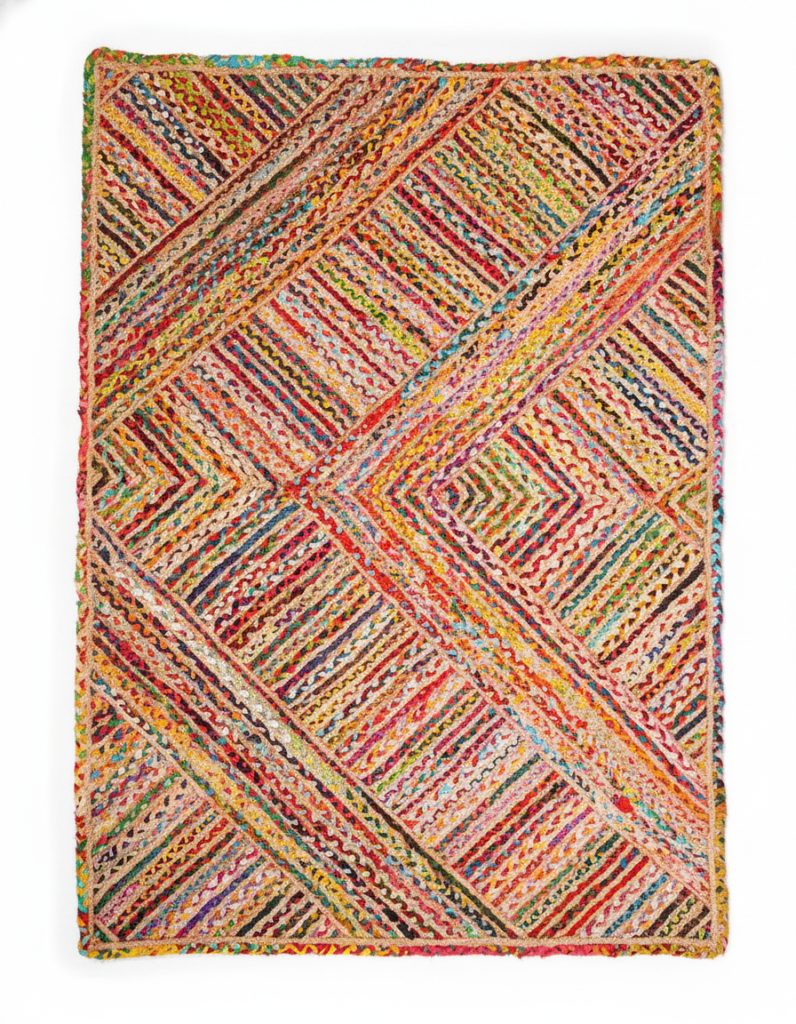
A hand-braided rug is not woven on a loom — it is a rope. Artisans twist yarn into three- or five-strand plaits, then coil that rope into rounds or rows and lock it flat with a hidden stitch. That single fact explains almost everything about how these rugs perform, and where a wholesale buyer’s spec sheet needs to be different from a tufted or flatwoven order.
The braiding process: From raw jute and recycled cotton to finished rug
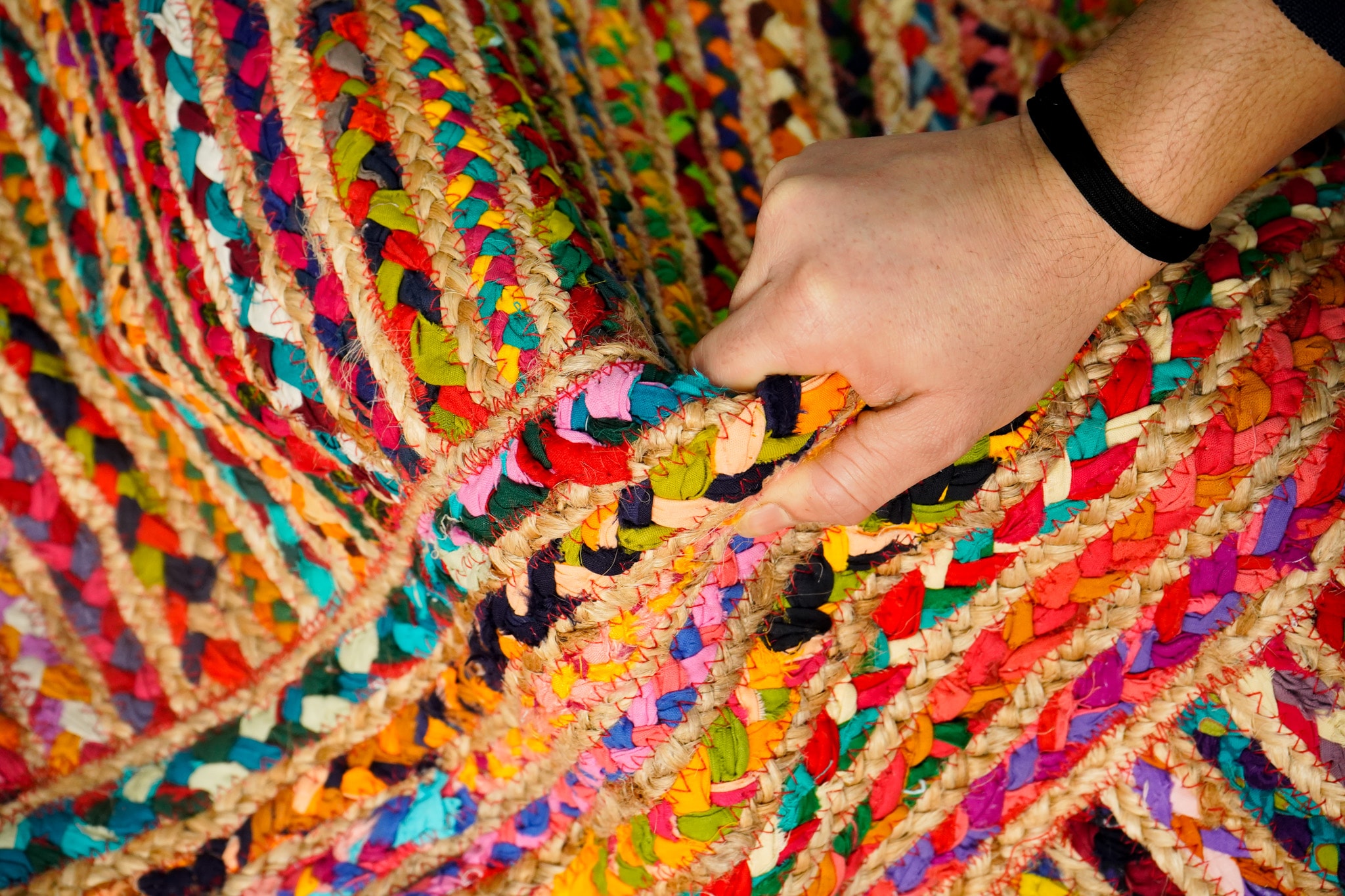
Hand-braided rugs start as loose fiber — jute, or in blended programs jute paired with recycled cotton — that is first spun into yarn, then plied into a three- or five-strand braid by hand. No loom is involved at any stage; the braid itself is the fabric.
Once a braider has enough rope for a panel, a second artisan coils it into concentric rounds or straight rows and locks each pass to the one before it with a blind lockstitch, usually cotton or jute twine pulled tight enough that the coils can’t shift under foot traffic. This is why colour changes in a braided rug show up as bands or blocks rather than a printed motif — the pattern is built round by round, never applied afterward. It’s also why jute takes dye down a shade: a colourway that looks bright on a swatch card lands warmer and slightly duskier once it’s braided and under natural light, something worth flagging to a retail buyer before final sign-off on a colour standard.
Our weaving units in northern India run both 100% jute braid programs and jute/recycled-cotton blends for buyers who want a softer underfoot hand-feel without giving up the rope construction. Either way, the finished panel is trimmed to size and edge-bound last — a step worth confirming with any supplier, since an unbound or loosely bound edge is where a braided rug starts to unravel first.
Product focus: RU24-126 and RU24-17 construction analysis
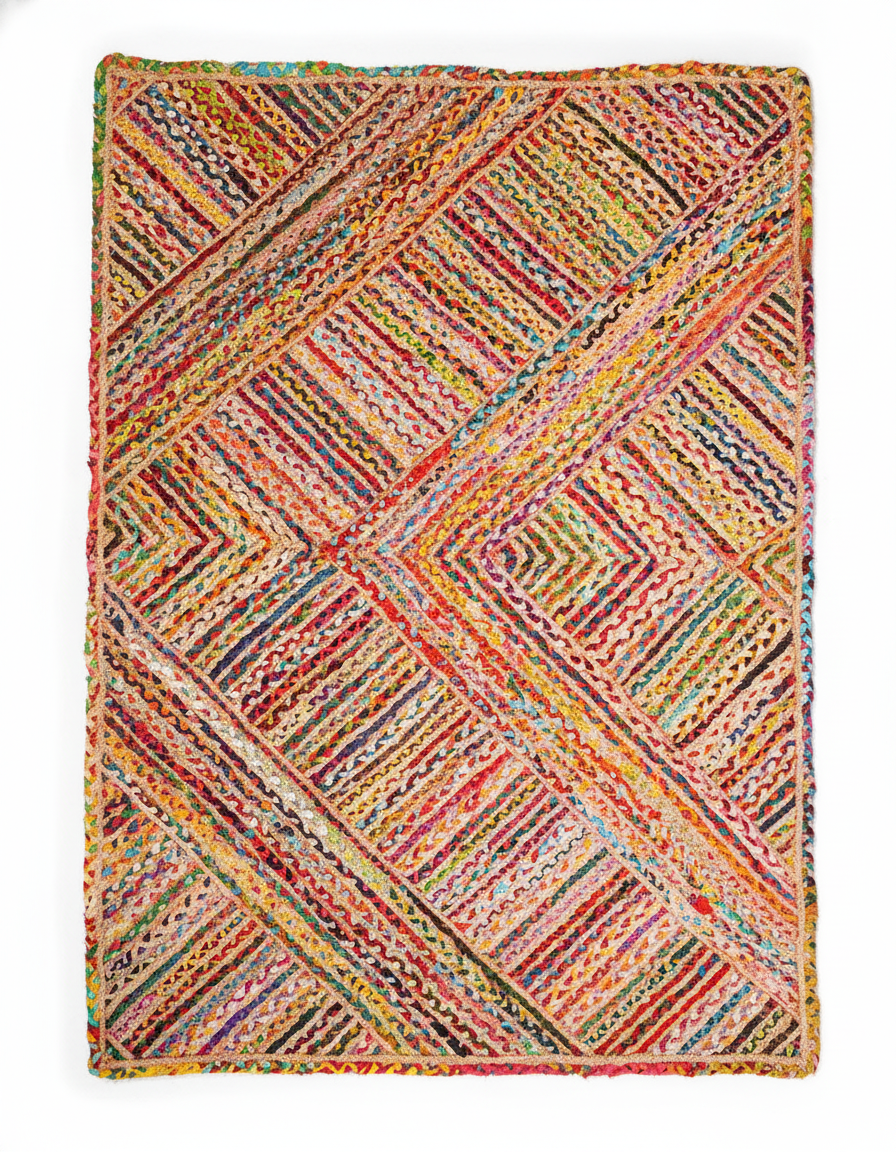
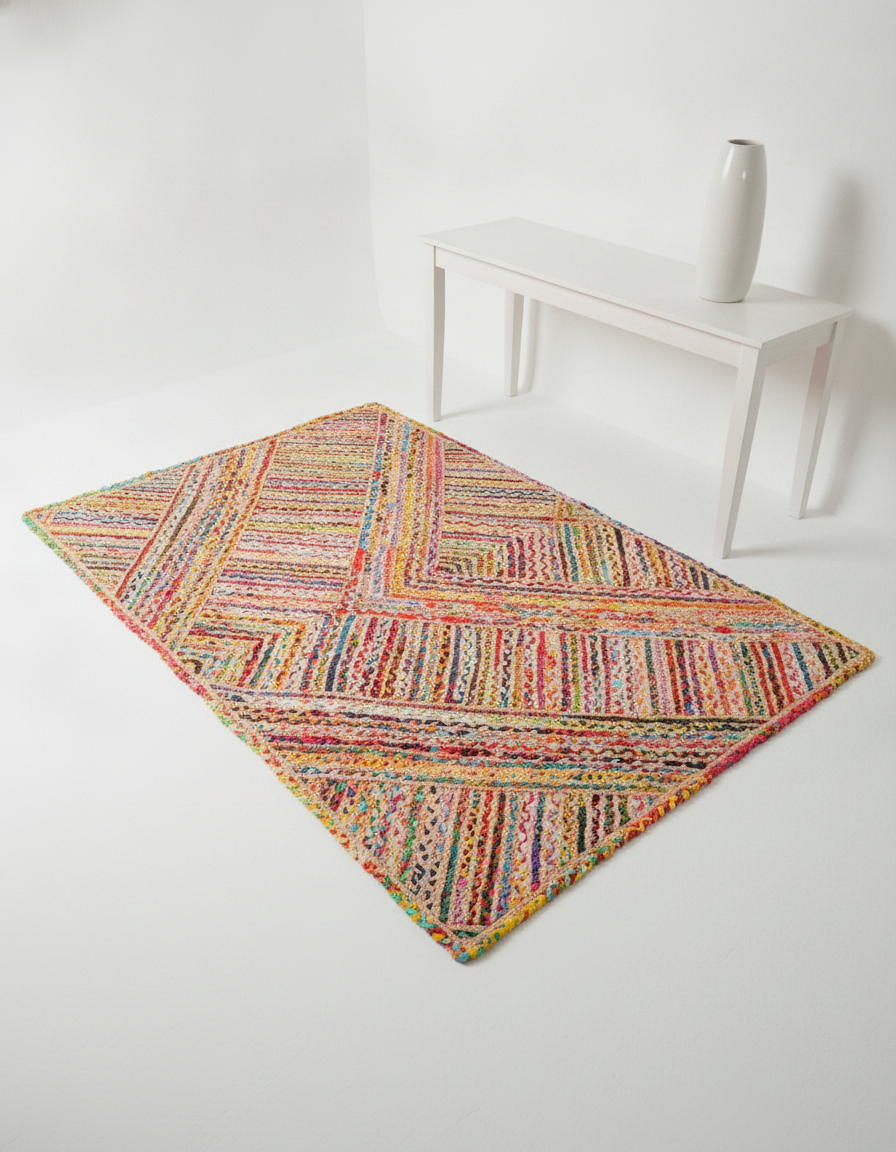
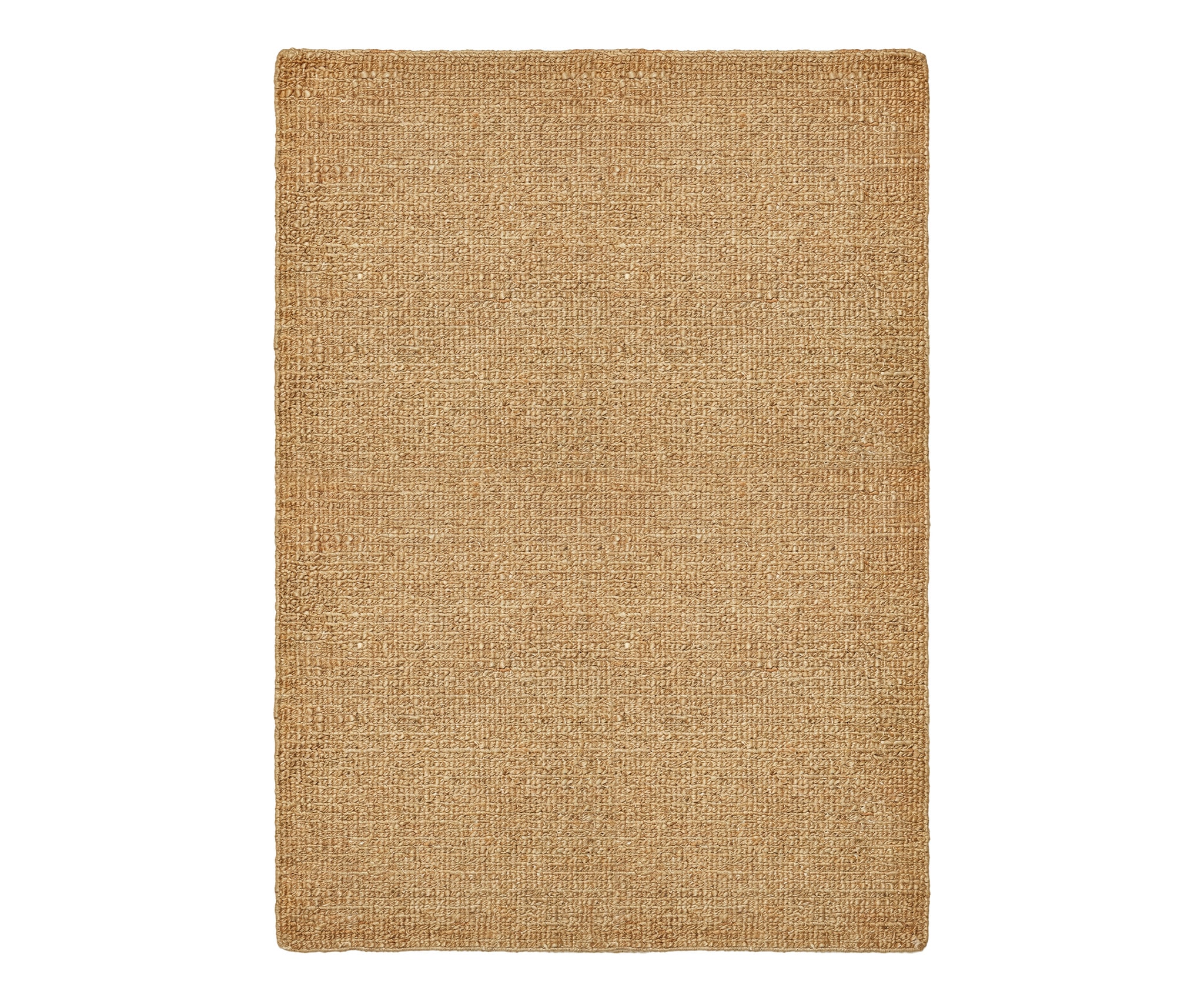
RU24-126 and RU24-17 are both 100% jute, hand-braided constructions from the same production line — the difference between them is braid gauge and colourway, not the underlying build. Both rely on the same coil-and-lockstitch method, which is what gives a braided rug its flat, reversible-feeling profile compared with a piled or tufted construction.
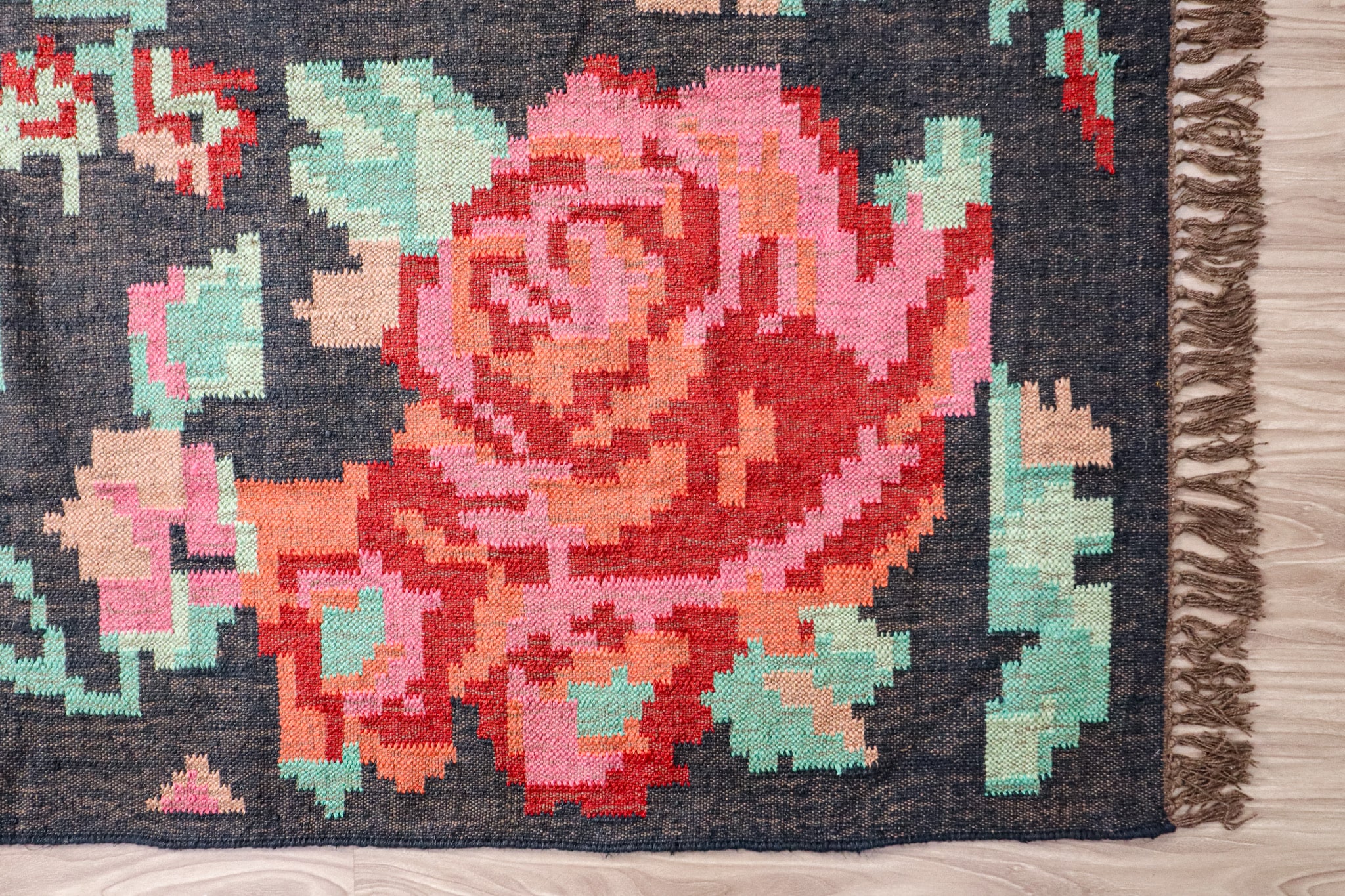
RU24-126 ships at a 120 x 180 cm sample size with a 100-piece MOQ, which is typical for a first program order — enough to test a colourway across a retail floor set or a hotel guest-room run before committing to a full container. The pattern language on both styles stays within stepped geometry: stripes, blocks and stepped chevrons built from the braid rounds themselves, rather than curved or figurative motifs, which simply isn’t achievable in a braided construction.
| Attribute | RU24-126 | RU24-17 |
|---|---|---|
| Composition | 100% jute | 100% jute |
| Construction | Hand-braided, coiled and lockstitched | Hand-braided, coiled and lockstitched |
| Sample size | 120 x 180 cm | Companion colourway/size option |
| MOQ | 100 pcs | Quoted per colourway on request |
| Pattern type | Stepped stripes/blocks | Stepped stripes/blocks |
Where hand-braided jute rugs belong (and where they don’t)
Hand-braided jute rugs are built for dry indoor floors — living rooms, bedrooms, studies, and hotel guest rooms — where the coiled rope construction holds up to daily foot traffic and regular vacuuming. They are not suited to bathrooms, kitchens near a sink, or any outdoor or poolside application, because jute fiber absorbs moisture and doesn’t release it quickly, which leads to odour, mildew and a braid that loosens from the inside out.
A category manager stocking a bath collection and a living-room collection from the same supplier needs to keep the sourcing brief clear: jute for the bedroom, a synthetic or recycled-PET construction for the patio or bath mat, and never the other way round. Buyers who want the same natural-fiber look for a covered veranda or a mudroom should be looking at how jute compares with cotton construction or at a PET-based alternative, not asking a jute mill to reformulate for wet conditions.
| Setting | Suitable for braided jute? | Why |
|---|---|---|
| Living room, bedroom, study | Yes | Dry, moderate traffic, easy to vacuum |
| Hotel guest room | Yes | Dry-use, replaces well on a program cycle |
| Hallway / entryway | With a non-slip pad | Higher traffic, needs pad to hold coil shape |
| Bathroom | No | Moisture absorption, slow drying |
| Outdoor patio / poolside | No | Not water-resistant, degrades fast |
Durability testing standards for braided floor coverings
Braided floor coverings are tested differently from tufted or knotted rugs because their strength comes from the tightness of the lockstitch, not from a backing or adhesive layer. The three checks that matter most are an abrasion or rub test, a braid-lock pull test, and colorfastness to rubbing and light.
Commercial flooring textiles are commonly rated against a 15,000-20,000 cycle Martindale-style abrasion benchmark; a hand-braided jute rug destined for a hospitality contract should hold its surface without visible fraying at the lower end of that range. The pull test matters more for braided construction specifically — a supplier should be able to tell you the stitch tension used to lock each coil, because a loose lockstitch is the single most common cause of returns on this product type. Across export orders shipped in 2025, quality complaints on braided jute lines traced almost entirely to loose braid-lock stitching at the panel edges rather than fiber failure in the yarn itself, which is why edge reinforcement gets checked separately from the field of the rug during final inspection.
| Test | What it checks | What to ask your supplier |
|---|---|---|
| Abrasion / rub | Surface wear under foot traffic | Cycle count the construction is rated to |
| Braid-lock pull | Stitch tension holding coils together | Minimum pull force before a coil shifts |
| Colorfastness | Dye stability under rubbing and light | Rating scale used (grey scale 1-5 is standard) |
| Edge inspection | Binding integrity at rug perimeter | Whether edges are checked separately from the field |
Buyers building a spec sheet for a hospitality or retail program should read this alongside the high-traffic durability data on jute rugs, since the wear patterns for braided and flatwoven jute differ even though both are built from the same fiber.
What this means for your next order
A braided jute program rewards buyers who ask construction questions upfront — stitch tension, edge binding method, and expected colour drift from swatch to finished rug — rather than treating it as interchangeable with tufted or flatwoven jute. For a fuller walkthrough of the rug manufacturing process, or for context on where braided styles fit inside a wider 2026 wholesale jute rug program, it’s worth reading both before finalising a colourway. Buyers building an eco-positioned assortment will also want the sourcing angle covered for eco-conscious buyers sourcing jute in bulk.
If you’re scoping a braided jute line for a Q4 reorder or a new hospitality contract, email a tearsheet with your target colourway and we’ll come back with a sample plan and lead time within 48 hours.
Frequently Asked Questions
How are braided rugs made?
Braided rugs are made by twisting yarn into a three- or five-strand rope, then coiling that rope into rounds or rows and locking each pass to the last with a hidden stitch. No loom is used — the braid itself is the fabric, which is why the construction feels flatter and more flexible than a tufted or knotted rug.
What is the MOQ for hand-braided jute rugs?
MOQ varies by style and colourway. RU24-126, for example, runs at 100 pieces per colourway for a 120 x 180 cm size, which is a typical starting order for a retail chain or hospitality program testing a new colourway before a full container commitment.
Can hand-braided jute rugs be used outdoors or in bathrooms?
No. Jute absorbs moisture and dries slowly, so braided jute rugs are built for dry indoor rooms — living rooms, bedrooms, studies, hotel guest rooms — not for bathrooms, kitchens near water, or any outdoor or poolside setting.
How long does sampling take for custom braided rug orders?
Sampling for a custom colourway on a braided jute construction typically runs 10-14 days from an approved artwork or Pantone reference, since the braid rounds need to be built and coiled by hand before a finished sample panel can be checked against the standard.
What durability tests should I ask a braided rug supplier for?
Ask for an abrasion or rub-test cycle rating, a braid-lock pull test result showing stitch tension, and a colorfastness rating on the grey scale. Braided construction depends on stitch tension rather than a backing layer, so the pull test matters more here than on tufted rugs.
Enquire about your collection or project
Tell us which products you need, your preferred sizes, quantities and destination. You can also share your collection or project requirements.
Make it part of your
next collection.
Share the designs you like, approximate quantities and destination. Let’s discuss samples, pricing and custom options.
