
6 Handwoven Jute Rugs Wholesalers Reorder Season After Season
Last updated: August 2026
Six handwoven jute rug patterns come up in nearly every wholesale reorder call, and none of them are new — Chevron Axis, Asymmetric Dot, Medallion Centerpiece, Trellis Leaf Jaal, Panja Stripe Block and Braided Check keep landing back on purchase orders because their stepped-geometry construction wears evenly and their colour reads consistent, batch after batch.
Modern geometric staples: Chevron Axis and Asymmetric Dot
Chevron Axis and Asymmetric Dot are the two flatweave patterns that move fastest through wholesale reorders, because their stepped-block geometry hides foot-traffic lines and slots into both minimalist and boho assortments without a design refresh. Both are handwoven flatweave jute — no printing, no stamping — built entirely from horizontal and diagonal block steps.
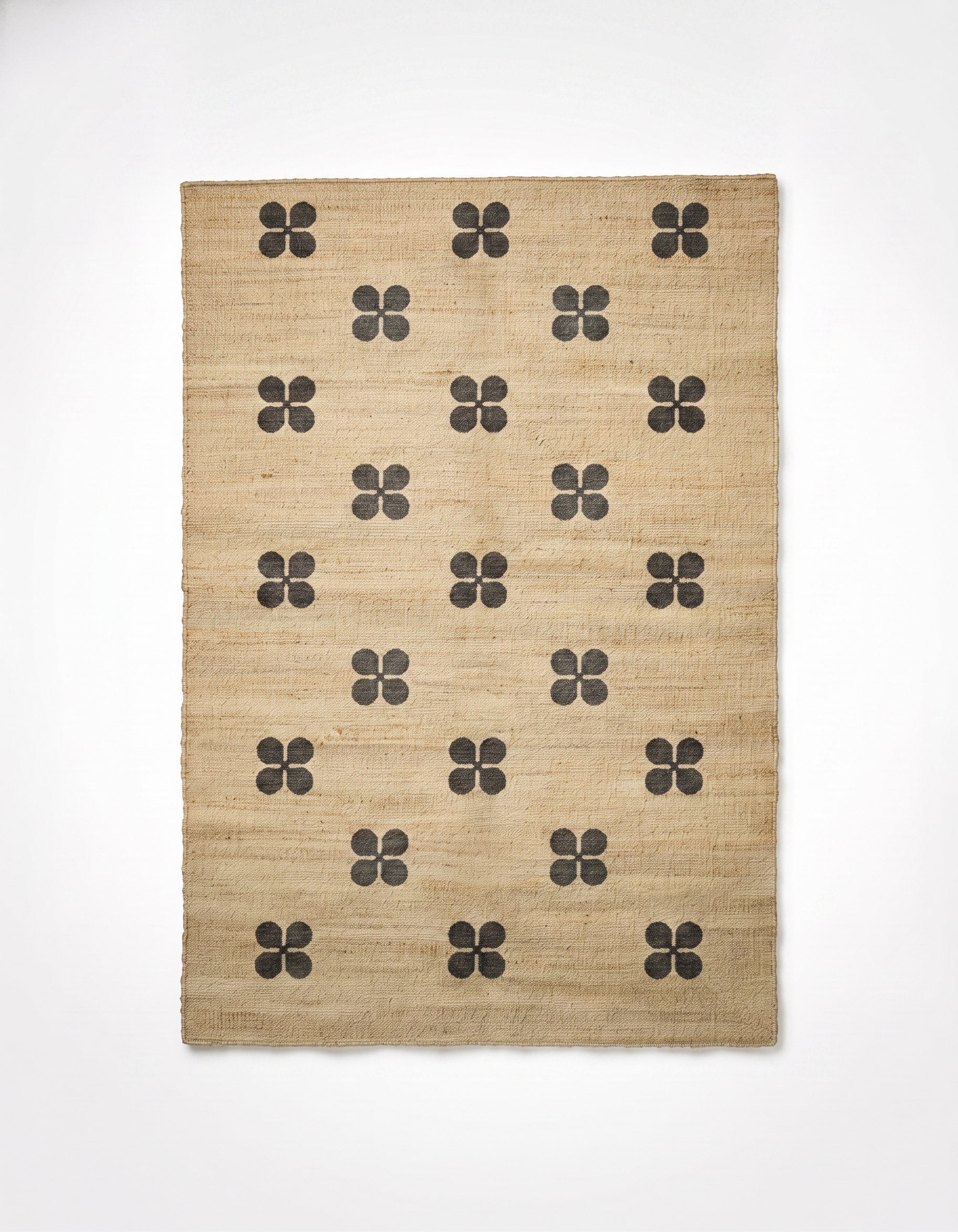
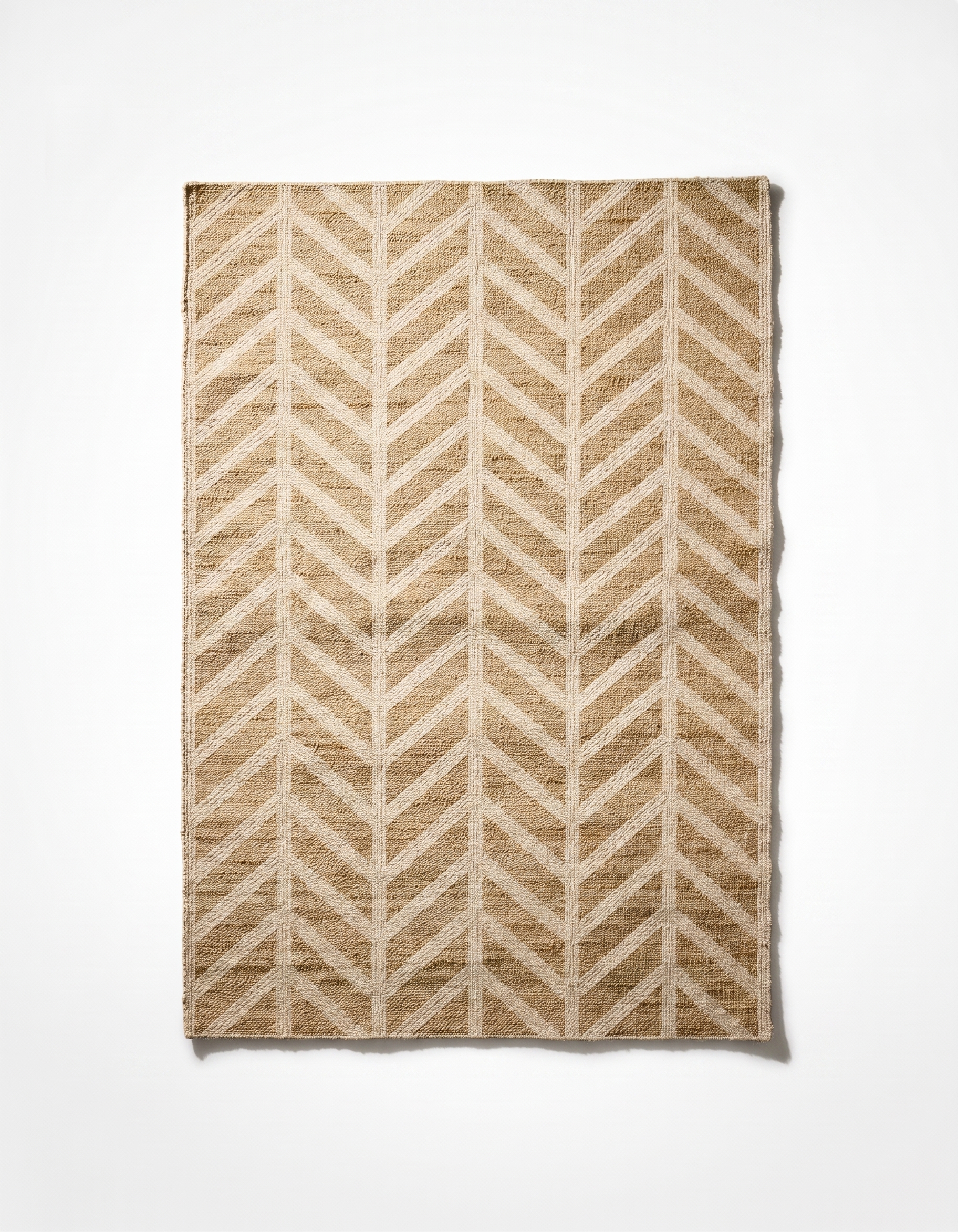
Chevron Axis (SKU AJD-26031) runs a stepped zig-zag across the full width of the rug rather than confining it to a border, so a 6×9 ft area rug and a runner cut from the same warp read as one family on a showroom floor. Asymmetric Dot (AJD-26030) breaks the grid with offset stepped squares, a small enough irregularity that colour lots can vary slightly across a run without a customer noticing on shelf — useful when three production batches are filling a single 500-piece order.
One detail worth building into your spec sheet: jute takes dye down, not up. A mustard swatch approved on screen lands a shade duskier and warmer once it’s woven into jute yarn, so colour approval should run off a physical strike-off rather than a Pantone reference. Our top jute rug designs for 2026 roundup breaks down which stepped palettes photograph closest to their true bulk shade.
Classic patterns: Medallion Centerpiece and Trellis Leaf Jaal
Medallion Centerpiece and Trellis Leaf Jaal are the two patterns retail buyers reorder for the “classic” shelf position — a centre motif and an all-over lattice, both built from stepped diamonds rather than curves, because jute construction won’t carry a rounded line cleanly. Medallion Centerpiece reads as a rug with a middle focal point, but the medallion itself is a stack of stepped diamonds, not a rounded motif — a construction detail worth flagging if a buyer’s spec sheet assumes tufted curves.
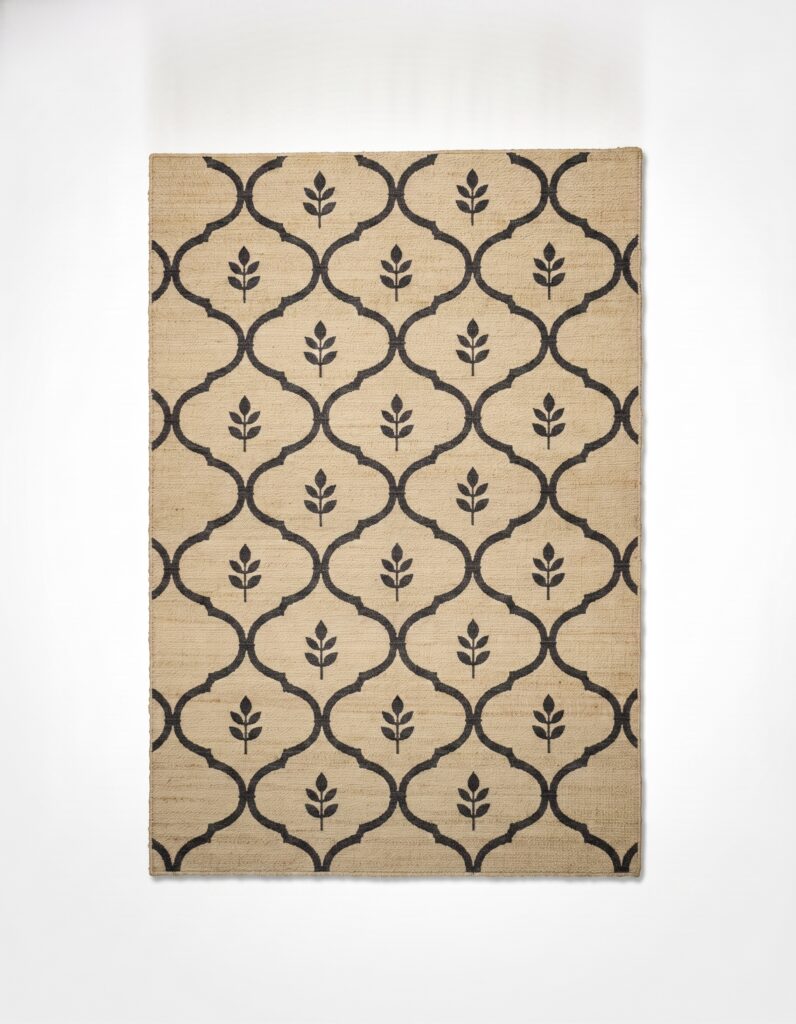
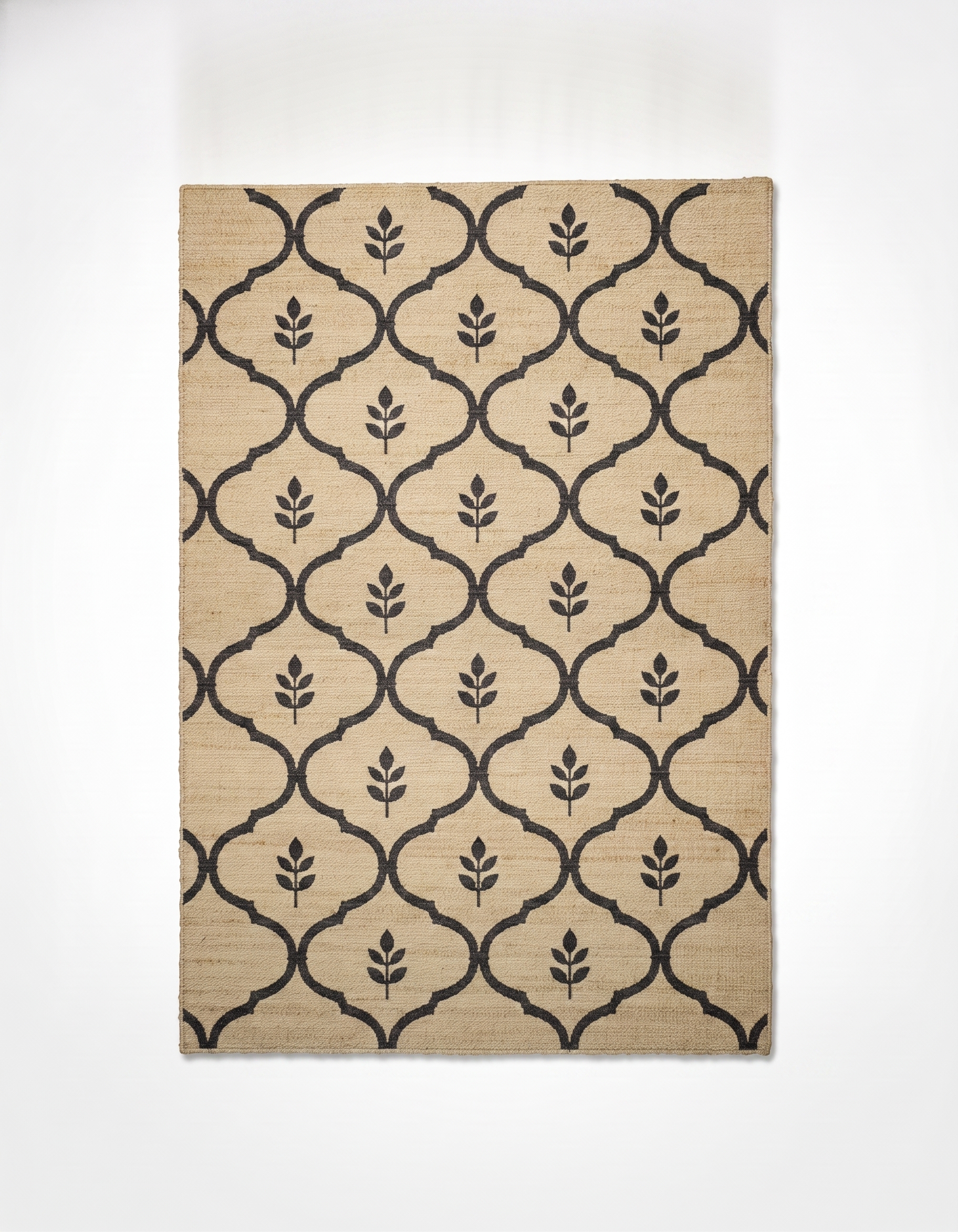
Trellis Leaf Jaal (AJD-26025) is the panja-woven lattice that’s carried the longest reorder history on our own order book — three consecutive seasons on the same 4×6 ft and 8×10 ft program with only colourway substitutions between shipments.
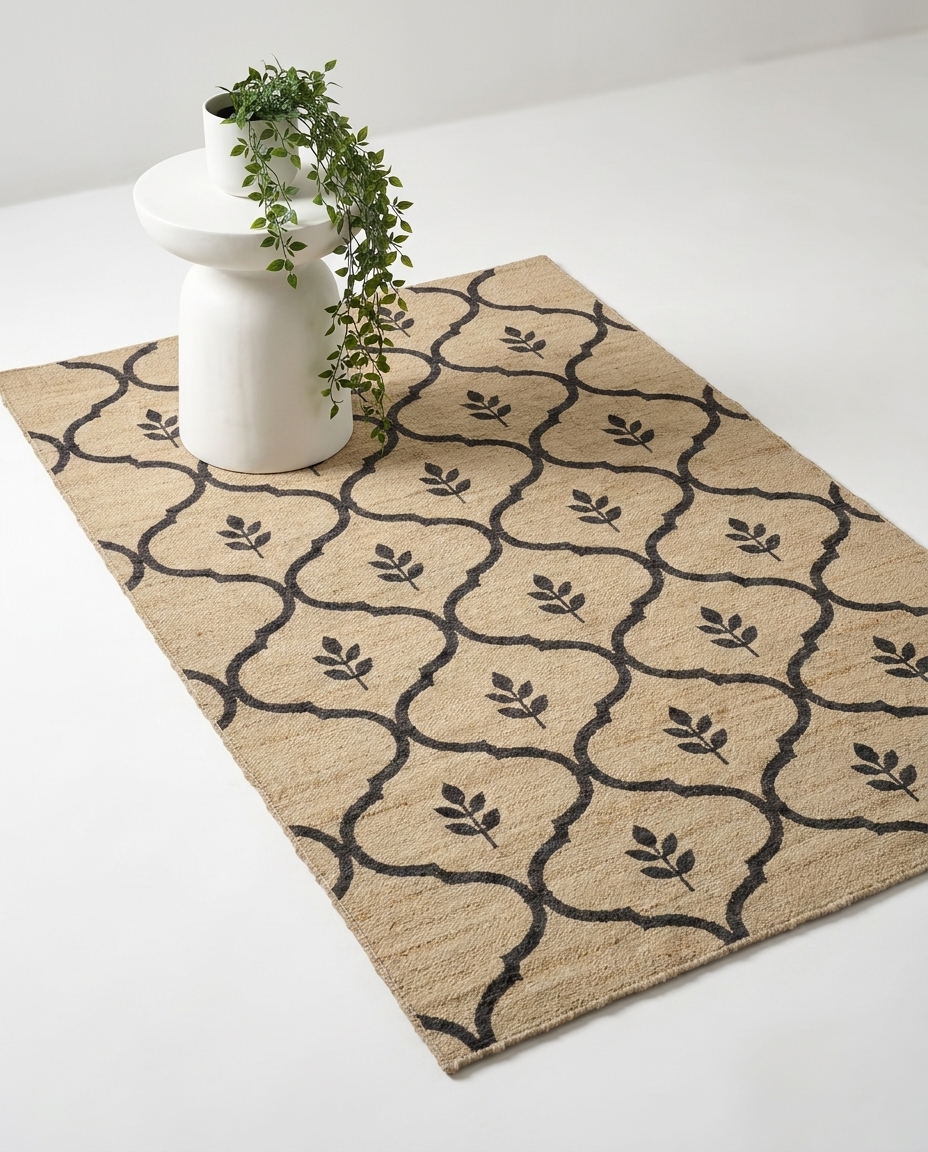
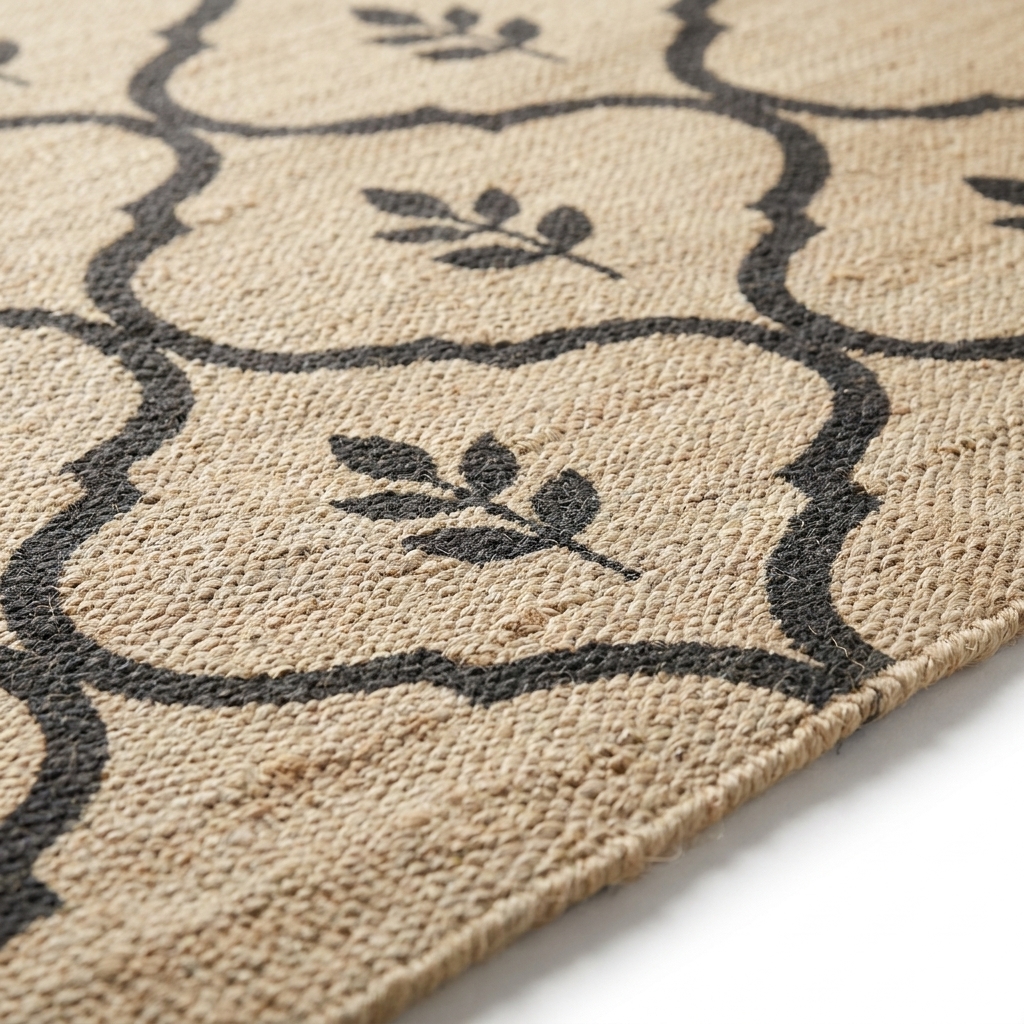
The close-up shows why: the weave stays dense and flat under the loop, which is what gives a jaal pattern its clean stepped edge instead of a fuzzy diagonal. Buyers scaling a private-label line around these two patterns should read how handwoven jute rugs blend tradition and modern design — it goes deeper into how panja weaving produces a medallion effect without a single curved pick.
Why These Handwoven Jute Weaves Maintain Retail Value
Jute is a dry indoor material — living rooms, bedrooms, studies — and every pattern on this list holds retail value because it’s sold and used exactly there, never pitched for a bathroom or a patio. Jute fibre holds moisture, so a rug that looks identical to a synthetic outdoor weave will still fail if it’s placed poolside; that mismatch, not the weave itself, is what drives the returns column on a reorder report.
Are handwoven jute rugs durable enough for high-traffic retail floors and hospitality lobbies? Within their intended footprint, yes — a flatweave or panja jute rug in a dry, low-moisture space holds its stepped pattern and edge integrity through years of foot traffic, which is exactly why durability drives repeat orders in high-traffic settings more than any single-season colour story does.
In our 2026 production data, these six patterns — the four above plus Panja Stripe Block and Braided Check — account for close to 45% of repeat wholesale orders on jute, against a much longer catalogue of one-season colourways. Across export orders shipped in 2025, damage and return claims on stepped-geometry jute ran noticeably lower than on curved or non-stepped experimental patterns, largely because the construction tolerates minor dye-lot shifts without reading as a defect.
| Pattern | Construction | Best placement | Typical reorder trigger |
|---|---|---|---|
| Chevron Axis | Flatweave, stepped zig-zag | Living room, study | Consistent sizing across runners and area rugs |
| Asymmetric Dot | Flatweave, offset block | Bedroom, casual living | Colour-lot tolerance across split production batches |
| Medallion Centerpiece | Panja, stepped diamond centre | Living room, dining | Demand for a “classic” shelf position |
| Trellis Leaf Jaal | Panja, stepped lattice | Living room, bedroom | Longest repeat-order history on file |
| Panja Stripe Block | Panja, horizontal block stripe | Study, bedroom | Simple restock, low colour-matching risk |
| Braided Check | Braided, stepped check | Bedroom, casual seating | Texture-led private-label programs |
A category manager building an assortment across four colourways should specify dye-lot tolerance in writing before the second production run, not after — jute’s dye-down behaviour means a “navy” approved in March can land closer to indigo by August, and that’s a material fact, not a defect, as long as it’s on the spec sheet. It’s also worth sharing our notes on caring for and maintaining jute rugs with retail floor-care teams, since most complaints trace back to wet-mopping rather than the weave. Buyers building a broader natural-fibre program might also want our piece on why eco-friendly jute rugs suit modern homes for the sustainability language increasingly showing up in retail RFPs.
If you’re scoping a jute reorder for Q4 or planning next season’s colourways, we can put together a sample plan against your existing SKU list within 48 hours — send over a tearsheet and we’ll come back with lead times and a quote.
Frequently Asked Questions
What is the MOQ for handwoven jute rugs from India?
MOQs on handwoven jute rugs typically run per colourway rather than per style, often starting around 50-100 pieces per size once a design is on the standard line. Custom patterns or private-label colourways usually need a higher volume to justify loom setup; Sheeltex quotes MOQ against the specific size and colour mix requested.
How long does sampling take for a custom jute rug pattern?
Sampling for a custom stepped-geometry jute pattern generally runs 10-14 days from approved artwork, covering yarn dyeing, loom setup and the physical strike-off buyers should approve colour against. Rush sampling under a week usually skips the dye-correction step, which shows up as colour drift once bulk production starts.
Are handwoven jute rugs durable enough for high-traffic retail floors?
Yes, within a dry indoor footprint. Flatweave and panja jute construction holds its stepped pattern and edge integrity through sustained foot traffic in living rooms, studies and hospitality lobbies, provided the space stays dry — moisture exposure, not foot traffic, is what shortens a jute rug’s working life.
Can jute rugs be used in bathrooms or outdoor spaces?
No. Jute fibre holds moisture rather than shedding it, so handwoven jute rugs are built for dry indoor rooms only — living rooms, bedrooms and studies. They should never be specified for bathrooms, poolside areas or any outdoor use regardless of how a design looks in styled photography.
How much colour variation should I expect between jute rug production batches?
Expect a visible but consistent shift, since jute takes dye a shade duskier and warmer than the approved swatch, and that shade can drift slightly further between production runs months apart. Buyers should approve colour off a physical strike-off per batch and write dye-lot tolerance into the purchase order rather than assuming digital colour matching.
Enquire about your collection or project
Tell us which products you need, your preferred sizes, quantities and destination. You can also share your collection or project requirements.
Make it part of your
next collection.
Share the designs you like, approximate quantities and destination. Let’s discuss samples, pricing and custom options.
