

The honeycomb shade divides its glass into small hexagonal cells, held within a broad, golden-toned metal frame. Beside it, the taller rectangular shade uses narrow vertical ribs and a darker frame. For a hospitality interior specifier, these two current Sheeltex designs offer a clear choice: add a compact surface pattern, or continue the room’s vertical lines.
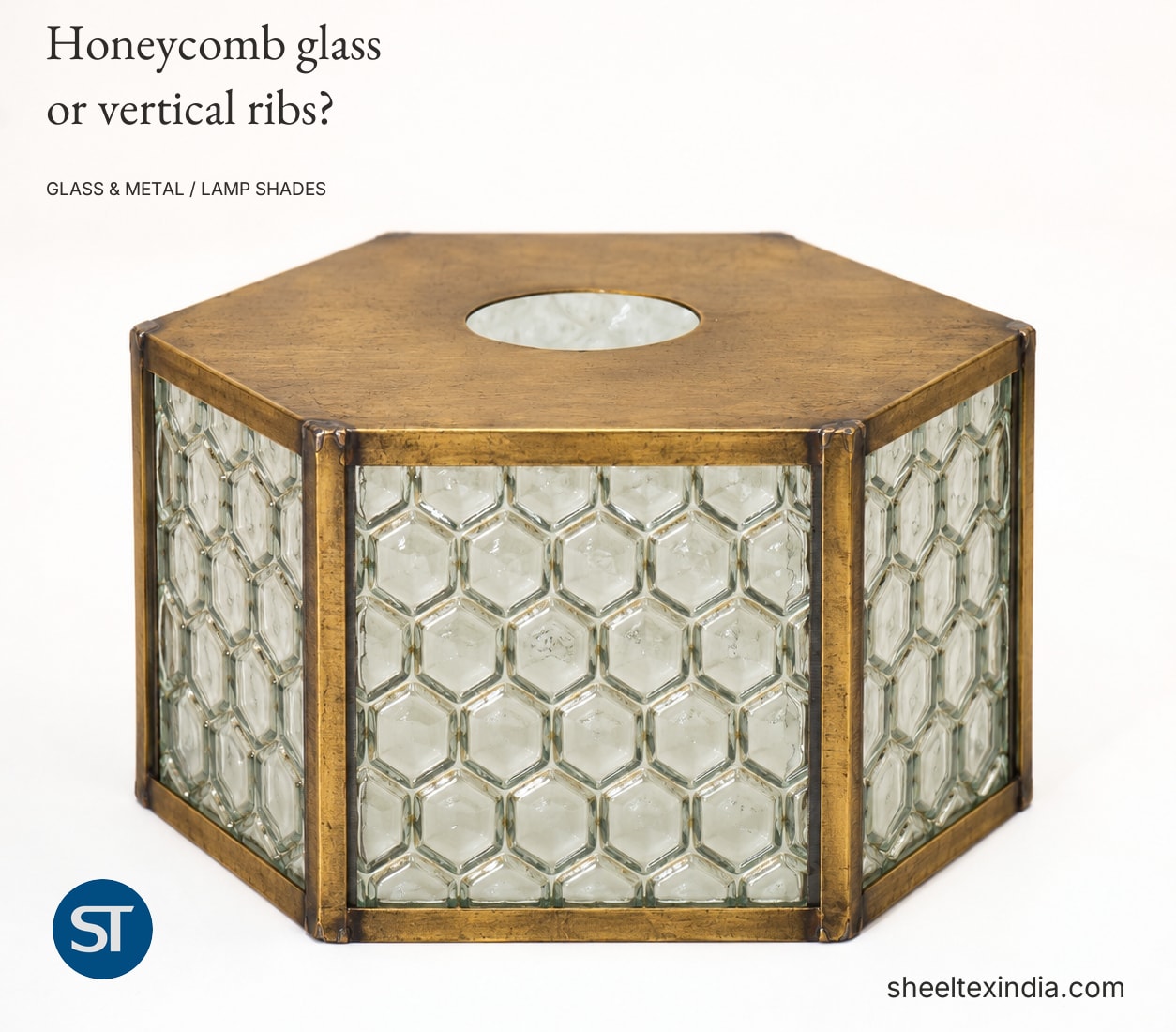
Honeycomb glass against a quieter backdrop
The first shade has a wide, many-sided outline. Its angled faces carry the same close-set glass pattern around the form, while the metal edges separate those faces. The top plate is broad, so the warm metal is as visible a part of the design as the glass.

Consider it beside plain plaster, a simple timber finish or upholstery without a small repeat. Those quieter surfaces leave room for the glass cells to be noticed. The shade supplies the detail; it does not need a second honeycomb pattern elsewhere in the scheme to make the connection clear.
If the project already includes hexagonal tiles or densely patterned fabrics, compare their scale with the glass. A tile that reads as a large shape from across the room may sit differently beside these smaller cells than a fine upholstery print. Put the actual samples together rather than relying on a shared pattern name.
Vertical ribs alongside longer architectural lines
The second shade is taller and narrower. Its pale glass runs in close vertical ribs between dark metal edges, with a square top plate. The repeated line follows the height of the object rather than spreading across several broad faces.
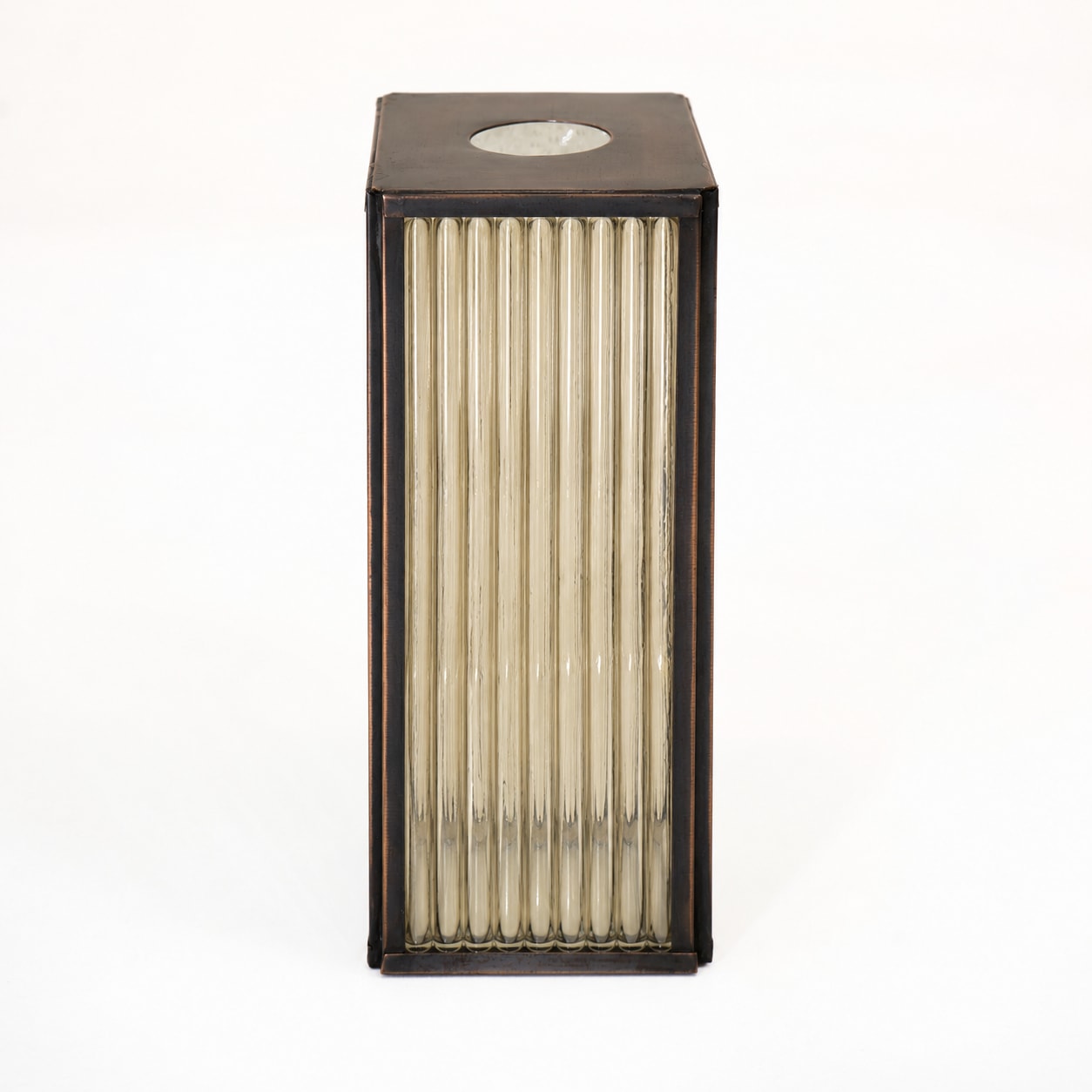
That makes it a useful candidate beside vertical timber panelling, fluted surfaces or tall cabinetry. The line can relate to the architecture without adding another small geometric motif. Against horizontal joinery, the same upright shape introduces a different direction.
For a scheme with striped upholstery, check which lines should lead. Matching every stripe to every rib may make the display feel busy; a plain fabric beside the shade lets the glass carry the repetition.
Pair the finishes as carefully as the patterns
Both designs combine pale glass with warm metal, but the frames are not the same colour. The honeycomb shade reads more golden; the ribbed design has a deeper brown or bronze tone. Compare those tones with the project’s handles, furniture legs and other metal details before treating the two as a matched pair.
A project could use the honeycomb form in a room with broad plain surfaces, then consider the ribbed version where tall joinery sets the direction. The connection would come from glass and warm metal, while each space keeps its own pattern. This is a selection idea to assess with samples, rather than a reason to order both automatically.
Both belong to Sheeltex’s current Lamp Shades Q4 26 group. Each is listed as handmade in glass and metal, with a minimum order quantity of 10 per design. Before specifying a fitting, confirm the overall dimensions, mounting arrangement and what electrical components are supplied for the intended installation.
Explore the current collection, or discuss samples and pricing with the selected shade, room finishes, quantities and destination.
Frequently Asked Questions
Which glass shade could work beside vertical wall panelling?
The ribbed shade repeats a vertical line and has a tall rectangular outline. The broader honeycomb form offers a contrasting small geometric repeat. Compare both with the actual wall finish and nearby fabrics.
Can the two frame finishes be treated as a matched pair?
Compare physical samples first. The honeycomb frame looks more golden in its photograph, while the ribbed frame reads darker and more bronze-toned. Assess them beside the project’s other metal finishes.
What is the minimum order quantity for these shades?
Each selected design lists a minimum order quantity of 10. Ask the Sheeltex team about the quantities and sample requirements for your particular shortlist.
What should I include in a project enquiry?
Share the selected shade, intended room, wall and metal finishes, approximate quantities and destination. Add the required dimensions and mounting context so the team can discuss the proposed specification.
Enquire about your collection or project
Tell us which products you need, your preferred sizes, quantities and destination. You can also share your collection or project requirements.