
Recycled Cotton Rag Rugs Bulk Ordering Guide 2026
Last updated: August 2026
Bulk ordering recycled cotton rag rugs means matching a retail assortment’s colour story to a supplier’s dyelot capacity — not just picking a pattern. A well-built rag rug programme gives buyers a genuine sustainability story, washable everyday performance, and enough SKU depth to fill a full floor-covering bay without sourcing from three different mills.
What’s Inside the Rag Rug Collection for 2026?
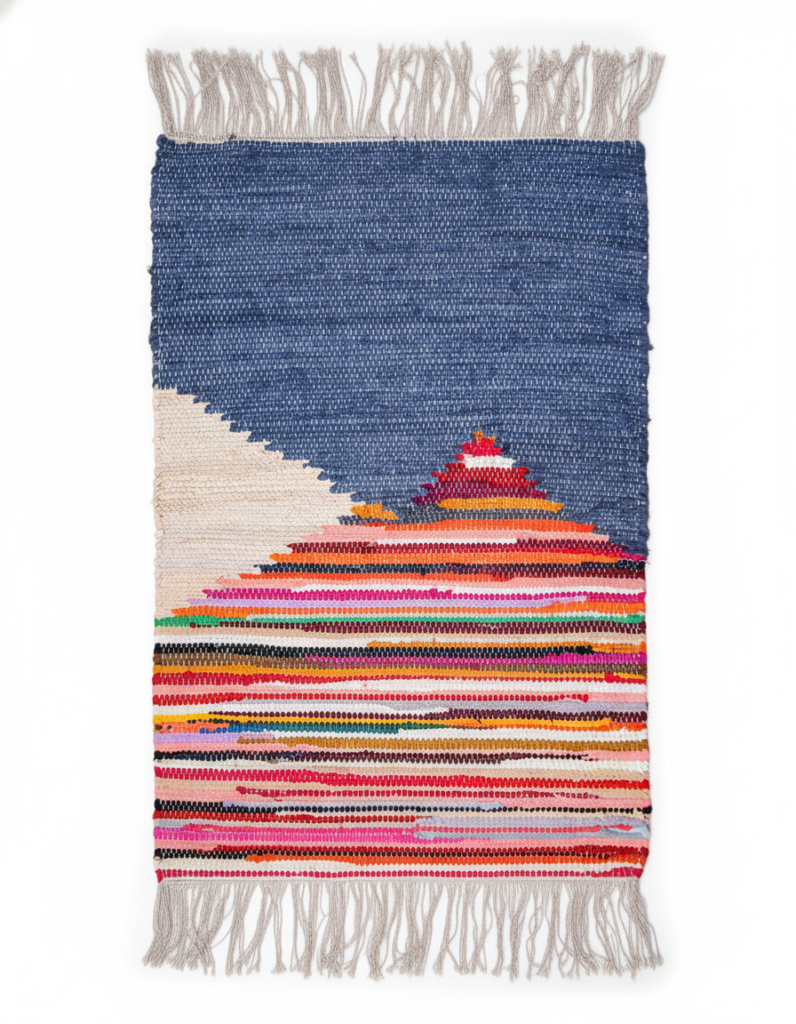
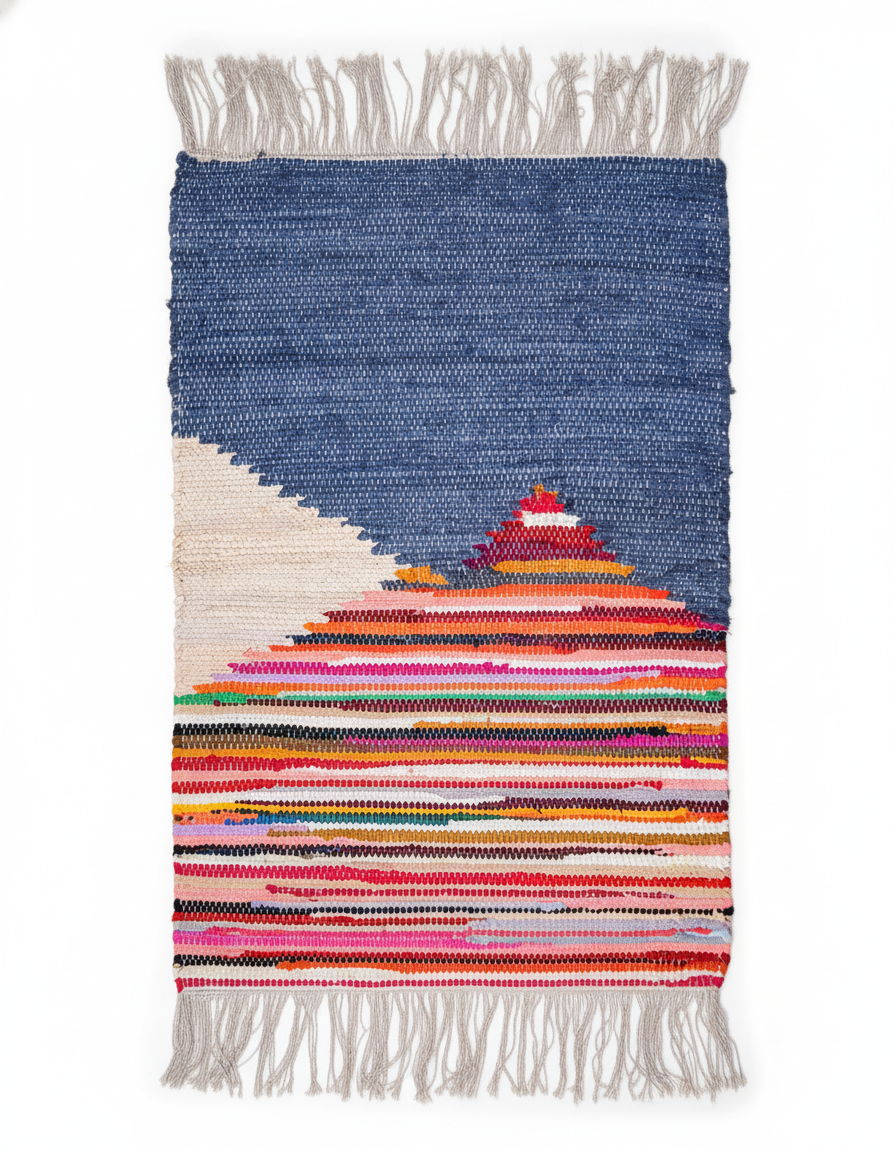
The Rag Rug Q3 26 range now runs 23 SKUs deep across three families: indigo handwovens (STCR-1, STCR-2, STCR-51), ripple weaves led by the Ripple Rug Blue (STJR-297), and geometric flatweaves including the Prism Rug and the Cobble Rug. That range lets a buyer build an entire rag rug bay from one supplier instead of piecing it together from several mills.
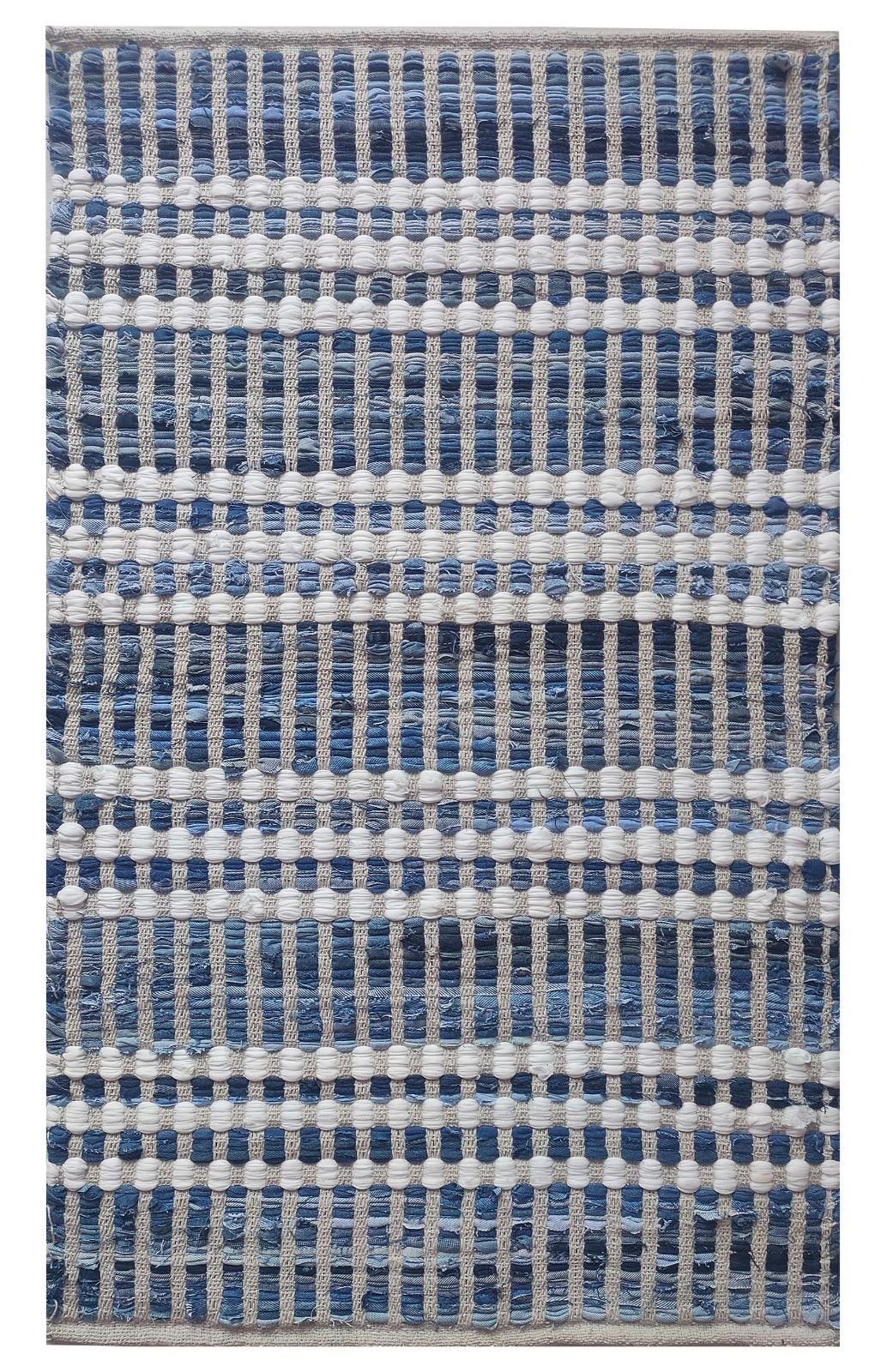
STCR-2 ships in a 120 x 180 cm sample size with a 100-piece MOQ, handwoven on a cotton ground — the specification most buyers use to test hand-feel and colour consistency before committing to a production run. The ripple and geometric lines use the same flatweave construction technique but vary the weft pattern rather than the yarn: ripple rows read as soft horizontal bands, while the Prism and Cobble constructions use stepped blocks and checks that photograph well against pale flooring.
Where Do Recycled Cotton Rag Rugs Actually Belong?
Recycled cotton rag rugs are built for dry indoor floors — living rooms, bedrooms, hallways, home offices, kids’ rooms — where the handwoven cotton ground can be spot-cleaned or hand-washed cold without losing its shape. They are not treated for wet-area or outdoor use, so bathroom mats, poolside decking, and covered patios need a different construction entirely.
That distinction matters more than most spec sheets admit. A cotton rag rug left in standing moisture holds water in the yarn and takes days to dry through a tight flatweave, which is exactly the failure mode retailers hear about in return requests. If a buyer’s assortment plan needs a wet-area or higher-traffic exterior piece, that’s a jute or cotton construction question worth resolving before the PO is cut, not after the first customer complaint.
What Is the Recycled Cotton Story Behind These Rugs?
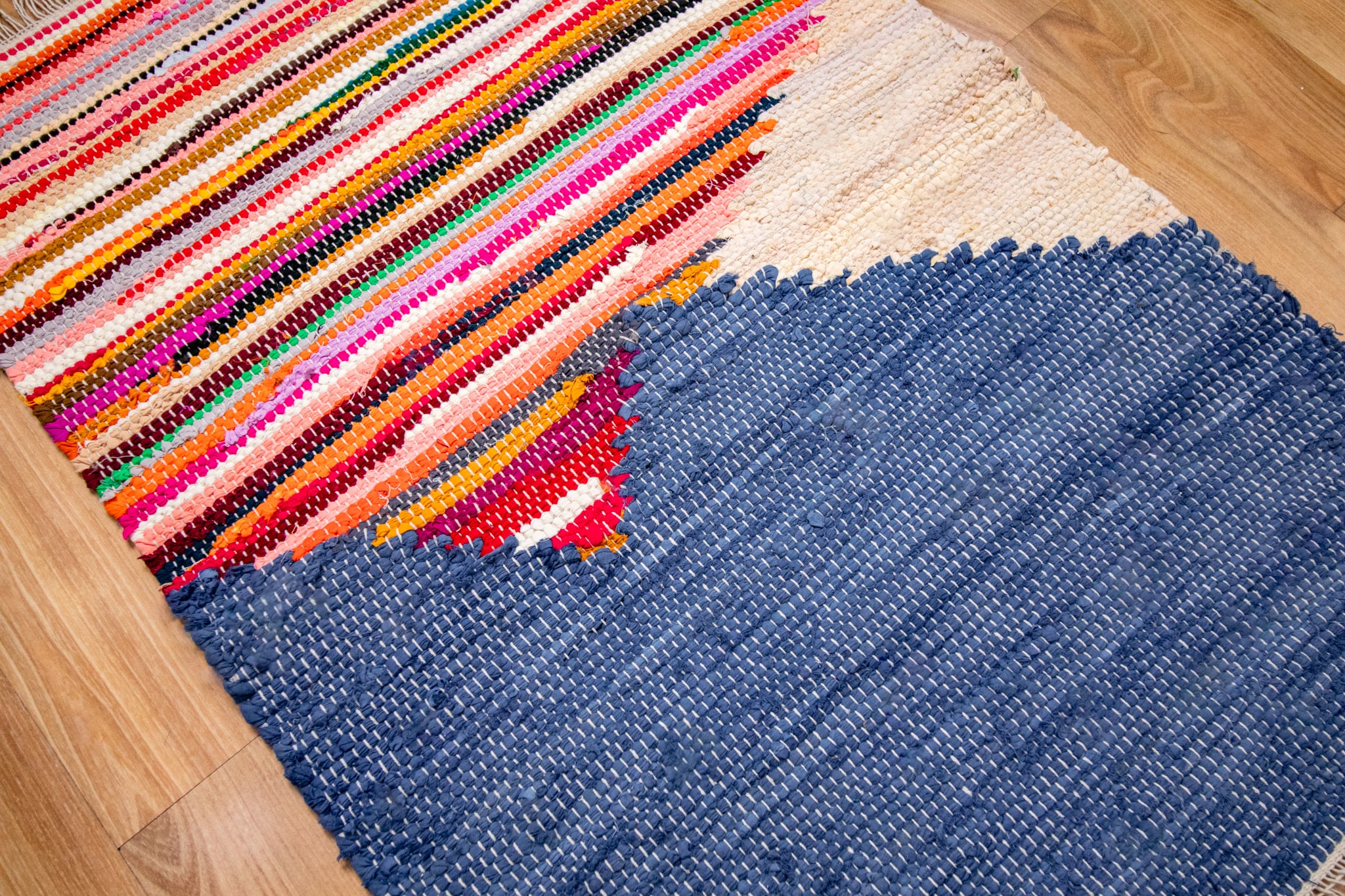
The recycled cotton in this collection comes from post-industrial denim offcuts and spinning-mill yarn waste — fabric scraps and thread ends that never reached a garment — mechanically shredded, re-spun into a coarser rag yarn, and handwoven into flatweave rugs. It’s an input-reduction story tied to an actual waste stream, not a label added after the fact.
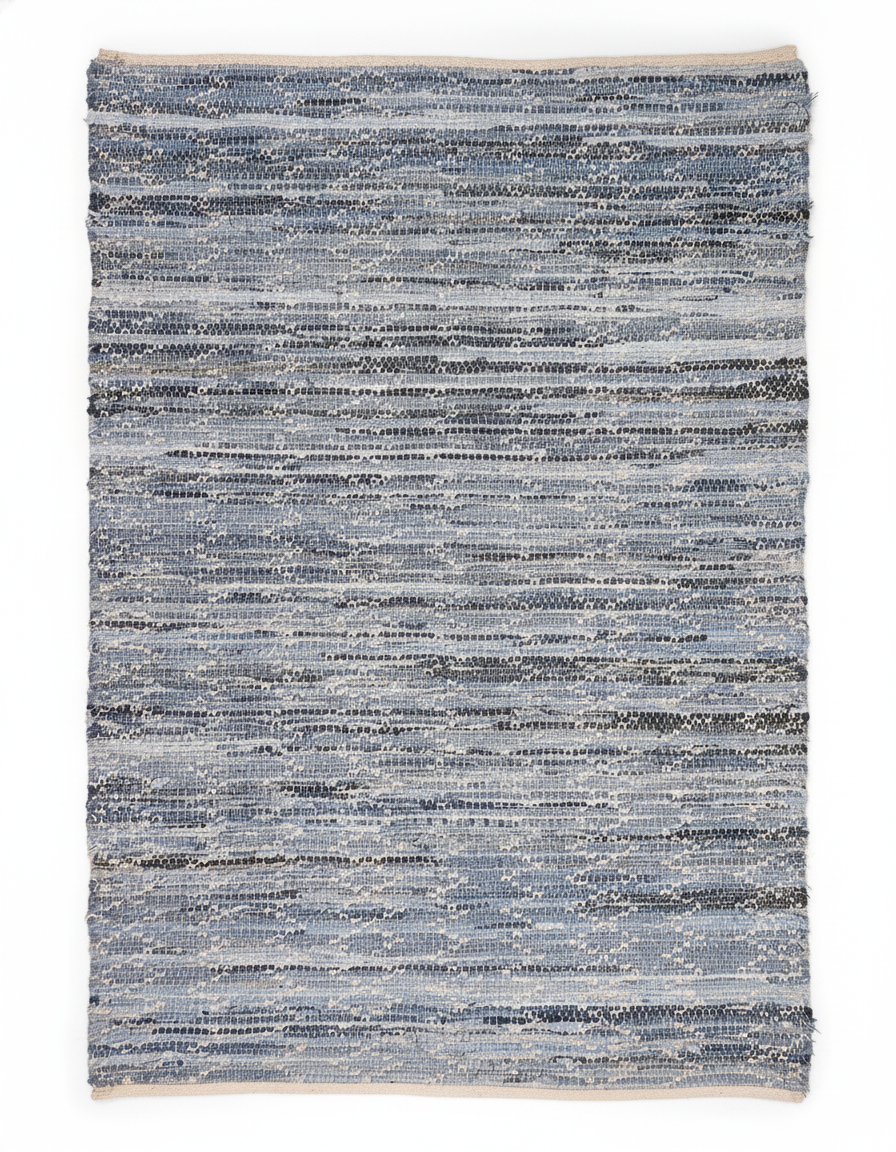
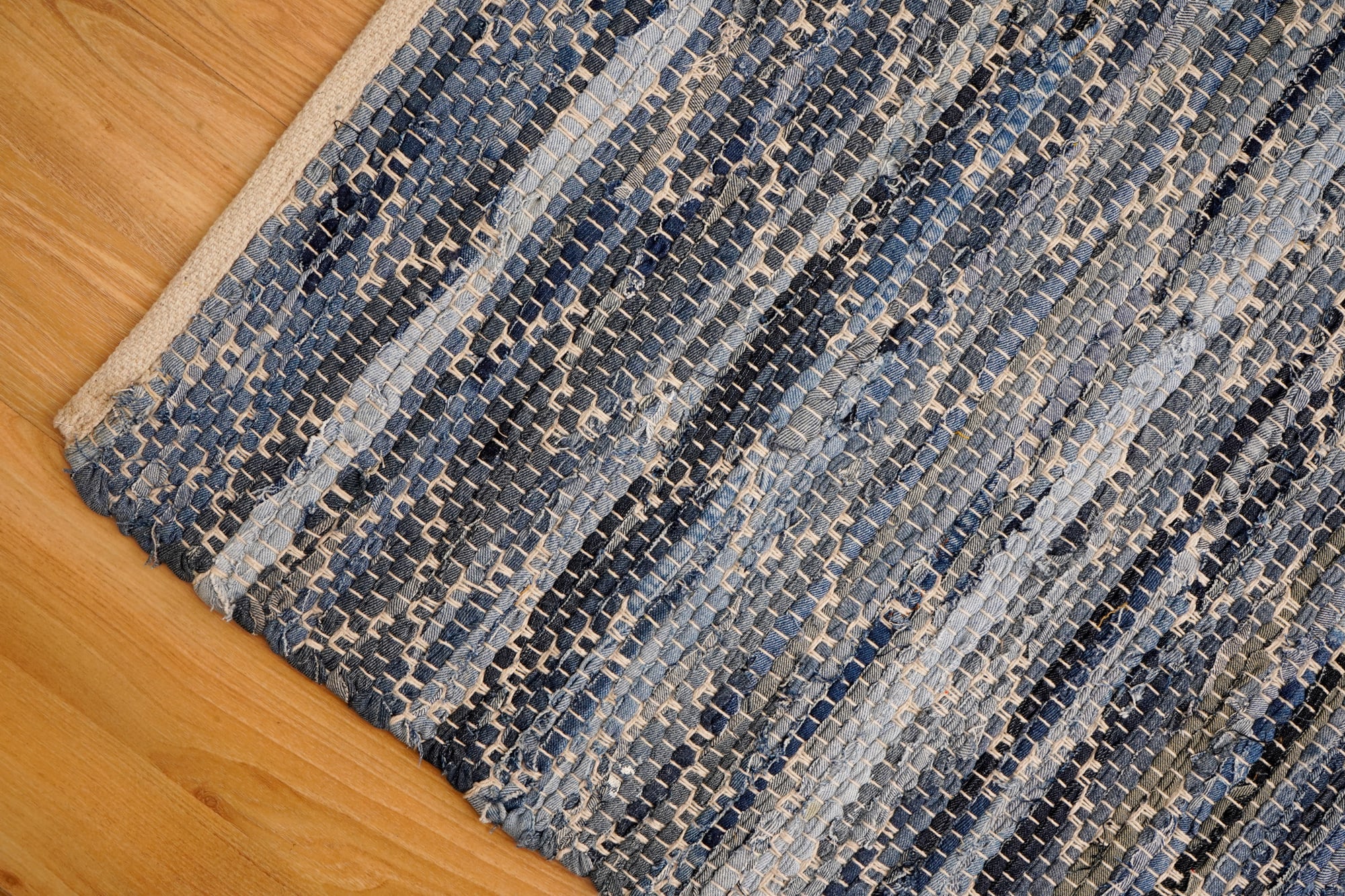
The denim source also explains why the indigo family reads as tonal rather than flat-dyed: offcuts are sorted loosely by shade before shredding, so STCR-1, STCR-2, and STCR-51 each carry slight variation batch to batch — a feature buyers should specify as acceptable in their PO rather than treat as a defect. Across our 2025 intake, denim offcut sourcing made up roughly 40% of the rag yarn used in the indigo family, with the remainder coming from cotton spinning waste for the neutral and terracotta groundwork.
How Does Handwoven Recycled Cotton Compare to Fast-Fashion Polyester Rugs?
Handwoven recycled cotton rugs hold their structure through years of foot traffic because the yarn is spun thick and the weft is packed tight by hand; machine-made polyester accent rugs commonly sold through fast-fashion home ranges tend to show pile crushing and edge fraying within 12-18 months of daily household use. The trade-off is unit price, not durability.
| Factor | Handwoven Recycled Cotton | Machine-Made Polyester |
|---|---|---|
| Construction | Hand-packed flatweave/braid | Tufted or woven on power loom |
| Typical shelf life (daily use) | 3-5 years before visible wear | 12-18 months before pile crush |
| Sustainability story | Verifiable waste-stream input | Often virgin polyester, hard to substantiate |
| Repair/re-weave | Possible at edge and binding | Not economical to repair |
| Colour consistency | Batch variation expected, disclosed | Uniform, dye-lot controlled |
In returns data we tracked across 2025 export orders, retail partners who displayed handwoven cotton next to machine-made synthetic in the same planogram saw the synthetic SKUs reordered at roughly half the rate — durability perception carries measurable retail weight, even before a customer touches either rug. For a deeper look at where hand-tufted, hand-knotted, and machine-made constructions actually differ underfoot, see how hand-tufted and machine-made rugs perform against each other.
How Should Retailers Merchandise Rag Rugs by Colour Story?
Group rag rugs by colour story rather than by SKU number: an indigo bay (STCR-1, STCR-2, STCR-51), a neutral bay for oatmeal and stone tones, and a terracotta bay for warm accent pieces. Buyers who order across one colour story rather than mixing tones convert better on repeat purchase, because the display reads as a curated edit instead of a clearance table.
A workable minimum is three SKUs per colour bay so the display doesn’t look thin, with at least one larger format (120 x 180 cm and up) anchoring each bay and a smaller accent size supporting it. Rotate the anchor colour seasonally — indigo through autumn and winter, terracotta into spring — while keeping the neutral bay as the year-round constant. Buyers building a 2026 assortment around this logic are the same audience tracking why buyers are stocking jute and recycled cotton rugs this year.
How Can Buyers Sample the Full Rag Rug Hand-Feel Range?
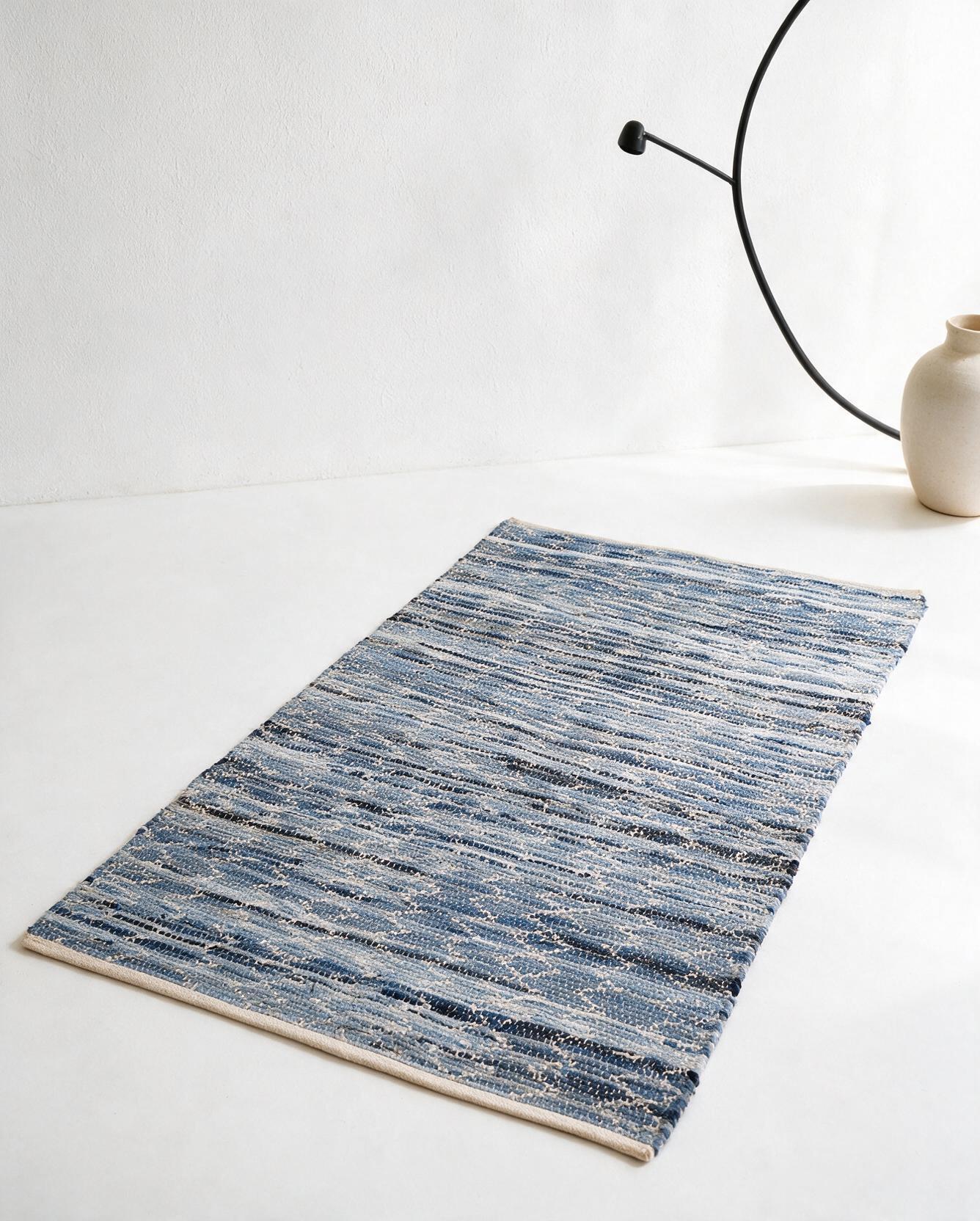
A sample set covering the indigo, ripple, and geometric families lets a buyer compare hand-feel, weave density, and colour consistency side by side before committing to a 100-piece MOQ. Most rag rug sample sets ship within 10-14 days of confirmed selection, cut at the standard 120 x 180 cm review size used across the collection.
Ask for the sample set unbound at the edges if you’re evaluating fray resistance, and request one piece from each colour bay rather than one piece per SKU — hand-feel differences show up more between families than within them. Buyers weighing recycled cotton against other handwoven textures may also want to compare against the calm, simple handwoven cotton rugs built on plain grounds, which sample differently than the textured rag constructions.
If you’re scoping a rag rug bay for Q3, send over your colour brief and floor plan and we can put together a sample plan within 48 hours.
Frequently Asked Questions
What is the MOQ for recycled cotton rag rugs?
The standard MOQ across the Rag Rug Q3 26 collection is 100 pieces per SKU or colourway, matching the 120 x 180 cm sample size used for STCR-2 and the rest of the range. Buyers combining multiple SKUs into one shipment can usually consolidate freight without raising the per-SKU minimum.
How long does sampling take for custom rag rugs?
Sample sets typically ship within 10-14 days of confirmed colour and SKU selection, cut at the standard review size. Custom colourways outside the existing indigo, neutral, or terracotta groundwork add roughly a week for yarn dyeing and approval.
Can recycled cotton rugs be used in bathrooms or outdoors?
No. Cotton rag rugs are handwoven for dry indoor floors — living rooms, bedrooms, hallways — and hold moisture in the yarn if used in wet areas or left outdoors untreated. A different, water-resistant construction should be specified for bathrooms or poolside use.
What’s the difference between the indigo and ripple rag rug families?
The indigo family (STCR-1, STCR-2, STCR-51) is spun mainly from denim offcuts, which gives it a tonal, slightly variable blue that shifts batch to batch. The Ripple Rug Blue (STJR-297) uses a banded weft pattern on a similar recycled cotton base but reads as a more uniform stripe.
Can rag rugs be private labeled or customized for retail?
Yes. Buyers typically customize border colour, binding, and swing-tag copy around the recycled content story; the core flatweave construction and 120 x 180 cm sample size stay standard to keep production tolerances predictable across a 100-piece order.
Enquire about your collection or project
Tell us which products you need, your preferred sizes, quantities and destination. You can also share your collection or project requirements.
Make it part of your
next collection.
Share the designs you like, approximate quantities and destination. Let’s discuss samples, pricing and custom options.
