
How to Source Hand-Tufted Hotel Carpets from India
Last updated: August 2026
Hand-tufted wool-cotton carpets are the standard hospitality specifiers reach for in lobbies, corridors and guest rooms because wool recovers from heavy footfall and furniture crushing better than any other fibre run at scale. This guide walks a hotel procurement team through pile selection, design customization and the sample-to-shipment timeline for a hand-tufted program.
Where hand-tufted wool carpets belong in a hotel program
Hand-tufted wool-cotton carpets are built for indoor, dry-foot traffic — lobbies, corridors, guest rooms, meeting suites — where the wool pile can recover between cleanings and the cotton backing stays dry. They are not a wet-area or outdoor product; wool retains moisture and a cotton primary backing has no drainage, so poolside decks, spa wet-rooms and covered terraces need a different construction entirely.
The reason hotels keep specifying wool over synthetic tuft is resilience under repeat compression. A hand-tufted wool pile crushed by a rolling cart or a stacked chair recovers its loft within hours once the load is removed; most synthetic fibres flatten permanently after a few hundred cycles. That single property is why wool shows up in the RFPs of chains renovating corridors on a 7-10 year cycle rather than a 3-year one.
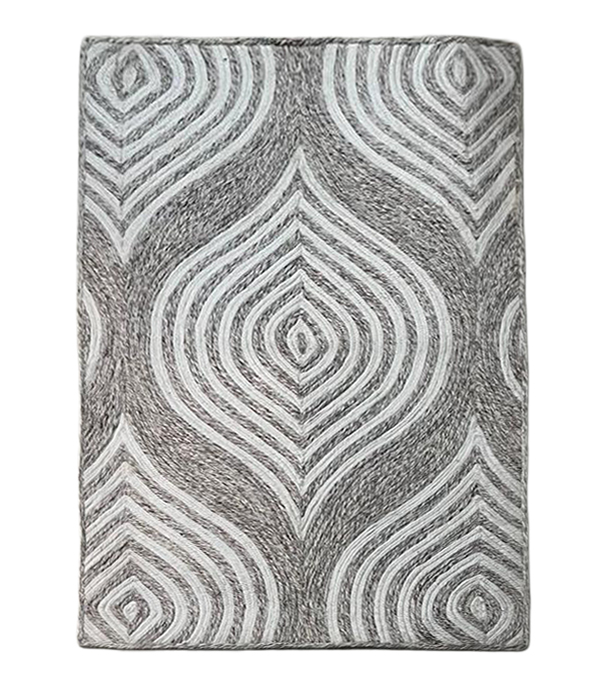
Styles like the Shikhar carpet (ATF-2609) illustrate the point — a hand-tufted wool-cotton construction sized and priced for exactly this kind of installation, run in a cut-pile default with carved detailing rather than a flat loop.
Evaluating pile height and density for high-traffic areas
Pile height and tuft density together determine how a carpet reads underfoot and how long it holds its face in a corridor doing 500+ passes a day — not pile height alone. A taller, low-density pile looks plush in a showroom but tracks and shadows faster than a shorter, tightly packed one; hotel corridors need the latter.
A category manager speccing carpet for a 120-key property’s public corridors should ask for tuft density in stitches per square inch, not just pile height in millimetres — two carpets at the same 10mm pile can behave completely differently depending on how tightly the wool is packed into the primary backing. Denser tufting resists matting where housekeeping trolleys run the same line every day.
| Zone | Recommended pile height | Density priority | Notes |
|---|---|---|---|
| Guest room floor | 10-14 mm | Medium | Comfort underfoot matters more than traffic resistance |
| Corridor / lobby | 6-9 mm | High | Lower pile with tight tuft holds a crisp edge longer |
| Meeting / banquet | 8-10 mm | High | Chair-caster rolling needs recovery, not depth |
In our 2026 production data, hand-tufted wool-cotton orders specified for corridor use came in at a median 8mm pile against 12mm for guest-room orders from the same buyers — the split is deliberate, not incidental. Specify pile height without a density figure and the third reorder can arrive visibly thinner in the same corridor run, because a mill without a written density spec will tuft to whatever gives the fastest output that week.
For a side-by-side on how hand-tufted construction actually compares to machine-made alternatives on wear performance, our comparison of hand-tufted versus machine-made rugs walks through the tuft-versus-loop mechanics in more depth.
Design customization: working with Chitra and Coil Carpet styles
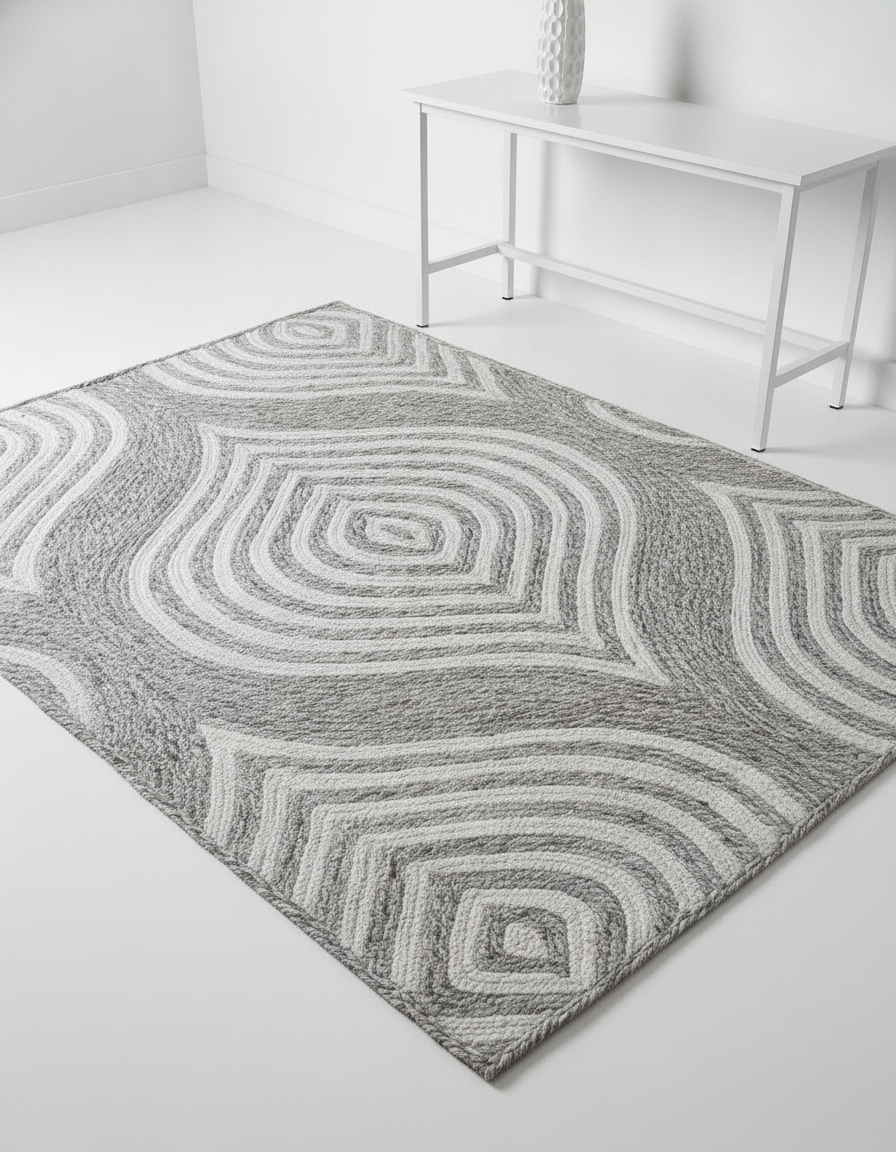
Custom hotel carpet programs need a base style the mill already knows how to tuft cleanly, then a colourway and border adjustment layered on top — starting from a blank design slows approval by weeks. The Chitra carpet (ATF2547) and the Coil pattern series are both examples of a proven cut-pile ground that takes carved detailing and colour-field changes without a re-engineered construction.
Chitra runs as a wool-cotton hand-tufted construction with a 120 x 180 cm sample size and a 10-piece MOQ, which is the practical minimum for a hotel to test a colourway against a real corridor before committing to a full-floor order. Hand-tufting allows true curves and multi-colour fields in a way hand-knotting cannot match at comparable cost — knot count drives price in knotted goods, while tufted goods price primarily on pile weight and colour count.
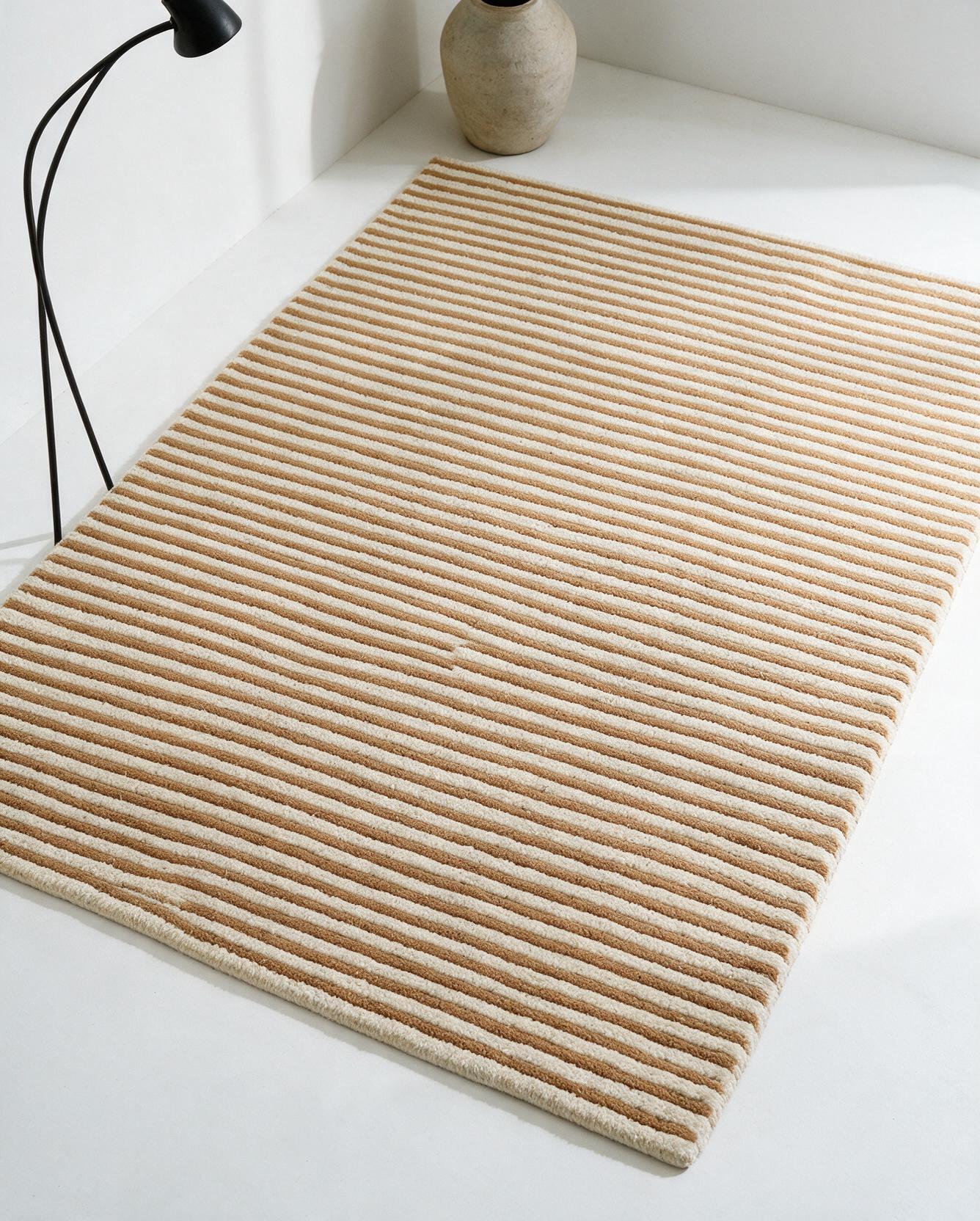
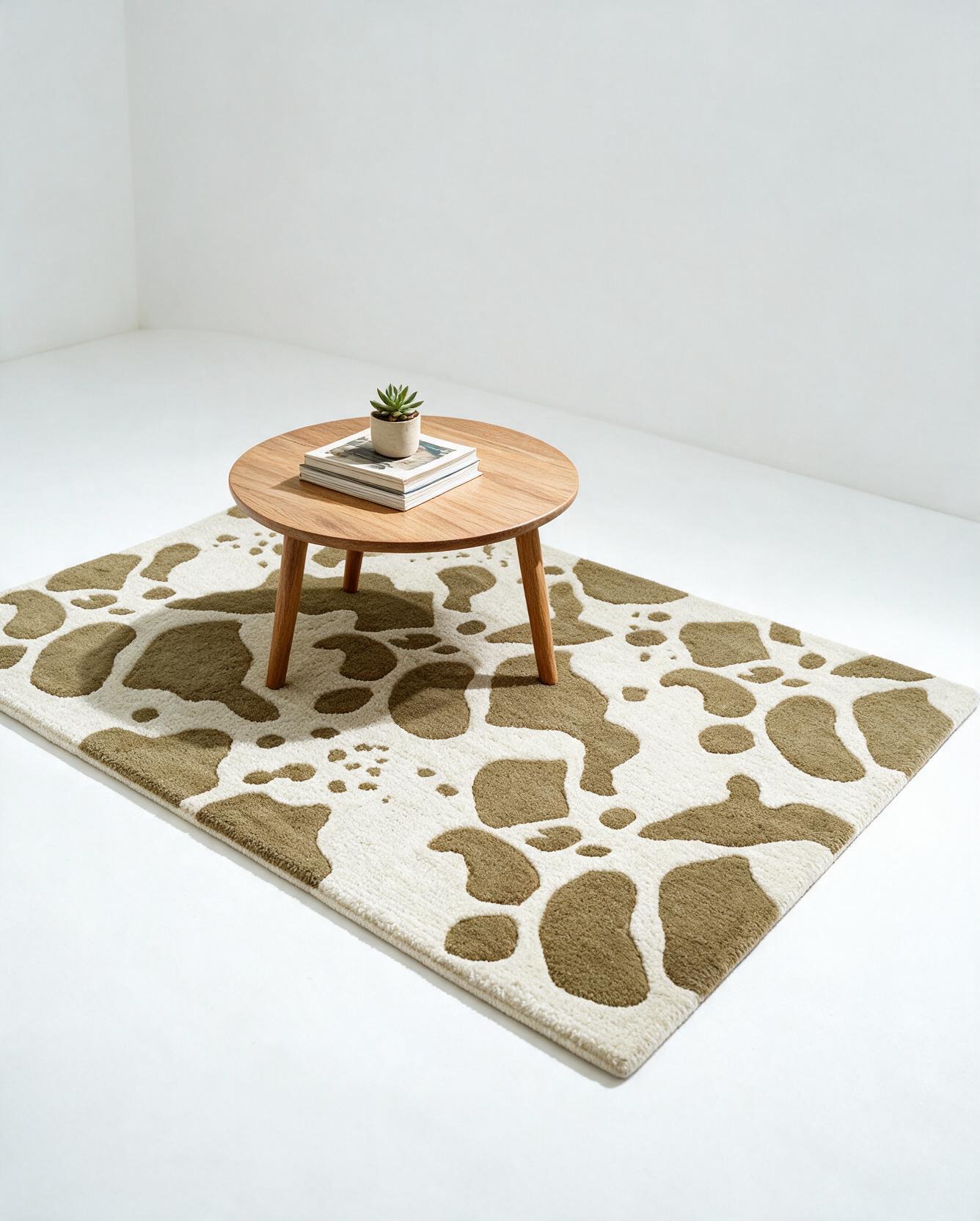
The Coil pattern, shown here in two colourways, demonstrates how a single carved motif can be re-run in a warm and a cool palette for two wings of the same property without touching the tufting gun setup — only the yarn dye lot changes between the BG and BL runs.
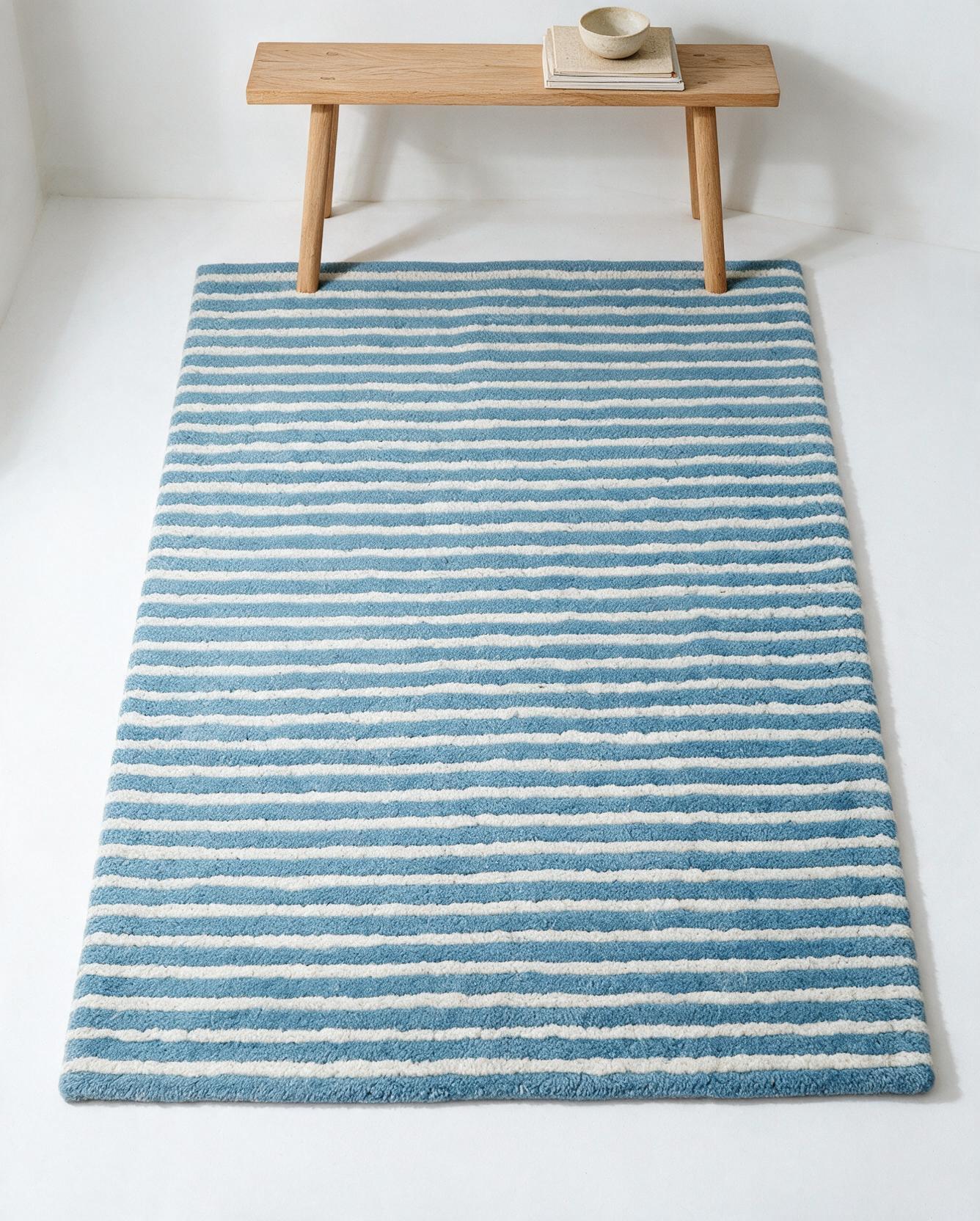
A hotel group re-carpeting across three properties in different climates often wants one motif in two or three colourways rather than three unrelated designs — it keeps the housekeeping and reorder paperwork simple. Across export orders we shipped in 2025, roughly four in ten hospitality carpet programs were a single carved motif run in multiple colourways rather than multiple distinct patterns, which tracks with how procurement teams actually manage multi-property specs. If you’re assembling a broader custom program, this walkthrough of customization options in bulk rug orders covers border, edge and colour-matching mechanics buyers often miss on a first RFP.
Sourcing timeline and sample approval processes
A realistic hand-tufted hotel carpet program runs 10-14 days for a colour-matched sample and 8-10 weeks for bulk production once that sample is signed off — anything quoted faster usually skips a colour-correction cycle. Buyers who build their project timeline backward from an opening date and forget the sample loop are the ones who end up airfreighting the last container.
The sequence that actually holds up on a hotel project:
- Artwork and colour brief (buyer supplies pantone or physical reference) — 2-3 days for the mill to confirm feasibility on the chosen pile height.
- Strike-off sample at or near the 120 x 180 cm sample size — 10-14 days including dye-lot matching.
- Buyer sign-off — ideally with the sample laid in situ under the property’s actual lighting, since wool colour reads differently under warm lobby lighting than under a daylight lamp in an office.
- Bulk tufting and finishing — 6-8 weeks depending on total square metreage and colour count.
- Final inspection and shipment — 1-2 weeks for FOB India, longer for DDP door delivery.
Skipping step 3 — approving off a photo instead of the physical sample under the property’s own lighting — is the single most common reason a bulk hotel order gets rejected on arrival. Ask any supplier to walk you through their sampling SOP before committing a PO; a mill that cannot describe this sequence in specific days is estimating, not scheduling. For a broader view of how a full hand-tufted bulk order moves from PO to container, this guide to sourcing hand-tufted rugs in bulk and the general import roadmap for rug sourcing from India both cover the shipping and documentation side in more detail.
If you’re scoping a hotel floor program for late 2026 or a 2027 opening, we can turn a colour brief into a physical 120 x 180 cm strike-off in about two weeks — send over your pile-height and density spec and we’ll come back with a realistic sample plan.
Frequently Asked Questions
What is the MOQ for hotel carpets sourced from India?
Most hand-tufted wool-cotton hotel carpet programs run a minimum order of 10 pieces per colourway or design at a given sample size, such as the Chitra carpet’s 120 x 180 cm reference size. Larger hotel floor programs typically order well above this, but 10 pieces is the practical floor for testing a colourway before committing to bulk.
How long does sampling take for a custom hand-tufted hotel carpet?
A colour-matched strike-off sample typically takes 10-14 days from an approved artwork brief, including dye-lot matching. Bulk production then runs another 6-8 weeks depending on total square metreage and colour count, so a full program from brief to shipment usually needs 8-10 weeks after sign-off.
Can hand-tufted carpets be customized for a specific hotel design brief?
Yes — hand-tufting allows true curves, carved detailing and multi-colour fields on a proven base construction, which is why styles like the Chitra and Coil patterns can be re-run in new colourways or border adjustments without re-engineering the tufting setup. A blank, from-scratch design takes longer to approve than a variant of an existing style.
Where should hand-tufted wool carpets be used in a hotel, and where should they not?
Hand-tufted wool-cotton carpets belong in dry, indoor traffic zones — lobbies, corridors, guest rooms and meeting spaces — where wool’s crush recovery pays off. They should not be specified for pool decks, spa wet-rooms or any area with standing moisture, since wool retains water and a cotton backing has no drainage.
What pile density should a hotel corridor carpet have?
Corridor and lobby carpets generally need a lower pile height, around 6-9 mm, paired with high tuft density to resist matting from repeat foot and trolley traffic. Guest room floors can run a taller 10-14 mm pile since comfort matters more than traffic resistance there.
Enquire about your collection or project
Tell us which products you need, your preferred sizes, quantities and destination. You can also share your collection or project requirements.
Make it part of your
next collection.
Share the designs you like, approximate quantities and destination. Let’s discuss samples, pricing and custom options.
