
Animal Tufted Collection 2026: Wholesale Wool-Cotton Carpets
Last updated: January 2026
Animal-print carpets are moving out of residential feature corners and into hotel lobbies, lodge suites and boutique retail floors, and the construction underneath the print decides whether that move survives daily foot traffic. The Animal Tufted Collection 2026 pairs hand-tufted wool pile with a cotton backing across three motifs — Bengal Tiger, Zebra Hide, and Leopard Prowl — built specifically for that kind of use.
Spotlight on bestsellers: Bengal Tiger, Zebra, and Leopard designs
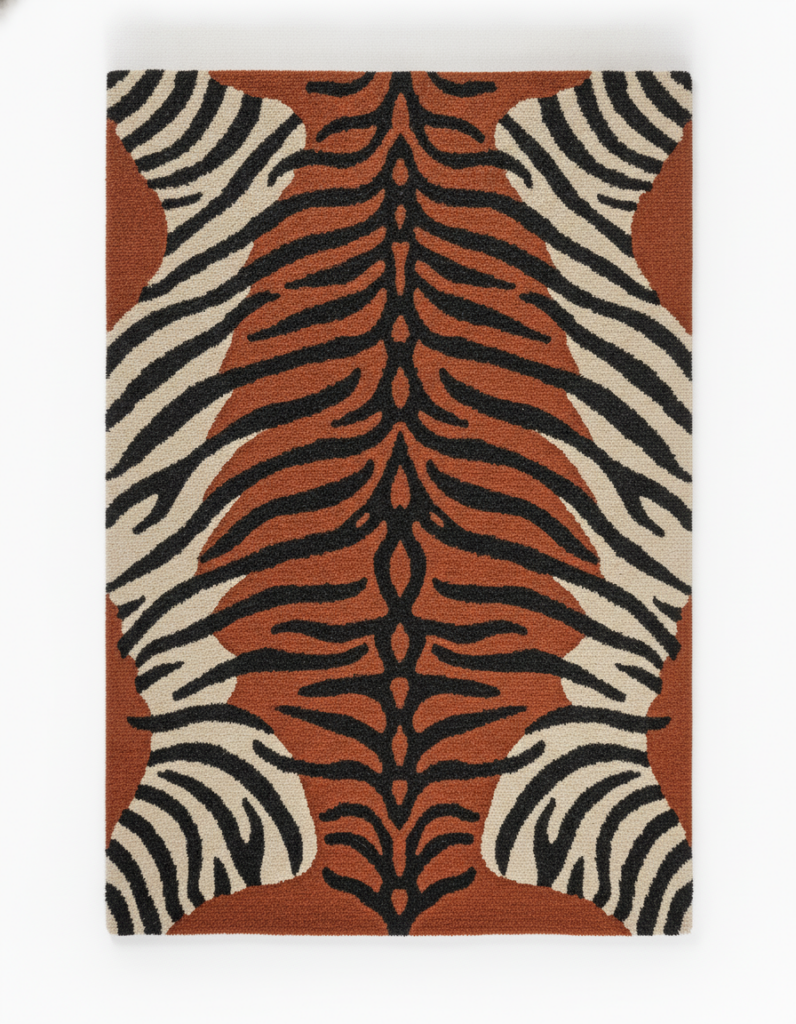
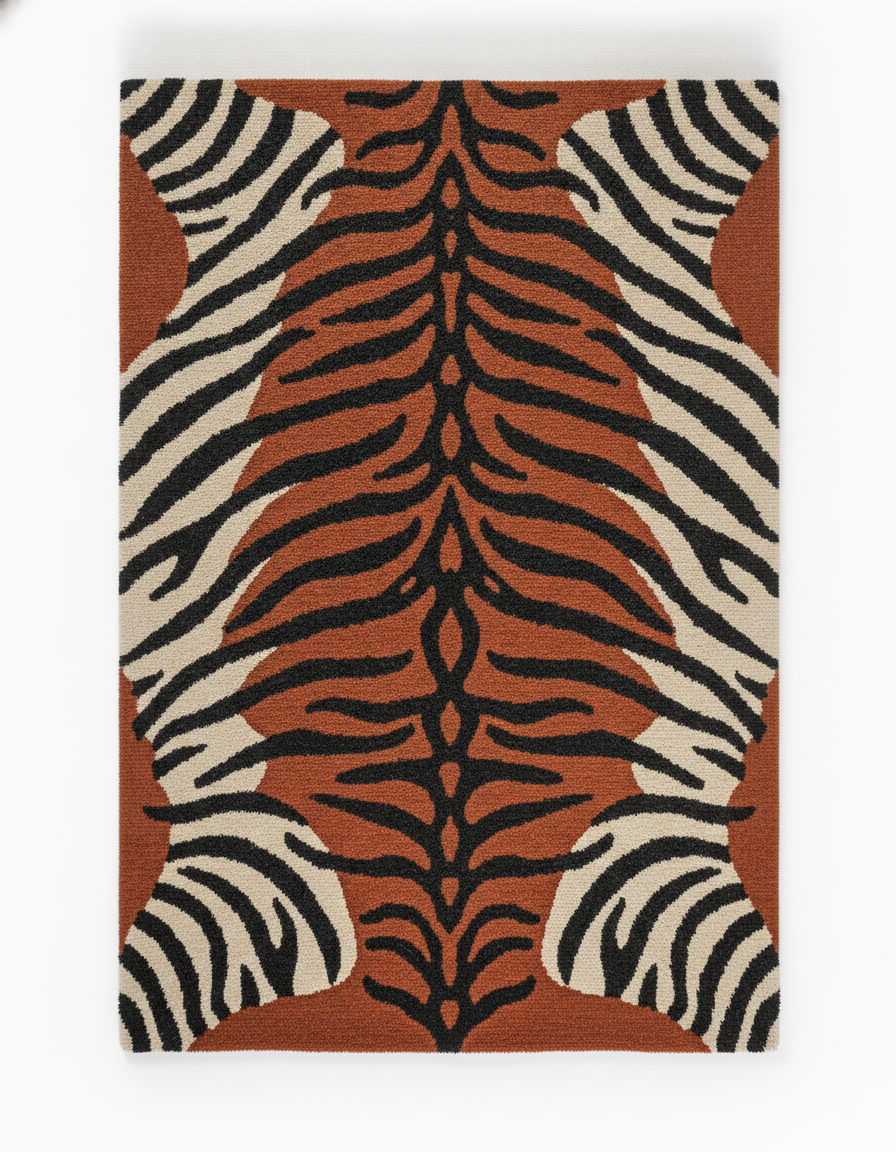
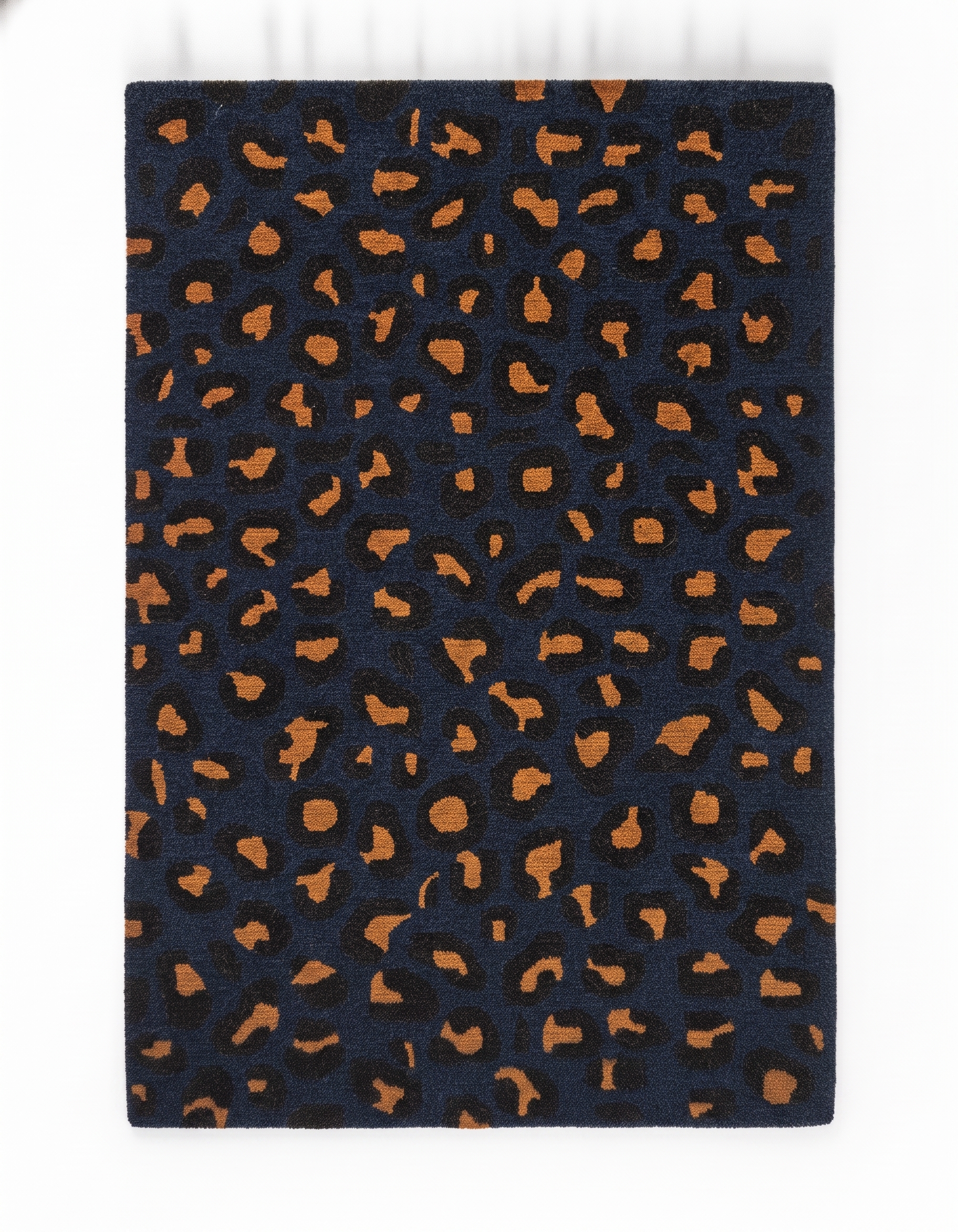
Three motifs carry this collection: Bengal Tiger Hide (ATF-26050), Zebra Hide Striping (ATF-26048), and Nocturnal Leopard Prowl (ATF-26047). All three are hand-tufted in wool pile on a cotton ground, sampled at 120 x 180 cm with a 10-piece MOQ per colorway, and each reads as a single organic field rather than a repeating print — which is the reason tufting, not printing, is the right construction here; a tufted gun can carve a stripe edge or a rosette outline that a flat print cannot fake.
| Motif | SKU | Visual character | Where it tends to get specified | |—|—|—|—| | Bengal Tiger Hide | ATF-26050 | Bold stripe field, warm ground | Lodge living rooms, statement suites | | Zebra Hide Striping | ATF-26048 | High-contrast graphic stripe | Lobbies, retail floor displays | | Nocturnal Leopard Prowl | ATF-26047 | Broken rosette field, deep ground | Bar areas, low-light lounge zones |
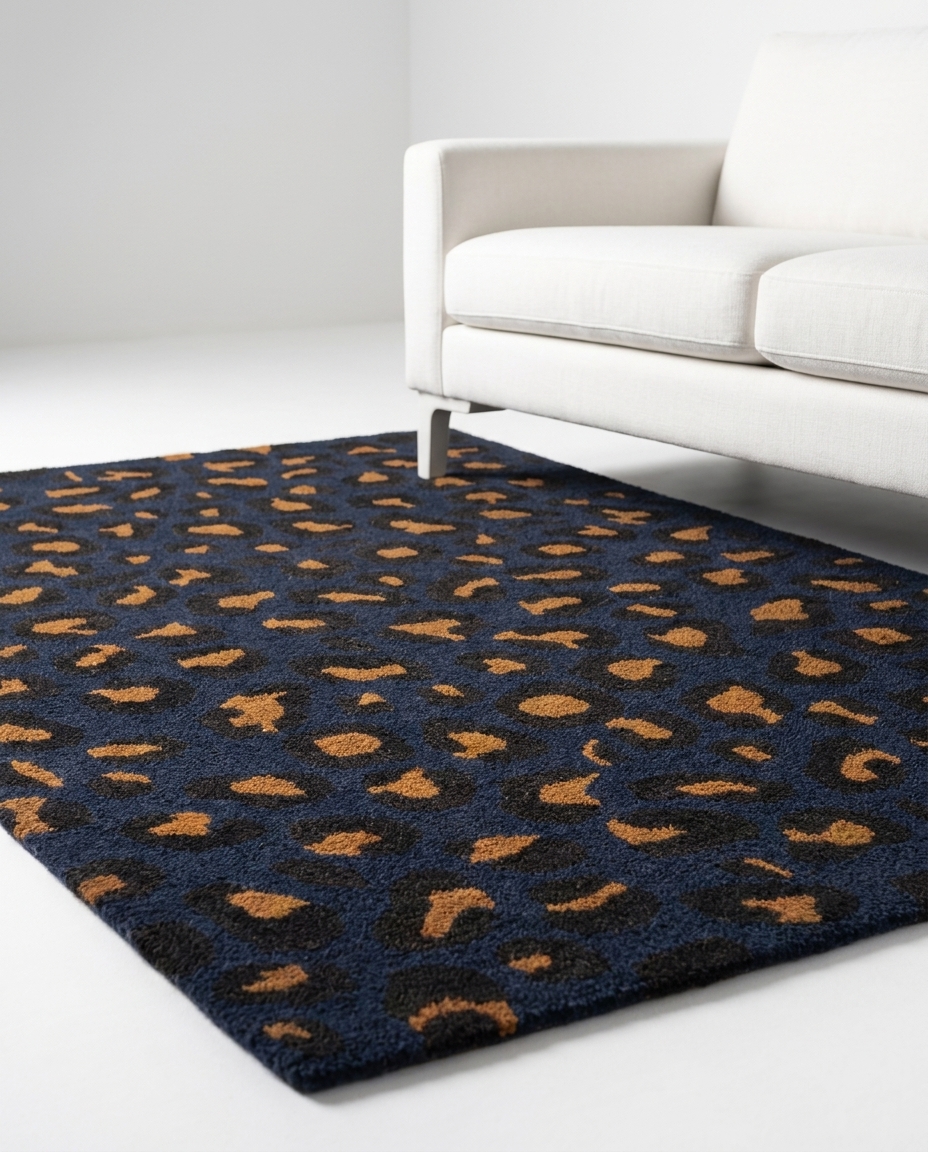
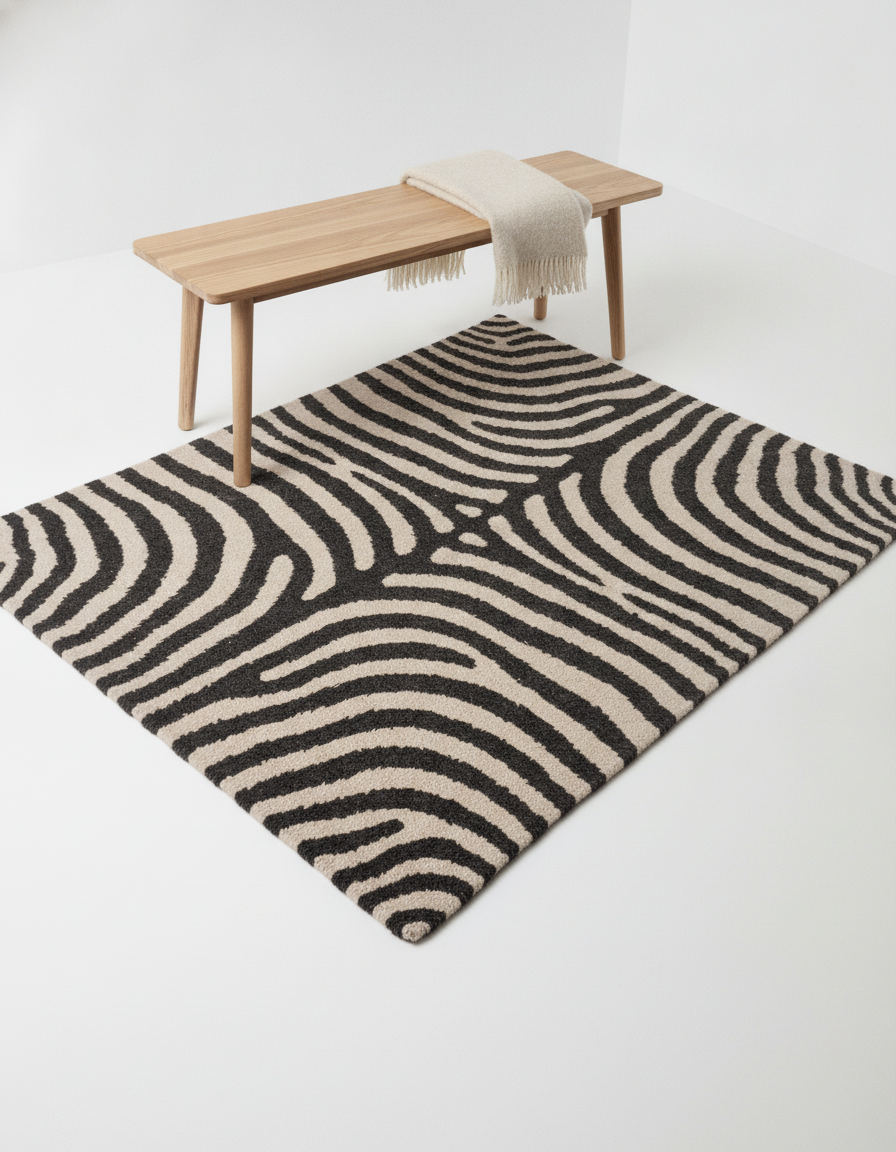
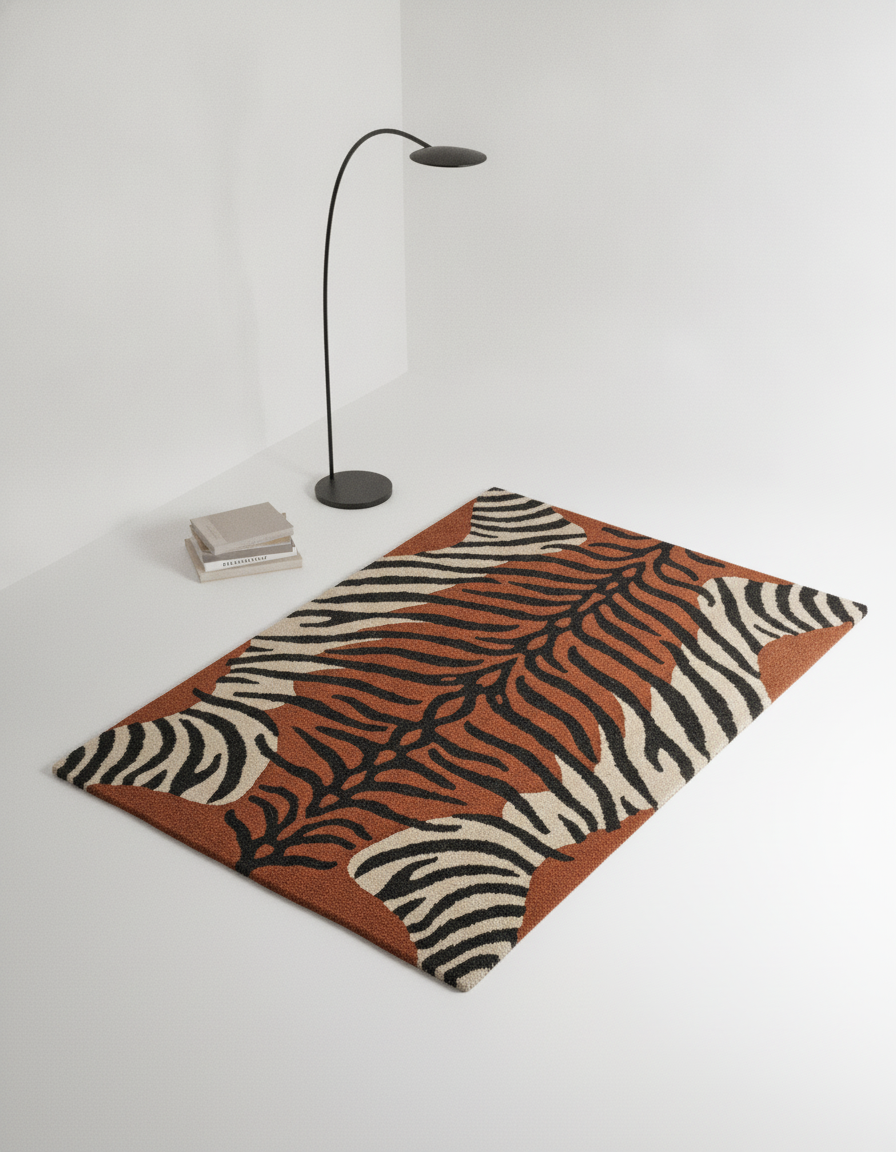
A hotel group fitting out three lodge properties usually standardizes on one motif per property rather than mixing all three across adjoining rooms — pattern clash between suites reads as inconsistent branding faster than a mismatched cushion cover does. In our 2026 production data, Bengal Tiger and Leopard motifs account for roughly 60% of hospitality reorders in this collection, with Zebra used more often in lobby and retail-facing zones than in guest rooms, likely because its higher contrast reads better under bright ambient lighting than under a bedside lamp.
For buyers comparing this construction against other tufted lines in the market, it’s worth reading up on tufted vs machine-made construction before finalizing a spec — the two behave very differently under commercial traffic even when they look similar in a catalogue photo.
Material breakdown: Why Wool-Cotton blends are preferred for lodges and hotels
Wool-cotton construction exists because the two fibres do different jobs: wool carries the weight-bearing work — warmth, underfoot comfort, and the crush recovery a carpet needs under a fixed bed frame or a lobby traffic lane — while the cotton backing gives a hand-tufted piece the dimensional stability to hold its shape instead of stretching out of square over a season of use.
Wool recovers from crushing better than any fibre we run through the tufting gun, which is exactly why hotel specifiers keep asking for it in suites and lounges. But it is not a wet-area or outdoor material, and a piece placed on a covered veranda through a humid season will felt and dull well before its expected service life. The rule a buyer should carry into every spec meeting: wool for the indoor floor plan, and something else entirely for anywhere water sits or sun bleaches.
| Fibre | Job in this carpet | Fits | Does not fit | |—|—|—|—| | Wool (pile) | Warmth, resilience, crush recovery, carved detail | Lobbies, suites, lounges, dry retail floors | Bathrooms, poolside, uncovered outdoor decks | | Cotton (backing) | Dimensional stability, structure | Any indoor hand-tufted construction | Any expectation of standalone outdoor performance |
Across export orders shipped in 2025, wool-cotton tufted carpets from this line came back for reweave under 1% of the time when the backing weight was specified correctly at order stage — most of the claims we do see trace back to installation in a bathroom or on a covered veranda rather than a manufacturing fault. Buyers weighing this construction against a pure wool build for a different project should also look at what a hand-tufted wool rug costs in terms of pile depth and knot-free build time, and the reasoning behind hand-carded wool construction if fibre softness is the deciding factor for a guest-room order.
Customization options for the Animal Tufted Collection
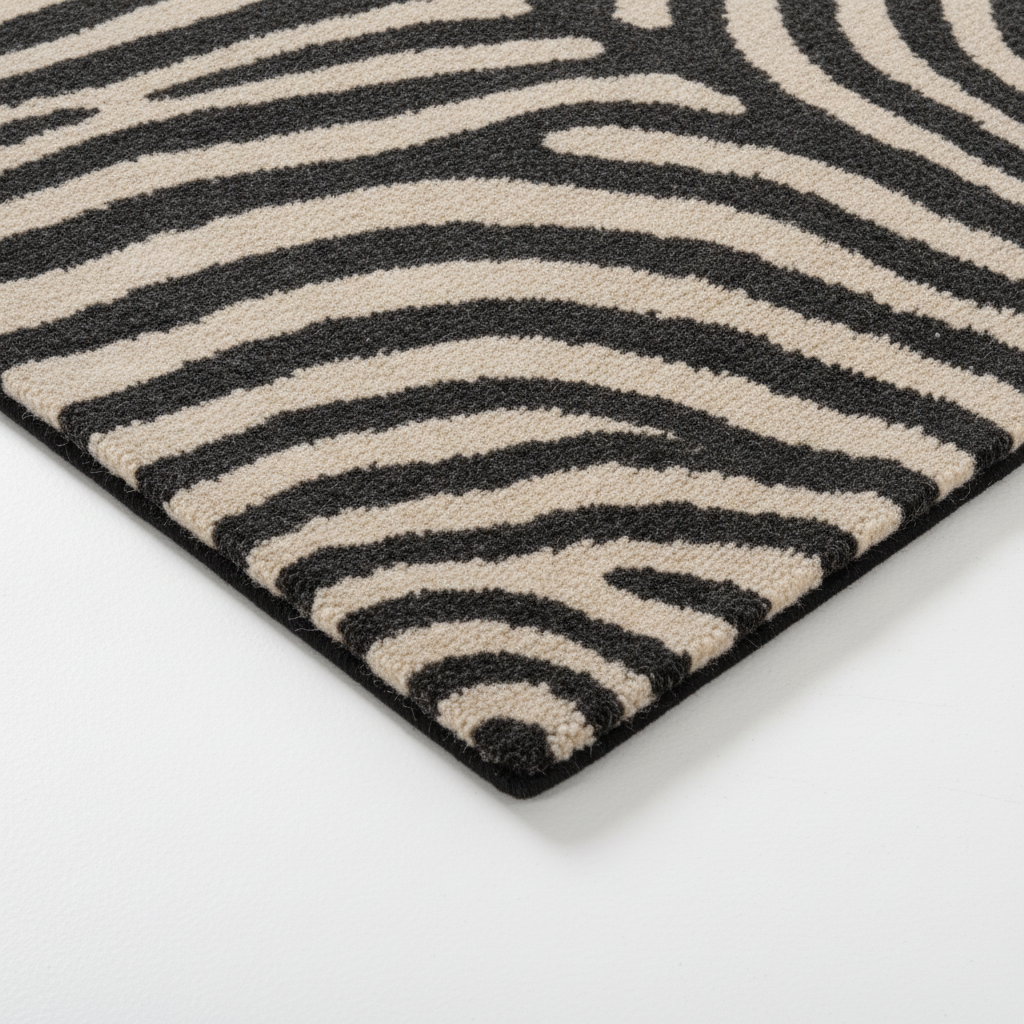
Buyers can customize across four levers on this collection: colorway (the motif silhouette stays fixed, the ground and highlight colors move), size beyond the 120 x 180 cm sample, carving depth on the pile outline, and border treatment — all run through the standard hand-tufted sampling workflow rather than a separate production line, which keeps sampling to the usual 10-14 days from an approved artwork file.
One mistake worth naming: a buyer who requests a full color reversal without resubmitting for a strike-off often finds the carved outline — the raised edge that gives a tiger stripe or leopard rosette its dimension — reads differently against a dark ground than it did against a light one, since the outline relies on shadow contrast, not just color contrast. Always ask for a physical strike-off before locking a reversed colorway across a 10-piece run; a photo approval alone won’t show that shift.
| Customization lever | What changes | What stays fixed | |—|—|—| | Colorway | Ground and highlight tones | Motif silhouette and carving lines | | Size | Overall dimensions | Pile height ratio to motif scale | | Carving depth | Outline dimension, shadow effect | Base tufting construction | | Border | Edge treatment, binding color | Field motif |
For a fuller view of how far a bulk order can flex before it needs a fresh production slot, the breakdown on customization options for bulk rug orders covers the same levers across other tufted lines, and buyers scoping their first hand-tufted program should also read through this guide on sourcing hand-tufted rugs in bulk before writing the RFP.
If you’re scoping a hospitality floor plan for Q2 or Q3, we can turn around a sample plan across all three motifs in 48 hours — send a tearsheet with room counts per motif and we’ll come back with a quote and a realistic sampling window.
Frequently Asked Questions
What is the MOQ for the Animal Tufted Collection carpets?
The MOQ is 10 pieces per SKU or colorway, with a 120 x 180 cm sample size used for approval before a bulk run. Larger project orders across multiple motifs and sizes are quoted per room count once a floor plan is shared.
How long does sampling take for a custom colorway on these carpets?
Sampling typically runs 10-14 days from an approved artwork file, since hand-tufted colorways go through a physical strike-off stage before bulk production starts. Reversed or high-contrast colorways sometimes need a second strike-off, which adds a few days.
Are wool-cotton tufted carpets suitable for hotel bathrooms or pool decks?
No. Wool is chosen for warmth and crush recovery in dry, indoor spaces like lobbies and suites, but it is not a wet-area or outdoor material. Placing it in a bathroom or on an uncovered deck will felt and dull the pile well before its expected service life.
Can the Bengal Tiger or Zebra motif be resized beyond the standard sample dimensions?
Yes, size is one of the standard customization levers on this collection alongside colorway, carving depth and border treatment. The motif scale is adjusted to keep the pattern proportion consistent when the overall carpet size changes.
What’s the difference between hand-tufted and hand-knotted construction for animal motif carpets?
Hand-tufting allows the curved lines, color fields and carved outlines that give these animal motifs their dimension, and it runs faster and at a lower cost than knotting. Hand-knotting can achieve finer detail but knot count drives the price up significantly, which usually isn’t necessary for a bold motif like these.
Enquire about your collection or project
Tell us which products you need, your preferred sizes, quantities and destination. You can also share your collection or project requirements.
Make it part of your
next collection.
Share the designs you like, approximate quantities and destination. Let’s discuss samples, pricing and custom options.

Comment (1)
Comments are closed.