
6 Handloom Carpets Wholesale Buyers Stock for Hospitality
Last updated: September 2026
A wool carpet that recovers its pile after a banquet chair drags across it for six months straight is worth more to a hotel procurement team than one that looks better on day one and flattens by month four. That’s the calculus behind handloom carpets: hand-tufted or hand-knotted wool construction gives buyers a floor covering built for repeated crushing, plus a level of pattern customization no machine-woven run can match. This guide walks through which handloom constructions suit which zones, and what to check before placing a bulk order.
Why handloom carpets are a hospitality staple — durability, customization, and natural fibers
Handloom wool carpets hold up in hospitality because the fiber itself is crimped and elastic — it springs back after a suitcase wheel or a banquet chair leg compresses the pile, which is the single most common failure mode procurement teams see with synthetic-pile alternatives. Hand-tufting and hand-knotting add the second half of the case: both let a design studio put a bespoke colorway, carved border or logo field into a floor plan without waiting on a mill’s existing pattern book.
The two build methods aren’t interchangeable, and buyers often ask for one when they mean the other:
| Construction | What it’s good for | Typical lead driver |
|---|---|---|
| Hand-tufted | Curved borders, colour-blocked fields, carved pile detail, faster turnaround | Design complexity, not knot count |
| Hand-knotted | Fine pattern detail, heirloom-grade wear life | Knots per square inch — drives both price and production time |
In our 2025 export data, roughly 6 in 10 hospitality wool orders specified hand-tufted construction because lobby and corridor designs change faster than a hand-knotted programme can be re-run — knotting suits a fixed, long-life installation more than a design that might refresh in three to five years.
One line worth putting in your own spec sheet: wool belongs indoors. It is not a wet-area or outdoor material — no finishing changes that — so keep it out of pool decks, rain-exposed entrances and spa wet zones, and reserve it for the lobbies, corridors, guest rooms and function spaces where its warmth and recovery actually pay off. If your project has both dry and wet zones, plan two different floor coverings rather than asking one wool carpet to do both jobs. For buyers building a full wool programme rather than a single SKU, the wholesale wool rugs collection is a useful next stop.
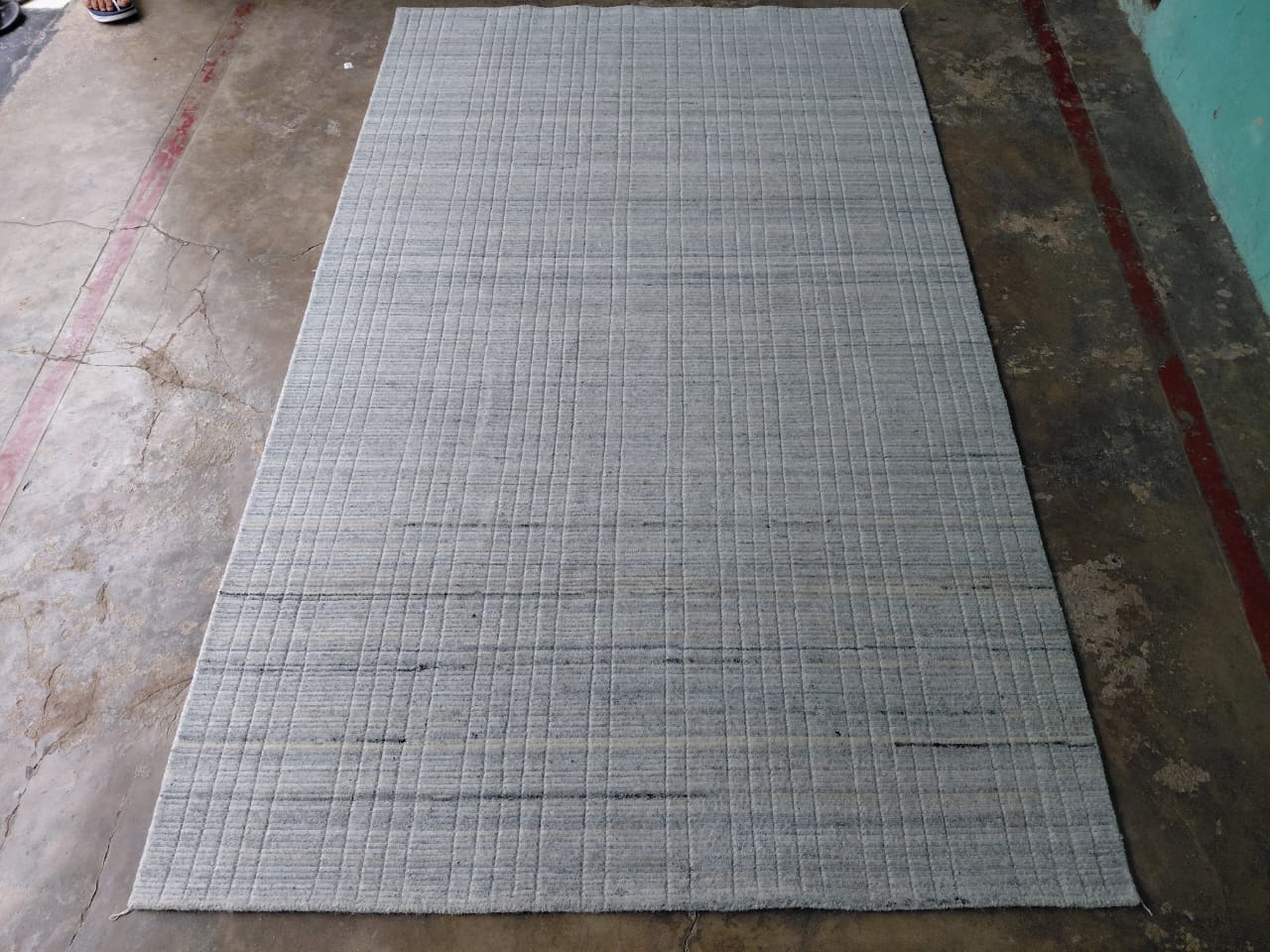
Spotlight on AHL-26010 ‘Loom Carpet’ — all-wool construction, ideal for lobbies and corridors
AHL-26010, the Loom Carpet, is a 100% wool, hand-tufted piece built on our handloom frames specifically for the zones that take the heaviest and most continuous foot traffic in a property — lobbies, corridors and pre-function areas where guests walk in street shoes for hours at a stretch. Wool’s crush recovery is the reason it sits here rather than in a guest bathroom.
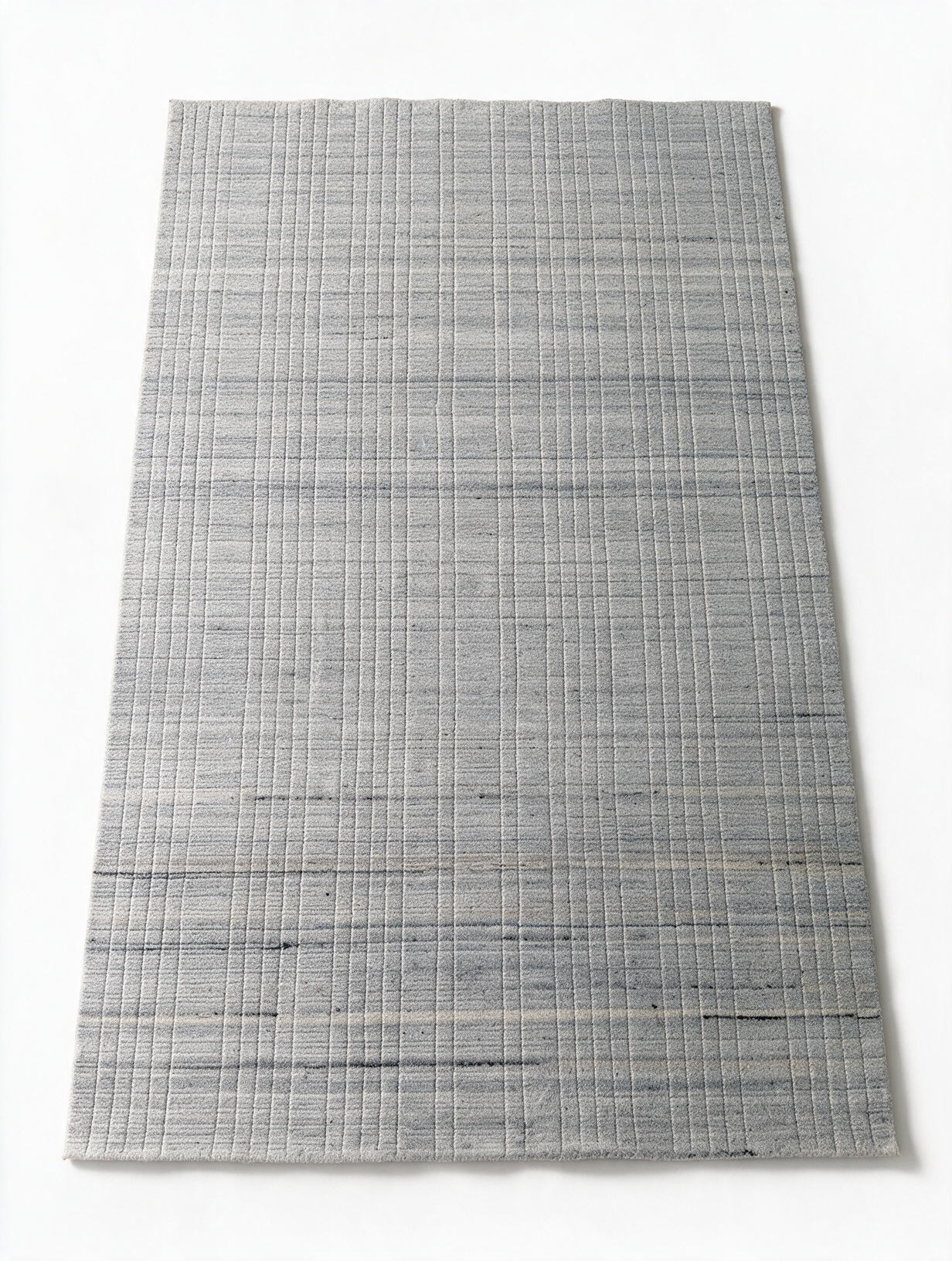
The style ships in a 140×200 sample size so designers can check colour and pile behaviour against an actual floor plan before committing to a production run, and it carries a 25-piece MOQ — a number worth planning against if you’re speccing a single colourway across multiple properties rather than one hotel. Buyers running a multi-site rollout with different corridor lengths per property should ask about bordered-to-size options rather than trimming a standard broadloom width on site; cut edges on hand-tufted wool need binding, and site-cut binding rarely matches factory finishing. For a broader look at how hand-tufted wool performs across a hotel programme, see our notes on hand-tufted carpets for hotel sourcing.
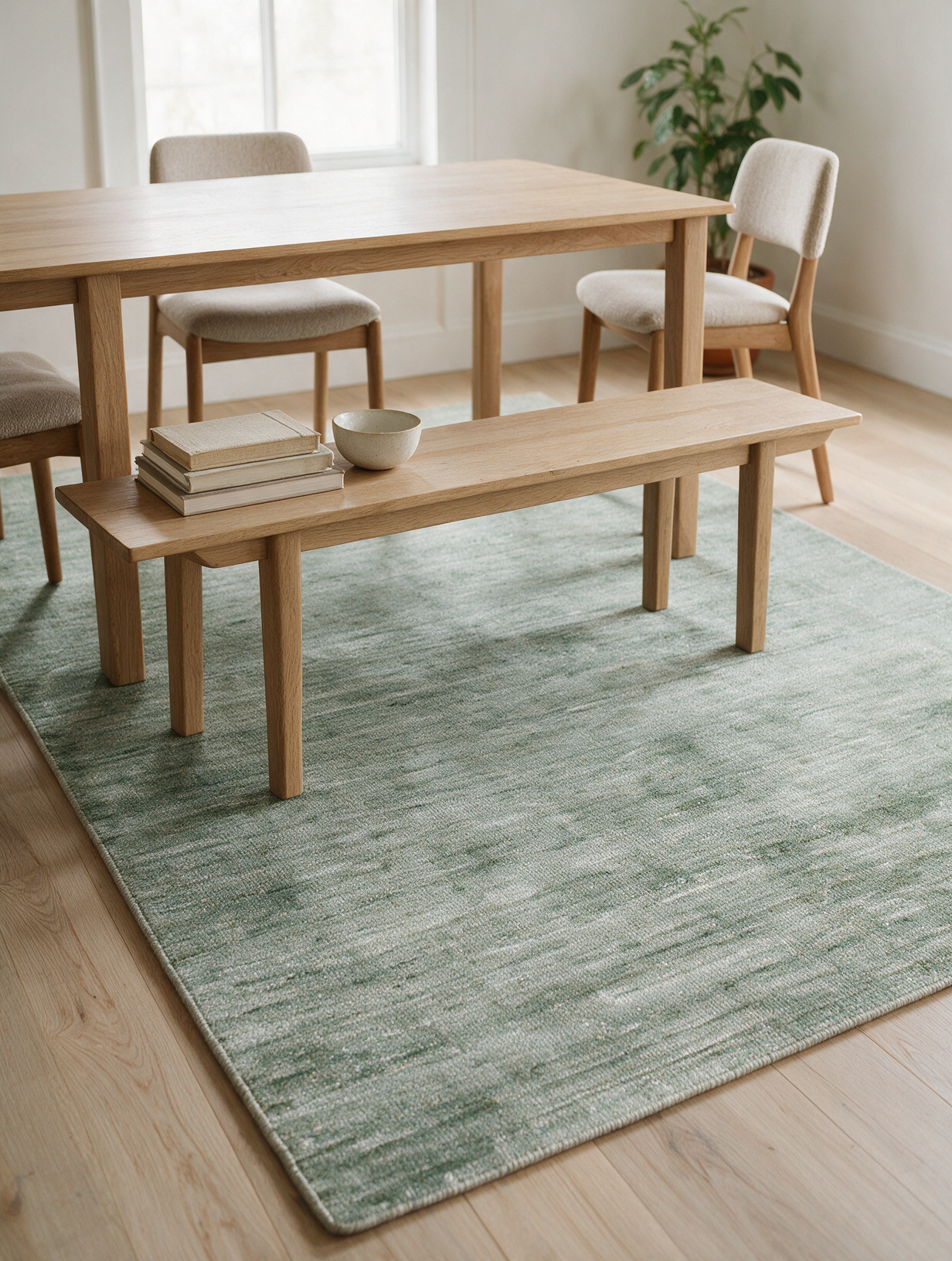
Review AHL-2608 GN and AHL-2608 NV — wool and bamboo-wool options for varied design needs
AHL-2608 GN and AHL-2608 NV are the same base carpet in two fiber routes — straight wool in GN, and a wool/bamboo-viscose blend in NV — so buyers can pick performance or sheen depending on where the piece lands. The wool content is what still carries crush recovery in both; the bamboo fiber in the NV colourway is there for lustre and drape, not durability, and shouldn’t be asked to do wool’s job.
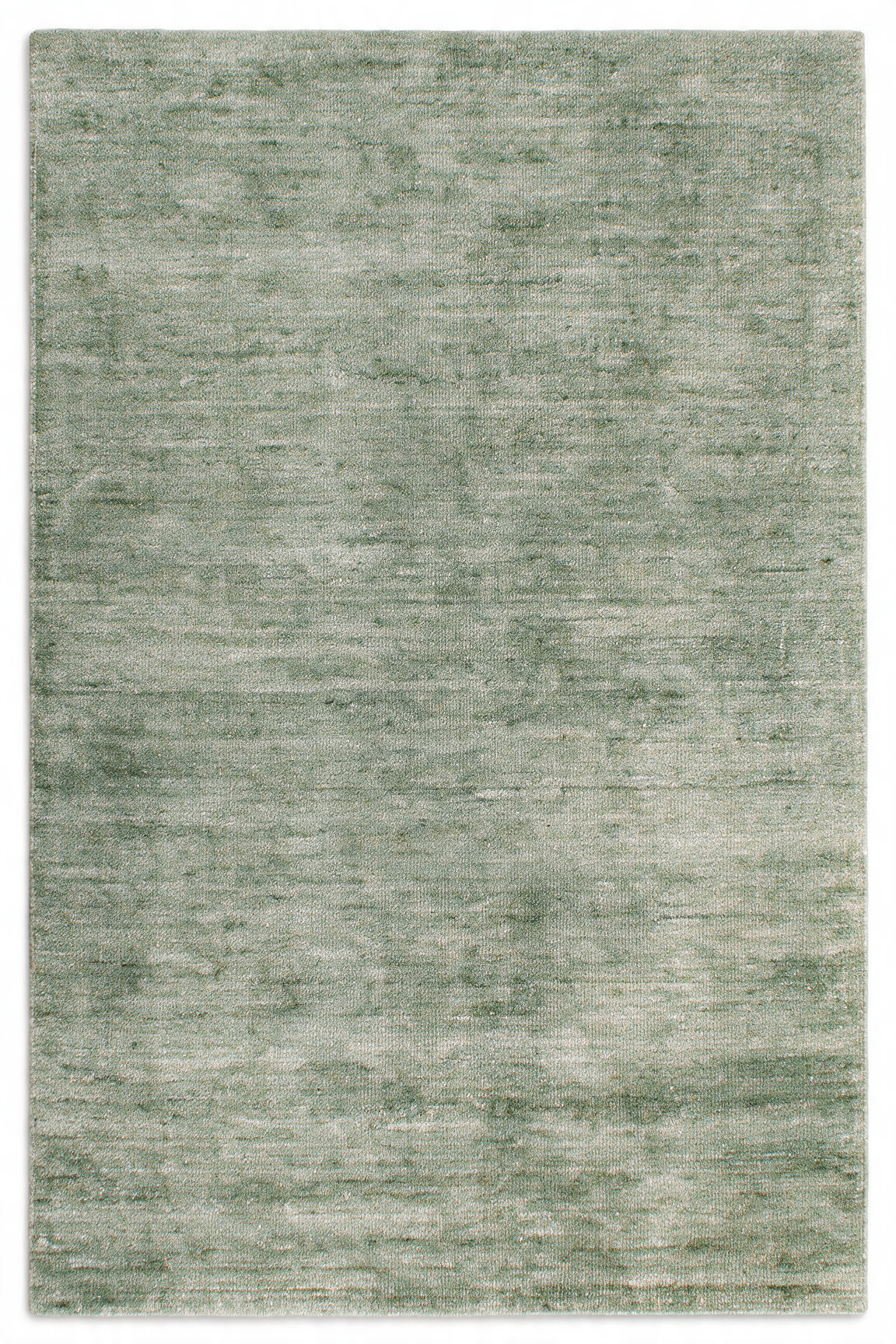
That distinction matters at spec time: a category manager sourcing for a boutique hotel’s evening-lit lounge might prefer NV for how it catches ambient light, while the same buyer speccing a 24-hour lobby with heavier shoe traffic should default to GN. Both remain hand-tufted, indoor constructions — the blend changes hand-feel and light behaviour, not the wet-area rule from the section above. If you’re weighing wool against other natural-fiber options for a mixed-use project, our piece on hand-carded wool rugs for global buyers covers the adjacent fiber-choice questions.
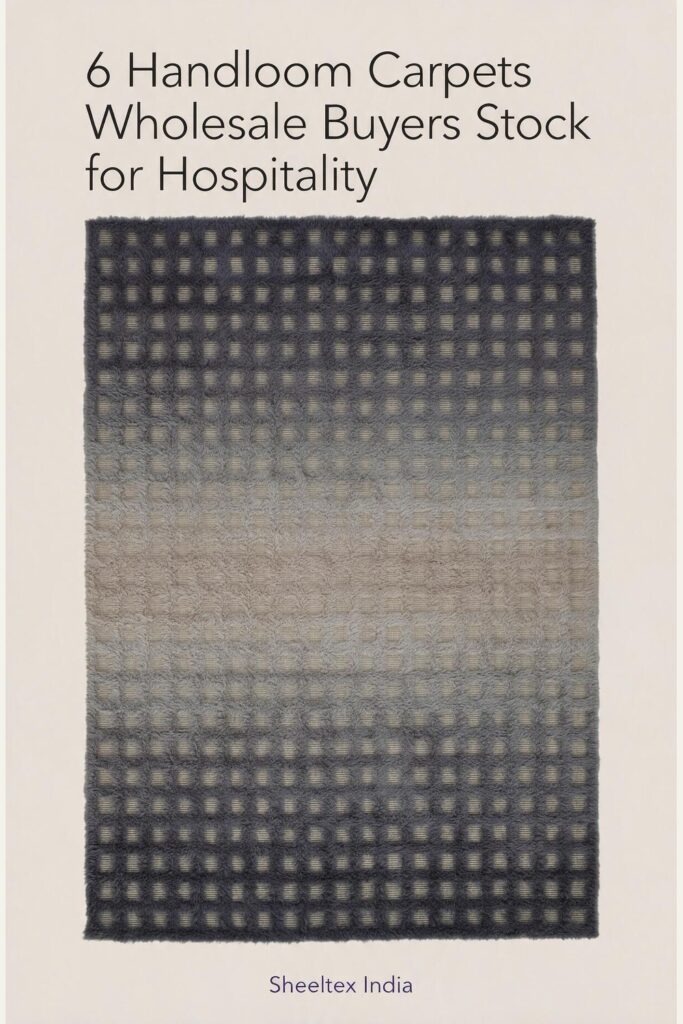
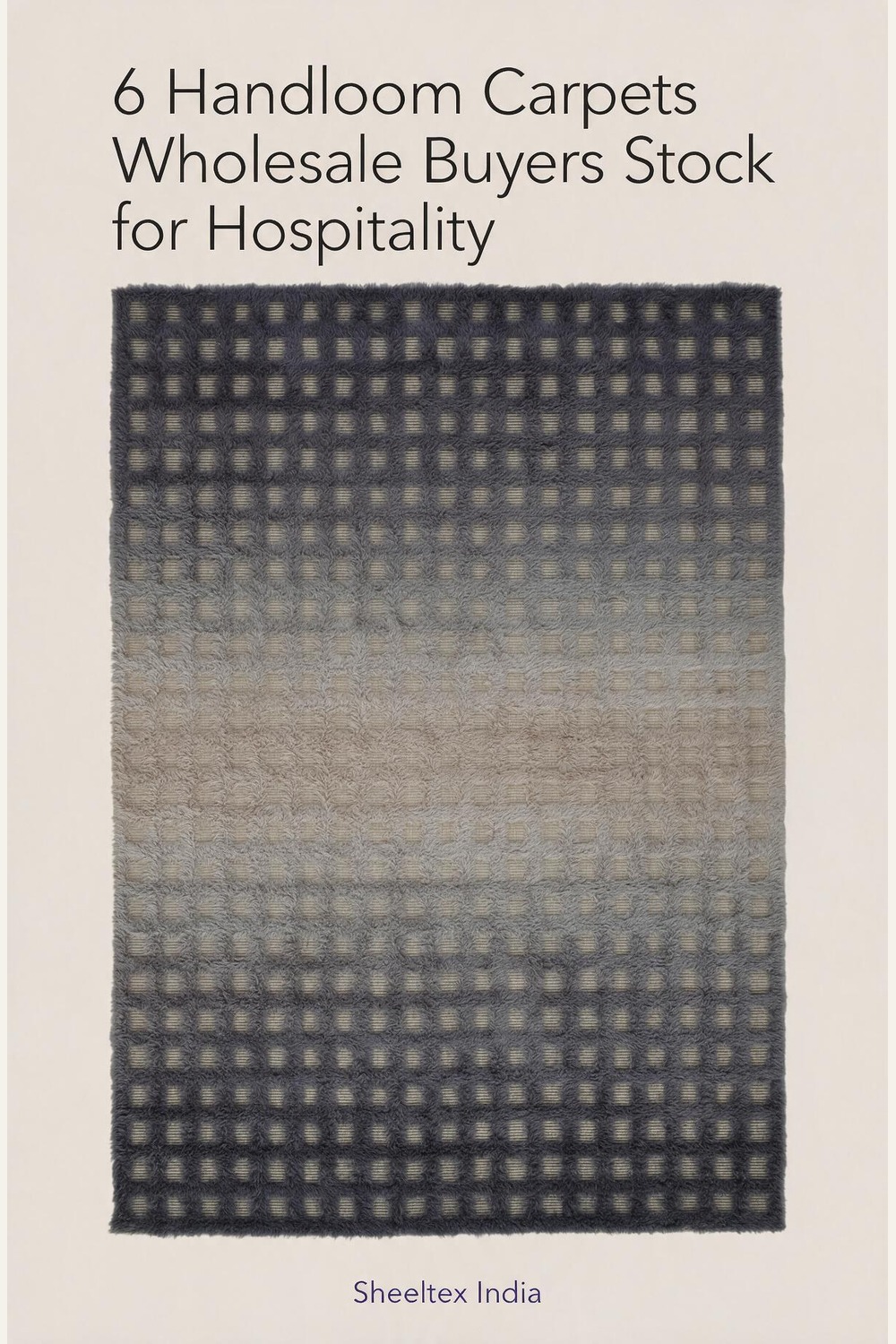
Design tip: using ombre and checkered patterns (AHL-26009) to hide wear in high-traffic zones
Ombre gradients and checkerboard fields — the two patterns behind AHL-26009 — do real work in high-traffic zones because they break up the floor visually, so soiling, foot-traffic sheen and minor pile-crush lines read as part of the design instead of as visible wear. A flat, single-tone wool field shows every one of those the moment it happens; a graduated or two-tone field hides them for one to two additional cleaning cycles before they’re noticeable.
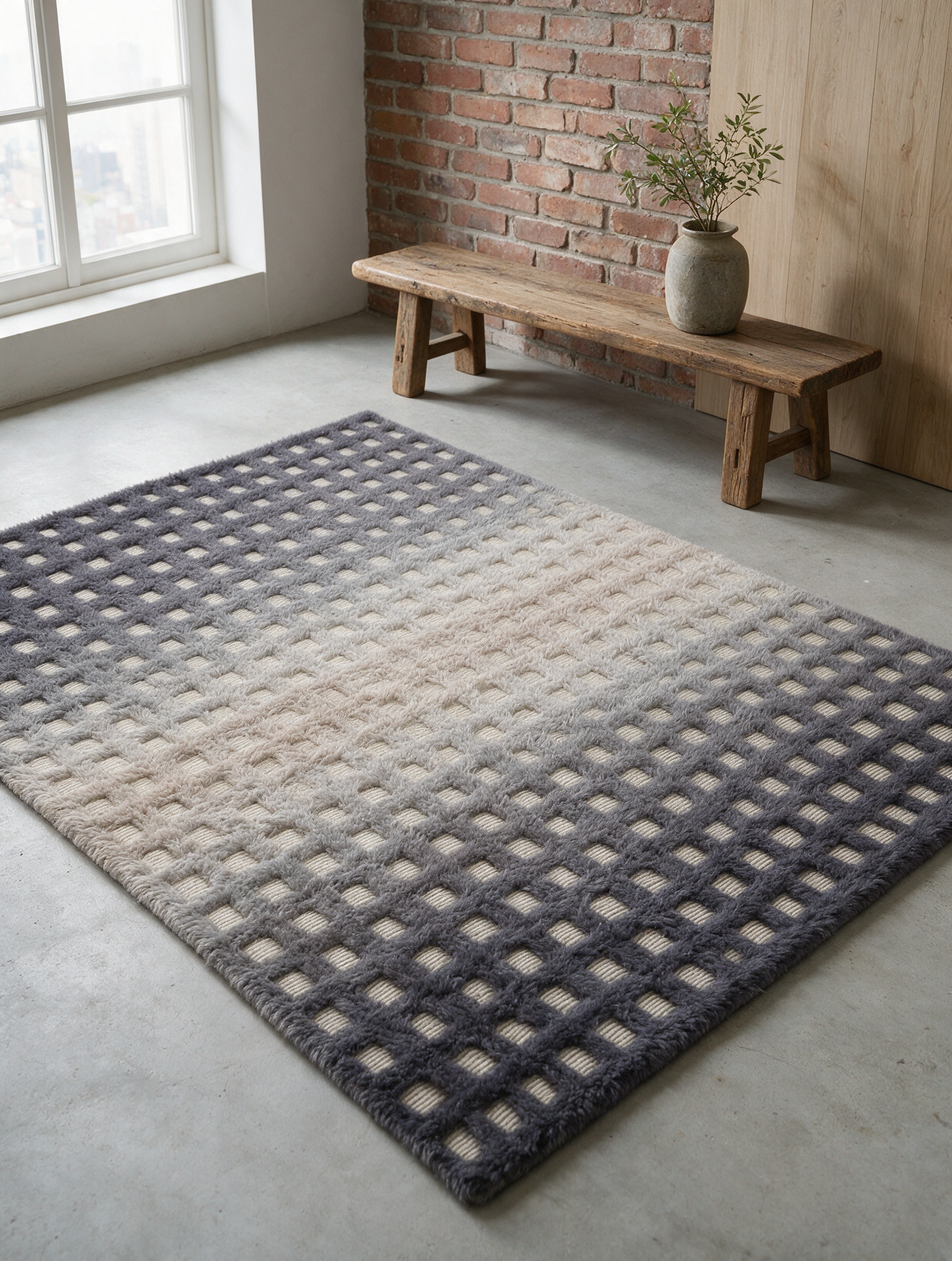
This is a genuinely useful spec lever for budget-constrained projects: a checkerboard or ombre colourway in the same wool quality can extend the visual life of a corridor installation without changing pile height, density or cleaning schedule. It’s a design decision, not a durability upgrade, so pair it with a realistic vacuuming interval rather than treating pattern as a substitute for maintenance. Buyers customizing colourways or scale for a specific pattern should check what’s actually adjustable before committing — our breakdown of customization options in bulk rug orders covers where mills can flex and where they can’t.
Sourcing considerations: MOQ, lead times, and QC for handloom carpets from India
Buyers sourcing handloom wool carpets from India should plan around a 25-piece MOQ per colourway as a starting point, a sampling window of roughly 10-14 days from approved artwork, and a bulk production lead time that typically runs 8-10 weeks depending on pile complexity and knot count. Anything quoted meaningfully faster on a hand-knotted or heavily carved hand-tufted field usually means a shortcut somewhere in finishing or drying.
QC on handloom wool should cover four things before a shipment leaves the factory: pile density and evenness across the field, edge binding strength (pulled, not just visually checked), colorfastness to light and rub, and a crush-recovery spot check on any sample panel held back from the run. In 2026, we’ve had more hospitality buyers ask for photographic QC reports per roll before container loading than in any prior year — worth building into your own PO terms rather than assuming it’s standard.
If your project spans wet and dry zones, or wool and washable ranges in the same property, it’s also worth reviewing where cotton fits instead — our ethnic cotton rugs sourcing guide covers the washable, everyday side of the same buyer’s spec sheet. For MOQ, sample and shipping specifics on a live order, the bulk order page has the current intake process.
FAQs
What is the MOQ for handloom wool carpets? Most handloom wool carpet programmes, including AHL-26010, run a 25-piece MOQ per colourway. Buyers testing multiple colourways for one property should expect the MOQ to apply per colour, not across the total order — confirm this before finalising a purchase order.
How long does sampling take for a custom handloom carpet? Sampling typically runs 10-14 days from approved artwork for hand-tufted wool, longer for hand-knotted programmes with high knot counts. Rush sampling under a week usually skips a colour-correction pass, which shows up as a mismatch between sample and bulk.
Can handloom wool carpets be used in wet or outdoor areas? No. Wool is an indoor material chosen for warmth and crush recovery, not moisture resistance — it should never be specced for pool decks, rain-exposed entrances or wet spa zones. Use a washable or synthetic construction for those areas instead.
What’s the difference between hand-tufted and hand-knotted wool carpets? Hand-tufting uses a tufting gun through a backing cloth and suits curved borders, colour fields and carved pile at a faster turnaround. Hand-knotting ties each knot by hand, giving finer pattern detail and longer wear life, but knot count drives both price and production time.
What sample size is available for AHL-26010 Loom Carpet? AHL-26010 ships as a 140×200 sample so buyers can check colour, pile height and hand-feel against an actual floor plan before committing to bulk production, which typically runs 8-10 weeks after sample approval.
If you’re scoping a wool carpet programme for a Q4 property refresh, send over a floor plan and traffic notes and we’ll come back with a sample plan and colourway options within 48 hours.
Frequently Asked Questions
What is the MOQ for handloom wool carpets?
Most handloom wool carpet programmes, including AHL-26010, run a 25-piece MOQ per colourway. Buyers testing multiple colourways for one property should expect the MOQ to apply per colour, not across the total order — confirm this before finalising a purchase order.
How long does sampling take for a custom handloom carpet?
Sampling typically runs 10-14 days from approved artwork for hand-tufted wool, longer for hand-knotted programmes with high knot counts. Rush sampling under a week usually skips a colour-correction pass, which shows up as a mismatch between sample and bulk.
Can handloom wool carpets be used in wet or outdoor areas?
No. Wool is an indoor material chosen for warmth and crush recovery, not moisture resistance — it should never be specced for pool decks, rain-exposed entrances or wet spa zones. Use a washable or synthetic construction for those areas instead.
What’s the difference between hand-tufted and hand-knotted wool carpets?
Hand-tufting uses a tufting gun through a backing cloth and suits curved borders, colour fields and carved pile at a faster turnaround. Hand-knotting ties each knot by hand, giving finer pattern detail and longer wear life, but knot count drives both price and production time.
What sample size is available for AHL-26010 Loom Carpet?
AHL-26010 ships as a 140×200 sample so buyers can check colour, pile height and hand-feel against an actual floor plan before committing to bulk production, which typically runs 8-10 weeks after sample approval.
Enquire about your collection or project
Tell us which products you need, your preferred sizes, quantities and destination. You can also share your collection or project requirements.
Make it part of your
next collection.
Share the designs you like, approximate quantities and destination. Let’s discuss samples, pricing and custom options.
