
Wholesale Jute Rugs from India: 7 Designs Buyers Reorder
Last updated: September 2026
Wholesale buyers in Japan and the UK keep reordering the same handful of jute rug designs because they combine natural-fibre texture, a defensible sustainability story, and a price point wool and synthetic rugs can’t match. Seven handwoven constructions from India’s current collection cycle account for most of that repeat volume — here’s what makes each one stick on a reorder sheet.
Why jute rugs dominate retail assortments in Japan and the UK — texture, sustainability, price point
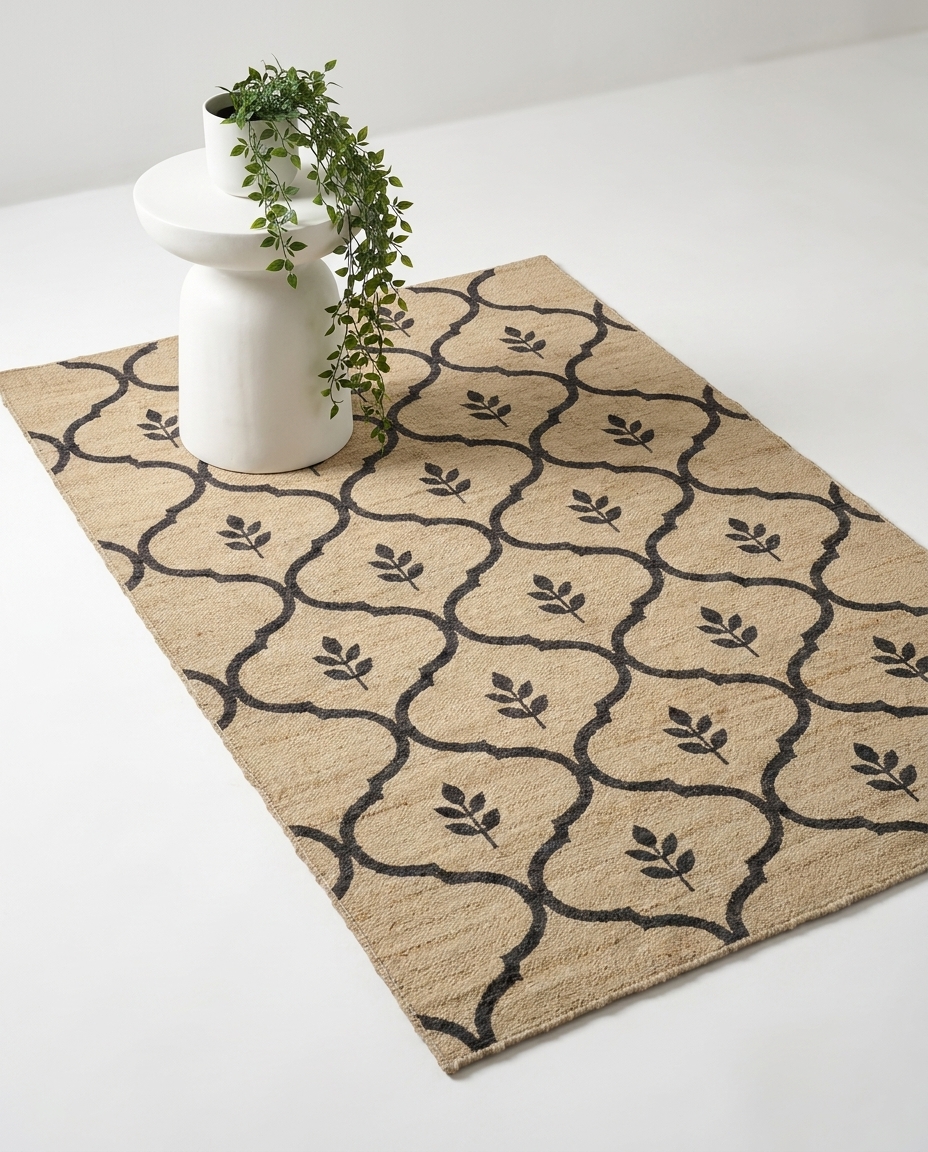
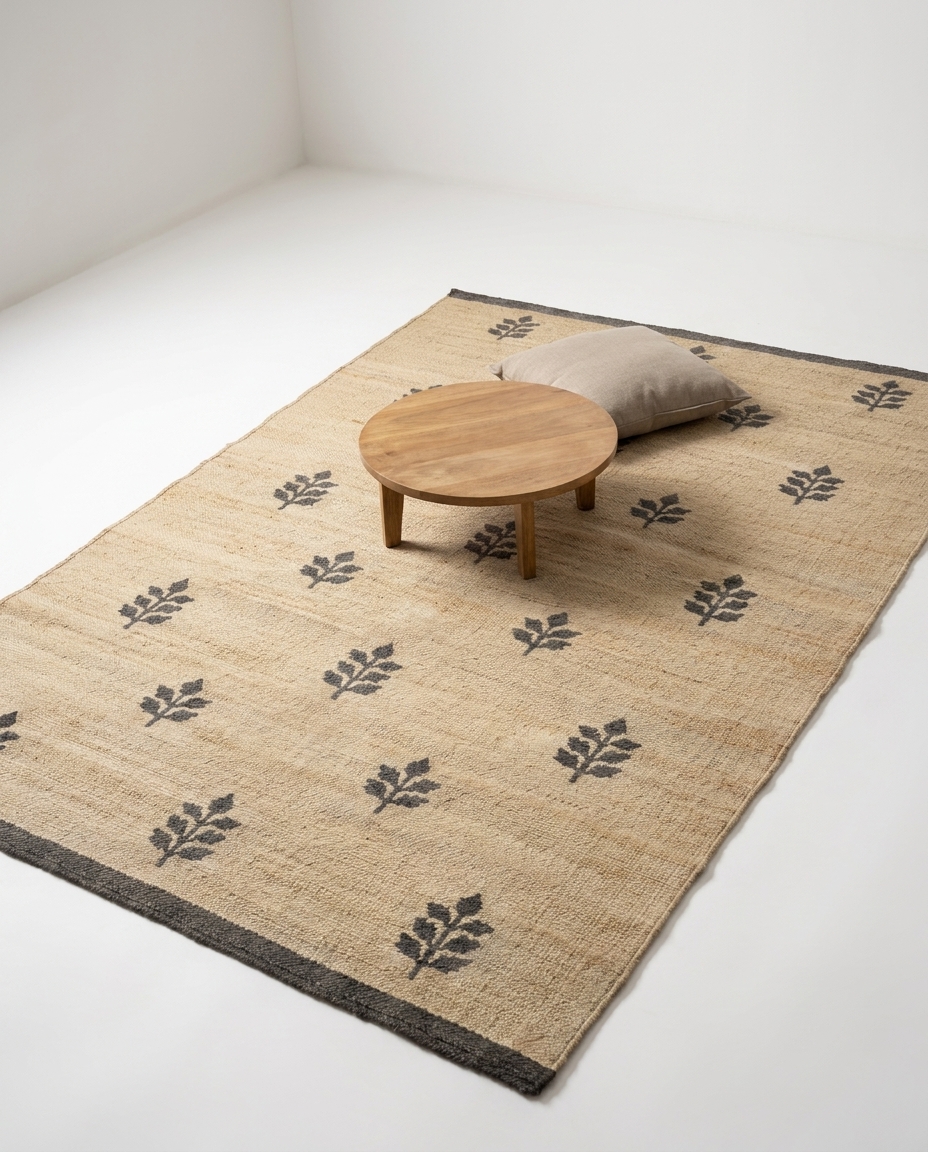
Jute rugs hold their assortment slot because they clear three buyer filters at once: a floor texture consumers can’t get from synthetic pile, a fibre origin story that satisfies sustainability sourcing checklists, and a landed cost roughly a third below comparable wool constructions. That combination is why category managers in Japan and the UK keep the same jute SKUs on repeat purchase orders rather than churning them each season.
In our 2025 export data, jute flatweave and panja constructions carried a higher reorder rate — meaning the same buyer placed a second purchase order within 12 months — than any other rug material category we shipped. UK homeware chains cite the fibre’s biodegradability in supplier scorecards; Japanese buyers more often cite the tactile weight underfoot against warm, low-toned interiors. Both filters point to the same shelf.
Jute belongs in dry indoor rooms — living rooms, bedrooms, studies — where foot traffic is moderate and there’s no standing water risk. It is not a bathroom mat, a poolside runner, or an outdoor piece: the fibre holds moisture rather than shedding it, and a wet jute rug left outdoors will mildew inside a season. Synthetic and PVC pieces handle the wet zones; jute handles the dry ones. That single line belongs on every buyer’s spec sheet before an order goes in.
| Fibre | Relative landed cost | Sustainability credential | Where it belongs on the floor |
|---|---|---|---|
| Jute (handwoven) | Lower | Biodegradable, renewable annual crop | Living rooms, bedrooms, studies — dry zones only |
| Wool (hand-tufted) | Higher | Renewable, longer wear life | High-traffic living areas, hospitality lobbies |
| Synthetic/PET | Mid | Recycled content varies | Outdoor, poolside, bath — wet-tolerant zones |
Buyers stocking a jute line for sustainable retail and hospitality spaces typically pair two or three jute SKUs with one wool anchor piece per assortment, which is the mix we see reordered intact most often.
Spotlight on AJD-2633: a handwoven jute rug in two colourways that sells across EU and APAC markets
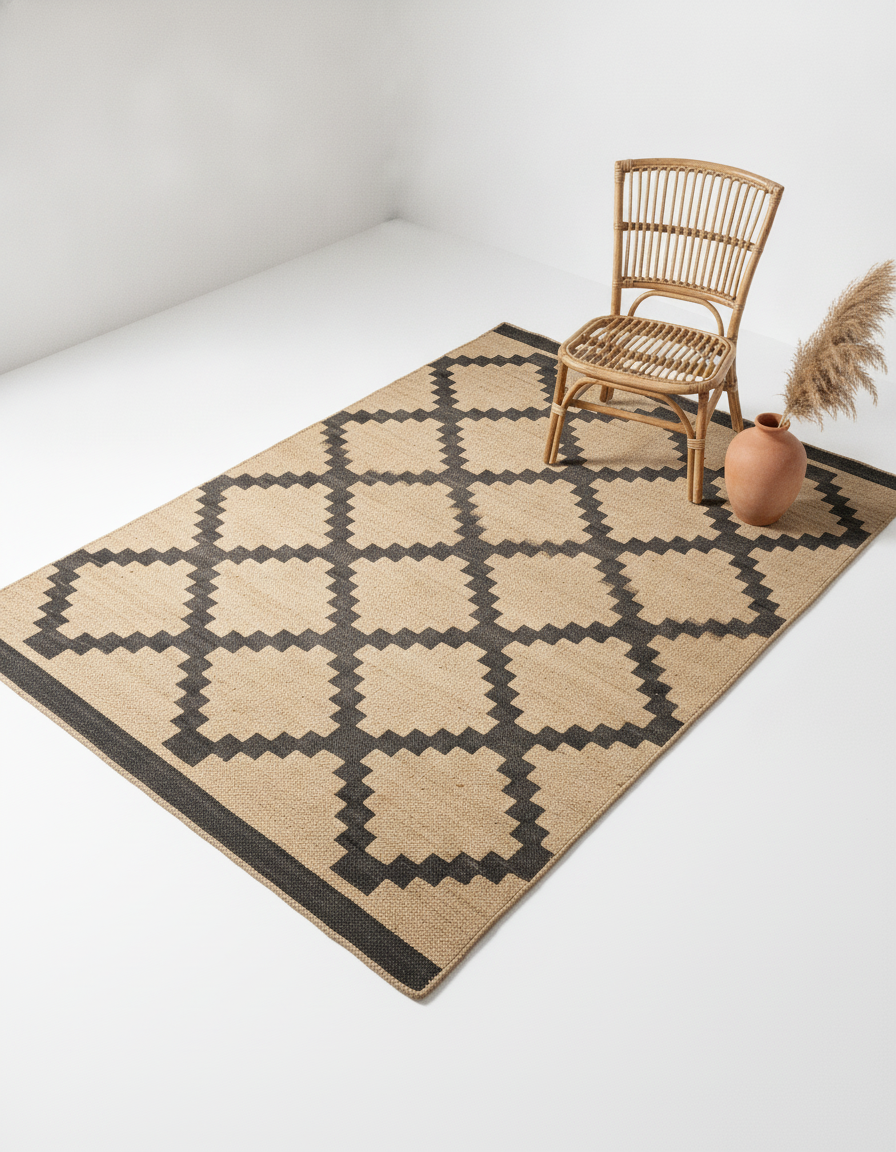
AJD-2633 is a handwoven flatweave jute rug built on a stepped stripe geometry, stocked in a natural RD colourway and a deeper AJD-2633 BLK colourway, and it’s one of the few single designs on our order books that moves at comparable volume into EU and APAC buyer accounts without a regional variant.
The two colourways aren’t a simple light/dark split. Because jute takes dye down rather than up, the AJD-2633 BLK run doesn’t render as a flat black in hand — it lands as a duskier, warmer charcoal than the swatch card suggests, which is a colour behaviour every jute buyer needs to plan for before finalising an order against a Pantone reference. Retail buyers approving artwork from a photo alone routinely ask for a physical strike-off precisely because of this shift; we recommend it as standard practice on any jute colourway that reads dark on screen.
A UK homeware buyer running a neutral-toned autumn set typically orders the RD colourway; a Japanese buyer building a darker, warmer palette leans toward BLK. Same construction, same loom width, two very different retail stories — part of why this design keeps showing up on reorder sheets from both regions without either market asking us to change the weave.
The Q3 26 Jute Rugs collection: 26 designs, low entry volume at 50 pieces, private label supported
The current Q3 2026 jute rug collection runs 26 designs across flatweave, panja, and braided constructions, with an entry volume of 50 pieces per design/colourway — low enough for a regional chain to trial a design before committing to a full container, and the range is open to private label branding at that same entry volume.
A 50-piece entry point matters more than it looks on a line sheet. A category manager testing three new designs across two colourways each is committing to roughly 300 pieces total — small enough to slot into a mixed consolidation shipment rather than waiting to fill a container alone. That’s the volume tier where most of this collection’s reorders start: a small first order that proves out on shelf, followed by a full-container repeat within two to three seasons.
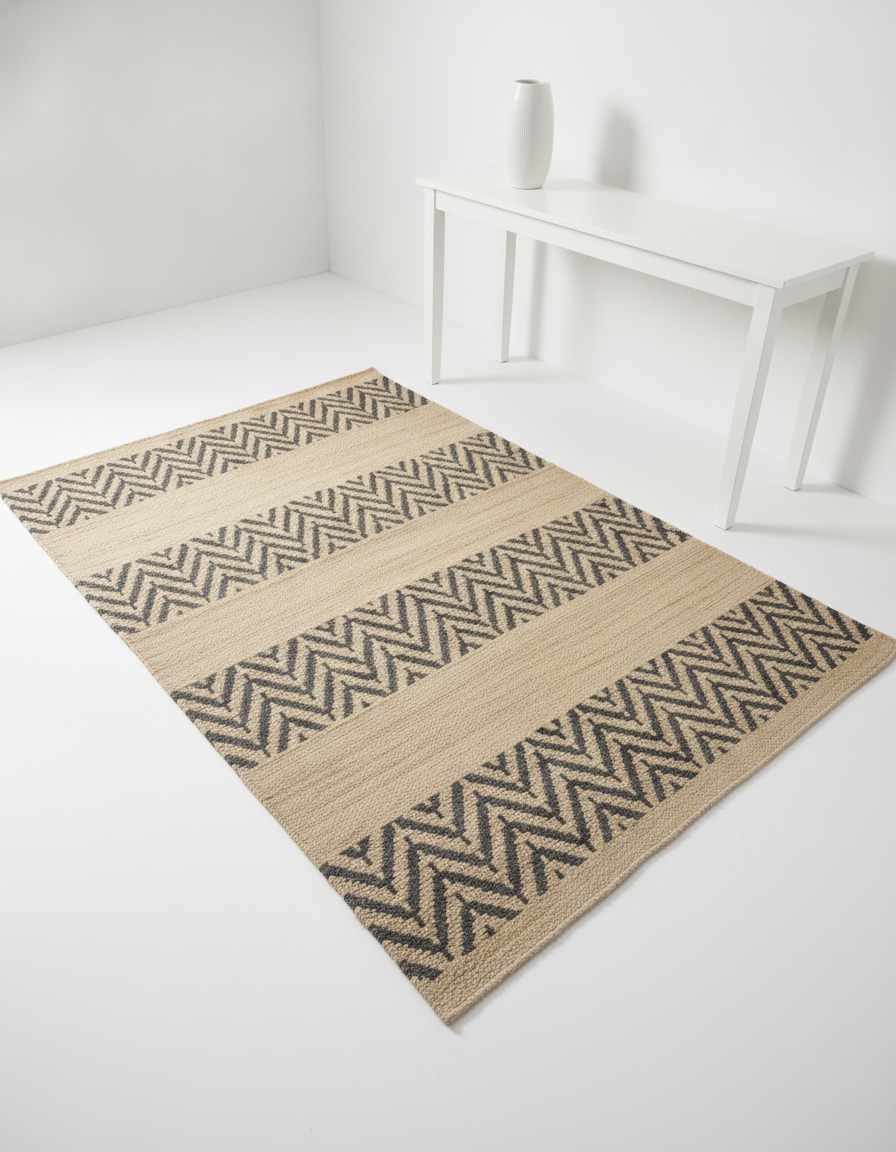
Private label runs at this volume typically add 10-14 days to standard lead time for label and packaging approval, not for the weave itself — loom time is identical whether the rug ships under our label or a retailer’s own. Buyers building label programs around jute usually start with one or two designs from an existing collection before commissioning a fully custom stepped-geometry pattern, since jute’s construction limits patterning to stripes, blocks, checks, and stepped diamonds or chevrons — no curved or photographic motifs, because the weave itself can’t render them.
How to evaluate handwoven vs braided jute construction for your floor plan
Handwoven flatweave jute gives a flatter, more even surface suited to furniture-heavy rooms where chair legs and rug edges meet often; braided jute construction is thicker and more forgiving underfoot in open floor space, but its coiled edge sits proud of the floor in a way flatweave doesn’t. Match the construction to the room’s furniture density, not just the pattern.
Panja weave sits between the two — a handloom technique with a slightly heavier hand than flatweave, without the coil profile of braided work. None of the three constructions are printed or stamped; every pattern you see, whether a stripe, a stepped diamond, or a chevron band, is built into the weave structure itself, not applied to the surface afterward. That’s worth confirming in writing on any purchase order, since a buyer who assumes ‘block-printed jute’ exists as an option is going to get a very different sample back than expected.
| Construction | Surface profile | Best floor plan fit | Pattern range |
|---|---|---|---|
| Handwoven flatweave | Flat, low profile | Rooms with dining chairs, desks, frequent furniture contact | Stripes, blocks, checks, stepped diamonds, chevrons |
| Panja weave | Slightly textured, mid profile | General living/bedroom use | Same stepped-geometry range, heavier hand |
| Braided | Thicker, coiled edge | Open floor space, low furniture density | Concentric or oval bands |
For a deeper technical comparison across handmade rug categories, hand-knotted, hand-tufted, and handwoven construction differences is worth reading before finalising a spec sheet, and our braided jute and cotton construction notes cover the coil-edge tolerance question in more depth.
Sourcing and QC: what we test for colourfastness and durability before shipment
Before a jute rug order ships, colourfastness gets checked against both dry and wet rub tests, and the weave gets checked for consistent tension across the full width of the rug — a loose selvedge or an uneven step in a chevron pattern is the most common defect an inexperienced QC pass misses.
In our 2026 QC logs, dye-lot variation between the first and last rolls of a production run is the single most frequent rework flag on jute orders — which is exactly why we recommend buyers ask for a bulk-dye strike-off approval, not just a lab-dip, before a production run starts. A lab-dip on a small swatch can look right and still drift a shade over a full width once the batch dye lot runs.
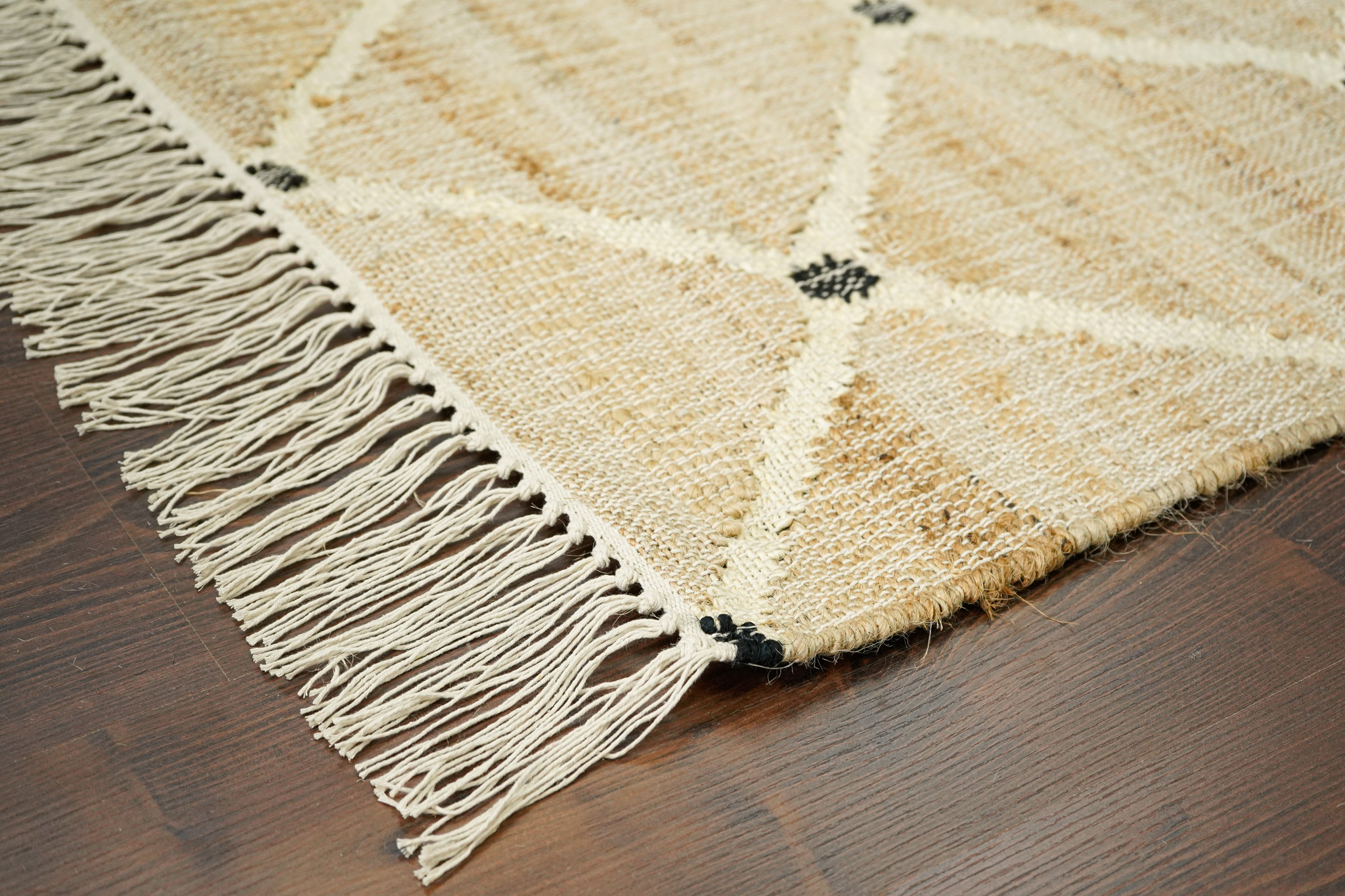
Durability testing on jute focuses on abrasion resistance at the weave’s tightest points — the stepped corners of a chevron or diamond pattern — since that’s where fibre wear shows first under foot traffic. Buyers stocking jute for high-traffic floor placements should ask any jute rug manufacturer in India to walk through their abrasion and colourfastness testing SOP rather than accepting a general durability claim — the corner-wear test is a fair proxy for how the rug will actually perform two years into a hospitality or retail placement.
If you’re scoping a jute assortment for Q4 or planning ahead to spring 2027, we can put together a sample plan across three or four of these seven designs within 48 hours — send over your target colourways and floor plan and we’ll come back with a quote.
Frequently Asked Questions
What is the MOQ for wholesale jute rugs from India?
Most jute rug collections, including Sheeltex’s Q3 2026 range, set entry volume at 50 pieces per design and colourway. That’s low enough for a regional chain to trial a design before committing to a full container, with full-container repeat orders typically following within two to three seasons.
Can jute rugs be private labelled?
Yes. Private label runs generally follow the same entry volume as branded stock, with 10-14 days added to standard lead time for label and packaging approval rather than for the weave itself, since loom time doesn’t change based on whose label ships on the rug.
How long does sampling take for a custom jute rug design?
Sampling for a custom jute design typically runs 10-14 days from approved artwork, since jute’s stepped-geometry construction (stripes, blocks, checks, diamonds, chevrons) needs a loom-tension check before a strike-off sample is cut and sent.
Can jute rugs be used in bathrooms or outdoors?
No. Jute holds moisture rather than shedding it, so it should never be specified for bathrooms, poolside areas, or outdoor use — a wet jute rug left outdoors will mildew within a season. It belongs in dry indoor rooms: living rooms, bedrooms, and studies.
What’s the difference between the AJD-2633 RD and AJD-2633 BLK colourways?
Both are the same handwoven flatweave construction; only the dye lot differs. Because jute takes dye down rather than up, the BLK colourway renders as a duskier, warmer charcoal in hand rather than a flat black, which is why buyers approving from a photo alone should request a physical strike-off first.
Enquire about your collection or project
Tell us which products you need, your preferred sizes, quantities and destination. You can also share your collection or project requirements.
Make it part of your
next collection.
Share the designs you like, approximate quantities and destination. Let’s discuss samples, pricing and custom options.
