
Wool vs Cotton vs Jute Rugs: A 2026 Retail Sourcing Guide
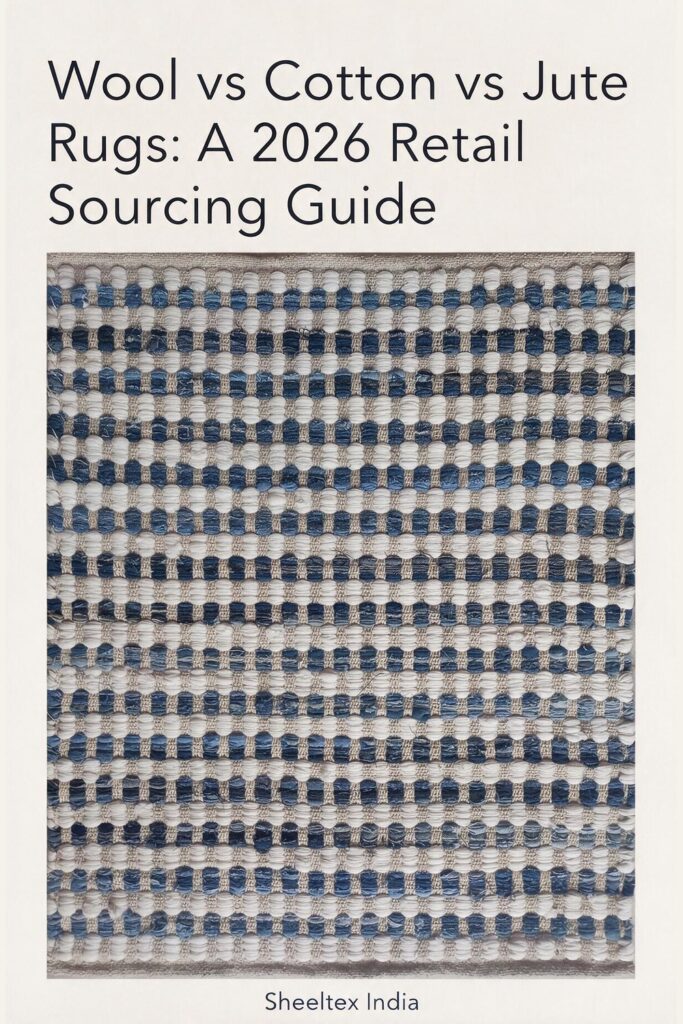
Last updated: August 2026
Wool, cotton and jute rugs are not interchangeable stock — each fibre carries a different durability curve, care profile and cost driver. Put the wrong one in the wrong category (a moisture-sensitive jute runner near a bath display, a flatweave cotton piece sold as a hospitality-grade wool alternative) and you’re managing returns, not repeat orders. Here’s how the three actually compare for a 2026 buy.
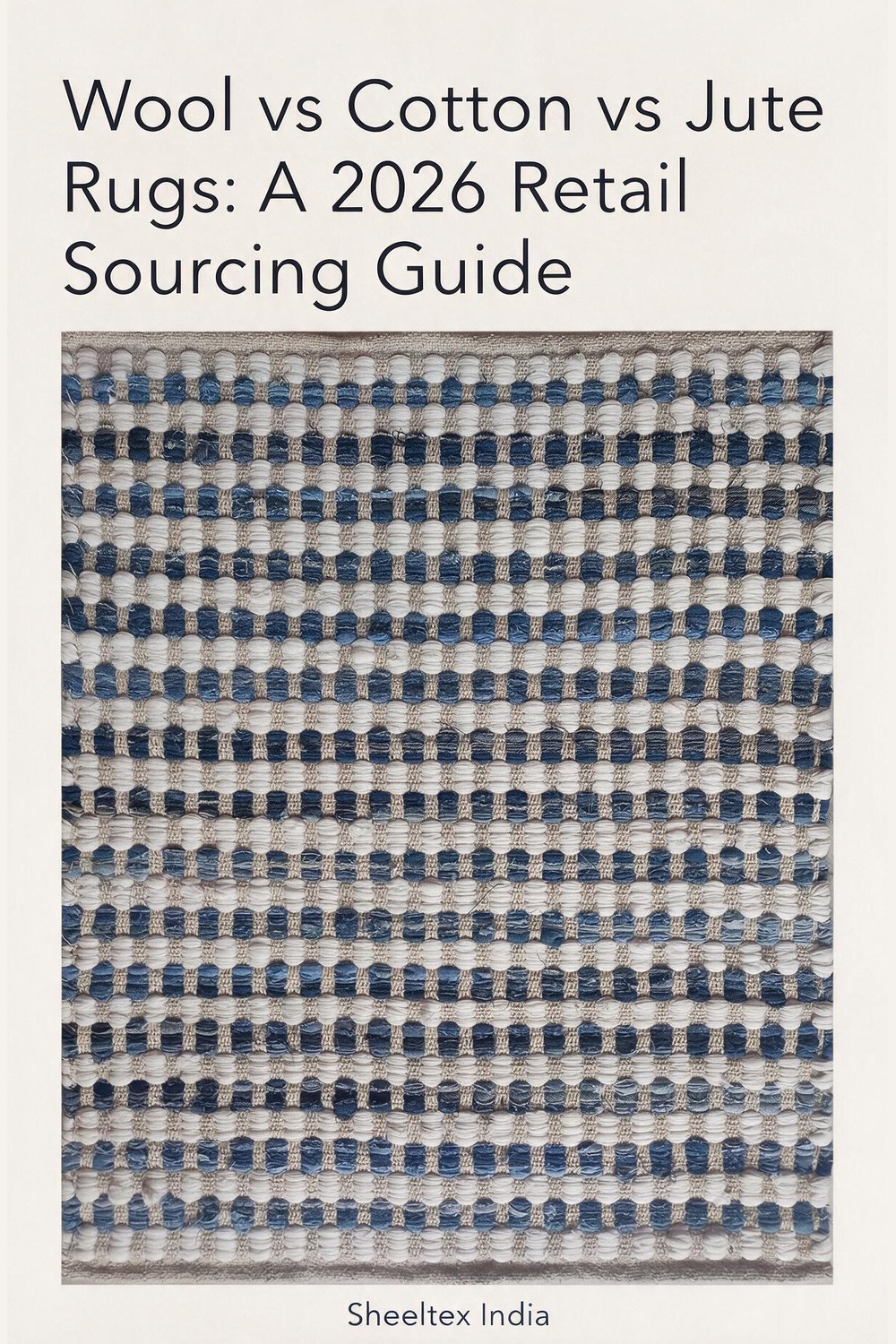
Wool, Cotton or Jute: Which Fibre Fits Your 2026 Rug Range?
Wool suits indoor living and hospitality floors where crush-recovery and handfeel matter more than unit cost. Cotton suits washable, everyday and kids’-room rugs where machine care is the selling point. Jute suits dry, textural indoor spaces — living rooms, studies, bedrooms — and should never be positioned for wet or outdoor use.
| Fibre | How it’s built | Belongs in | Keep it out of |
|---|---|---|---|
| Wool (e.g. AWD2613 series) | Handwoven or hand-tufted/hand-knotted wool-cotton constructions; recovers pile height after crushing | Living rooms, bedrooms, hotel corridors, lobbies | Wet zones, outdoor decks |
| Cotton (e.g. STCR-1) | Handwoven flatweave or braided; printed ranges use a plain woven cotton ground with the design applied after | Bath mats, kids’ rooms, washable everyday rugs | High-traffic commercial floors on their own, untreated outdoor use |
| Jute (e.g. STJR-307) | Handwoven flatweave, panja or braided; stepped geometry — stripes, blocks, chevrons | Dry indoor rooms, studies, living areas | Bathrooms, poolside, anywhere moisture sits |
A line note that trips up first-time buyers: jute takes dye down a shade, so a chevron ordered in a bright colourway on a swatch card lands a step duskier and warmer once it’s woven at scale — worth flagging to your design team before final sign-off, not after the container lands. Wool constructions split two ways worth pricing separately: hand-tufted allows curved motifs and colour fields at a manageable cost, while hand-knotted carries finer detail but the knot count is what actually drives the price, not the wool grade. For a deeper look at how these construction choices carry through to landed cost, our breakdown of how rug material choices affect durability and cost walks through the maths by fibre. If you’re deciding purely between the two natural-fibre options for a home or lifestyle range, our jute-versus-cotton comparison covers ground this guide doesn’t.
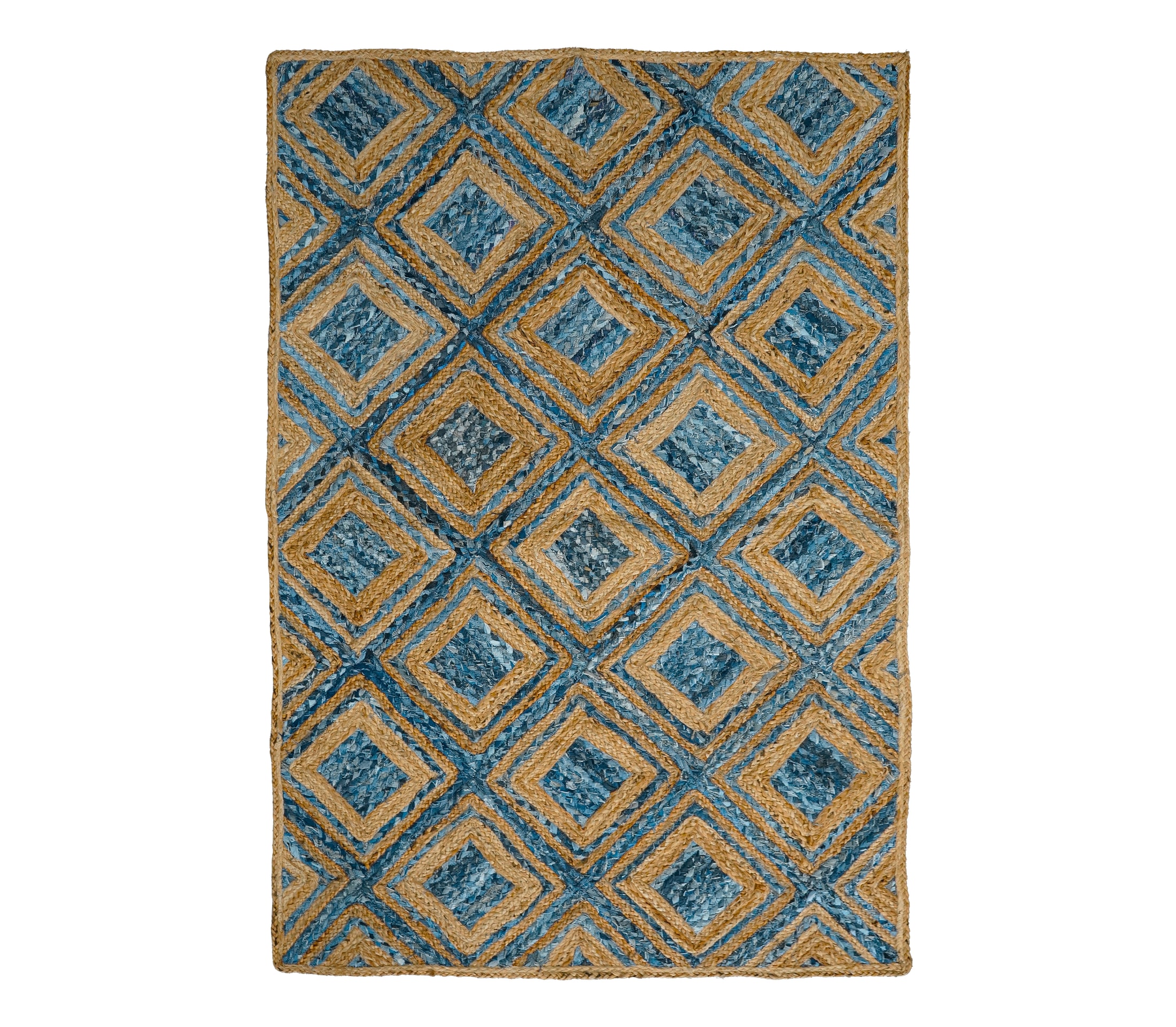
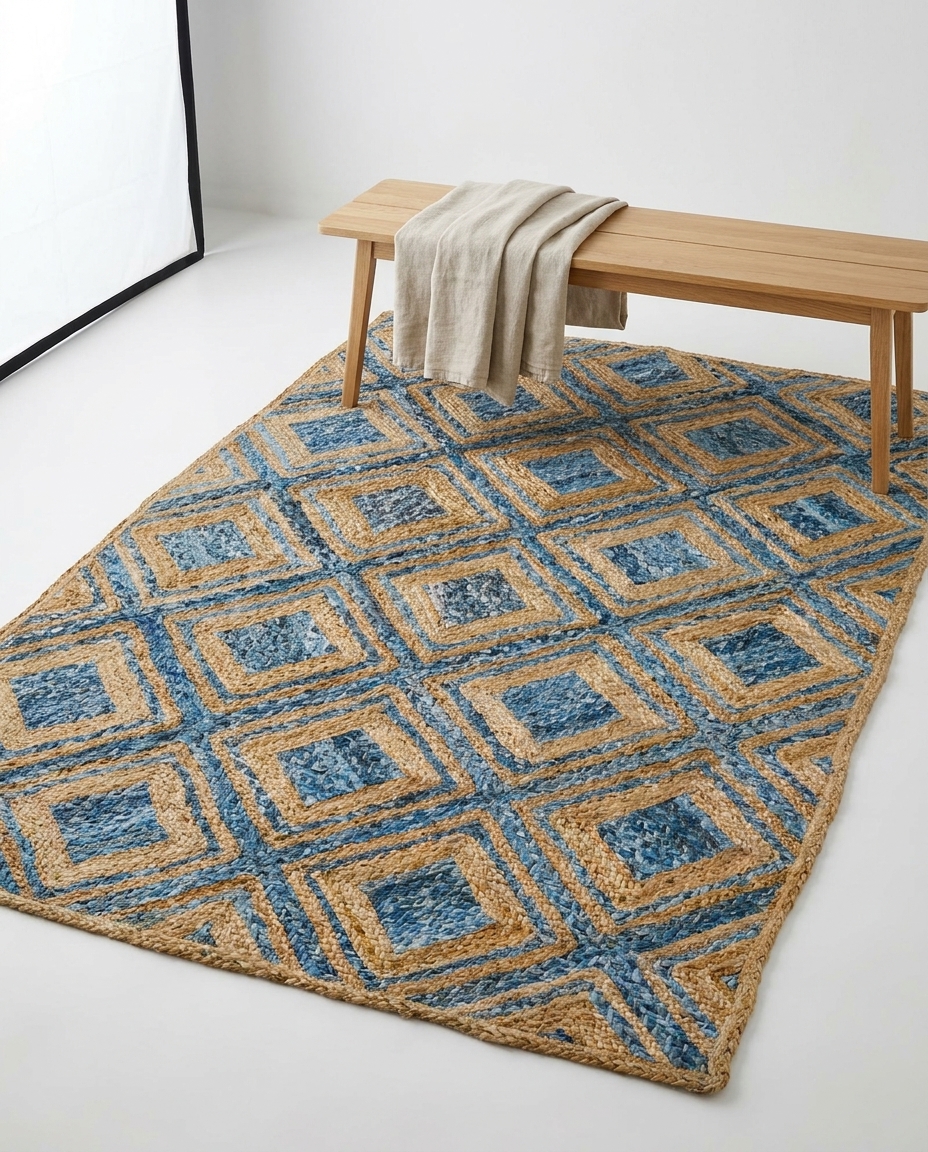
Styled correctly, a jute chevron in a stepped-diamond layout reads as warm and textural in a living room setting — it’s the room the fibre is actually built for.
What Actually Drives Cost Per Unit Across the Three Fibres?
Wool’s cost is set mostly by construction and knot count, not by the raw fibre; cotton’s cost stays low because flatweave and braided constructions are simple and fast to produce; jute’s cost sits between the two, driven more by labour-intensive braiding and panja work than by yarn price. Anchor retail pricing on construction complexity, not on fibre name alone.
Across export orders shipped in 2025, hand-knotted wool programs we quoted ran three to four times the labour hours of a comparable hand-tufted design in the same size — knot count, not the wool itself, was the swing factor. That’s a line worth adding to your own RFPs: ask suppliers to quote knot count and labour hours separately from yarn cost, because two rugs that look identical on a spec sheet can carry very different production times. Cotton programs, by contrast, price close to flat across colourways because a plain woven ground takes the same loom time whether it ships blank or goes on to be block- or screen-printed — the printing is a separate cost line, not a construction one. If you’re building a wool-anchored range and want a sense of where hand-tufted and handwoven wool sit relative to each other on a spec sheet, our wholesale wool rug guide sets out the construction options buyers ask for most in 2026 orders.
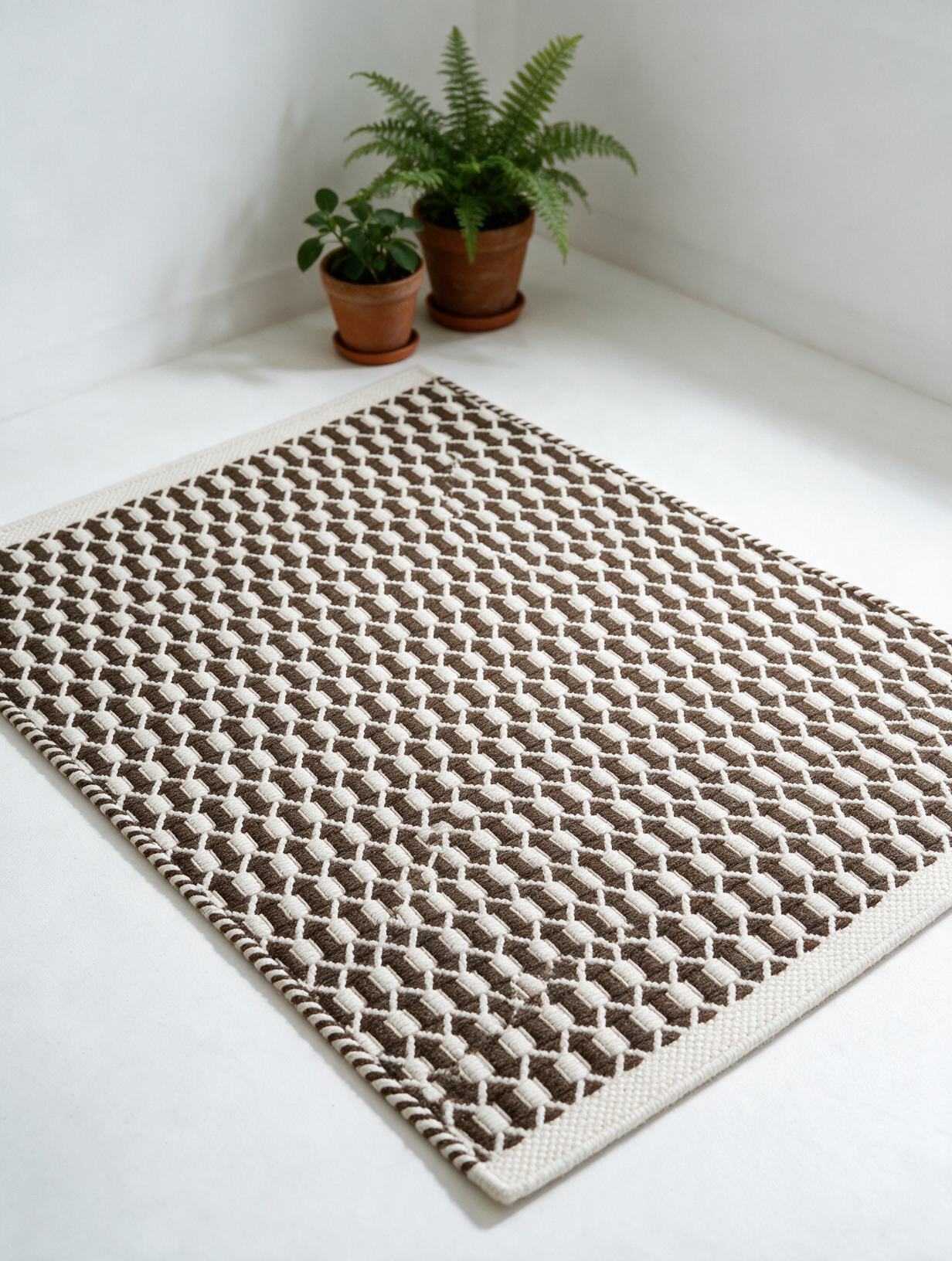
A hand-tufted wool piece styled into a hospitality corridor — this is the segment where wool’s price premium over cotton and jute is easiest to defend, because crush-recovery under daily foot traffic is the actual purchase reason, not the look.
How Do Wool, Cotton and Jute Actually Hold Up in Daily Use?
Wool resists surface staining because its natural lanolin sheds liquid before it soaks into the fibre, and it recovers from crushing better than any other fibre we run — that’s why hotel specifiers keep asking for it. Cotton flatweave and braided rugs go through a domestic or commercial wash cycle without issue. Jute holds moisture and must stay in dry indoor rooms only — it should never be machine washed, steam-cleaned wet, or left where damp can sit in the weave.
In our 2026 order book, hand-tufted wool reorders from hospitality accounts average one repeat purchase every 14-16 months, largely because pile height bounces back after heavy foot traffic in a way a cotton flatweave placed in the same corridor simply won’t — that piece typically shows wear lines and needs replacing well inside a year. Jute’s failure mode is different: it isn’t a wear problem, it’s a placement problem. A jute rug that’s spec’d correctly for a dry living room can outlast the design cycle it was bought for; the same rug placed near an entryway that tracks in wet weather will show moisture damage in a single season. If your buying team needs a longer reference on jute-specific upkeep before writing care instructions for retail tags, our guide to caring for jute rugs is written for exactly that swing-tag use case.
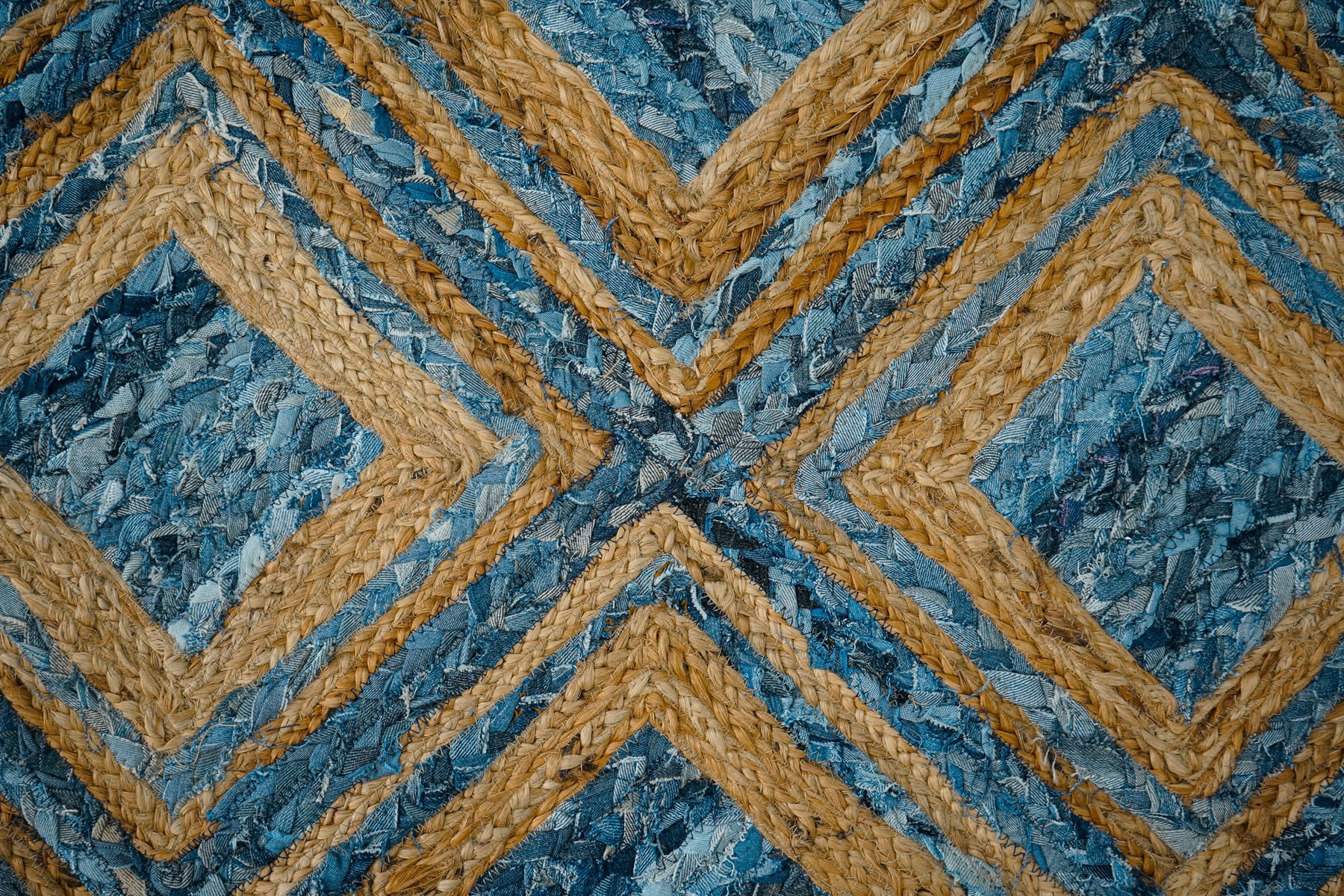
A close weave check on a handwoven jute chevron — this is the flatweave structure the moisture-sensitivity rule above applies to; it is never printed, stamped or screened.
What’s a Sensible Wool, Cotton, Jute Ratio for a 2026 Assortment?
A balanced mid-market rug program typically runs close to 50% wool, 30% cotton and 20% jute — wool carries the durability and price anchor, cotton covers washable and kids’-room demand, and jute adds the texture and eco-story a swing tag can lean on. Hospitality-led ranges skew heavier wool; eco/lifestyle-led ranges skew heavier jute.
| Buyer profile | Wool | Cotton | Jute |
|---|---|---|---|
| Balanced mid-market retail | 50% | 30% | 20% |
| Hospitality / hotel procurement | 65% | 20% | 15% |
| Eco-lifestyle / sustainability-led boutique | 30% | 30% | 40% |
The ratio only works if the SKUs behind it are placed correctly — a jute-heavy eco range still needs its rugs marketed for dry living rooms and studies, not bathrooms or patios, no matter how strong the sustainability story is on the hang tag. For buyers building that eco-forward mix specifically, our piece on why buyers are stocking jute and recycled cotton in 2026 covers the demand side of that ratio shift.
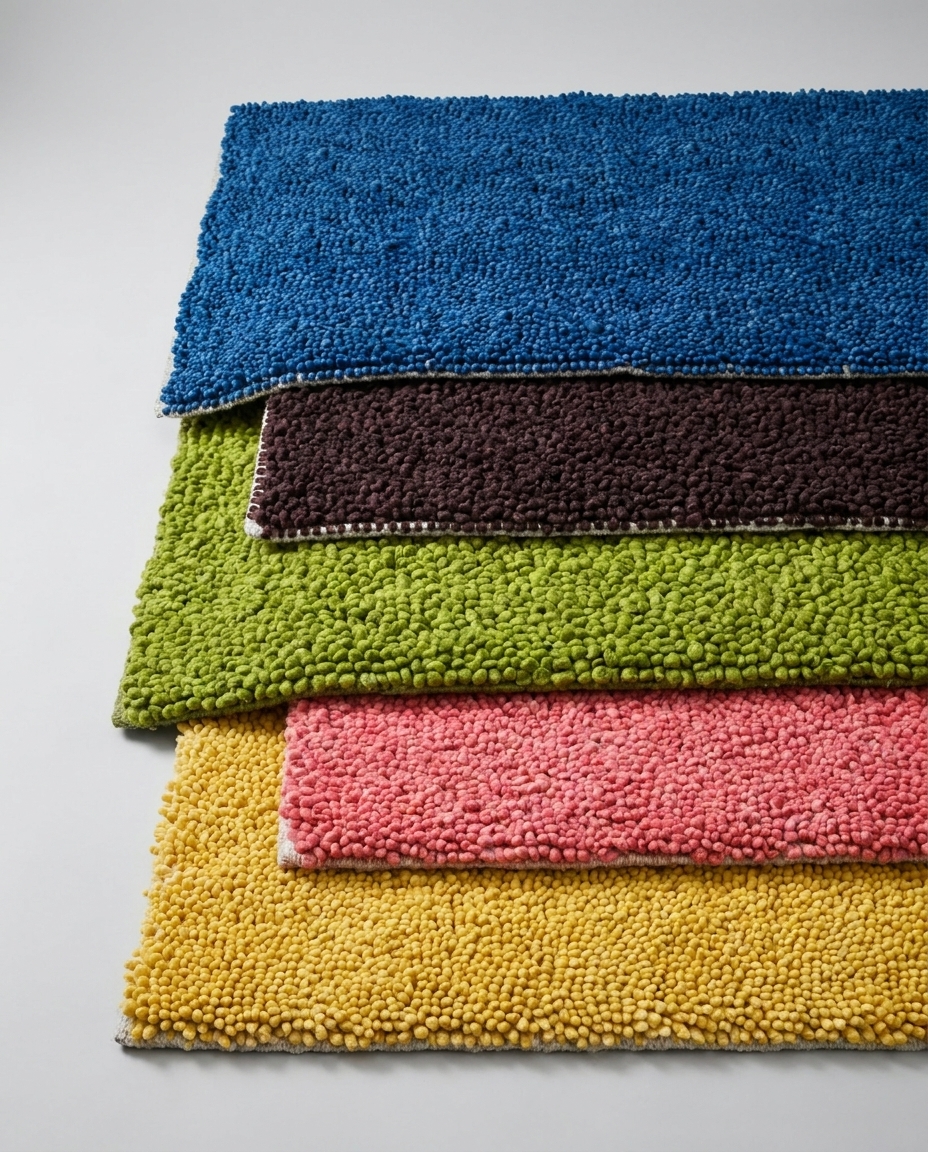
A grouped shot of a wool-cotton blend range in one colourway family — this is what assortment planning looks like at the sample stage, before a buyer commits to a ratio across a full program.
Ready to See the Three Fibres Side by Side?
A swatch kit across wool, cotton and jute settles more sourcing questions in ten minutes than a spec sheet does in a week — handfeel, dye depth and weave density are hard to judge from photographs alone. If you’re finalising a 2026 range and want to compare all three against your own spec, send over your sizing and colourway notes and we can put together a sample plan within a couple of days.
Frequently Asked Questions
What’s the best rug material for a retail store planning a 2026 range?
There’s no single best fibre — it depends on category. Wool anchors durability and price for living-room and hospitality lines, cotton covers washable and kids’-room demand, and jute adds texture and an eco story for dry indoor spaces. Most balanced mid-market programs mix all three rather than committing to one.
Can jute rugs be used in bathrooms or outdoors?
No. Jute is a dry indoor material only — living rooms, bedrooms, studies. It holds moisture and will show damage if placed in a bathroom, poolside, or any spot exposed to damp. Position it for warm indoor texture, never for wet-area or outdoor performance.
What is the MOQ for wool, cotton or jute rugs from Sheeltex?
MOQs vary by style and construction; a hand-tufted wool piece like the AWD2613 series runs an MOQ of 100 pieces at a 130 x 190 cm sample size. Cotton and jute flatweave programs are typically quoted per colourway once a design is confirmed.
How long does sampling take for a three-fibre swatch kit?
A swatch kit across wool, cotton and jute usually ships within a few days since it draws from existing colourways rather than new tooling. A full custom sample in a new design typically needs 10-14 days from approved artwork before it’s ready to send.
Is wool or cotton better for hotel and hospitality rugs?
Wool is generally the better fit for hospitality floors because it recovers pile height after heavy foot traffic, which is why hotel procurement teams specify it over cotton flatweave for corridors and lobbies. Cotton stays a better fit for washable, lower-traffic guest-room accents.
Enquire about your collection or project
Tell us which products you need, your preferred sizes, quantities and destination. You can also share your collection or project requirements.
Make it part of your
next collection.
Share the designs you like, approximate quantities and destination. Let’s discuss samples, pricing and custom options.
