
Hand-Tufted Wool Figure Carpets: Sourcing for Kids & Hotels
Last updated: September 2026
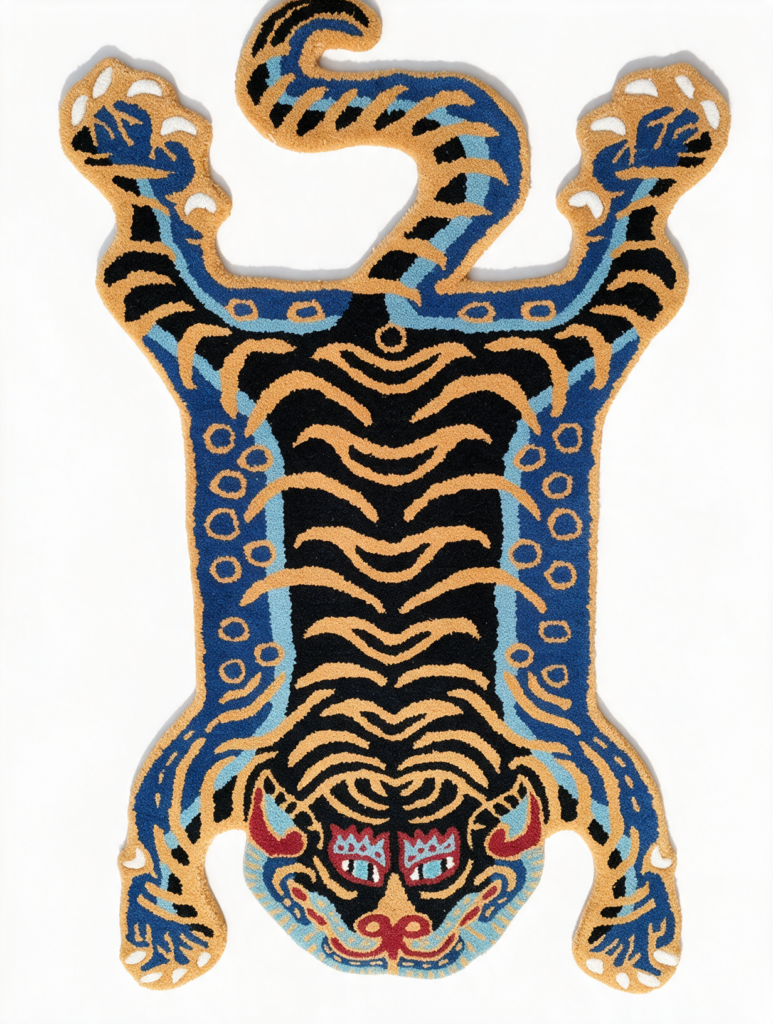
Figure carpets — animal and character shapes made in hand-tufted wool — are no longer confined to nurseries. Hotel kids’ clubs, boutique concept stores and lifestyle retailers now order them as statement pieces from wool figure carpet manufacturers in India, and procurement teams need to understand construction, MOQ and customization before placing a first order.
Why Figure Carpets Sell: Animal-Shaped Designs Are Not Just for Kids
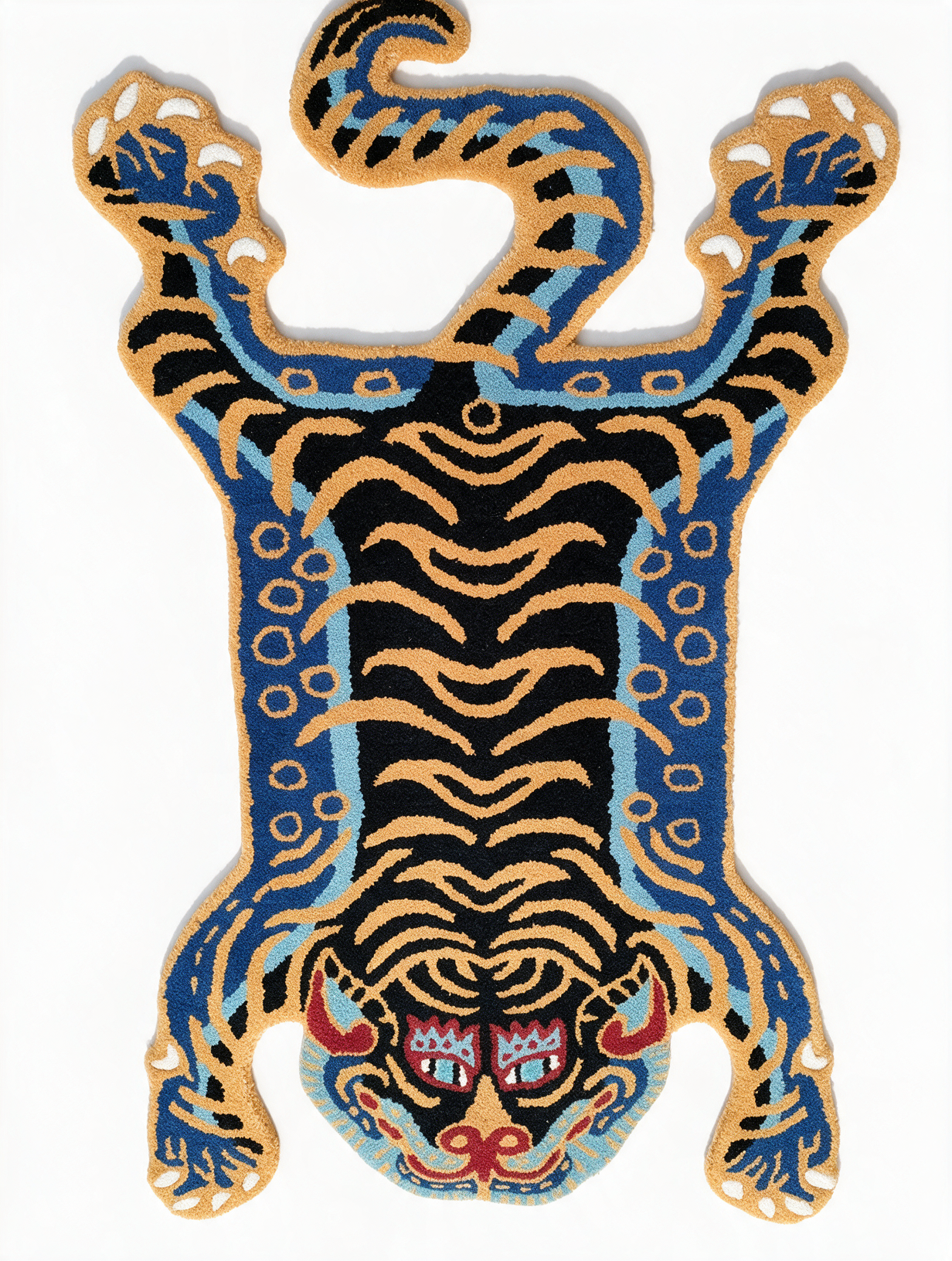
Figure carpets sell because they photograph well, anchor a room without needing a matching palette, and give hospitality brands a signature piece guests remember. A tiger, a bear or a folk-art animal shape reads as art on the floor — which is why boutique retail and hotel kids’ clubs now order the same design in different colourways for different properties.
In our 2025 wholesale order book, figure and animal-shaped carpets moved from a niche 4% of total carpet orders to just over 11% — almost entirely driven by hospitality groups building Instagram-ready kids’ zones and lobby corners, and by home-decor retailers who wanted one hero SKU per collection rather than ten similar florals. A single striking shape does more retail-floor work than a run of standard rectangles, and it justifies a higher shelf price per square foot because it isn’t directly comparable to a plain rug.
The trade-off: figure carpets are harder to standardise. Every animal shape has a different footprint, a different amount of high-detail carving, and a different finishing time — which is why the sourcing conversation has to start with construction, not colour.
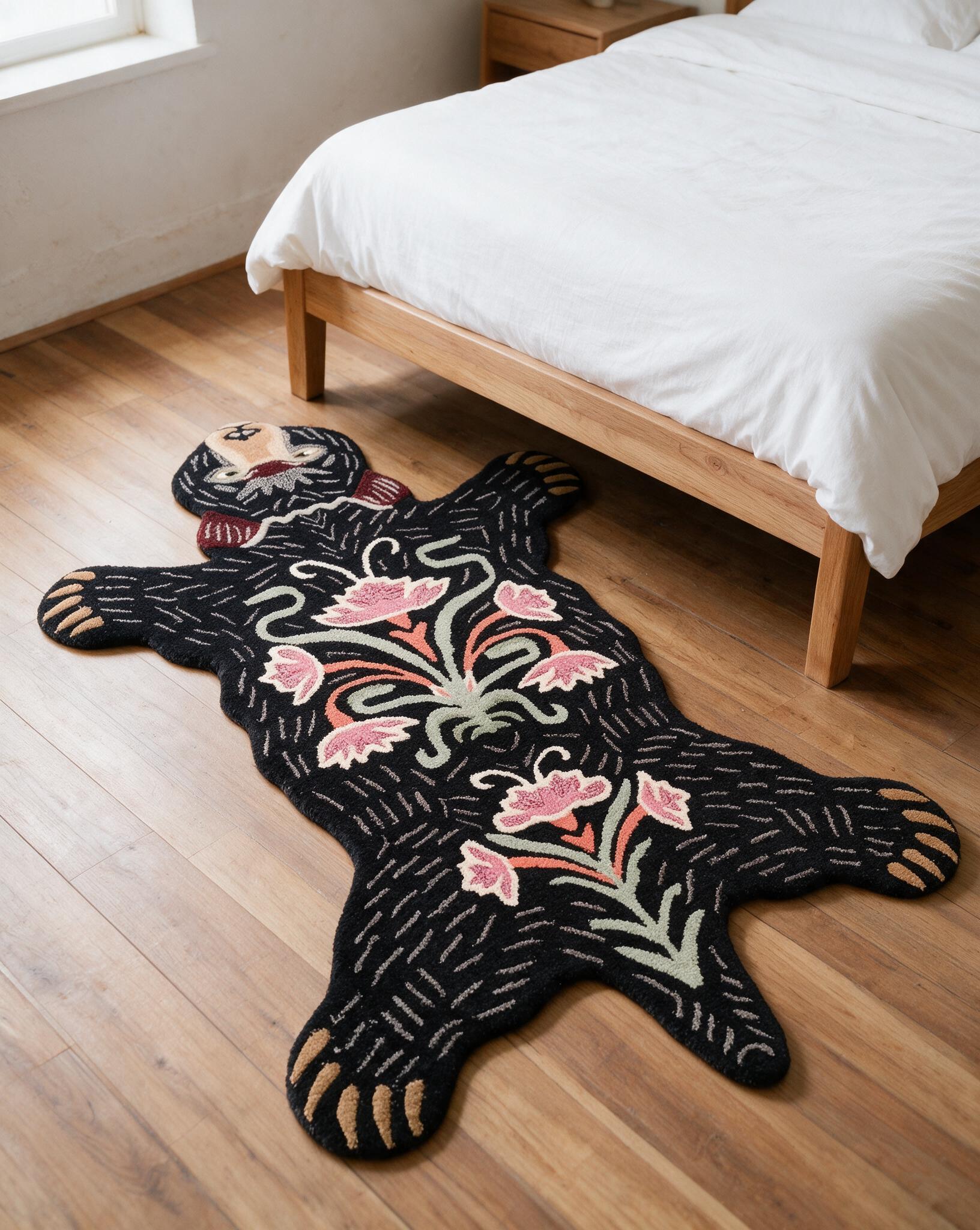
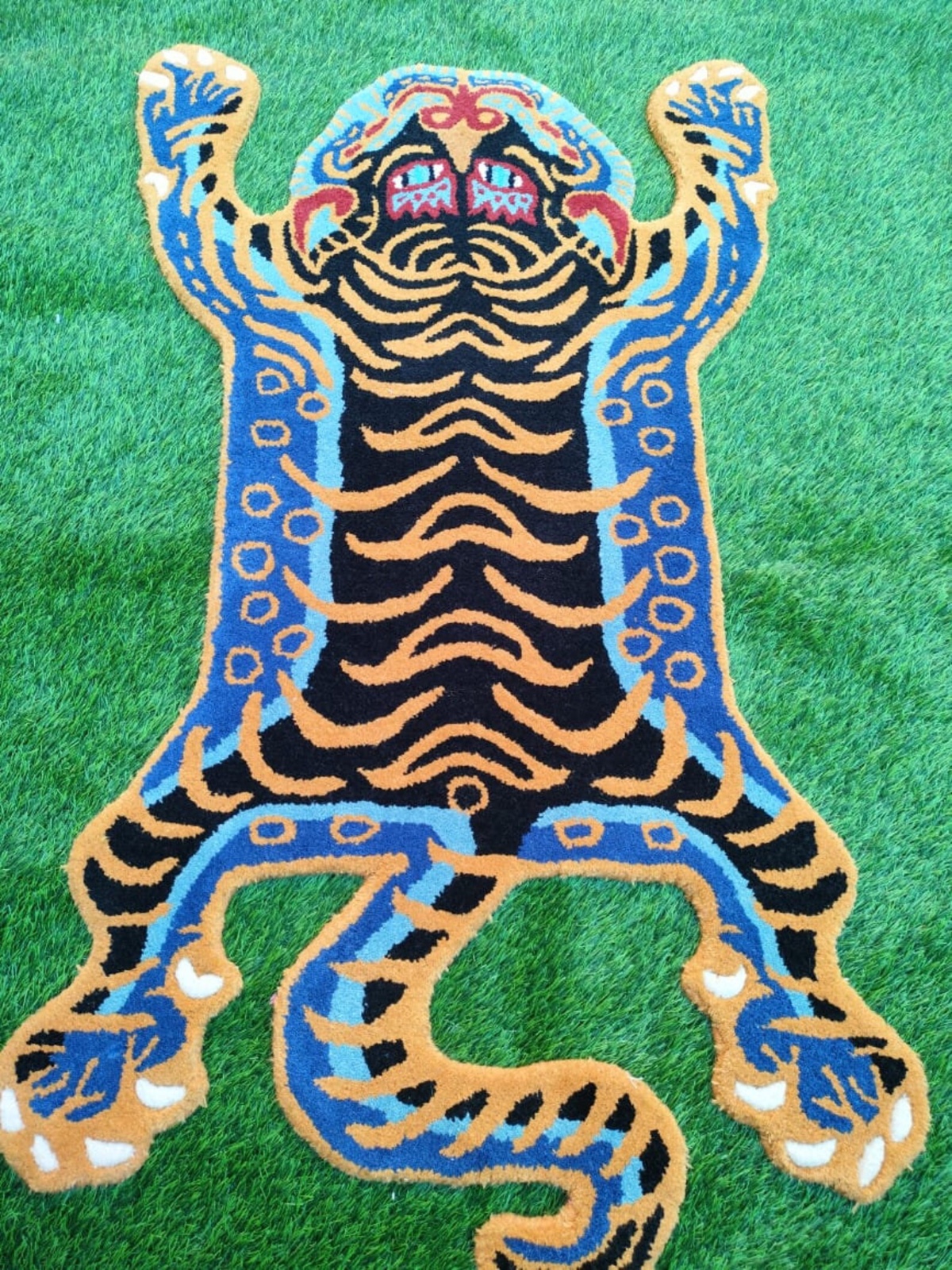
Spotlight on FCA-26007 (Floral Bear) and FCA-26005 (Tibetan Tiger) — Wool, Hand-Tufted, Free-Form Shapes
Both the Floral Bear Carpet (FCA-26007) and the Tibetan Tiger Folk Carpet (FCA-26005) are built the same way: wool, hand-tufted, cut pile, free-form outline rather than a rectangle. That construction is what lets the outline follow the animal’s silhouette instead of sitting inside a border — a hand-knotted piece could do the same detail, but at several times the production hours.
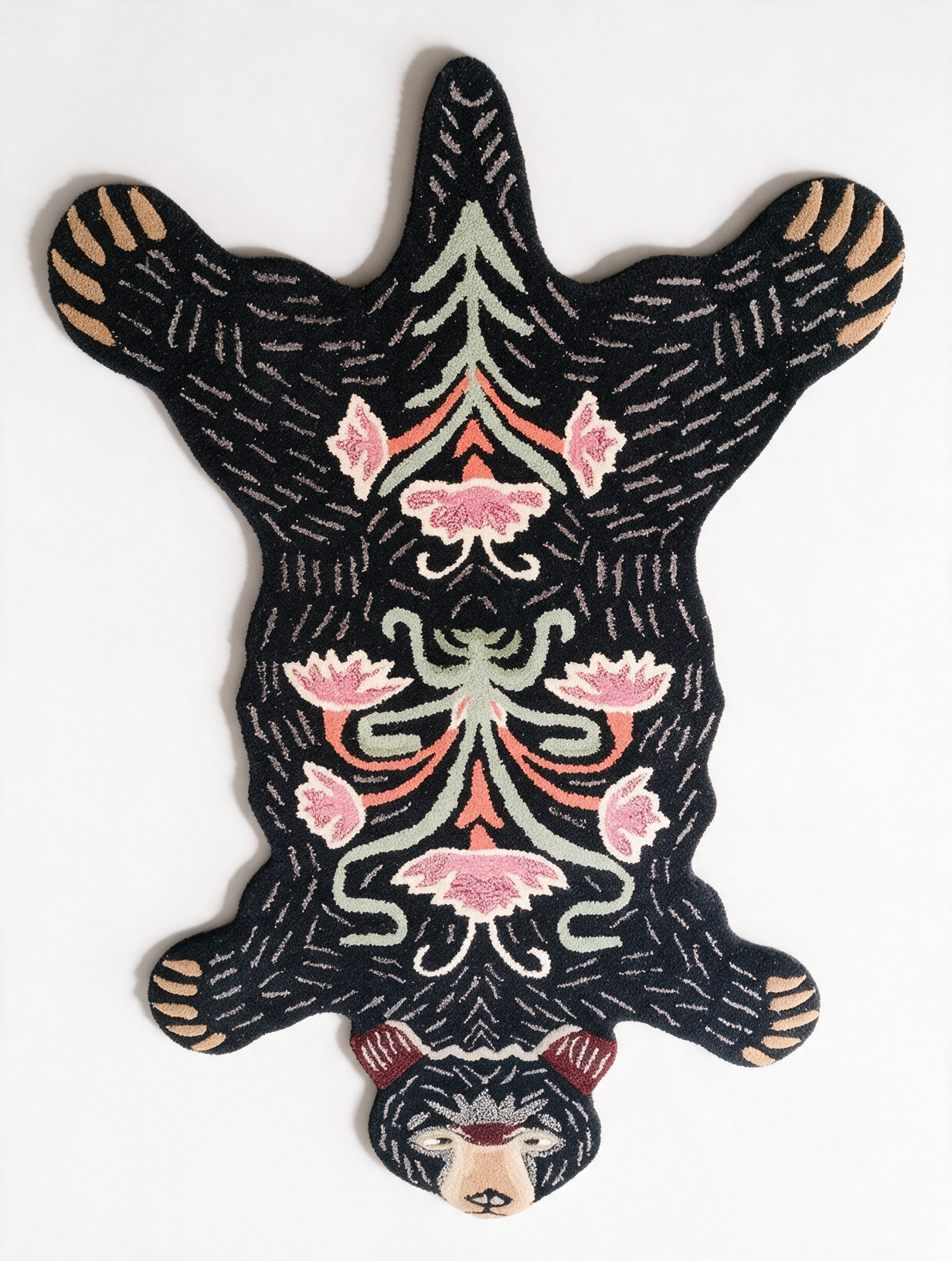
The Floral Bear leans domestic and boutique-retail — a rounded, friendlier shape with a floral fill that reads well in a kids’ bedroom or a home-decor storefront window. The Tibetan Tiger Folk Carpet takes the same tufting technique into a folk-art register — bolder outline, higher contrast colour fields — which is why it turns up more often in hotel lobbies and lounge corners rather than nurseries specifically. Buyers looking for more shapes in the same family can browse the wider animal tufted carpet collection for wool and cotton variants.
Where These Carpets Belong (and Where They Don’t)
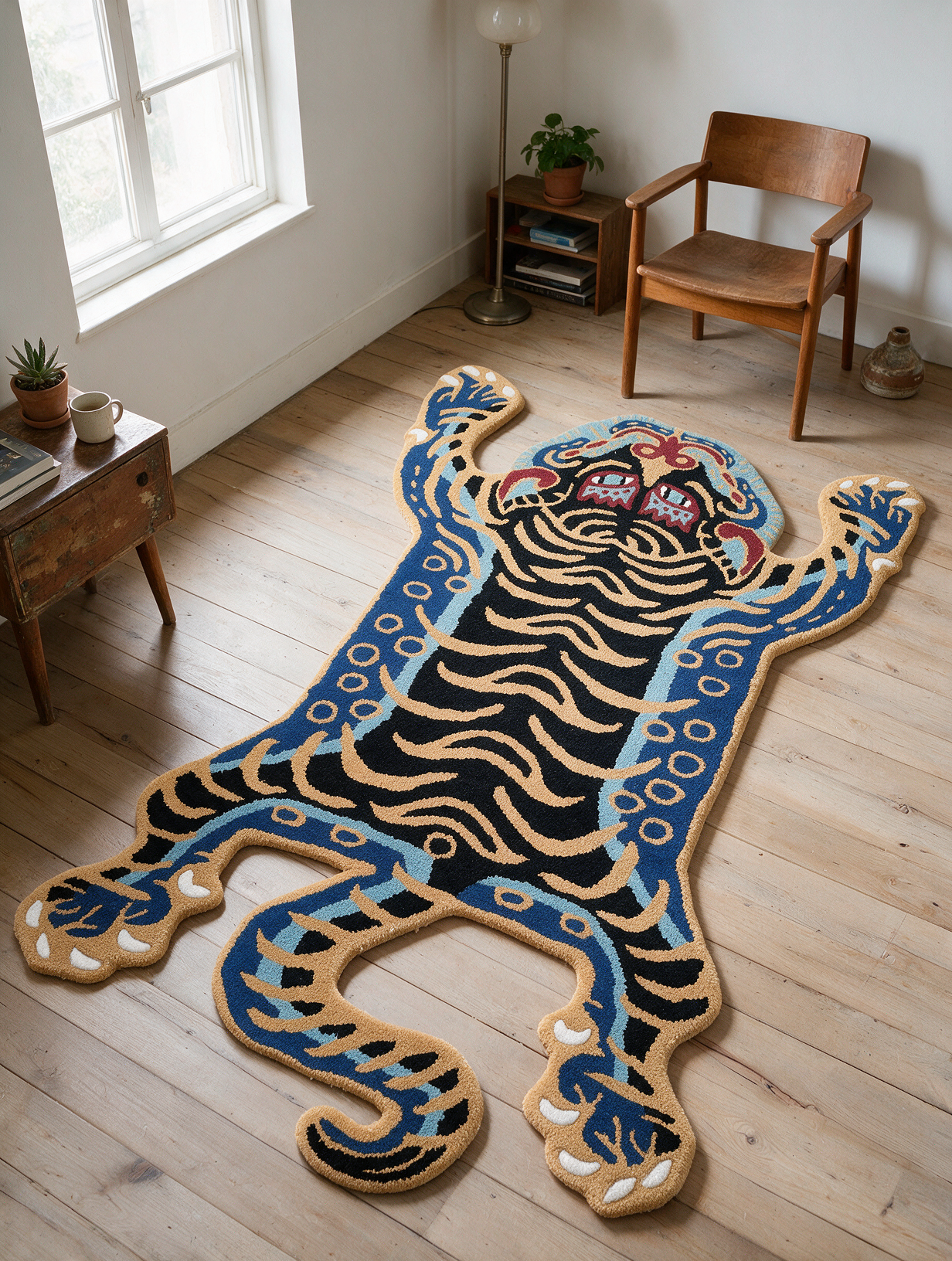
Wool figure carpets are built for indoor, foot-traffic floors — hotel kids’ clubs, lounge corners, boutique retail floors, residential living rooms and bedrooms. Wool holds shape under repeated crushing better than synthetic pile, which matters when a hotel wants the same rug looking sharp after six months of daily play. It is not a wet-area or outdoor material: wool absorbs moisture rather than shedding it, so these carpets do not belong in bathrooms, pool decks, spa walkways or any space that gets mopped or rained on. Spec PVC or a synthetic outdoor construction for those zones and keep wool for the rooms guests actually sit and play in.
Tufted vs Hand-Knotted Figure Carpets: Durability, Price, and Design Flexibility for Volume Orders
Hand-tufting is the right construction for most figure-carpet programs because it lets a designer draw a true curve and carve the pile for definition, at a production speed volume retail and hospitality orders actually need. Hand-knotting can achieve finer outline detail, but knot count — not design complexity — drives the price, which makes large multi-colourway orders slow and expensive.
| Hand-Tufted | Hand-Knotted | |
|---|---|---|
| Free-form / curved outlines | Yes, standard | Yes, but slower per piece |
| Typical use case | Volume hospitality & retail orders | Heritage / museum-grade pieces |
| Price driver | Design complexity, colour count | Knots per square inch |
| Consistency across reorders | Consistent batch to batch | Harder to match exactly |
| Pile carving for detail | Yes | Limited — knot structure is flatter |
A buyer ordering 300 pieces across four colourways for a hotel chain’s kids’ clubs will get consistent hand-feel and finishing time on a tufted order; the same brief in hand-knotted construction can stretch a single order’s production window from weeks into several months, because knotting speed per weaver doesn’t scale the way tufting-gun output does. If you’re weighing the two constructions for a broader rug program rather than figure shapes specifically, our comparison of hand-knotted, hand-tufted and handwoven rugs breaks down where each earns its price.
Custom Development: Send Us Your Brand’s Mascot or Character — We’ll Develop It to Your Brief
Custom figure carpets start from artwork, not a catalogue page — a hotel mascot, a retail brand’s character, or a redrawn version of an existing shape in new brand colours. The process runs from a flat vector or reference image to a scaled tufting template, then a physical sample in the requested colourway before bulk cutting begins.
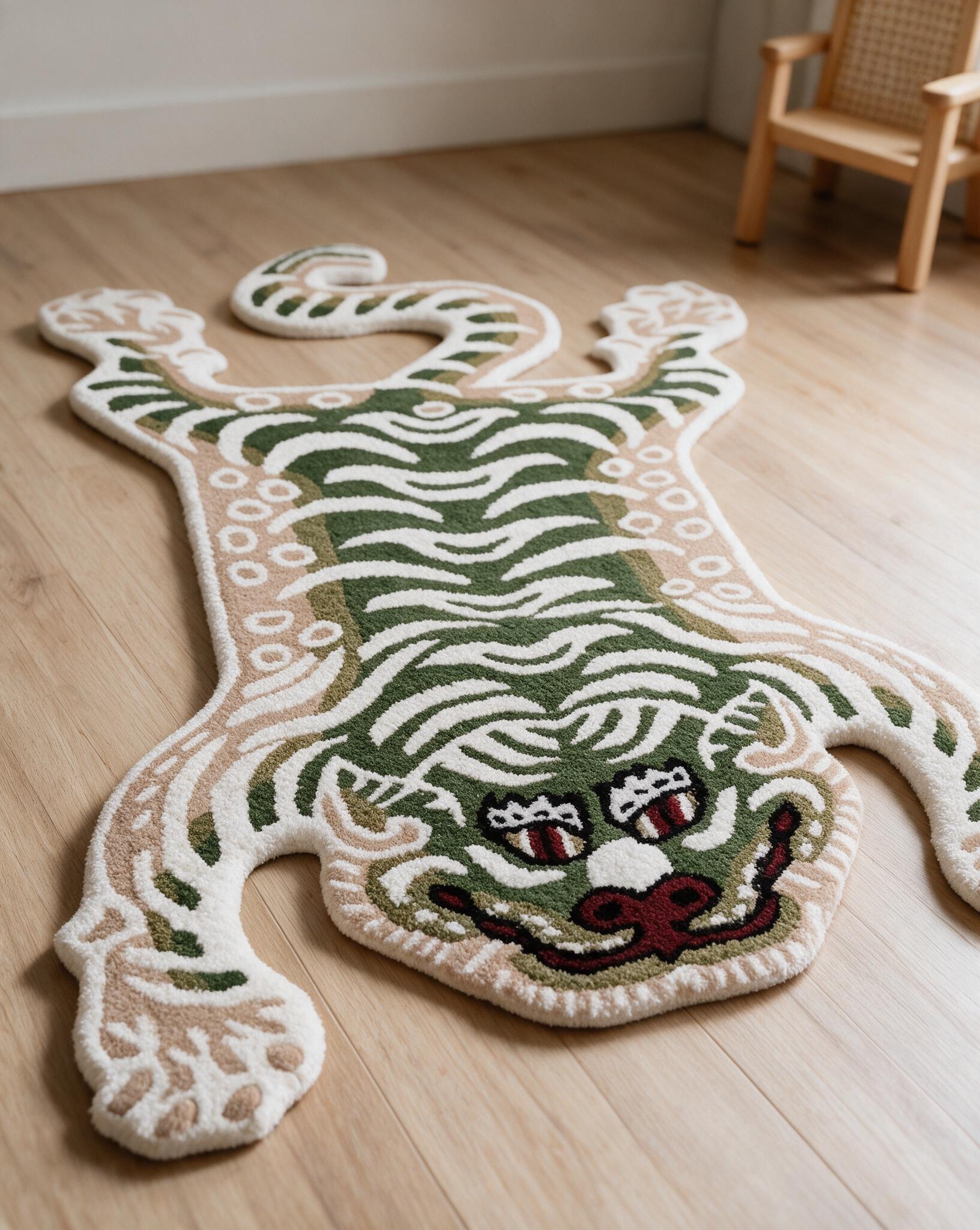
Colourway changes are the most common request we see on figure carpets — the same outline reissued in different palettes for different properties or seasons, the way the Tibetan Tiger shape shown here also runs as a green colourway (FCA-26016) for a cooler, more retail-neutral look.
For brand or private-label work, a merchandiser will usually ask for your mascot’s flat artwork, your target size range, and whether the piece needs to nest inside an existing collection’s colour story. Our custom pattern rug development process and the broader private-label carpet development route both apply directly to figure carpets — the tufting technique doesn’t change, only the outline does.
Lead Times and Sampling: What to Expect from Our Workshops in Northern India
A first sample on a new figure-carpet design typically takes 10-14 days once artwork is approved, followed by bulk production of 6-8 weeks depending on colourway count and total quantity. Reorders of an approved design run faster — 4-5 weeks — because the tufting template and colour formulas are already locked.
Across figure-carpet orders shipped in 2026, the single biggest delay we’ve tracked wasn’t production — it was buyers approving a sample photo instead of asking for the physical piece. Wool pile depth and carving detail don’t always read correctly on screen; a hospitality buyer sourcing for six properties should ask for one physical sample before locking a bulk PO, even if it adds a week. For a wider view of what hotel procurement teams typically specify on hand-tufted programs, see our notes on hand-tufted carpet sourcing for hotels; the same sampling logic applies whether the shape is a rectangle or a tiger. Buyers building a broader wool assortment alongside figure pieces might also want our overview of wholesale wool rug construction options.
If you’re scoping a figure-carpet program for a hospitality rollout or a retail season, send over the mascot artwork or reference shape and we can turn around a sample plan within 48 hours.
Frequently Asked Questions
What is the MOQ for custom figure carpets from India?
Most hand-tufted wool figure carpets ship at an MOQ of 10 pieces per design and colourway. Sheeltex applies this across its Figure Carpets range, so a hotel group can trial one shape in a single colourway before committing to a larger multi-property rollout.
How long does sampling take for a custom animal-shaped rug?
Once artwork is approved, a physical sample typically takes 10-14 days to produce. This covers building the tufting template from the artwork, dyeing the wool to match the requested colourway, and hand-tufting the sample piece before it ships for review.
Can hand-tufted wool carpets be used in bathrooms or outdoor kids’ play areas?
No. Wool absorbs moisture rather than shedding it and does not hold up in wet or outdoor conditions. Hand-tufted wool figure carpets are built for indoor floors — hotel kids’ clubs, lounges, bedrooms and retail spaces — not bathrooms, pool decks or exterior play areas.
What’s the difference between hand-tufted and hand-knotted figure carpets?
Hand-tufting uses a tufting gun to push wool through a backing, allowing true curves, colour fields and pile carving at production speeds suited to volume orders. Hand-knotting produces finer detail but is driven by knot count, making it slower and costlier for multi-colourway bulk programs.
How do I get a brand mascot turned into a custom carpet design?
Send flat vector artwork or a clear reference image of the mascot along with your target size range and colour requirements. The design team converts this into a scaled tufting template, produces one physical sample for approval, then moves to bulk cutting once the sample is signed off.
Enquire about your collection or project
Tell us which products you need, your preferred sizes, quantities and destination. You can also share your collection or project requirements.
Make it part of your
next collection.
Share the designs you like, approximate quantities and destination. Let’s discuss samples, pricing and custom options.
